
Single-Ingredient vs Blended Hair Oil: Which Should You Buy?
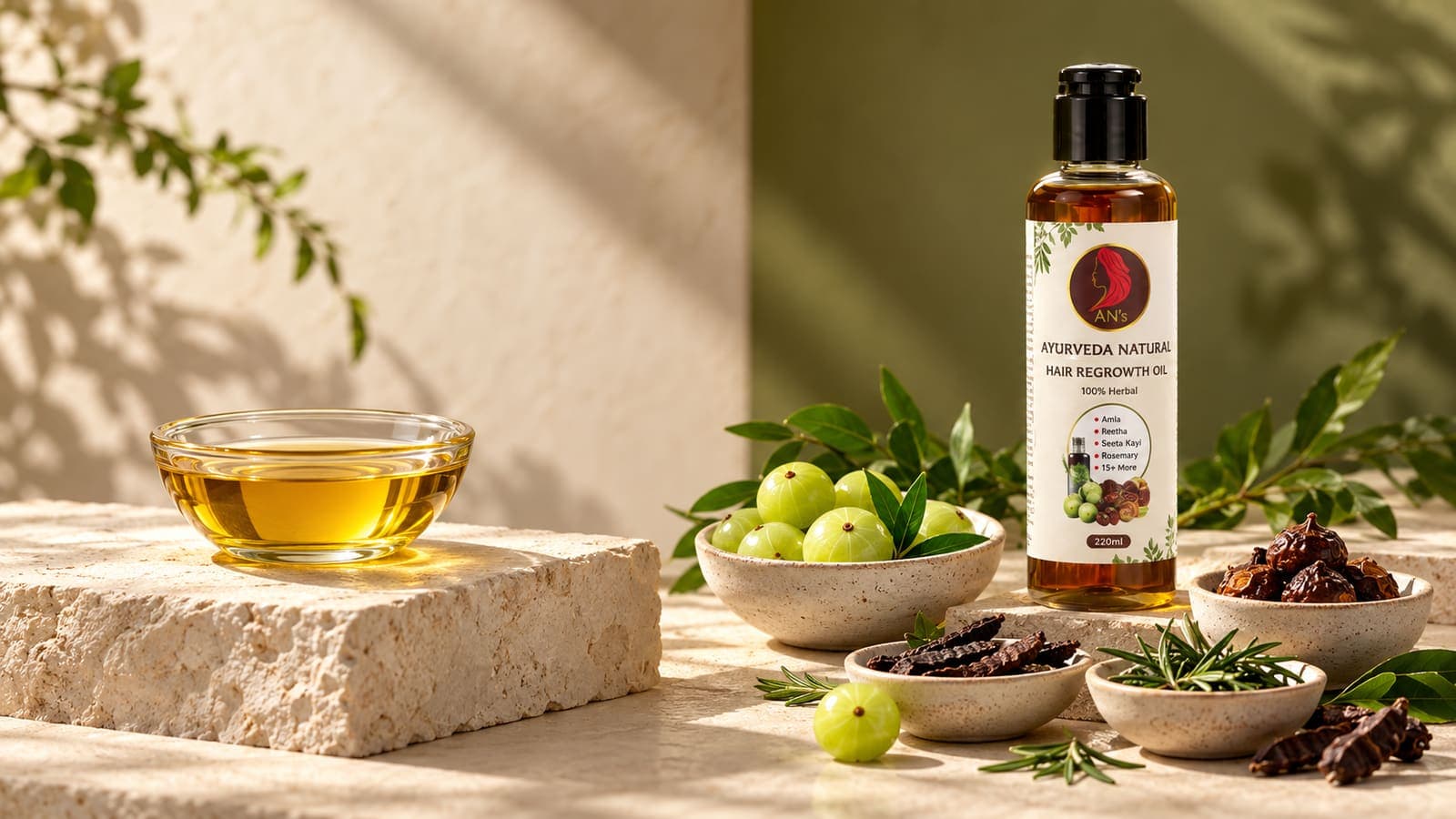
Short answer: buy a single-ingredient hair oil when you want one clearly identified carrier oil. Choose a blended hair oil when you want a ready-made combination and can review its complete ingredients. More ingredients do not automatically mean better results. Your intended use, preferences and budget should decide.
The choice is often presented as purity versus performance, but that is not a helpful way to shop. A single oil can be a perfectly useful cosmetic purchase. A carefully described blend can also be useful. Neither wins simply because its ingredient list is shorter or longer.
For a Pakistan shopper comparing bottles online, the real questions are practical: what is in the finished product, where does it belong in your routine, and are you paying for a combination you actually want? This guide works through those questions without inventing product tests or promising that an oil treats hair loss.
Single-ingredient vs blended hair oil: the buying comparison
| Decision | Single-ingredient carrier oil | Prepared blended hair oil |
|---|---|---|
| Formula | One declared oil, if the complete label supports that description. | Two or more ingredients, which may include carrier oils, botanicals or other additions. |
| Main shopping advantage | A simpler ingredient review and a clear purchase when you already know the oil you want. | Convenience when you want a finished combination without buying several separate bottles. |
| Main trade-off | You are choosing that oil's particular feel and limitations. | You cannot individually adjust the components of a fixed formula. |
| What matters most? | Identity, directions, packaging and suitability for your intended use. | Complete disclosure, directions and whether the whole combination suits your preferences. |
| Does it establish safety or regrowth? | No. One ingredient does not guarantee compatibility or treatment. | No. A longer herb list is not proof of a clinical result. |
Start by defining “single ingredient” correctly
A bottle called coconut hair oil is not necessarily a single-ingredient product. The name may highlight coconut while the formula includes other oils, fragrance or additional ingredients. A front label tells you what the brand wants to emphasise; the complete ingredient information tells you what you need to review.
For a genuine one-oil comparison, identify the ingredient rather than the marketing category. A declared carrier such as coconut oil or sesame oil is a different purchase from an oil-based perfume, an essential-oil concentrate or a prepared herbal mixture. Do not assume similar bottle shapes indicate similar application directions.
The FDA's explanation of cosmetic ingredient names offers background on identifying ingredients rather than relying only on product names. Its regulatory context is the United States; it is not a statement about the legal requirements for your Pakistan purchase. For shopping, the useful habit is to ask for a readable complete label.
Also separate ingredient count from processing. A single carrier can be refined or described as cold-pressed; a prepared blend can include cold-pressed carriers. Our cold-pressed versus herbal-infused guide explains that different question. This article focuses on choosing a simple formula or a finished combination.
What a blended hair oil can contain
A blend may combine several carrier oils, use one carrier with botanical additions, or contain other ingredients intended to change scent, feel or stability. “Blend” does not describe one standard recipe. Two bottles with the same headline herb can be very different finished products.
Read the formula as a whole. A list of highlighted botanicals is not necessarily a full ingredient declaration. If a seller promotes fifteen herbs, that still does not tell you every carrier, whether fragrance is present, or the proportion of each ingredient. Ask for clarification instead of assuming the missing details.
Do not demand an exact percentage for every component as a condition of an ordinary purchase; many brands do not disclose their full recipe. You can still expect enough information to understand the ingredients and directions. If an ingredient is important because of a known allergy or avoidance preference, an incomplete answer may be a reason not to buy.
A blend's most straightforward advantage is convenience. You receive one prepared product rather than sourcing, storing and measuring several oils. That is a legitimate reason to choose it without claiming that the ingredients have a proven synergistic effect or that a larger herb count guarantees stronger results.
When a single-ingredient oil may be the simpler purchase
You already know the particular oil you prefer
If you have used a specific carrier comfortably and want that same kind of product again, a clearly labelled single oil is an uncomplicated choice. Compare the exact product identity and packaging rather than treating every new botanical mixture as an upgrade.
A straightforward repeat purchase can also make your routine easier to interpret. You are not simultaneously introducing several unfamiliar components. That does not turn the product into a diagnostic tool, but it reduces the number of formula changes you are making at once.
You want to control which ingredients you buy
A short declaration can be easier to review when you have a specific ingredient preference. However, a single ingredient is not automatically harmless or suitable for everyone. If you have a diagnosed sensitivity, use your clinician's advice rather than relying on the word “pure.”
The FDA's information about cosmetic allergens is a reminder that cosmetic ingredients and fragrances can matter to individual sensitivities. It does not establish that a single carrier is allergy-free or that every blend causes reactions. Product selection remains individual.
You do not want to buy a complete herbal routine
You may simply want an occasional pre-wash oiling step without changing your shampoo or styling products. There is no requirement to turn that into a multi-bottle regimen. Buy the item with the clear role and keep the rest of a comfortable routine familiar.
Be wary of paying for several additions you did not intend to use. A plain oil is not automatically inferior because its product page has fewer stories, and a blend is not automatically unnecessary because it is more elaborate. The decision is about your actual use.
When a prepared blend may be worth buying
You want convenience rather than home mixing
If you want a botanical hair oil but do not want to source several ingredients, a prepared blend can simplify the purchase. One closure, one label and one set of directions may fit your routine better than maintaining several partly used bottles.
Convenience is especially relevant if you are new to oiling and do not already own the ingredients. Compare the initial basket cost rather than assuming home mixing is always cheaper. Do not add concentrated essential oils to a finished product to make it “stronger”; that changes the supplied formula.
You want a finished texture rather than a particular raw oil
Some shoppers choose a blend because they prefer the way a finished formula feels or dispenses. That preference can be valid, but an online description cannot guarantee your experience. Look for useful directions and a sensible bottle size for a first purchase.
Do not infer “lightweight” from the presence of one familiar ingredient. The overall formula and amount used matter. Likewise, the word “herbal” does not tell you whether a product is intended as a leave-in or a rinse-out step.
You specifically want an Ayurvedic blend
If a prepared Ayurvedic oil is your preference, review the Ayurveda Naturals Hair Regrowth Oil information and request the current label if you need more detail. Our product is positioned as a blend, not a bottle of one isolated carrier.
Choose it for a clearly understood oiling role. The product name does not guarantee new growth, and this article does not claim the finished formula has been tested against every single oil. A buyer deserves that distinction before deciding whether a blend suits their priorities.
Do not confuse carrier oils with essential-oil concentrates
“Single ingredient” covers products with very different intended uses. A single carrier oil sold for cosmetic application is not equivalent to a concentrated essential oil. A small bottle labelled rosemary essential oil should not be treated like a ready-to-use herbal hair oil simply because both mention rosemary.
Follow the exact manufacturer's directions and warnings. Do not invent a dilution ratio from a comparison article or apply a concentrate as though it were a finished scalp product. If you cannot establish whether a product is ready to use, resolve that question before ordering.
The same caution applies to home mixing. Adding a few drops of an unfamiliar concentrate is not merely changing the scent; it changes what you are applying. Buying a disclosed ready-made formula is often the simpler option for someone who does not want formulation decisions as part of their routine.
Three label-reading examples
These examples are imaginary labels to illustrate the comparison, not ingredient declarations for specific products.
Example A: one declared carrier oil
A hypothetical label lists only coconut oil, a net volume, a manufacturer contact and cosmetic-use directions. That is a straightforward single-ingredient candidate. You still need to decide whether you want coconut oil and whether the instructions fit your routine.
You cannot conclude that it will treat dandruff or hair loss from the short list. Simplicity tells you about composition, not the range of results you can expect.
Example B: three carriers and fragrance
A second imaginary bottle lists three carrier oils and fragrance. It is a blend even if the front highlights only one oil. Someone avoiding fragrance would need to consider that fact rather than being reassured by a prominent “natural oil” headline.
The blend may still be a suitable cosmetic choice for another shopper. An ingredient preference is not a universal verdict that every product containing that ingredient is poor quality.
Example C: highlighted herbs without a full declaration
A third listing shows attractive botanicals but no readable complete label. You cannot determine the whole formula from the photograph. Ask the seller for the declaration, use directions and relevant warnings. Do not fill the information gap with assumptions about what a traditional formula usually contains.
This listing is not ready for an informed ingredient-sensitive purchase. Waiting for clarification is a practical shopping decision, not proof that the product is counterfeit.
Compare the cost of buying one bottle with buying several
Illustrative arithmetic: imagine a single oil costs Rs. 800 for 100 ml, while a prepared blend costs Rs. 1,500 for 200 ml. Their prices are Rs. 8 and Rs. 7.50 per ml respectively. The blend has a higher initial price but a lower unit price in this invented example. These are not current offers.
If your alternative is buying three separate Rs. 800 bottles, your initial outlay becomes Rs. 2,400. You would own more total oil, but that is not necessarily useful if you only wanted to try one routine. Include unused product, storage and separate delivery charges in your practical comparison.
On the other hand, if you already own a carrier you like, buying a prepared blend may add cost without solving a problem. Do not compare the blend only against an imaginary home recipe you were never going to make. Compare it against your actual next-best purchase.
A discount does not settle the question. Ask whether the bottle size matches your likely use and whether the delivered total still fits your budget. A smaller first order may be sensible even when the larger bottle has a better price per millilitre.
Plan the application before choosing the formula
Write down whether you want pre-wash oiling, a scalp application permitted by the label, or a finishing step for lengths. A rich oil bought for pre-wash use should not automatically be applied as a daily leave-in. Your intended application is a stronger shopping filter than the number of ingredients.
If your concern is the finish after washing, our hair oil versus serum guide may help you choose the right category first. If roots feel oily while ends feel rough, the two-zone routine guide explains why one product does not need to go everywhere.
For a new oil, follow the supplied directions and any testing advice. Introduce one new product at a time rather than changing oil, shampoo and styling products together. Stop if the product causes irritation. A small trial cannot guarantee that a reaction will never occur.
Judge practical fit: whether you like applying it, whether you can wash it out comfortably and whether you continue using it. Do not turn a smoother finish into evidence that you have treated a medical cause of shedding.
Packaging, storage and seller support
A one-ingredient product still needs appropriate packaging and handling. A blend still needs a readable label. Compare closures, dispensing and date information, and follow the manufacturer's storage instructions. The FDA's cosmetic shelf-life guidance explains why storage and product changes matter; it does not supply one universal expiry period for every oil.
Avoid adding water or fresh plant material to a purchased bottle unless that is part of explicit manufacturer instructions. You would change the product and no longer be assessing it as supplied. Keep labels and order information so that you can ask precise questions if the contents or packaging seem different on a repeat purchase.
Before buying online, read the current delivery information and returns policy. Ask what to do about leakage or an incorrect item. A clear support process is more useful than relying on a bottle's expensive-looking colour scheme.
Frequently asked questions
Is a single-ingredient oil always purer than a blend?
A genuinely single-ingredient product has a simpler declared composition. That does not automatically establish better quality, compatibility or performance. A disclosed blend is not impure merely because it contains more than one ingredient.
Are more herbs better for hair?
A larger herb count does not prove a better finished product or clinical result. Review the whole formula, intended use and directions. Choose the combination you understand and want rather than the longest promotional list.
Can I mix a blend with another oil?
Do not assume you should. Mixing changes the supplied formula and its application amount. Follow manufacturer directions, and do not add essential-oil concentrates casually. A finished product is usually simpler to evaluate when used as supplied.
Which option is better for ingredient sensitivities?
A shorter complete declaration may be easier to review, but no ingredient count guarantees compatibility. For diagnosed allergies, follow professional advice and avoid the specific ingredients you were advised to avoid. Ask for clarification when a label is incomplete.
Does “coconut hair oil” mean it contains only coconut oil?
No. The name may highlight one ingredient in a larger formula. Check the complete declaration to establish whether it is a single carrier or a blend with other oils, fragrance or additions.
Should I buy a shampoo with a new oil?
Only if you also need a cleanser. Your existing shampoo may already suit your wash routine. Review Purifying Hair Shampoo separately if cleansing is a genuine gap, rather than making a second purchase automatic.
Buy the level of complexity you actually want
A single carrier suits a shopper seeking one identified oil. A prepared blend suits someone seeking a disclosed ready-made combination. Those are both reasonable preferences. What matters is whether you understand the finished bottle and have a realistic place for it in your routine.
If you prefer a prepared Ayurvedic option, view Hair Regrowth Oil. Use our contact page for current label questions and compare the delivered checkout total. Buy one useful step first, not several bottles to satisfy a routine you do not need.
Editorial note: reviewed October 9, 2026. Examples and prices are hypothetical. This guide does not report personal product testing, certify ingredient purity or promise treatment for hair loss. Decorative botanicals in the hero image are not a complete formula declaration.
Ready to stop hair fall naturally?
Don't wait until it's too late. Experience the proven magic of our 100% organic, wild-harvested Ayurvedic formulations and start seeing real results in 14 days.
Free Shipping + Cash on Delivery