
Hair Oil vs Hair Serum in Pakistan: Which Should You Buy First?
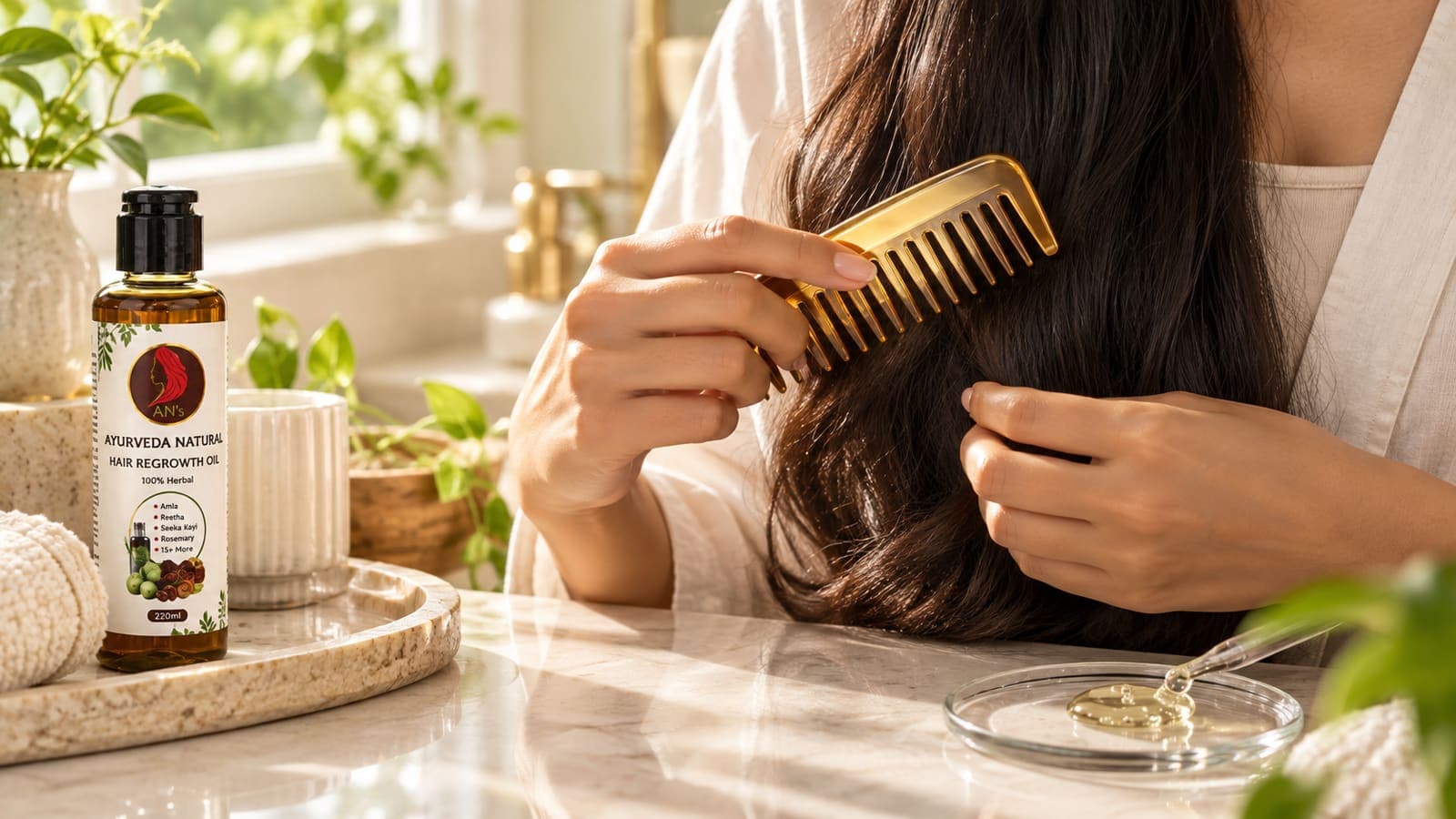
Short answer: when comparing hair oil vs hair serum in Pakistan, buy an oil first if you want a pre-wash oiling routine. Choose a cosmetic styling serum first if your main concern is the appearance of frizz or rough ends after washing. If your scalp feels dirty or your hair tangles because you skip conditioner, address those needs before buying either. You do not automatically need both products.
The useful question is not which bottle has the most impressive name. It is which job your routine is missing. A rich herbal oil used before a wash and a small amount of leave-in finishing serum can belong in the same bathroom, but they are not interchangeable. Your hair texture, where you apply the product, how much washing time you have, and your total delivered budget should guide the first purchase.
This guide compares cosmetic haircare choices, not medical treatments for hair loss. It includes a practical decision table, real product-role examples, and clearly labelled shopping calculations. We have not conducted a head-to-head product trial, so there is no invented winner or promise that one formula suits everyone.
Hair oil vs hair serum: the differences that matter before checkout
| Buying question | Hair oil | Cosmetic styling serum |
|---|---|---|
| What are you buying it for? | An oiling step, often before washing; some formulas also allow light leave-in use. | A finishing step for the look and feel of the lengths, such as smoother-looking ends or added shine. |
| Where does it go? | Lengths, scalp, or both, according to the formula and label. | Usually mid-lengths and ends. Do not assume it belongs on the scalp. |
| When will you use it? | Plan around washing if the directions require rinsing it out. | Often after washing or during styling; damp-versus-dry application depends on the label. |
| What could disappoint you? | Too much oil can leave hair feeling heavy or require more cleansing than you expected. | Too much serum can flatten fine hair; a shine formula may not provide heat protection. |
| What should you compare? | Complete ingredients, application directions, bottle size, wash-out effort and seller information. | Complete ingredients, intended hair type, application amount, finishing purpose and specific protection claims. |
| Does it replace the basics? | No. Oil does not clean the scalp or automatically replace conditioner. | No. Serum does not remove dirt, replace every conditioning step or diagnose scalp symptoms. |
These are category-level distinctions, not fixed rules about every formula. A lightweight leave-in oil can resemble a finishing serum, while a product marketed as a serum may contain substantial amounts of oil. Read the directions before deciding how a bottle fits your routine.
First, check which kind of “serum” you are comparing
Online searches often mix two different purchases. A styling serum is usually intended for hair lengths and cosmetic finishing. A scalp serum is intended for the scalp and may have a different purpose, ingredients and application schedule. Some scalp products are cosmetics; others contain medicines. The word “serum” alone tells you very little.
If a seller describes a product as a hair-growth serum, ask what it actually contains and what evidence supports the claim. A glossy finish is not evidence of new growth. Do not apply a length-focused styling product at the roots because another bottle uses the same name.
For a real example of cosmetic positioning, Livon’s manufacturer application guide distinguishes anti-frizz styling from heat-protection needs. That helps identify the intended job; it is not an independent comparison proving the brand is better than an oil. In this article, “serum” means a cosmetic finishing product unless stated otherwise.
What hair oil can offer—and what the evidence does not say
Hair oil is a familiar option for people who enjoy an oiling ritual before washing. Depending on its composition and use, it may change how the lengths feel or look. Whether you prefer that effect is a personal fit question: a formula that feels comfortable on coarse lengths may feel excessive on very fine hair.
There is some ingredient-specific research, but it should not be stretched into a claim about every bottle. A 2003 study by Rele and Mohile found that coconut oil reduced hair-fibre protein loss under the conditions tested, unlike the other two oils examined. This was not a clinical trial showing hair regrowth, and it did not test Ayurveda Naturals products. The authors were affiliated with Marico Industries.
When buying an Ayurvedic hair oil, judge the actual product information rather than a list of attractive herb names. A long ingredient story does not establish compatibility with your scalp. Ask for the complete current label if you have fragrance sensitivity or need to avoid an ingredient, and do not assume that “natural” means suitable for everyone.
If the purchase you want is specifically an oiling step, review the Ayurveda Naturals Hair Regrowth Oil product details. Its name identifies the store’s oil product; it is not a guarantee of regrowth. Compare its directions with the time you realistically have to apply and wash it out.
What a finishing serum can offer—and when another product comes first
A finishing serum is worth considering when your hair is clean but the lengths do not look or feel how you want after drying. The relevant purchase might be an anti-frizz formula, a lightweight shine product, or a specifically labelled heat protectant. Those are different jobs; one bottle does not necessarily do all three.
Conditioner remains a separate consideration. The American Academy of Dermatology’s healthy-hair guidance recommends conditioner after shampooing, scalp-focused cleansing, and gentle handling. A shopping decision based only on oil versus serum can miss the simpler issue that your lengths need a suitable conditioning step.
For leave-in products, the AAD’s leave-in conditioner guidance advises choosing for hair type and looking for heat-protection wording on the packaging when that function is needed. A leave-in conditioner is not identical to every serum, but the label-checking principle is useful: do not infer heat protection from shine or a silky texture.
For example, Livon Damage Protect Serum is specifically marketed by its manufacturer for heat styling. That makes it a different purchase category from an ordinary pre-wash oil. This is an example of product positioning, not an endorsement, a verified Pakistan stock listing or an independent confirmation of the manufacturer’s performance claims.
Choose your first purchase by your actual hair situation
Your roots are oily, but your ends feel rough
Separate the two areas instead of applying the same product everywhere. If you already wash and condition comfortably, a small amount of a suitable length-focused finishing product may be a more relevant next purchase than a rich scalp oil. If conditioner is missing, start there rather than stacking leave-in products.
An oil can still be an optional pre-wash choice for the lengths if that suits you, but oily roots do not create a requirement to oil the scalp. Our oily scalp and dry ends routine explains the two-zone approach. Keep this article’s decision narrow: buy for the part of your routine that is not working, not for every possible concern at once.
Your fine hair loses volume easily
Prioritise application control. Look for clear instructions and a dispenser that lets you use a modest amount. Avoid assuming that a serum will always be weightless or that every oil will be too heavy; formulations vary. The sensible comparison is whether the particular product is intended for fine hair and whether you can use it without coating the roots.
If you want occasional pre-wash oiling, choose an oil with that role in mind. If your main complaint is flyaways before leaving home, choose a finishing product with that role in mind. Buying the largest bottle first is not necessarily better value if you have never established that you like using it.
Your wavy or curly lengths need a better finish
Decide whether you want softness, easier styling or curl hold. A serum sold for shine is not automatically a replacement for the styling product that gives your curls definition. Equally, an oiling ritual does not answer every after-wash styling need.
If your current routine already has a conditioner and a styling product you like, do not add both oil and serum just because they appear in a suggested routine. Identify a specific gap first. Change one purchase at a time so that you can tell which step improves your experience and which adds unnecessary weight or work.
You regularly use a blow dryer or straightener
Choose a specifically labelled heat-protection product if that is the missing step. A regular herbal oil is not automatically a heat protectant, and an ordinary finishing serum may not be one either. Follow the particular product’s instructions about application and styling.
The AAD recommends limiting excessive heat and using appropriate protection. Do not treat a manufacturer's maximum-temperature claim as a target setting for your tools. If your concern is mainly the finish after washing rather than heat styling, our frizz-conscious wash routine covers related choices without requiring an oil-and-serum shopping basket.
Your scalp is itchy, painful or shedding unexpectedly
This is not a straightforward cosmetic comparison. The AAD’s hair-loss diagnosis guidance explains that identifying the cause guides treatment. Persistent symptoms, sudden changes or bald patches are reasons to seek professional assessment rather than keep replacing oils and serums. Neither category name tells you what the underlying problem is.
Three practical buying decisions for a Pakistan routine
The following are illustrative shopping situations, not customer testimonials or product-testing results.
The commuter who wants a neater finish after washing
You wash in the morning, already use conditioner, and dislike how your ends look before work or university. You do not have time for a new oil-and-wash step on those mornings. A suitable cosmetic finishing product is the more direct first purchase. Choose the formula for your intended finish and use it according to its directions.
Do not buy a rich oil expecting it to behave like a lightweight finishing product unless its label supports leave-in use. An oil can remain an optional purchase for a different day, rather than the answer to the problem you want to solve before leaving home.
The shopper who enjoys a planned pre-wash ritual
You already have a comfortable wash routine and want to introduce an oiling step. An oil is the relevant purchase because the activity you want is pre-wash care, not daily styling. Before ordering, check the directions, application area and the practical time involved.
Make sure your existing shampoo can handle your routine comfortably. You do not automatically need to change shampoo or buy a serum as well. If cleansing is also an unmet need, compare the Purifying Hair Shampoo separately rather than treating an extra product as compulsory.
The shopper working within one small basket budget
You can afford one useful addition this month. Write down the main complaint in plain words: “my clean ends look frizzy” or “I want an oiling step before washing.” That sentence is more useful than shopping for a vague “complete transformation.” Choose the purchase that matches it.
If you need both an oil and a cleanser, an oil-and-shampoo set may simplify the order. If your current cleanser works well, a bundle might add a bottle you do not need. Value is the cost of useful products you will actually use, not the number of items shown in an offer.
Compare cost per use, not only bottle price
A small serum bottle and a larger oil bottle cannot be compared by volume alone. They may be applied in different amounts and at different intervals. Start with the delivered price, then consider how much you would reasonably use per application. Avoid believing an exact “lasts six months” claim unless the seller explains its assumptions.
Illustrative calculation only: imagine a 100 ml oil costs Rs. 1,500 and you use 5 ml per application. That is about 20 applications at Rs. 75 each. Imagine a 50 ml serum costs Rs. 1,200 and you use 0.5 ml per application. That is about 100 applications at Rs. 12 each. These are invented arithmetic examples, not current product prices or recommended doses.
The serum is cheaper per application in that example, but it does not perform the same job. If you use the oil twice a week and the serum five times a week, their approximate four-week product costs would be Rs. 600 and Rs. 240 respectively. Your actual use, bottle sizes and purchase prices may differ substantially.
Include delivery charges and any applicable cash-on-delivery costs when comparing baskets. For an oil routine, consider whether you would need to replace your cleanser sooner or spend more time washing. For a finishing routine, consider whether the serum duplicates a leave-in product you already own. A low sticker price is not good value when the product has no clear place in your routine.
A checkout checklist before you buy hair oil or serum online
- Confirm the exact product and variant. Similar names can cover different formulas. A smoothing serum and a scalp serum are not automatically substitutes.
- Read the complete label. Check ingredients, directions and warnings. Ask for a readable current label when the online listing is incomplete.
- Check bottle size and application area. Know whether you are ordering a full-size bottle and whether its directions allow scalp use, length use or both.
- Confirm seller identity. Use clear business contact details and an order confirmation. A professional-looking photo alone does not authenticate a product.
- Check packaging information. Look for applicable batch or date information and inspect seals on delivery. These checks can reveal problems but do not independently prove authenticity.
- Read the delivered total. Compare product cost, shipping and any payment-related charges before placing the order.
- Understand the policy. Check what happens if the wrong item arrives or packaging is damaged. Do not assume an opened cosmetic product is returnable.
For Ayurveda Naturals orders, read the current shipping information, cash-on-delivery policy and returns and refunds policy. Contact the team through the contact page if a formula or delivery detail is unclear. Policies and availability can change; the checkout and current support information should guide the purchase.
How to fit the purchase into your existing routine
If you choose an oil first
Read the oil’s own instructions before application. Decide where it belongs, when you will use it and how you will wash it out. Do not invent a longer contact time because a social-media routine says more is always better. If the product is unfamiliar, follow any manufacturer testing instructions and remember that a small trial cannot guarantee you will never react.
Avoid introducing several new products on the same day. That makes it harder to identify what caused discomfort or an unwanted finish. Stop using a product if it causes irritation and seek advice when symptoms persist. The aim is a comfortable, repeatable routine, not enduring burning or itching as evidence that a formula is working.
If you choose a serum first
Check whether the particular serum is intended for damp hair, dry hair or both. Follow the stated amount and application area, especially around fine roots. Assess the finish once your hair is styled rather than repeatedly adding more because you cannot see an immediate change while it is still wet.
If the serum is intended for heat protection, follow those specific directions. If it is intended only for cosmetic finishing, do not assign it a protective function the label does not claim. Keep the purchase connected to its actual purpose rather than adding several overlapping styling steps.
If you eventually choose both
Give each a separate job. Your oil might belong before a wash, while your finishing serum belongs afterward. Follow each product’s directions rather than mixing them in your palm or layering them indiscriminately. Adding both makes sense only when each answers a different need you actually have.
Evaluate practical outcomes: whether your hair feels comfortably clean, whether the finish suits you, and whether you can maintain the routine. Do not use a better-looking finish as proof of treating hair loss. Cosmetic appearance and changes in hair density are different questions.
Common purchase mistakes to avoid
- Buying a product for its name alone: “repair,” “growth” and “natural” do not tell you its full composition or prove a result.
- Assuming all serums protect against heat: confirm that function for the exact variant.
- Choosing a bundle without checking what you own: an extra cleanser has limited value if your existing one already suits you.
- Buying a large bottle before establishing fit: a lower price per millilitre does not solve an unsuitable finish.
- Expecting one product to replace the whole routine: cleansing, conditioning and finishing have different roles.
- Confusing cosmetic improvement with medical treatment: seek professional advice for persistent scalp or hair-loss concerns.
Frequently asked questions
Is hair serum better than oil for frizzy hair?
A suitable finishing serum may be the more direct purchase if your concern is how clean lengths look after washing. An oil may suit a separate pre-wash step. The particular formula, your existing conditioner and your preferred finish matter more than the category name.
Can I use hair oil and serum on the same day?
You may be able to, when their individual directions allow it and they serve separate purposes. For example, a rinse-out oiling step and an after-wash finishing step occur at different times. Do not assume every pair of formulas should be mixed or layered together.
Can hair oil replace conditioner?
Do not assume it can. Oil and conditioner are different product categories, and an oiling step does not automatically provide everything your conditioning routine needs. Decide whether you need an oil only after considering how your lengths feel with your usual wash and conditioner.
Does every serum protect hair from a straightener?
No. Check that the exact serum is specifically labelled for heat protection and follow its application directions. Shine, slip or a silky texture does not establish that function. An ordinary pre-wash oil should not be treated as a heat protectant either.
Which should I buy if I have oily roots and dry ends?
First separate scalp cleansing from care for the lengths. If washing and conditioning are already comfortable, a length-focused finishing product may address your remaining concern. You do not need to oil already-oily roots simply because the ends feel rough.
Is an Ayurvedic oil-and-shampoo bundle a complete styling routine?
No. It combines an oiling product with a cleanser; it does not automatically replace conditioner, a curl-styling product or heat protection. A bundle is useful when those two included products match your needs, not because every routine requires it.
Will oil or serum stop hair loss?
A cosmetic category name does not establish treatment for hair loss. Smoother-looking lengths are not proof of regrowth. If you notice persistent shedding, bald patches or scalp symptoms, seek professional assessment rather than repeatedly switching cosmetic products.
The sensible next step: buy for one clear job
Choose oil if you want a pre-wash oiling step. Choose a suitable finishing serum if clean lengths need a different after-wash finish. Choose neither yet if your immediate need is a better cleanser, conditioner or professional scalp assessment. That is a more practical purchase decision than assuming everyone needs a shelf full of products.
For an oil-focused routine, view Hair Regrowth Oil and compare its directions with your schedule. If you also need a cleanser, review the Ultimate Haircare Bundle against buying the required items separately. You can browse the Ayurveda Naturals shop without adding products that duplicate what already works for you.
Editorial note: sources and product-role information were reviewed on October 9, 2026. This guide is not a medical diagnosis, a clinical endorsement or a report of personal product testing. Hypothetical prices illustrate comparison methods only; use the current listing and checkout for actual purchase totals.
Ready to stop hair fall naturally?
Don't wait until it's too late. Experience the proven magic of our 100% organic, wild-harvested Ayurvedic formulations and start seeing real results in 14 days.
Free Shipping + Cash on Delivery