
Cold-Pressed vs Herbal-Infused Hair Oil: What Should You Buy?
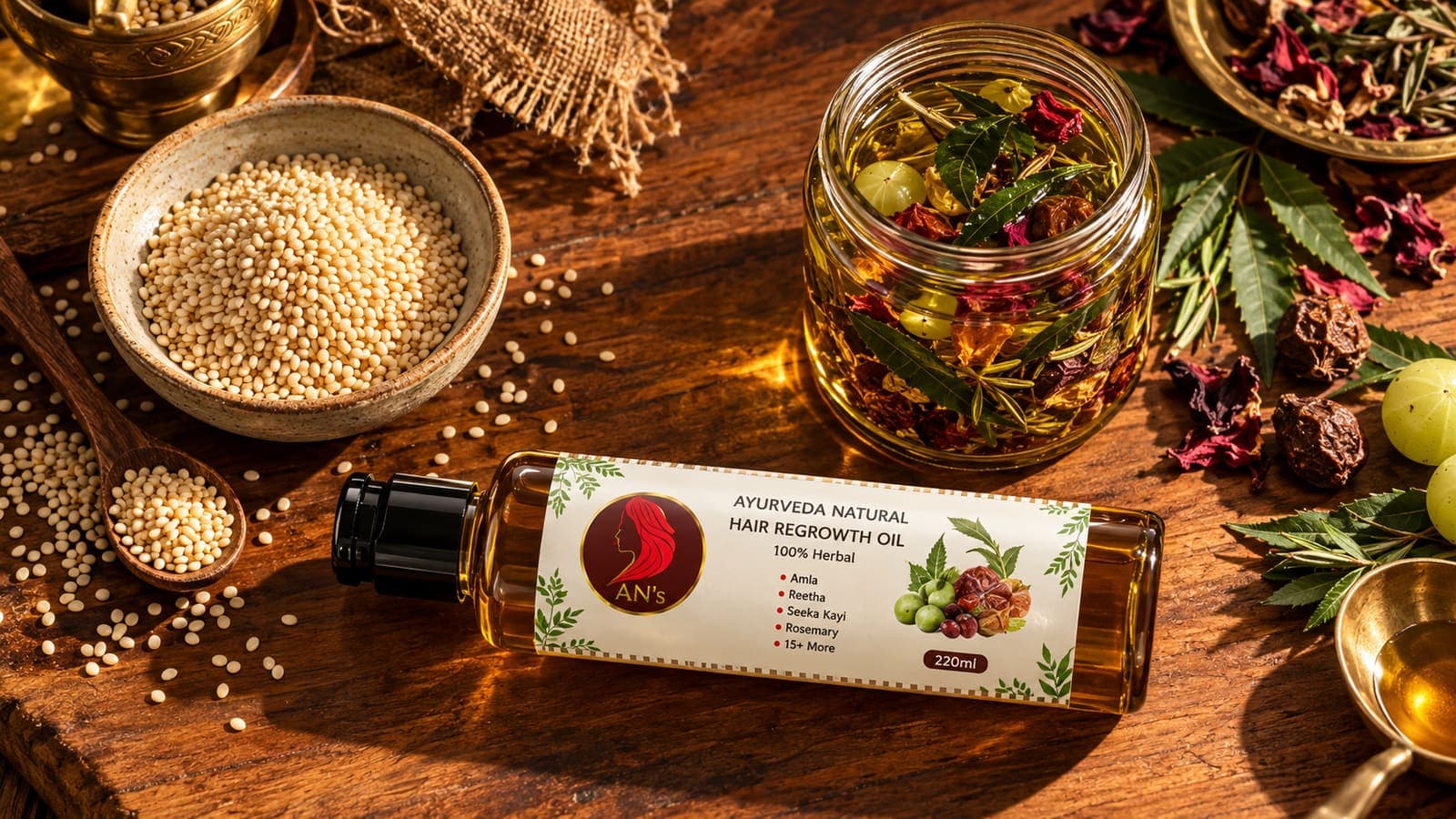
Short answer: cold-pressed and herbal-infused hair oil are not opposing categories. Cold pressing describes how a carrier oil is extracted; infusion describes how botanicals are incorporated. A prepared oil can involve both. When buying in Pakistan, compare the complete formula, directions and seller information—not just the manufacturing phrase.
You may see one bottle advertised as cold-pressed coconut oil and another as an Ayurvedic herbal infusion. The first describes a raw material and its extraction. The second describes a prepared product and part of its processing. Neither phrase, on its own, tells you whether the finished oil will feel comfortable on your hair or fit your wash routine.
This guide helps you interpret those labels before spending money. It does not rank brands by claims we cannot independently verify, and it does not turn traditional preparation methods into promises of hair regrowth. The most useful purchase is a clearly described product with a role you understand.
Cold-pressed vs herbal-infused hair oil at a glance
| Question | Cold-pressed | Herbal-infused |
|---|---|---|
| What does it describe? | The extraction of an oil from an oil-bearing raw material. | The incorporation of botanical material into a carrier oil. |
| Does it identify every ingredient? | No. The finished product may include other ingredients. | No. The carrier, herbs and other additions still need to be disclosed. |
| Can both apply? | Yes. A cold-pressed carrier can later be used in a prepared blend. | Yes. An infusion can use a carrier originally obtained by cold pressing. |
| Does it prove suitability? | No. Extraction language is not a personal compatibility test. | No. Traditional processing does not guarantee scalp comfort. |
| What should a buyer ask? | Which carrier was cold-pressed, and what is in the finished bottle? | Which botanicals and carrier are used, and how should the finished product be applied? |
What “cold-pressed” actually tells you
Cold pressing refers to obtaining oil using mechanical extraction without applying heat during that extraction step. The FAO-hosted Codex standard for named vegetable oils uses that distinction for edible oils. It is useful background terminology, not proof that a particular cosmetic complies with a standard or a statement of Pakistani cosmetic law.
The important shopping detail is the scope of the claim. “Made with cold-pressed sesame oil” describes an ingredient. It does not necessarily say the entire finished formula remained unheated, contains only sesame oil, or has been independently certified. Read the sentence carefully rather than assigning it a broader meaning.
If a listing says only “cold-pressed herbal oil,” ask which oil-bearing ingredient was pressed. Botanical ingredients may be added to an existing carrier rather than pressed to obtain the finished bottle. A precise answer should distinguish carrier extraction from the later preparation process.
Also avoid importing a temperature threshold from another product category. You may encounter temperature discussions about olive oil or particular food standards, but those numbers are not automatically specifications for every hair oil. If temperature history matters to your preference, request the manufacturer's actual process description instead of guessing from a marketing label.
What “herbal-infused” tells you—and leaves unanswered
In a haircare listing, herbal infusion generally means botanical material has been processed with a carrier oil. The details can differ between products. Some brands describe an unheated steeping process; others describe controlled warming or a traditional preparation method. The word alone is not a complete manufacturing specification.
An infusion description should help you understand the finished product, not require you to imagine its composition. Useful information includes the carrier oils, named botanical ingredients, intended application area, use directions and relevant warnings. A photograph of herbs beside a bottle is not a substitute for that information.
Do not assume a darker colour means a stronger infusion or that a stronger scent proves more herbs are present. A shopper cannot reliably determine concentration, authenticity or performance from appearance alone. These are questions for documented product information, not home colour comparisons.
Nor does “infused” establish that every desirable component of every herb is present at an effective concentration. A manufacturer's processing narrative and evidence about a finished product are different things. You can appreciate traditional preparation without treating it as a clinical result.
One bottle can use both processes
Imagine a manufacturer purchases a cold-pressed carrier oil and then uses it to prepare a botanical infusion. The carrier's extraction history and the final product's preparation history are two separate stages. A listing that explains both can be perfectly understandable; the terms do not need to compete.
However, the later process matters when interpreting a broad “never heated” claim. If warmth is used during infusion, that does not change how the carrier was originally extracted, but it does mean you should not infer that the finished product has never experienced heat. Ask which stage the wording describes.
This distinction is particularly helpful when comparing a plain carrier oil with a finished Ayurvedic blend. They may differ in formula complexity, scent, packaging and convenience as well as processing. Treat those as separate purchase criteria. Our single-ingredient versus blended hair oil guide covers the formula-complexity decision.
Read three common label patterns correctly
“100% cold-pressed coconut oil”
Start by checking whether the complete ingredient declaration supports a single-ingredient product. If it does, you are comparing a defined carrier oil rather than a multi-herb blend. Confirm that it is offered with appropriate cosmetic-use directions if haircare is your purpose. Do not assume food packaging provides instructions for every scalp application.
The purchase question becomes whether you want that particular oil, in that bottle size, for your intended routine. A familiar ingredient does not remove the need to consider your own preferences or any known sensitivities.
“Herbal oil with a cold-pressed base”
This suggests a prepared formula whose carrier has a stated extraction history. Ask for the complete ingredient information rather than just the highlighted herbs. The base oil, fragrance and any other additions can matter as much to your decision as the botanical names printed prominently on the front.
A helpful seller should be able to clarify whether the description refers to one carrier or all carriers in a blend. If the answer is unclear, keep that item on your shortlist rather than placing an order based on an assumption.
“Traditional Ayurvedic infused hair oil”
This describes a style of preparation or brand positioning, but it does not by itself explain the whole formula. Look for practical directions and ingredient disclosure. Ask what role the oil is intended to play: pre-wash oiling, scalp massage where appropriate, or length care.
Ayurveda Naturals describes its Hair Regrowth Oil as a prepared Ayurvedic blend. Review the current product information and ask the team for a readable label if you need additional ingredient details. The product name is not a guarantee of new growth, and this article does not independently certify its manufacturing process.
A useful seller-question checklist
- Which carrier oils are in the finished formula? Ask for the complete label, not only the most recognisable ingredient.
- Which ingredient does the cold-pressed claim apply to? This prevents a raw-material claim being mistaken for a statement about the entire production process.
- What does “infused” mean for this product? Request a plain explanation, without assuming all brands use the same method.
- Are fragrance or essential oils included? This matters when you are avoiding a particular ingredient or prefer an unscented routine.
- Where should it be applied and how is it removed? Understand whether it fits the time and cleanser you already have.
- What is the net volume and delivered total? Compare actual quantity and checkout cost, not bottle height.
- Who can answer a product question after delivery? A reachable contact is more useful than a long list of unexplained quality badges.
You do not need proprietary manufacturing records for an ordinary purchase. You do need enough information to understand what you are buying. If a listing cannot answer basic formula or application questions, it is reasonable to choose another product with clearer information rather than trying to decode the advertising.
Which type makes sense for your shopping situation?
You already know you like one carrier oil
A clearly labelled single-carrier product may be the simpler purchase. You are not paying for a prepared botanical mixture you do not particularly want. Compare seller reliability, packaging and quantity. There is no need to replace a comfortable routine just because another bottle lists more herbs.
If you later try an infused formula, treat it as a new finished product rather than assuming it will feel identical because it uses the same base. Other ingredients and their proportions can change the experience.
You want a ready-made Ayurvedic oiling step
A disclosed infused formula may be more convenient than buying several ingredients and preparing a mixture yourself. The practical benefit is convenience and a defined finished product. Do not turn that convenience into an unsupported claim that blending necessarily produces stronger hair-growth results.
Check the directions against your week. If you rarely have time to wash after oiling, buying a large pre-wash bottle may be less useful than you expect. If your actual concern is an after-wash finish, read our hair oil versus hair serum comparison before choosing the product category.
You have a known fragrance or ingredient sensitivity
Make ingredient disclosure your first filter, ahead of processing terms. The FDA's general information on cosmetic allergens explains why ingredients such as fragrances can matter to people with sensitivities. This is general consumer information, not a claim that an extraction method makes a product allergy-free.
If you have a diagnosed allergy, follow the advice you were given about avoidance and product selection. A shorter ingredient list may be easier to review, but it does not guarantee compatibility. Stop a new product if it causes discomfort rather than interpreting irritation as evidence of potency.
Compare value without paying for a vague process story
A more elaborate preparation can carry a different price, but shoppers cannot calculate its value from a romantic description alone. Compare the information you can verify: bottle volume, the actual delivered price, the type of formula, the packaging and whether you will use it.
Hypothetical example: a 100 ml carrier oil priced at Rs. 900 costs Rs. 9 per ml. A 200 ml prepared infusion priced at Rs. 1,800 also costs Rs. 9 per ml. The second bottle is twice the checkout outlay, but not more expensive by volume. These numbers are illustrative, not current prices for named products.
That comparison still does not prove equal performance or equal value. If you specifically want a simple carrier, the larger infusion may be unnecessary. If you want a prepared blend, buying several separate bottles could increase your initial spending. Compare against the product you actually intend to use, rather than treating every oil as interchangeable.
Account for delivery as well. Two small bottles from different sellers may have separate shipping charges. Conversely, adding an unwanted shampoo merely to meet a shipping threshold can make the basket more expensive. Look at the final total and the usefulness of every item before deciding a promotion saves money.
For a repeat purchase, compare the same variant rather than just the same brand name. A larger bottle or a newly described formula may have different directions or ingredients. Keep a photograph of the label you liked so that you can ask a precise question if the next listing changes. That is more useful than assuming that a familiar front-label phrase guarantees an unchanged product.
Storage and packaging are part of the purchase
A detailed extraction story does not eliminate the need for sensible storage. The FDA's cosmetic shelf-life guidance discusses how storage conditions and product changes can affect cosmetics. Follow the manufacturer's own storage directions and date information; do not assume a universal lifespan from the word “natural.”
Choose a size you can reasonably use, especially for a first purchase. Keep the closure clean and secure, and do not transfer an unidentified product into another container without keeping its label information. If packaging is damaged or the contents change unexpectedly, contact the seller rather than trying to determine safety by smell alone.
For an online order, read the current shipping information and returns policy. Check what to do if a bottle leaks in transit. An order receipt, clear product name and photographs of damaged packaging can help support resolve a delivery problem without guesswork.
Plan a realistic first use
Before opening a new oil, read its directions and any testing advice. Do not heat it or add water, herbs or essential oils unless the manufacturer specifically instructs you to do so. Changing a prepared formula means you are no longer evaluating the product as supplied.
Keep the rest of your routine familiar initially. Note whether the application is manageable, whether the wash-out process fits your schedule and whether you like the finish. These are meaningful purchase outcomes that do not require invented hair-growth measurements.
If you need a cleanser alongside an oil, review the Purifying Hair Shampoo information separately. An oiling product does not replace cleansing, and a shampoo's suitability cannot be inferred from the oil's extraction method. Buy an additional product only when it solves a real routine gap.
Frequently asked questions
Can a herbal-infused hair oil use a cold-pressed carrier?
Yes. Extraction and infusion describe different stages. A carrier can be cold-pressed before it is used in a prepared botanical formula. Ask the manufacturer which stage each claim refers to if the listing is unclear.
Does cold-pressed mean the finished hair oil was never heated?
Not necessarily. The wording may refer only to a carrier's extraction. Later preparation can involve a different process. Do not infer an entirely unheated manufacturing history unless the manufacturer explicitly documents that claim.
Is herbal-infused oil always better than a plain carrier?
No. A prepared infusion may offer convenience, while a plain carrier may suit someone who prefers a simpler formula. The better purchase depends on the disclosed ingredients and intended use, not the number of botanicals promoted.
Can colour or smell prove that an oil is authentic?
No. Appearance and scent do not reliably establish ingredient concentration, authenticity or performance. Use the complete label, seller information and documented product details rather than home colour or fragrance comparisons.
Does either processing term guarantee hair regrowth?
No. Processing terminology does not establish a clinical result. Persistent shedding, bald patches or scalp symptoms need professional assessment rather than a purchase based on an extraction or infusion claim.
Which should I buy for a first oiling routine?
Choose a clearly described formula you can review, apply and wash out according to its directions. A known carrier may suit simplicity; a disclosed prepared blend may suit convenience. Start with a practical bottle size rather than the biggest promotional pack.
Choose the formula, not a false either-or
Cold-pressed versus herbal-infused is the wrong contest when the terms describe different stages. Separate the questions: how was the carrier extracted, what is in the finished product, and does that product fit your routine? Clear answers are more useful than a dramatic manufacturing story.
If you want a prepared Ayurvedic option, review Hair Regrowth Oil and use our contact page for ingredient or application questions. Compare the current delivered total before ordering. Choose a product because you understand its role, not because a label promises an outcome it cannot establish.
Editorial note: reviewed October 9, 2026. This is a buying guide, not a manufacturing certification, personal product test or medical recommendation. Hero-image botanicals are editorial styling, not a complete ingredient declaration. Illustrative prices are not live offers.
Ready to stop hair fall naturally?
Don't wait until it's too late. Experience the proven magic of our 100% organic, wild-harvested Ayurvedic formulations and start seeing real results in 14 days.
Free Shipping + Cash on Delivery