
How to Protect Hair from Smog & Air Pollution in Pakistan
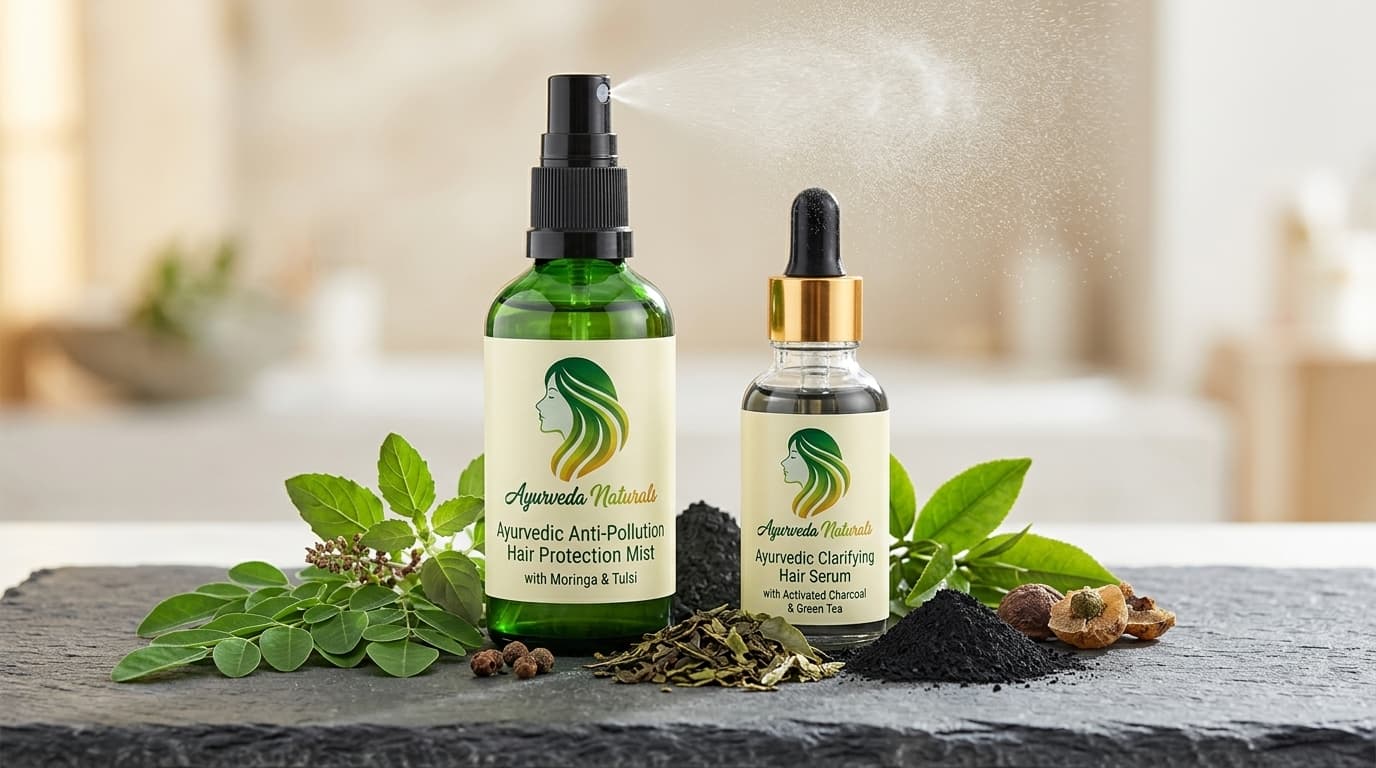
Direct Answer: To master how to protect hair from smog and air pollution, you must establish a three-tiered defense strategy: physical shielding with silk scarves and biomimetic botanical oil barriers (Jojoba and Argan), bi-weekly scalp chelation and detoxification using Multani Mitti and Triphala masks, and gentle cleansing with saponin-rich herbal shampoos formulated with Reetha and Shikakai. Combining topical antioxidant protection with internal Rasayana herbs like Amla and Guduchi neutralizes reactive oxygen species (ROS), prevents particulate matter (PM2.5) from penetrating follicular pores, and stops pollution-induced hair fall permanently.
Urbanization and industrial expansion have transformed the air quality of major metropolitan centers across the globe. From the dense, hazardous winter smog blankets covering Lahore, New Delhi, and Faisalabad to the chronic vehicular haze of Karachi, London, and Beijing, urban air is heavily laden with microscopic toxins. While health-conscious individuals readily wear N95 face masks and invest in indoor air purifiers to safeguard their respiratory systems, they frequently overlook an equally vulnerable organ: their hair and scalp. As the outermost biological barrier exposed directly to the open atmosphere, your hair acts like a microscopic net, continuously trapping airborne particulate toxins throughout the day.
When left unaddressed, the toxic cocktail present in atmospheric smog penetrates deep into the follicular pores, destabilizing the cellular architecture of hair strands and triggering chronic inflammatory cascades. Sufferers notice their hair becoming progressively dull, limp, sticky at the roots yet straw-like at the ends, accompanied by relentless scalp itchiness and alarming daily shedding. Modern dermatology has coined the term "Sensitive Scalp Syndrome" to describe this pollution-induced distress. Fortunately, classical Ayurvedic medicine, combined with modern aerosol biophysics, offers profound, natural protocols to insulate your hair from atmospheric toxins. In this definitive master guide, we explore how to protect hair from smog and air pollution utilizing ancient botanical science and cutting-edge environmental trichology.
The Invisible Enemy: The Chemistry of Urban Smog & Air Pollution
To construct an impenetrable defense, we must first analyze the toxic chemical constituents comprising modern atmospheric smog. Smog is not merely benign smoke or harmless fog; it is a complex, reactive photochemical aerosol generated by vehicular combustion, industrial emissions, agricultural burning, and municipal incinerators. The primary toxic components that assault your hair daily include:
- Particulate Matter (PM2.5 and PM10): These are microscopic airborne particles with aerodynamic diameters of 2.5 microns and 10 microns, respectively. For perspective, a single strand of human hair is approximately 70 microns in diameter—meaning PM2.5 particles are nearly 30 times smaller than the cross-section of your hair. These ultrafine particles easily settle into the opening of the hair follicle (the infundibulum), bypassing superficial cleansing and accumulating around the sebaceous gland.
- Polycyclic Aromatic Hydrocarbons (PAHs): Highly lipophilic (fat-soluble) chemical compounds produced by incomplete fossil fuel combustion. Because PAHs dissolve effortlessly in lipids, they rapidly absorb into your scalp's natural sebum, transforming beneficial protective oils into cytotoxic chemical reservoirs.
- Heavy Metal Residues: Smog contains trace concentrations of toxic heavy metals, including lead (Pb), cadmium (Cd), nickel (Ni), arsenic (As), and copper (Cu). These metals act as potent catalytic oxidizers upon contact with biological tissues.
- Gaseous Oxidants (Ozone, SO2, NO2): Ground-level ozone (O3), sulfur dioxide (SO2), and nitrogen dioxide (NO2) are aggressive oxidizing gases that strip moisture from the stratum corneum and break structural chemical bonds within biological proteins.
The Biochemical Cascade of Pollution-Induced Hair Destruction
When atmospheric pollutants deposit onto the hair fiber and scalp skin, they initiate a catastrophic four-stage biochemical cascade that destroys hair vitality from root to tip:
1. Sebum Squalene Lipid Peroxidation
Natural scalp sebum is rich in squalene—an unsaturated hydrocarbon that provides emolliency and antioxidant protection. However, when squalene molecules encounter ozone, nitrogen dioxide, and PM2.5 particulates, they undergo rapid lipid peroxidation, converting into squalene monohydroperoxide (SQ-OOH) and malondialdehyde (MDA). These oxidized byproducts are severely cytotoxic; they disrupt the epidermal skin barrier, cause intense scalp redness, trigger unbearable itching, and alter the scalp microbiome by favoring opportunistic inflammatory bacteria.
2. Degradation of the Protective 18-MEA Cuticle Coat
The outermost layer of every healthy hair cuticle is chemically bonded with a unique lipid monolayer known as 18-Methyleicosanoic Acid (18-MEA). This fatty acid layer imparts natural hydrophobicity—repelling external water, preventing static electricity, and giving hair a silky, glass-like shine. Acidic gases and particulate abrasion in smog chemically shear off the 18-MEA layer. Stripped of this protective armor, the hair becomes hydrophilic, rough, porous, highly prone to friction tangles, and utterly incapable of reflecting ambient light.
3. Keratin Protein Carbonylation and Bond Cleavage
Heavy metals deposited by smog act as catalysts for the Fenton reaction, converting hydrogen peroxide and environmental oxidants into destructive hydroxyl free radicals (•OH). These free radicals attack the polypeptide chains of hair keratin, cleaving the vital disulfide bonds (cystine bridges) that give hair its tensile strength and elasticity. This structural damage, known in biochemistry as protein carbonylation, leaves the hair shaft hollow, porous, and brittle, causing hair to snap midway when brushed.
4. Follicular Micro-Inflammation & Hair Thinning
As PM2.5 particulates and PAHs accumulate within the follicular infundibulum, they activate toll-like receptors (TLRs) and the NF-kB inflammatory pathway within dermal papilla cells. This triggers the excessive release of pro-inflammatory cytokines such as Interleukin-1 alpha (IL-1α) and Tumor Necrosis Factor-alpha (TNF-α). This chronic micro-inflammation prematurely pushes actively growing follicles from the anagen (growth) phase into the telogen (shedding) phase, leading to diffuse, persistent environmental hair thinning.
Ayurvedic Understanding of Atmospheric Pollution: Dushi Visha & Garavisha
Ancient Ayurvedic masters documented the profound physical hazards of environmental toxins thousands of years ago. Classical treatises such as the Charaka Samhita, Sushruta Samhita, and Ashtanga Sangraha contain dedicated sections on Agada Tantra (Ayurvedic toxicology) and Janapadodhvamsa (epidemic and environmental destruction caused by polluted air, water, and climate).
In Ayurvedic terminology, urban smog is understood as a lethal combination of Garavisha (artificial, manufactured environmental poisons) and Dushi Visha (latent, cumulative low-grade toxins). When inhaled and absorbed through cutaneous pores, these atmospheric poisons disrupt the delicate equilibrium of the biological doshas:
- Pitta Aggravation (Rakta Dushti): The hot, caustic, and acidic nature of chemical pollutants vitiates Pitta dosha and overheats the blood tissue (Rakta Dhatu). This manifests as burning scalp sensations, follicular erythema (redness), sensitive scalp syndrome, and premature graying (Palitya).
- Kapha Srotorodha (Channel Blockage): Heavy particulate matter and oily soot mix with sticky sweat, vitiating Kapha dosha and creating toxic sludge (Ama). This toxic buildup causes Srotorodha—the physical obstruction of the micro-circulatory channels (Kesha Vaha Srotas) that deliver vital nutrients to hair roots.
- Vata Depletion (Dhatu Kshaya): As the hair fiber is continuously stripped of its natural unctuousness (Sneha), Vata dosha surges, causing extreme dryness (Rukshata), split ends, and rapid breakage.
To effectively neutralize Dushi Visha, Ayurveda dictates a multi-pronged approach: external detoxification (Shodhana), physical protection (Avarana), and internal cellular rejuvenation (Rasayana).
The 6-Pillar Ayurvedic Defense Protocol Against Smog & Pollution
Successfully shielding your hair from urban smog requires a proactive daily and weekly strategy. Implement these six scientific, botanical pillars to ensure complete protection against airborne environmental hazards.
1. Physical Shielding and Biomimetic Dry Oil Barriers
The most immediate and foolproof defense against smog is physical exclusion. Whenever you commute outdoors—whether walking through city streets, riding a motorbike, or waiting in traffic—cover your hair completely with a densely woven, breathable scarf made of 100% natural Mulberry silk or organic cotton.
Beneath the scarf, or whenever outdoor exposure is inevitable, apply a microscopic botanical lipid shield. Modern chemical serums rely on heavy synthetic dimethicones that create an occlusive plastic film, ironically acting as a sticky magnet that traps airborne particulate soot against the hair shaft. Instead, utilize Biomimetic Botanical Dry Oils such as cold-pressed Jojoba Oil (Simmondsia chinensis) and Argan Oil (Argania spinosa).
- The Science: Jojoba oil is not a fat but a liquid wax ester with a molecular profile almost identical to human sebum. It forms an ultra-thin, non-greasy, hydrophobic film that seals the cuticle scales flat without creating stickiness. This drastically reduces particulate adhesion and friction.
- How to Use: Dispense exactly 2 to 3 drops of pure Jojoba or Argan oil onto your palms. Rub vigorously to warm the oil, then lightly glide your hands over the lengths and ends of dry or damp hair before stepping outdoors.
2. Weekly Deep Scalp Chelation & Detoxification Lepams
Even with daily shielding, microscopic PM2.5 particles and heavy metal residues inevitably bypass barriers and lodge within the follicular infundibulum. To extract these deeply embedded toxins, apply a weekly Ayurvedic chelating clay mask (Shodhana Lepam).
For complete step-by-step guidance on removing toxic mineral crusts and environmental buildup, explore our comprehensive tutorial on how to detox scalp buildup at home.
- The Ultimate Anti-Pollution Clay Lepam Recipe: Combine 2 tablespoons of authentic Fuller's Earth (Multani Mitti) or Bentonite Clay, 1 teaspoon of food-grade Activated Charcoal Powder, 1 teaspoon of organic Triphala Powder, and 1 teaspoon of pure Neem Leaf Powder. Activate the mixture with fresh, organic green tea or rose water until a smooth, spreadable paste is formed.
- The Mechanism: Multani Mitti and activated charcoal possess powerful negative ionic charges and microscopic porosity that attract, absorb, and chelate positively charged heavy metal ions (lead, cadmium) and greasy soot from the scalp pores. Triphala delivers massive doses of natural antioxidants, while Neem’s azadirachtin neutralizes inflammatory microbes.
- Application: Section damp hair and apply the paste directly to the scalp. Leave on for 20 minutes (do not allow the clay to become bone-dry and cracked), then rinse thoroughly with lukewarm water.
3. Synergistic UV and Ozone Shielding
During peak smog months, harmful ground-level ozone reacts synergistically with ambient ultraviolet (UV) radiation, accelerating photochemical lipid breakdown by up to 300%. To master dual-action environmental shielding, study our expert guide on how to protect hair from sun damage naturally.
Botanical oils rich in natural carotenoids, polyphenols, and tocopherols—such as Red Raspberry Seed Oil, Carrot Seed Oil, and Sesame Oil—provide natural baseline UV absorption while actively quenching ozone-induced free radicals on the hair surface.
4. Saponin-Rich Botanical Cleansing (No Harsh Sulfates)
When living in a polluted city, the instinct is to vigorously wash hair daily with heavy chemical clarifying shampoos. However, commercial shampoos formulated with Sodium Lauryl Sulfate (SLS) violently strip away your scalp's protective acid mantle (pH 4.5–5.5). When this hydrolipidic barrier is destroyed, the scalp becomes hyper-permeable, allowing environmental pollutants to penetrate even deeper into the living dermis.
The solution is cleansing with saponin-rich botanical herbs like Reetha (Soapnut - Sapindus mukorossi) and Shikakai (Acacia concinna). These sacred Ayurvedic cleansers contain natural, water-soluble triterpenoid saponins that gently emulsify greasy soot, dust, and PM2.5 particles, washing them away while leaving the vital lipid barrier completely intact. For an expertly balanced, 100% natural formulation that purifies without stripping, utilize our handcrafted Ayurveda Naturals Purifying Hair Shampoo.
5. Nightly Particulate Dislodging & Scalp Misting
Never go to sleep with a day's worth of urban pollution clinging to your hair. If you lay your head on your pillow without clearing environmental debris, the abrasive PM2.5 particles will grind against your cuticles throughout the night, causing severe friction damage and transferring toxic residue to your facial skin.
- Neem Wood Combing Ritual: Every evening before bed, gently comb your hair for 3 to 5 minutes using a wide-toothed comb crafted from pure Neem Wood (Azadirachta indica). Neem wood is naturally anti-bacterial, static-free, and gently dislodges trapped dust, pollen, and soot particles from the hair lengths while distributing natural protective sebum.
- Hydrosol Protective Mist: After combing, lightly spritz your scalp and lengths with a soothing botanical hydrosol made of pure Green Tea and Rose Water (Gulab Jal). Green tea is rich in Epigallocatechin Gallate (EGCG)—one of the most potent polyphenolic antioxidants known to modern science—which actively neutralizes residual oxidative free radicals while you sleep.
6. Internal Rasayana Support: Cellular Detoxification from Within
Ayurveda emphasizes that true environmental resilience originates internally. By consuming potent Rasayana (rejuvenating) and Vishaghna (anti-toxic) herbs, you fortify your cellular antioxidant defense systems—boosting endogenous glutathione, superoxide dismutase (SOD), and catalase enzymes.
- Amla (Indian Gooseberry): Ingest 1 teaspoon of organic Amla powder with warm water every morning. Its bioavailable Vitamin C and emblicanins protect follicular melanocytes, preventing pollution-induced premature graying.
- Guduchi (Giloy - Tinospora cordifolia): Known in Sanskrit as Amrita (the nectar of immortality), Guduchi is a supreme immune-modulator and blood purifier (Raktashodhaka) that rapidly eliminates circulating metabolic and environmental Ama.
- Tulsi (Holy Basil - Ocimum sanctum): Brew a daily herbal tea with 5 fresh Tulsi leaves, 1 crushed cardamom pod, and a slice of fresh ginger. Tulsi’s rich eugenol and ursolic acid content protects against heavy metal cellular toxicity.
Comparison: Air Pollutants vs. Botanical Neutralizers
The following detailed comparison table outlines the specific air pollutants found in urban environments, their destructive biophysical mechanisms, and the exact botanical ingredients clinically proven to neutralize them.
| Air Pollutant Category | Specific Toxic Agents | Pathological Impact on Hair & Scalp | Key Botanical Neutralizer | Active Bio-Compound & Action |
|---|---|---|---|---|
| Ultrafine Particulates | PM2.5, PM10, Diesel Exhaust Particulates (DEP) | Follicular pore blockage, micro-inflammation, premature anagen termination | Multani Mitti & Reetha | High cation-exchange capacity & natural saponins physically adsorb and flush particles |
| Lipophilic Toxins | Polycyclic Aromatic Hydrocarbons (PAHs), Benzo[a]pyrene | Sebum squalene peroxidation, cytotoxic lipid breakdown, severe itching | Activated Charcoal & Jojoba | Microporous carbon structure traps PAHs; biomimetic wax esters prevent sebum oxidation |
| Heavy Metals | Lead (Pb), Cadmium (Cd), Nickel (Ni), Arsenic (As) | Fenton-reaction hydroxyl radicals, keratin cystine bridge cleavage, hair brittleness | Triphala & Rosemary | Chelating gallic and ellagic acids bind metal ions; carnosic acid halts radical chain |
| Aggressive Oxidant Gases | Ground-level Ozone (O3), Sulfur Dioxide (SO2), NO2 | 18-MEA cuticle lipid stripping, cuticle flaring, severe color fading, dullness | Amla & Green Tea (EGCG) | Ascorbic acid & epigallocatechin gallate donate electrons to neutralize gaseous oxidants |
| Microbial Pathogens in Smog | Airborne fungal spores, opportunistic bacteria | Seborrheic exacerbation, folliculitis, foul scalp odor in humid smog | Neem (Azadirachta indica) | Azadirachtin, nimbin, and nimbidol deliver broad-spectrum antimicrobial disinfection |
Urban Smog Hair Care Dinacharya: Your Daily & Weekly Schedule
Consistency is paramount when combating persistent environmental pollution. Follow this structured Ayurvedic Dinacharya (daily routine) to maintain pristine, resilient hair despite severe urban pollution.
| Timeframe | Action Steps | Primary Purpose & Benefits |
|---|---|---|
| Morning (Pre-Commute) | Apply 2 drops of pure Jojoba or Argan oil to hair lengths; cover hair completely with a 100% pure silk scarf or secure underneath a bonnet. | Creates an impenetrable physical and hydrophobic botanical barrier against airborne soot and PM2.5 adhesion. |
| Evening (Post-Commute) | Gently comb hair for 3 minutes using a pure Neem wooden comb; lightly mist scalp with antioxidant Green Tea / Rose Water hydrosol. | Dislodges loose particulate pollutants before sleep; neutralizes residual free radicals and soothes sensitive scalp nerves. |
| Bi-Weekly (Wash Days) | Wash hair with a gentle, sulfate-free purifying herbal shampoo containing Reetha, Shikakai, and Amla; finish with a cool water rinse. | Emulsifies and flushes away accumulated environmental grime without stripping the essential acid mantle (pH 4.5–5.5). |
| Weekly (Detox Day) | Apply the Multani Mitti, Activated Charcoal, Triphala, and Neem Lepam for 20 minutes before shampooing; follow with light overnight herbal oiling. | Deeply chelates heavy metal residues, unblocks congested follicular pores, and infuses lipid nourishment into stressed hair roots. |
Frequently Asked Questions (FAQ)
How does smog and air pollution damage hair and scalp health?
Smog and urban air pollution contain microscopic particulate matter (PM2.5 and PM10), polycyclic aromatic hydrocarbons (PAHs), and heavy metals that settle into the follicular infundibulum. These toxic particles trigger severe oxidative stress, lipid peroxidation of natural scalp sebum, degradation of structural keratin proteins, and chronic follicular micro-inflammation, leading to sensitive scalp syndrome, premature graying, and diffuse hair thinning.
What is the best way to protect hair from smog during daily commutes?
The most effective daily protection involves creating a physical and botanical barrier. Wear a tightly woven silk or satin scarf over your hair during outdoor travel, apply 2 to 3 drops of a non-comedogenic botanical dry oil (such as Jojoba or Argan oil) to coat hair cuticles against particulate adhesion, and avoid sticky synthetic styling products that trap airborne pollutants.
How often should you wash your hair if you live in a polluted city?
If you are exposed to moderate or high air pollution index (AQI) levels, wash your hair 2 to 3 times a week using a gentle, sulfate-free purifying herbal shampoo. Daily washing with harsh commercial detergents strips the protective hydrolipidic barrier, whereas using a botanical shampoo enriched with Reetha, Shikakai, and Amla safely removes PM2.5 particles without dehydrating the scalp.
Can an Ayurvedic scalp detox mask remove heavy metal pollution buildup?
Yes, an Ayurvedic scalp lepam combining Fuller's Earth (Multani Mitti), activated charcoal, Triphala, and Neem possesses powerful natural chelating and adsorption properties. The negatively charged clay and charcoal particles attract and bind positively charged heavy metal ions (such as lead, nickel, and arsenic) and airborne particulate residue, flushing them safely away during rinsing.
How does Ayurveda categorize environmental pollution and its impact on hair?
In Ayurveda, atmospheric pollution is classified under Dushi Visha (latent cumulative toxins) and Garavisha (artificial environmental poisons). These airborne toxins vitiate Pitta and Kapha doshas, block the micro-circulatory channels (Kesha Vaha Srotas), and deplete the vital biological essence (Ojas) of hair follicles, leading to premature aging and hair loss.
Which natural antioxidants are most effective for neutralizing free radicals on hair?
The most potent botanical antioxidants for hair include Amla (rich in ascorbic acid and gallotannins), Green Tea (rich in epigallocatechin gallate - EGCG), Rosemary extract (carnosic and rosmarinic acid), and Holy Basil/Tulsi (eugenol and flavonoids). These compounds scavenge reactive oxygen species (ROS) and prevent oxidative carbonylation of hair keratin.
Does brushing your hair at night help reduce pollution damage?
Yes, gently brushing your hair before bed with a pure Neem wooden comb or natural boar bristle brush physically dislodges loose particulate matter, dust, and toxic pollutants accumulated throughout the day. This prevents particulate matter from grinding into the scalp cuticle during sleep while distributing beneficial sebum across the hair length.
Can internal Ayurvedic Rasayana herbs protect hair from pollution stress?
Consuming classical Rasayana (rejuvenating) herbs such as Triphala, Guduchi (Giloy), Amla, and Tulsi boosts systemic antioxidant defenses, purifies the bloodstream (Rakta Dhatu), and fortifies cellular resilience against airborne environmental toxins.
Purify and Protect Your Hair From Toxic Urban Smog
Do not let toxic particulate matter and heavy metals destroy your hair roots. Cleanse away PM2.5 buildup and restore vibrant shine with the power of sacred, purifying Himalayan herbs.
Discover Ayurveda Naturals Purifying Hair Shampoo100% Plant-Based • Sulfate-Free • Clinically Proven Botanicals
Ready to stop hair fall naturally?
Don't wait until it's too late. Experience the proven magic of our 100% organic, wild-harvested Ayurvedic formulations and start seeing real results in 14 days.
Free Shipping + Cash on Delivery