
How to Fix Dry, Brittle Hair from Heat Styling Tools
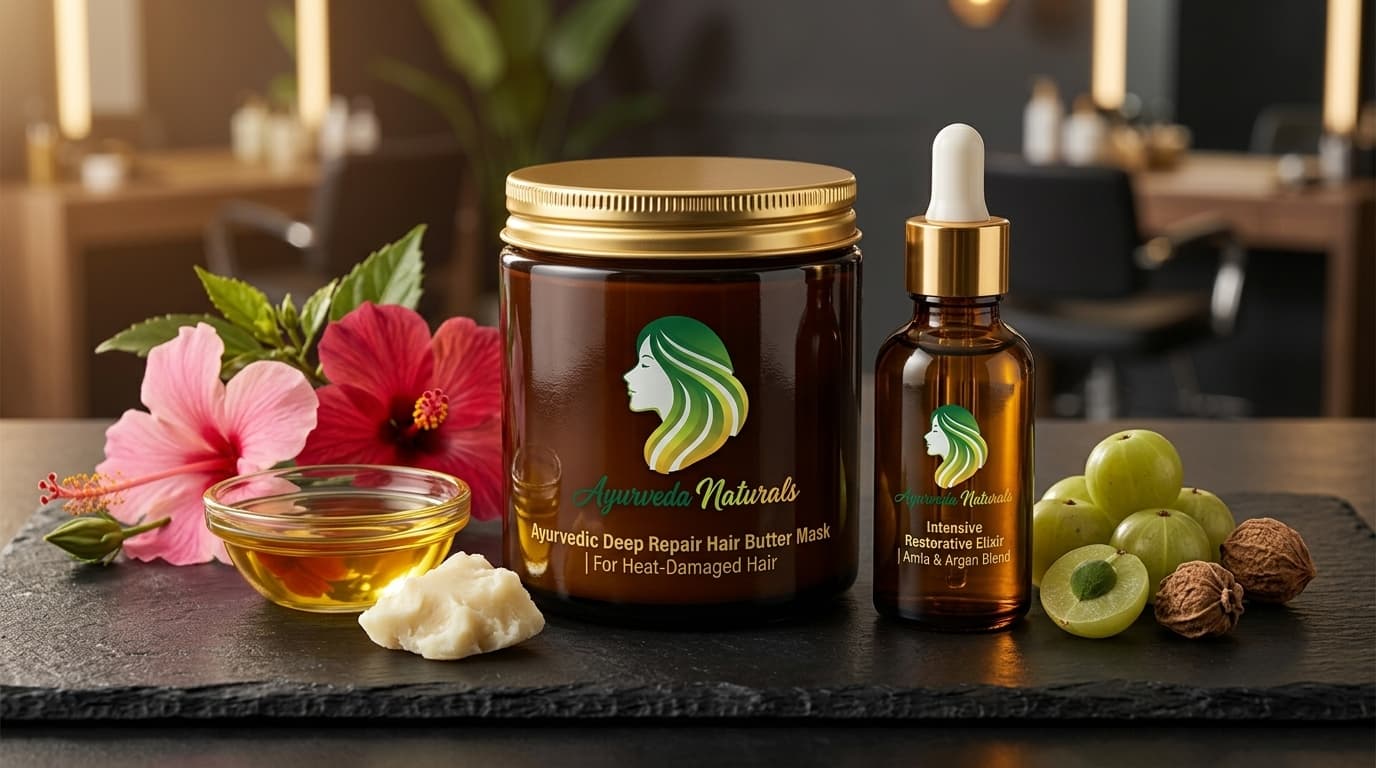
The direct answer: Discovering how to fix dry brittle hair from heat styling tools requires rebuilding the hair shaft's vaporized lipid barrier and restoring denatured keratin proteins at the molecular level. High-temperature styling tools (exceeding 180°C/350°F) burn away the hair's protective 18-MEA lipid layer, degrade cystine disulfide bonds, and flash-boil internal moisture into destructive cortical fractures. In Ayurvedic medicine, thermal damage represents an acute scorching of Keshya Dhatu by excess Ushna (heat) and Rooksha (dryness), violently deranging Vata dosha. You can revive straw-like, brittle hair without drastic haircuts by infusing your strands with deep-penetrating triglycerides from cold-pressed Coconut and Sesame oils, applying protein-rich Fenugreek and Hibiscus hair masks (Shiro Lepas), and adopting a zero-heat recovery protocol.
The Molecular Anatomy of Heat Damage: Keratin Denaturation and Lipid Strip
Flat irons, curling wands, blow dryers, and hot straightening combs are staples of modern hair styling. They promise sleek glass hair, bouncy curls, and salon-smooth finishes in minutes. However, the thermodynamic reality of applying 180°C to 230°C (350°F to 450°F) heat directly to delicate human hair fibers is devastatingly destructive. Understanding how to fix dry brittle hair from heat styling tools begins by examining the microscopic and biochemical transformations that occur inside the hair fiber during thermal exposure.
Human hair is a complex, highly organized biological composite composed of 85% to 90% keratin proteins, 5% to 9% water, 1% to 3% structural lipids, and trace minerals. The structural integrity of each strand relies on three concentric layers: the outer cuticle (6 to 10 overlapping layers of flat, scale-like cells), the central cortex (tightly packed bundles of alpha-helical keratin intermediate filaments), and the innermost medulla.
When exposed to high-temperature thermal tools, the hair fiber suffers catastrophic structural damage across four distinct molecular phases:
1. Vaporization of the 18-MEA Protective Lipid Shield (The F-Layer)
The outermost surface of the virgin hair cuticle is chemically coated by a specialized monolayer of covalently bound fatty acids called 18-Methyleicosanoic acid (18-MEA), commonly known as the F-layer. This lipid layer gives healthy hair its signature hydrophobic (water-repelling) properties, low surface friction, silky softness, and brilliant light reflection. When flat irons exceed 150°C (300°F), this delicate lipid layer is permanently oxidized and vaporized. Stripped of its lipid shield, the hair becomes hydrophilic (water-absorbing), dull, rough, and highly vulnerable to environmental moisture fluctuations that cause intractable frizz.
2. Thermal Denaturation of Alpha-Helical Keratin Proteins
Inside the hair cortex, long polypeptide chains are wound into tight, spring-like structures known as alpha-helices, held together by hydrogen bonds, salt linkages, and strong cystine disulfide cross-links. When thermal tools exceed 180°C (356°F), the kinetic energy permanently uncoils the alpha-helical keratin into disorganized, amorphous beta-sheet protein structures. Furthermore, intense heat oxidizes the disulfide bonds (the fundamental chemical bridges that give hair its tensile strength and elasticity) into cysteic acid residues. As disulfide bonds rupture, the hair fiber loses its structural memory; it stretches without bouncing back and snaps under minimal physical tension.
3. The "Bubble Hair" Phenomenon and Cortical Cavitation
One of the most destructive forms of thermal trauma occurs when hot styling tools are applied to hair that is slightly damp or improperly dried. Water trapped inside the cortex is flash-heated past its boiling point in milliseconds, transforming into expanding steam. Because the steam cannot escape through the compact cuticle quickly enough, it forms pressurized gas bubbles inside the cortex. These microscopic steam pockets explode outward, creating permanent hollow cavities and deformities within the hair shaft known clinically as bubble hair deformity. The hair becomes extremely brittle, snapping off in chunks at the site of each bubble.
4. Cuticle Buckling, Cracking, and Cortex Exposure
Extreme dry heat causes differential thermal expansion between the outer cuticle and the inner cortex. As the cortex shrinks and dehydrates, the outer cuticle scales buckle, curl upward, and crack along their longitudinal margins. With the cuticle scales permanently lifted and broken, the porous inner cortex is left completely exposed to atmospheric dryness, friction, and daily mechanical abrasion, leading to the rapid formation of split ends (trichoptilosis) and mid-shaft fractures (trichorrhexis nodosa).
Ayurvedic Pathology: Extreme Agni & Ushna Guna Scorching the Keshya Dhatu
Classical Ayurvedic medicine conceptualizes thermal hair damage through the foundational principles of Guna (qualities), Dravya (substances), and Dhatu (tissue metabolism). For a deeper understanding of chemical and thermal degradation, review our guide on how to fix chemically damaged hair without cutting, as both thermal and chemical processes share profound doshic similarities.
In Ayurvedic physiology, the hair fiber is classified as Keshya, an unctuous sub-tissue (Upadhatu) that depends entirely on a delicate balance of Sneha (unctuous biological lubrication) and Kapha (structural cohesion and moisture). The application of extreme artificial heat disrupts this balance through three primary pathologies:
1. Excessive Agni and Ushna Guna Scorching
Thermal styling tools act as an unnatural, violent external application of Agni (fire element). The intense Ushna (hot) and Tikshna (sharp, penetrating) qualities of flat irons literally "cook" the delicate lipids and moisture within the hair fiber. In classical Sanskrit texts, this condition is described as Kesha Shosha (withered, desiccated hair) and Kesha Sphutana (split, cracked hair).
2. Violent Derangement of Vata Dosha
Because heat drives out all water and natural lipids, it leaves behind an overwhelming excess of Vata dosha in the hair shaft. The dominant qualities of Vata—Rooksha (extreme dryness), Khara (roughness), Laghu (lightness), and Parusha (brittleness)—manifest physically as straw-like texture, uncontrollable static electricity, tangled knots, and spontaneous mid-shaft snapping. Reversing this severe Vata derangement requires the intensive application of opposing Snigdha (unctuous, oily) and Guru (heavy, nourishing) botanical therapies.
3. Scorching of Bhrajaka Pitta
While the hair shaft itself is non-living keratin, using hot styling tools close to the scalp overheats Bhrajaka Pitta (the sub-dosha of Pitta residing in the skin). This causes chronic low-grade scalp dehydration, damages the delicate sebaceous glands that produce natural protective sebum, and weakens the anchoring stability of the hair roots, leading to simultaneous breakage and root shedding.
Signs of Thermal Degradation: From Dullness to Trichorrhexis Nodosa
Thermal damage is progressive. Recognizing the precise clinical symptoms of heat degradation allows you to intervene before the structural damage becomes irreversible:
- Loss of Natural Elasticity: Healthy hair can stretch up to 30% of its original length when wet and return to its original shape without breaking. Heat-damaged hair loses its tensile elasticity; when gently pulled, it either feels stiff and snaps immediately (dry state) or stretches like gummy rubber and disintegrates (wet state).
- High Porosity and the "Sponge Effect": Because the cuticle scales are blistered and lifted, heat-damaged hair absorbs water rapidly in the shower but loses that hydration instantly as soon as you step out, leaving the hair feeling rough, puffy, and completely parched within minutes.
- Extreme Surface Friction and Matted Tangling: When the smooth 18-MEA lipid layer is gone, the exposed cuticle scales act like tiny jagged fish hooks. As neighboring strands rub against each other, they interlock, creating stubborn, matted knots that tear when brushed.
- Trichorrhexis Nodosa (White Node Breakage): Under close inspection, you may see tiny white specks along the length of your hair shafts. These are not dandruff flakes; they are microscopic fracture nodes where the cortical fibers have unraveled and splayed outward like two paintbrushes pushed together. The hair snaps effortlessly at these nodes.
- Longitudinal Split Ends (Trichoptilosis): As the protective cuticle completely wears away at the tips, the inner cortex splits longitudinally into two, three, or multiple feathered branches. Learn how to seal and manage these splits in our detailed guide on split ends treatment without cutting hair.
- Rapid Color Fade and Brassiness: Heat oxidizes both natural melanin pigments and artificial dye molecules inside the cortex, causing rich dark hair to turn dull, brassy, and faded prematurely.
Comparison Table: Heat Damage Severities & Targeted Rebuilding Protocols
To accurately assess the severity of thermal trauma and select the appropriate therapeutic protocol, consult this comprehensive diagnostic table:
| Damage Severity Level | Molecular & Structural Status | Visible Physical Symptoms | Restoration Potential | Targeted Ayurvedic Protocol |
|---|---|---|---|---|
| Level 1: Surface Lipid Desiccation | Partial degradation of 18-MEA F-layer; intact cortex; minor cuticle lifting | Loss of shine; mild dryness; slight frizz in humid weather; rough ends | 100% Reversible within 7 to 14 days of lipid replenishment | Pre-wash warm Sesame & Coconut oil saturation; cold green tea acidic rinse |
| Level 2: Cuticle Scale Blistering & High Porosity | Complete loss of 18-MEA; chipped and uplifted cuticle scales; moderate cortex exposure | Dull straw-like texture; high friction; persistent knots; hair dries into a puffy, frizzy triangle | 90% to 95% Reversible within 3 to 4 weeks of intensive lipid & moisture therapy | Bi-weekly Hibiscus & Aloe Vera Shiro Lepa; warm overnight botanical oil saturations |
| Level 3: Cortical Keratin Denaturation | Ruptured cystine disulfide cross-links; alpha-to-beta keratin shift; elevated cysteic acid | Gummy wet elasticity; severe mid-shaft breakage; white fracture nodes (trichorrhexis nodosa) | 75% to 85% Structural reinforcement with plant proteins and dense plant lipids | Weekly intensive Methi (Fenugreek) & Amla protein masks; pure Castor & Bhringraj sealing |
| Level 4: Severe Bubble Hair & Complete Fissuring | Exploded cortical steam pockets; longitudinal fissures; complete cuticle obliteration | Hair breaks off in short clumps; extreme brittleness; completely frayed, split ends | Irreversible at localized bubble sites; requires micro-dusting; surround fibers can be reinforced | Selective micro-trimming of split tips; intensive reconstruction of surrounding fiber sheath |
Lipid-Replenishing Botanical Oils and Ayurvedic Shiro Lepas (Hair Masks)
To reverse the structural dehydration of heat-damaged hair, you cannot rely on commercial synthetic conditioners packed with dimethicone and mineral oil. Silicones merely coat the outside of the hair with a plastic-like film, masking dryness while preventing true moisture from penetrating the cortex. Instead, you must utilize bio-compatible Ayurvedic lipids and botanical proteins that genuinely reconstruct the hair fiber from the inside out:
1. Cocos Nucifera (Virgin Coconut Oil): The Deep Cortex Restorer
Virgin Coconut oil is unique in botanical pharmacology. It is composed predominantly of lauric acid (a medium-chain, 12-carbon saturated fatty acid) that possesses a straight-chain molecular structure and a very low molecular weight. Combined with its high affinity for hair keratin proteins, Coconut oil is scientifically proven to penetrate deep past the cuticle and enter the inner cortex. It replaces lost inter-cellular lipids, reinforces hydrogen bonding, and reduces protein loss by up to 39% during washing.
2. Sesamum Indicum (Sesame Oil) & Prunus Dulcis (Almond Oil): Cuticle Lubricants
While Coconut oil penetrates the cortex, cold-pressed Sesame and Sweet Almond oils are rich in long-chain monounsaturated and polyunsaturated fatty acids (oleic and linoleic acids). These larger lipid molecules remain anchored on the cuticle surface, creating a protective, biocompatible lubricating film that mimics the lost 18-MEA layer, lowering surface friction and imparting brilliant shine.
3. Trigonella Foenum-Graecum (Methi / Fenugreek): The Botanical Keratin Rebuilder
Fenugreek seeds are an Ayurvedic miracle for brittle hair. They contain high concentrations of galactomannans (complex mucilaginous polysaccharides), lecithin, and essential amino acids. When soaked and blended, Fenugreek mucilage coats damaged hair shafts with a flexible plant-protein film that fills in chipped cuticle gaps, restores tensile elasticity, and stops mid-shaft snapping.
4. Hibiscus Rosa-Sinensis (Japa Pushpa): Amino Acid Powerhouse
Hibiscus flowers and leaves are extraordinarily rich in natural amino acids (the raw building blocks of keratin), vitamin C, and soothing plant mucilage. Hibiscus acts as a natural conditioning agent that smooths rough cuticle scales, locks in moisture, and restores rich, vibrant pigment to heat-bleached hair.
5. Emblica Officinalis (Amla): The Cuticle-Sealing Astringent
Amla is packed with concentrated tannins, gallic acid, and ellagic acid. These natural astringent polyphenols cross-link with damaged proteins and tighten the swollen, uplifted cuticle scales back down against the hair shaft, restoring an ultra-smooth, light-reflective surface.
The Ultimate DIY Reconstructive Ayurvedic Shiro Lepa (Hair Mask)
Prepare this intensive protein-lipid rebuilding mask once a week to restore severely heat-damaged hair:
- 2 tablespoons of organic Fenugreek (Methi) seeds (soaked in 1 cup of warm water overnight).
- 5 fresh Hibiscus flowers (or 2 tablespoons of organic Hibiscus petal powder).
- 3 tablespoons of fresh, pure Aloe Vera gel (scraped directly from the inner leaf).
- 1 tablespoon of pure cold-pressed Sesame oil.
- 1 tablespoon of pure Ghee (clarified butter) or Virgin Coconut oil.
Instructions: Blend the soaked fenugreek seeds and hibiscus with the aloe vera gel until an ultra-smooth, silky, mousse-like paste forms. Stir in the warm sesame oil and ghee. Apply this luxurious mask generously from your roots to your very tips, ensuring every brittle strand is completely saturated. Cover with a shower cap and leave on for 45 to 60 minutes. Rinse thoroughly with lukewarm water, and follow with a gentle herbal cleanser.
Heat-Free Styling Alternatives and Thermal Protection Protocols
Healing heat-damaged hair requires an absolute commitment to resting your hair from hot styling tools. Fortunately, embracing heatless styling allows you to achieve stunning, voluminous styles without burning your keratin:
1. Silk Ribbon Heatless Curls
Wrap slightly damp (85% dry) hair around a soft 100% mulberry silk curling rod, securing the ends with silk scrunchies before going to sleep. In the morning, unwrap to reveal bouncy, defined, salon-worthy waves that required zero heat and caused zero moisture loss.
2. The Natural Flaxseed Styling Gel
Boil 1/4 cup of whole organic flaxseeds in 2 cups of water for 7 minutes until a smooth gel forms. Strain through a cheesecloth. This natural gel provides flexible, long-lasting hold, defines natural curls, and delivers rich omega-3 fatty acids to damaged cuticles without the drying alcohols found in commercial gels.
3. Cold Air Diffusing with Botanical Protective Barriers
If you must dry your hair quickly, use exclusively the cool or cold air setting on your blow dryer. Before drying, apply 2 to 3 drops of pure Argan or Almond oil to damp hair. The lipid barrier locks in internal moisture while the cool airflow gently sets the style.
The 4-Week Intensive Hair Fiber Reconstruction Regimen
Commit to this step-by-step 4-week biological hair restoration protocol to transform brittle, straw-like hair into soft, resilient, shining tresses:
- Week 1 (The Complete Thermal Detox & Lipid Infusion):
- Impose a strict, 100% ban on all flat irons, curling wands, and high-heat blow dryers.
- Perform a deep pre-wash warm oil saturation twice this week, leaving the oil on for at least 2 hours before washing.
- Switch immediately from harsh, stripping chemical shampoos to an all-natural, sulfate-free Ayurvedic cleansing routine using our Ayurveda Naturals Ultimate Haircare Bundle.
- Week 2 (Protein Reconstruction & Cuticle Smoothing):
- Apply the DIY Reconstructive Fenugreek & Hibiscus Shiro Lepa once this week for 60 minutes.
- Perform an overnight cranial and hair saturation ritual with warm botanical oil, sleeping on a pure mulberry silk pillowcase.
- Finish every wash with a cool green tea or diluted apple cider vinegar rinse to flatten lifted cuticle scales.
- Week 3 (Elasticity Restoration & Internal Nourishment):
- Notice a dramatic reduction in daily mid-shaft snapping and brush breakage as keratin flexibility returns.
- Incorporate 1 tablespoon of pure cow's Ghee into your daily diet to nourish your body's unctuous biological reserves (Sneha) and fuel Asthi Dhatu.
- Style your hair exclusively with heatless silk ribbon methods or loose, protective braids.
- Week 4 (Sealing, Maintenance & Lasting Shine):
- Perform a selective "micro-dusting" trim on the very tips (1/4 inch) to remove any isolated, split ends that cannot be sealed.
- Observe the total transformation: your hair is soft, touchable, deeply hydrated, bouncing with natural elasticity, and glowing with radiant mirror-like shine.
- Continue bi-weekly botanical oiling and monthly herbal masks as your permanent maintenance routine.
Frequently Asked Questions About Heat-Damaged Hair
Here are detailed answers to the most common questions regarding thermal damage repair and natural hair reconstruction:
How does extreme heat from flat irons and blow dryers damage hair structure?
Heat styling tools operating between 150°C and 230°C (300°F to 450°F) inflict structural damage on multiple molecular levels. First, heat vaporizes the 18-Methyleicosanoic acid (18-MEA) lipid layer that coats the outer cuticle, stripping the hair's natural hydrophobic shield. Second, extreme temperatures denature alpha-helical keratin proteins into disordered beta-sheet conformations, degrading cystine disulfide bonds into cysteic acid. Finally, if applied to damp hair, heat flash-boils internal water into expanding steam pockets, causing irreversible internal cortical fractures known clinically as 'bubble hair'.
Can severely heat-damaged, brittle hair be repaired without cutting?
While completely split ends (trichoptilosis) and severe bubble hair fractures eventually require micro-trimming, dry and brittle heat-damaged hair fibers can be substantially repaired and restored without cutting off significant length. By replenishing lost cortical lipids with low-molecular-weight botanical oils (like cold-pressed Coconut and Sesame), depositing natural plant-derived proteins (such as Fenugreek and Hibiscus), and sealing the raised cuticle layer with astringent herbal rinses, you can restore elasticity, tensile strength, and smoothness.
What is the Ayurvedic view on heat-damaged hair?
Ayurveda classifies heat styling damage as an acute manifestation of excess Ushna (burning heat), Tikshna (sharpness), and Rooksha (dryness) qualities directly applied to the hair fiber (Kesha). This severe thermal Agni burns out the natural biological lubrication (Sneha) and moisture (Kapha), violently aggravating localized Vata dosha. This leads to brittle, rough, straw-like hair that breaks under minimal tension, requiring heavy lipid-replenishing therapies (Snehan and Shiro Lepa) to restore biological equilibrium.
Which natural botanical oils penetrate deepest into heat-damaged hair shafts?
Virgin Coconut oil (Cocos nucifera) is the most deeply penetrating botanical oil due to its high concentration of lauric acid (a medium-chain fatty acid with a straight-chain molecular structure) and strong affinity for hair keratins, allowing it to penetrate past the cuticle directly into the cortex. Unrefined Sesame oil (Sesamum indicum), Castor oil (Ricinus communis), and Sweet Almond oil (Prunus dulcis) provide complementary long-chain fatty acids that seal and lubricate the outer cuticle scales.
How often should I apply a deep conditioning Ayurvedic hair mask (Shiro Lepa)?
For severely dry, brittle, heat-damaged hair, apply an intensive Ayurvedic Shiro Lepa (herbal hair mask) 1 to 2 times weekly. Masks formulated with soaked Fenugreek (Methi) paste, Hibiscus flower mucilage, fresh Aloe Vera gel, and nourishing botanical oils deliver concentrated amino acids, galactomannans, and moisture directly into the damaged hair cortex.
What are the best heat-free styling alternatives for damaged hair?
The most effective heat-free styling alternatives include silk ribbon heatless curling rods worn overnight, loose French braiding on slightly damp hair, flaxseed gel defining for natural curl enhancement, and roller sets dried under a cool-air setting. These methods create gorgeous volume, waves, and curls with zero thermal denaturation of hair keratin.
How long does it take to fully restore heat-damaged hair using natural remedies?
With a disciplined Ayurvedic restoration regimen combining warm lipid saturations, bi-weekly restorative masks, sulfate-free cleansing, and a complete pause on thermal tools, noticeable improvements in softness, shine, and reduced breakage occur within 14 days. Full structural restoration of the hair fiber's elasticity and porosity typically takes 4 to 8 weeks.
Conclusion and Complete Hair Repair Roadmap
Dry, brittle, heat-scorched hair does not have to be your permanent reality, nor does it require shaving your head or surrendering to short pixie cuts. By shifting your approach from superficial synthetic cosmetic coatings to true biological lipid replenishment, plant-protein reconstruction, and time-tested Ayurvedic hair therapies, you can restore structural integrity and silky softness to even the most damaged strands.
Put away the scorching flat irons today, embrace the deeply nourishing power of botanical oils and restorative herbal masks, and give your hair the gentle, loving care it needs to shine with natural, effortless beauty.
Completely Reconstruct and Revive Your Heat-Damaged Hair Today
Give your straw-like, brittle hair the ultimate holistic healing ritual. Our Ayurveda Naturals Ultimate Haircare Bundle provides everything your hair needs to heal: our lipid-replenishing Hair Regrowth Oil, gentle Purifying Herbal Shampoo, and nourishing Botanical Conditioner. Infused with pure Bhringraj, Amla, Shikakai, and pure plant lipids, it reconstructs damaged keratins, seals split ends, and restores mirror-like shine in just 14 days.
Ready to stop hair fall naturally?
Don't wait until it's too late. Experience the proven magic of our 100% organic, wild-harvested Ayurvedic formulations and start seeing real results in 14 days.
Free Shipping + Cash on Delivery