
Curry Leaves for Hair Fall & Premature Gray Hair
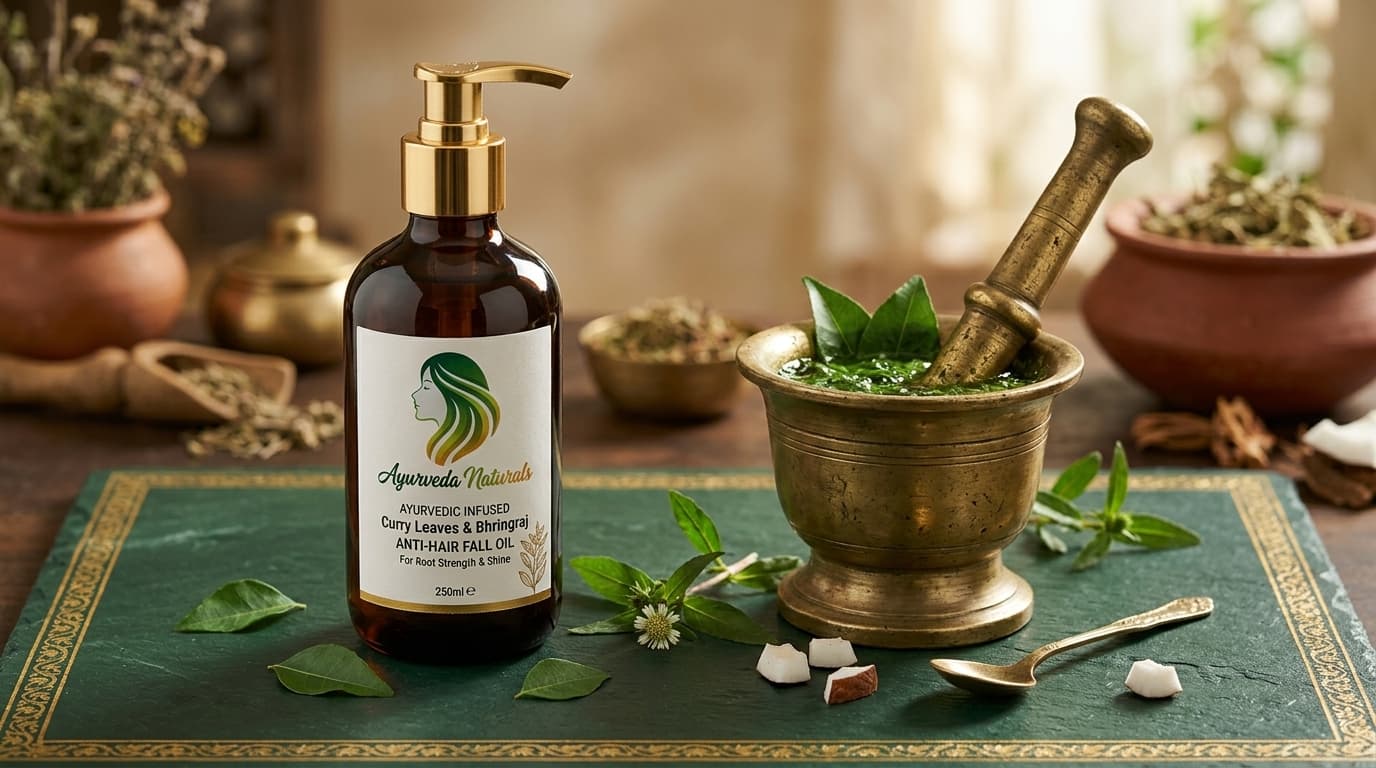
Direct Answer: How Curry Leaves Stop Hair Fall and Restore Natural Dark Pigment
Curry leaves benefits for stopping hair fall and darkening premature graying hair stem from their extraordinary concentration of carbazole alkaloids (mahanimbine, girinimbine), beta-carotene, bioavailable iron, amino acids, and antioxidant polyphenols. Derived from the aromatic Murraya koenigii tree, curry leaves (known as Kadi Patta in Hindi and Girinimba in Ayurveda) deliver a dual therapeutic action. They fortify the follicular dermal anchor, eliminate scalp sebum accumulation, and suppress inflammatory cytokines to halt sudden telogen shedding. Concurrently, their high antioxidant profile stimulates endogenous catalase enzyme activity, neutralizing the hydrogen peroxide accumulation that bleaches melanocytes, thereby preventing premature graying and restoring rich, dark, lustrous hair density within 60 to 90 days.
The Ancient Ayurvedic Science of Girinimba (Murraya koenigii)
In the classical compendiums of Ayurvedic pharmacology (Dravyaguna Shastra), curry leaves are recognized under the Sanskrit names Girinimba (mountain neem), Surabhinimba (aromatic neem), and Kaidarya. Ancient Ayurvedic physicians categorized curry leaves as a premier Keshya (hair-nourishing), Keshya Ranjana (hair-pigment restoring), and Deepana-Pachana (digestive fire stimulating) medicinal plant.
According to classical Dravyaguna classifications, curry leaves possess Tikta (bitter) and Kashaya (astringent) primary tastes (Rasa), along with subtle Madhura (sweet) undertones. They exhibit Laghu (light) and Ruksha (dry) physical qualities (Guna), a mild Sheeta (cooling) to neutral thermal potency (Virya), and a Katu (pungent) post-digestive bio-transformation (Vipaka). This unique energetic configuration makes curry leaves an unparalleled natural regulator of both Pitta and Kapha doshas.
In Ayurvedic pathology, excessive hair shedding and premature graying (Palitya) occur when aggravated Pitta dosha overheats the blood tissue (Rakta Dhatu) and scorches the hair follicles (Keshamula). Concurrently, vitiated Kapha dosha generates sticky metabolic toxins (Ama) that clog the microchannels (Srotas) feeding the scalp. Curry leaves’ bitter and astringent properties purify the blood, clear blocked follicular channels, and balance excess Pitta heat, establishing a clean, cool, and highly receptive biological environment for healthy hair growth.
To understand the deeper biological mechanisms underlying early pigment loss and its natural reversal, see our comprehensive guide on natural Ayurvedic treatments for premature graying of hair.
Phytochemical Architecture: The Bioactive Molecules of Curry Leaves
Modern analytical biochemistry has identified a remarkable profile of potent phytochemicals within Murraya koenigii leaves that directly influence scalp and follicular physiology:
- Carbazole Alkaloids (Mahanimbine, Girinimbine, Koenimbine, Mahanine): Unique to the Rutaceae family, these specialized alkaloids exhibit formidable antioxidant, free-radical scavenging, and anti-inflammatory activities. Mahanimbine and girinimbine protect follicular stem cells from oxidative degradation and inhibit lipid peroxidation across the scalp stratum corneum.
- Beta-Carotene (Pro-Vitamin A): Beta-carotene is essential for normal cellular division, tissue repair, and sebum homeostasis. It prevents follicular hyperkeratosis (the clogging of hair pores with hardened keratin and dead cells) and maintains the suppleness of the scalp barrier.
- Bioavailable Iron and Folic Acid: Iron is a non-negotiable cofactor for ribonucleotide reductase, the enzyme that catalyzes DNA synthesis in rapidly dividing matrix cells within the hair bulb. Curry leaves deliver non-heme iron paired with natural vitamin cofactors that facilitate rapid cellular uptake.
- B-Complex Vitamins (Pyridoxine B6, Riboflavin B2, Niacin B3): These vital coenzymes drive energy metabolism within follicular keratinocytes, ensuring an uninterrupted supply of adenosine triphosphate (ATP) during the demanding anagen growth phase.
- Keratin-Associated Amino Acids: Curry leaves contain a rich spectrum of free amino acids (including aspartic acid, glutamic acid, and glycine) that integrate into the structural cortex of the hair strand, reinforcing tensile strength and preventing mid-shaft snapping.
- Flavonoids & Phenolic Acids (Quercetin, Catechin, Rutin): Powerful polyphenols that chelate heavy metal ions, protect cellular membranes against environmental pollution, and stimulate local microvascular endothelial function.
5 Biological Mechanisms: How Curry Leaves Stop Hair Fall & Darken Strands
Utilizing curry leaves benefits for stopping hair fall and darkening hair influences follicular biology through five well-documented physiological pathways:
1. Hydrogen Peroxide Neutralization via Catalase Activation
Scientific research into premature graying has uncovered that as hair follicles age or encounter oxidative stress, they produce excess hydrogen peroxide (H2O2). In youthful, healthy follicles, the enzyme catalase swiftly breaks down hydrogen peroxide into harmless water and oxygen. However, when catalase levels decline, H2O2 accumulates within the hair bulb, literally bleaching melanin pigments from within. The polyphenols and carbazole alkaloids in curry leaves stimulate endogenous catalase production and act as potent antioxidant mimics, dismantling hydrogen peroxide and safeguarding the melanocyte stem cell reservoir.
2. Clearing Follicular Hyperkeratinization and Sebum Plugs
A primary cause of acute hair fall is the accumulation of oxidized sebum, heavy mineral residues, and dead cellular debris inside the follicular infundibulum. This suffocates the emerging hair shaft and sparks micro-inflammation that forces the follicle into early telogen regression. The astringent tannins and volatile terpenes in curry leaves break down stubborn sebum plugs, unclog the follicular ostia, and restore oxygenation to the root matrix.
3. Strengthening the Dermal Papilla Anchor
Hair shedding occurs when the connection between the hair bulb and the surrounding extracellular matrix of the dermal papilla weakens. The amino acids and bioavailable iron in curry leaves cross-link with collagen and elastin fibers in the dermal sheath, physically tightening the follicular anchor and significantly reducing daily mechanical shedding during brushing and washing.
4. Microvascular Perfusion and Nutrient Shuttling
The bioflavonoids in curry leaves promote the local synthesis of endothelial nitric oxide, which relaxes microcapillaries surrounding the hair root. This enhanced vasodilation ensures that circulating red blood cells can efficiently deliver ferritin, oxygen, and nutrients to the rapidly dividing hair matrix cells.
5. Suppressing Scalp Microbial Pathogens
The volatile essential oils of Murraya koenigii (including pinene, caryophyllene, and linalool) demonstrate broad-spectrum antifungal and antibacterial activity against Malassezia furfur, Candida albicans, and Staphylococcus aureus, eliminating fungal-induced itching, flaking, and follicular inflammation.
To see how herbal oil extracts compare when formulated for maximum growth velocity, explore our detailed comparative analysis on rosemary oil vs bhringraj oil for hair growth.
Comprehensive Comparison: Curry Leaves vs. Premier Botanical Darkeners
Understanding how curry leaves compare with other traditional herbs helps you design a tailored routine for your specific color and growth goals:
| Botanical Remedy | Primary Active Compounds | Mechanism for Pigment / Fall | Natural Hair Color Impact | Texture & Conditioning Effect |
|---|---|---|---|---|
| Curry Leaves (Kadi Patta) | Carbazole alkaloids, beta-carotene, iron, amino acids | Catalase enzyme activation, H2O2 breakdown, root tightening | Preserves natural dark pigment, prevents premature graying | Lightweight, non-drying, restores natural bounce and shine |
| Bhringraj (Eclipta alba) | Wedelolactone, wedelic acid, dimethyl-wedelolactone | Reactivates anagen phase, stimulates tyrosinase enzyme | Enriches deep black and brown tones, reverses early graying | Deeply nourishing, thickens strand diameter |
| Natural Henna (Lawsonia inermis) | Lawsone (2-hydroxy-1,4-naphthoquinone) | Chemically binds to hair keratin proteins | Deposits an auburn/reddish-orange dye molecule onto the cuticle | High protein reinforcement; can feel slightly drying if unbuffered |
| Indigo (Indigofera tinctoria) | Indican (glycoside precursor to indigo blue) | Oxidative dye deposition over henna base | Creates jet black tones when used after henna | Astringent, clarifying; requires post-conditioning |
| Amla (Indian Gooseberry) | Ascorbic acid, ellagic acid, gallic acid tannins | Inhibits melanin photo-oxidation, tightens follicles | Enhances cool, ash-toned dark highlights, prevents brassiness | Intense softness, gloss, and structural cortex hydration |
Master DIY Traditional Recipes: Authentic Preparations with Curry Leaves
To release the full spectrum of fat-soluble alkaloids and water-soluble vitamins from fresh curry leaves, traditional Ayurvedic practice relies on precise heating and maceration techniques. Below are three master recipes:
Recipe 1: The Classical Emerald Curry Leaf & Virgin Coconut Hair Oil (Kadi Patta Taila)
This legendary Indian home remedy extracts carbazole alkaloids and chlorophyll into a deeply penetrating virgin coconut oil base, perfect for twice-weekly overnight scalp nourishment.
Ingredients:
- 2 cups of fresh, dark green organic Curry Leaves (washed and thoroughly air-dried)
- 1 cup of pure cold-pressed Virgin Coconut Oil
- 1/4 cup of cold-pressed Castor Oil (adds ricinoleic acid for extra thickness)
- 1 tablespoon of Methi (Fenugreek) seeds
Preparation & Application Protocol:
- Air-Dry Thoroughly: Ensure the washed curry leaves are 100% dry to prevent water splattering during oil heating.
- Gentle Infusion: In a heavy-bottomed stainless steel or cast-iron pan, combine the virgin coconut oil, castor oil, dried curry leaves, and fenugreek seeds.
- Slow Simmer: Turn the flame to the lowest possible setting. Allow the leaves to gently crackle and infuse for 20 to 25 minutes. You will see the oil turn a rich, translucent forest green hue while the leaves darken and become crisp. Never let the leaves burn black.
- Cool & Steep: Turn off the heat and let the oil cool with the leaves remaining inside for 24 hours to maximize phytochemical transfer.
- Strain & Store: Strain through an unbleached cheesecloth into an amber glass bottle. Store in a cool, dark cabinet for up to 6 months.
- Application: Warm 2 tablespoons of oil in a bowl of warm water. Apply directly to the scalp with fingertips, performing a rhythmic 10-minute Shiro Abhyanga massage. Leave on overnight or for at least 2 hours before washing with a mild herbal shampoo.
Recipe 2: The Curry Leaf & Sprouted Methi Anti-Shedding Follicle Mask
This potent botanical pack delivers high-potency protein, mucilage, and iron directly to weak roots, making it an ideal weekly treatment for post-stress or seasonal hair shedding.
Ingredients:
- 1 generous handful of fresh Curry Leaves
- 2 tablespoons of soaked Fenugreek (Methi) seeds
- 3 tablespoons of plain probiotic curd/yogurt
- 1 tablespoon of cold-pressed Neem oil or pure sweet almond oil
Preparation Protocol:
- Blend the curry leaves and soaked fenugreek seeds in a high-powered blender with 2 tablespoons of water until a smooth, velvety paste forms.
- Stir in the yogurt and almond/neem oil until thoroughly homogenized.
- Apply the paste from roots to tips, focusing heavily on the scalp. Put on a shower cap to keep the mask moist.
- Leave on for 35 to 45 minutes, then rinse thoroughly with cool water followed by a gentle sulfate-free cleanser.
Recipe 3: The Daily Curry Leaf & Black Tea Melanin Spray
A weightless, water-based daily scalp mist that combines the catalase-stimulating bioactives of curry leaves with the caffeine and tannin richness of black tea.
Preparation Protocol:
- Boil 15 to 20 fresh curry leaves and 1 tablespoon of organic loose-leaf black tea in 2 cups of filtered water for 10 minutes.
- Let the infusion cool completely, strain into a sterile spray bottle, and add 4 drops of rosemary essential oil.
- Store in the refrigerator for up to 10 days. Mist onto the scalp every morning, gently massaging for 2 minutes. No rinsing necessary.
Dietary Integration: Eating Curry Leaves for Systemic Follicle Fuel
Ayurvedic medicine emphasizes that external treatments (Bahya Chikitsa) must always be paired with internal nourishment (Abhyantara Chikitsa). The hair (Kesha) is considered a direct metabolic byproduct (Upadhatu) of the bone tissue (Asthi Dhatu). Eating curry leaves provides systemic nutrition that fuels hair growth from the inside out:
- Morning Raw Leaf Ritual: Chew 6 to 8 fresh, thoroughly washed raw curry leaves on an empty stomach every morning, followed by a glass of warm water. The bitter principles ignite your digestive fire (Agni), eliminate liver toxins (Ranjaka Pitta), and deliver an immediate surge of bioavailable iron and beta-carotene directly into circulation.
- Traditional Curry Leaf Chutney: Lightly roast 2 cups of curry leaves with 1 tablespoon of split chickpeas (chana dal), 1 teaspoon of cumin seeds, a pinch of asafoetida (hing), and dry coconut. Grind with a little water and rock salt into a delicious, nutrient-dense daily condiment.
- Curry Leaf Herbal Tea: Boil 10 crushed curry leaves with a small piece of fresh ginger and a crushed green cardamom pod for 5 minutes. Strain and drink as an afternoon digestive tea that curbs Pitta-induced acid reflux while delivering systemic hair-fortifying antioxidants.
Practical Precautions and Best Practices
To safely incorporate curry leaves into your hair wellness routine:
- Sourcing Organic Leaves: Commercial curry leaves sold in conventional supermarkets are frequently sprayed with heavy chemical pesticides. Always source certified organic leaves or grow your own Murraya koenigii plant in a sunny window or garden.
- Patch Testing: While curry leaves are gentle and edible, always perform a simple patch test behind your ear if you have hyper-reactive skin or allergies to the Rutaceae (citrus) plant family.
- Temperature Control: When infusing curry leaves in carrier oils, never allow the oil to overheat to the smoke point. Excessive heat destroys delicate carbazole alkaloids and turns beneficial fatty acids rancid.
Ready to Transform Your Hair Naturally?
Explore our 100% organic Ayurvedic haircare range crafted with 15+ potent herbs.
Hair Regrowth Oil · Purifying Hair Shampoo · Ultimate Haircare Bundle
Frequently Asked Questions (FAQ)
How do curry leaves stop hair fall and promote new hair growth?
Curry leaves (Murraya koenigii) are packed with potent carbazole alkaloids (such as mahanimbine and girinimbine), beta-carotene, amino acids, iron, and B-complex vitamins. These bioactives strengthen the hair shaft from within the follicle, improve microcapillary circulation, clear cellular debris and sebum buildup around the roots, and reduce oxidative stress that causes premature telogen hair shedding.
Can curry leaves reverse or prevent premature graying of hair?
Yes, curry leaves are exceptionally rich in antioxidants and trace minerals that support the production of the catalase enzyme in hair follicles. Catalase actively neutralizes hydrogen peroxide buildup, which is the primary biochemical cause of hair bleaching and graying from within the root. Regular topical use and dietary consumption preserve follicular melanocytes and maintain natural dark hair pigmentation.
How often should I apply curry leaf oil or a curry leaf hair mask?
Apply homemade or cold-infused curry leaf oil 2 to 3 times per week as an overnight or pre-wash scalp massage treatment. If using a fresh curry leaf paste mask (blended with yogurt or fenugreek), apply once a week for 30 to 45 minutes before shampooing.
Is drinking or eating curry leaves effective for hair health?
Absolutely. Chewing 5 to 8 fresh raw curry leaves on an empty stomach daily or drinking boiled curry leaf tea provides systemic iron, calcium, and bioavailable antioxidants that boost ferritin levels, stimulate digestive fire (Agni), and nourish the deeper Asthi Dhatu (bone tissue) responsible for healthy hair formation in Ayurveda.
Will curry leaf oil stain light or blonde hair?
Fresh curry leaf infusions have a deep emerald green to dark amber hue. While they enhance the depth, shine, and richness of dark brown and black hair, repeated application on porous, chemically bleached platinum blonde hair may impart a subtle greenish-golden cast over time. Those with light blonde hair should perform a strand test first.
How long does it take to see results from curry leaves for hair fall?
With consistent topical application 2 to 3 times weekly combined with a balanced diet, a noticeable reduction in daily hair fall and shedding is typically observed within 14 to 21 days. Visible improvements in root strength, luster, and baby hair regrowth along the hairline generally appear within 8 to 12 weeks.
Restore Strong Roots and Dark Luster with Authentic Ayurveda
Harnessing the full regenerative power of curry leaves requires organic sourcing, precise lipid infusion temperatures, and synergistic botanical balance. If you want the ultimate all-natural formula that blends pure cold-infused Curry Leaf extracts with the time-tested restorative power of Bhringraj, Amla, Brahmi, Kalonji, and Rosemary, explore our handcrafted remedies.
Give your hair the pure nourishment it needs to stop shedding, resist premature graying, and thrive with vibrant density. Discover our artisanal Ayurvedic Hair Regrowth Oil and elevate your natural hair care regimen today.
Ready to stop hair fall naturally?
Don't wait until it's too late. Experience the proven magic of our 100% organic, wild-harvested Ayurvedic formulations and start seeing real results in 14 days.
Free Shipping + Cash on Delivery