
Winter Dry Scalp Home Remedies: Ayurvedic Deep Hydration
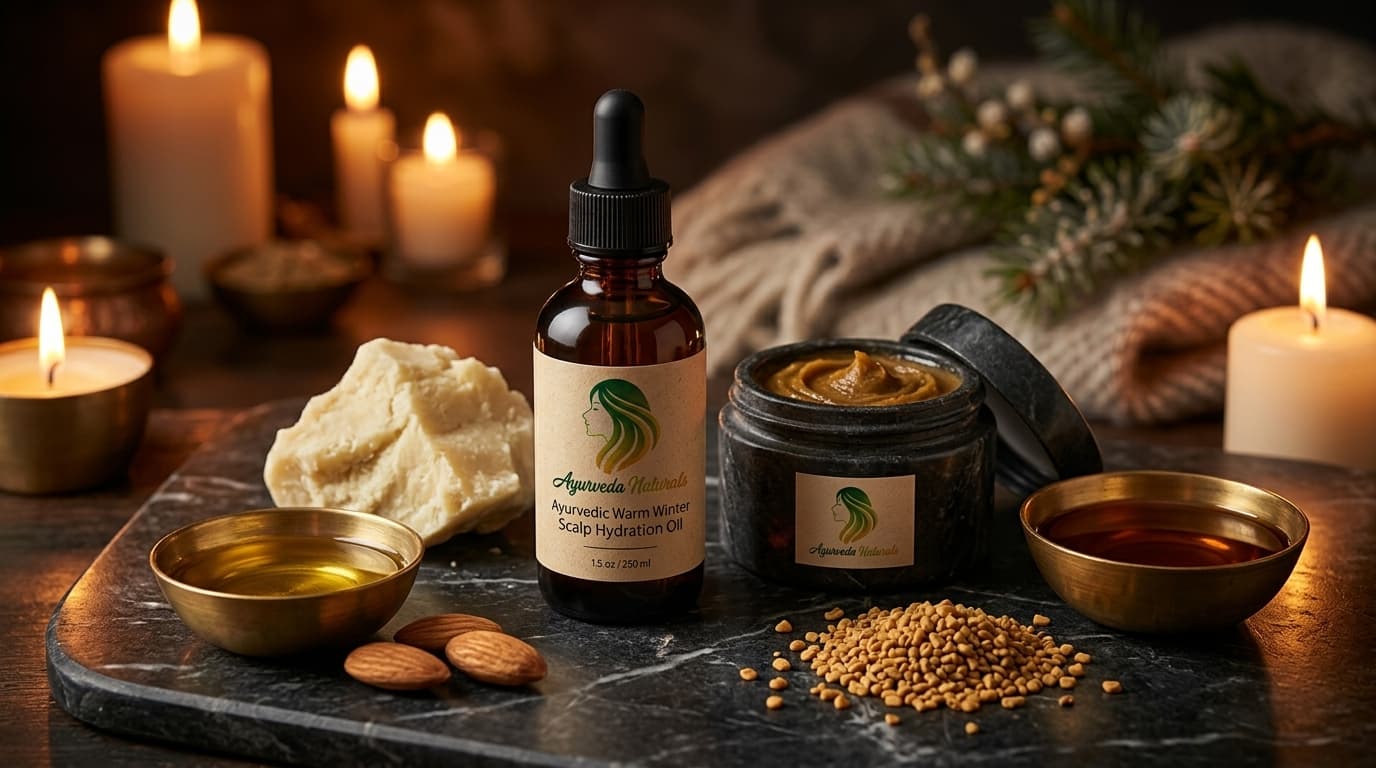
Direct Answer: The most effective winter dry scalp home remedies ayurveda recommends involve pacifying aggravated Vata dosha through warm Shiro Abhyanga (therapeutic head oiling) using cold-pressed sesame, almond, or Bhringraj oil, applying weekly botanical Lepams (herbal moisture masks) made of fresh Aloe Vera, Fenugreek, and Amla, and ingesting internal lubricants like pure cow's Ghee (Ghrita). By restoring the epidermal lipid barrier and balancing internal Rasa Dhatu (circulatory plasma), these Ayurvedic protocols eliminate winter flaking, soothe relentless itching, and permanently revitalize dehydrated hair follicles within 14 days.
When the temperature drops and winter arrives, millions of people experience an uncomfortable tightness across their scalp, accompanied by persistent itching, irritating white flakes, and fragile, brittle hair strands. Winter weather introduces a harsh combination of icy outdoor winds and dry indoor artificial heating, creating an environment that relentlessly saps moisture from biological tissues. While modern commercial markets flood consumers with harsh chemical anti-dandruff shampoos containing synthetic zinc pyrithione or coal tar, these formulas often exacerbate the underlying problem by violently stripping the scalp of its remaining natural oils. The time-tested wisdom of Ayurveda approaches this seasonal dilemma through an entirely different paradigm, treating the root cause rather than merely washing away surface symptoms.
Ayurvedic trichology recognizes that human physiology does not exist in isolation from nature. As the external season shifts into winter, your internal bio-energetic doshas fluctuate in response. Understanding the biological mechanisms behind winter dry scalp home remedies ayurveda empowers you to reconstruct your scalp’s natural moisture barrier, restore micro-vascular circulation to starved hair roots, and transform parched, brittle tresses into a resilient, lustrous mane. In this comprehensive master guide, we explore the deep botanical science, classical Ayurvedic diagnoses, step-by-step DIY formulations, and internal dietary regimens required to conquer winter scalp dryness permanently.
The Science of Winter Scalp Dehydration: Transepidermal Water Loss
To appreciate how Ayurvedic remedies heal the scalp, we must first analyze the biophysical phenomena occurring on the cellular level during cold seasons. The outermost protective layer of your scalp skin is the stratum corneum, often described in dermatology through the "brick and mortar" model. In this structure, the corneocyte skin cells act as bricks, while a specialized lipid matrix consisting of ceramides, free fatty acids, and cholesterol serves as the mortar. This intercellular lipid matrix is responsible for locking in vital hydration and preventing foreign pathogens or irritants from penetrating the deeper epidermal layers.
During the winter months, ambient relative humidity frequently plummets below 30%. This dramatic vapor pressure deficit between the atmospheric air and the warm, hydrated human scalp initiates rapid Transepidermal Water Loss (TEWL). Water molecules are physically drawn out from the stratum corneum into the thirsty dry air. Furthermore, indoor heating units, car heaters, and electric space heaters further depress indoor humidity while elevating room temperatures, accelerating this moisture extraction process around the clock.
Compounding this evaporative dehydration is the physiological response of the scalp's sebaceous glands. Exposure to cold air induces local vasoconstriction—the narrowing of microcapillaries supplying blood and nutrients to the hair follicles. Reduced blood flow decreases the metabolic activity of sebaceous glands, resulting in diminished production of sebum. Sebum is your body’s natural protective wax-ester emulsion that lubricates the hair shaft and maintains the scalp's acidic mantle (pH 4.5–5.5). When sebum secretion drops and the lipid mortar deteriorates, the stratum corneum develops microscopic cracks and fissures. Skin cells detach unevenly in dehydrated clusters, manifesting as the characteristic small, powdery white flakes of winter dry scalp.
Furthermore, when the stratum corneum is cracked, the underlying sensory nerve fibers (C-fibers) become exposed to ambient environmental irritants, airborne particulate pollutants, and dry friction. This nerve stimulation triggers localized neurogenic inflammation, releasing substance P and calcitonin gene-related peptide (CGRP), which produce the maddening, persistent scalp itching (pruritus) so common throughout the winter months. Scratching the itchy scalp mechanically damages the epidermal barrier further, creating a vicious cycle of inflammation, flaking, and follicular weakening.
Ayurvedic Pathophysiology: Vata Aggravation in Hemanta and Shishira Ritus
In classical Ayurvedic medicine, the annual cycle is divided into six distinct seasons (Ritus). The cold period comprises Hemanta Ritu (early winter, roughly mid-November to mid-January) and Shishira Ritu (late winter, roughly mid-January to mid-March). During these months, the atmospheric qualities are predominantly cold (Sheeta), dry (Ruksha), light (Laghu), rough (Khara), and subtle (Sukshma). These exact attributes directly mirror and elevate the fundamental properties of Vata Dosha, the biological energy composed of air (Vayu) and ether/space (Akasha) elements.
Vata dosha is inherently dry, cold, and mobile. When the cold environmental wind and dry atmosphere penetrate the human physiology, Vata inevitably surges within the body, a state known as Vata Prakopa. In the head and scalp region (Shiro Pradesha), aggravated Vata depletes the natural unctuousness (Sneha) of the tissues. It exhausts the lubricating moisture of Tarpaka Kapha (the sub-dosha responsible for nourishing the brain, nervous tissue, and sensory roots) and dries out the plasma tissue (Rasa Dhatu).
According to the classical Ayurvedic physiology detailed in texts such as the Charaka Samhita, hair (Kesha) is classified as the metabolic byproduct (Upadhatu) of bone tissue (Asthi Dhatu). The nutritional transformation pathway begins with the food you digest (Ahara Rasa), which subsequently nourishes the seven bodily tissues (Sapta Dhatus): Rasa (plasma), Rakta (blood), Mamsa (muscle), Meda (fat), Asthi (bone), Majja (nervous tissue), and Shukra (reproductive tissue). When winter Vata dries up Rasa Dhatu and impairs blood circulation, the nutrient stream flowing to Asthi Dhatu is constricted. Consequently, the hair follicles are starved of foundational minerals, proteins, and lipids, resulting in brittle hair shafts that snap under minimal tension.
This localized Vata imbalance disrupts cellular turnover and leads directly to a condition known in classical Sanskrit texts as Darunaka. While Darunaka can sometimes involve Kapha when fungal elements are present, the pure winter dry scalp variant is predominantly a Vataja Darunaka. Classical treatises such as the Sushruta Samhita and Ashtanga Hridaya describe Vataja Darunaka as presenting with intense dryness (Rukshata), scalp roughness (Kharata), mild to severe itching (Kandu), micro-cracking of the skin (Sphutana), and continuous shedding of powdery white skin particles (Toda and Kesha Patana). Therefore, the foundational principle of all winter dry scalp home remedies ayurveda is the systematic, aggressive pacification of Vata through unctuous, warming, and deeply penetrating therapeutic modalities (Snehana and Swedana).
Dry Scalp vs. Fungal Dandruff: Accurate Doshic Diagnosis
A critical mistake that causes thousands of people to worsen their winter condition is misdiagnosing simple winter dry scalp as fungal dandruff. Because both conditions produce visible flaking and itching, sufferers often rush to buy aggressive chemical anti-dandruff shampoos containing Ketoconazole, Selenium Sulfide, or Zinc Pyrithione. If you apply a potent anti-fungal, clarifying shampoo to a scalp suffering from cold-induced dehydration, you will aggressively strip what little lipid protection remains, triggering severe burning, intensified flaking, and catastrophic hair fall.
Before applying any remedy, you must identify your exact condition. For an extensive, microscopic comparison between these two scalp disorders, consult our detailed clinical guide on dry scalp vs dandruff difference.
| Diagnostic Feature | Winter Dry Scalp (Vataja Darunaka) | Fungal Dandruff (Kapha-Pitta Seborrhea) |
|---|---|---|
| Root Etiology | Transepidermal moisture loss, low humidity, cold air, Vata surge | Malassezia globosa yeast overgrowth feeding on rancid sebum |
| Flake Morphology | Small, fine, dry, white, powdery flakes that brush off easily | Large, thick, greasy, yellowish, clumping flakes stuck to scalp |
| Scalp Sensation | Tight, stretched, dry, sensitive, stinging when exposed to dry air | Intensely itchy, greasy, inflamed, warm to the touch, sore |
| Sebum Level | Severely depleted, dry roots, parched hair shafts from root to tip | Excessive, greasy roots, oily scalp odor, clogged follicular pores |
| Primary Dosha | Aggravated Vata (Air & Space) | Aggravated Kapha (Earth & Water) and Pitta (Fire) |
| Cuticle Health | Desiccated, frayed, high static electricity, split ends | Suffocated by waxy sebum plaque, weighed down, clumped |
| Correct Treatment | Deep lipid replenishment, warm unctuous oils, hydrating lepams | Anti-microbial, clarifying herbs (Neem, Tea Tree, Triphala) |
The Top 7 Ayurvedic Home Remedies for Winter Dry Scalp
When crafting remedies for winter scalp distress, Ayurveda utilizes natural botanicals that possess Snigdha (unctuous/oily), Guru (nourishing/heavy), and Ushna (warming) properties to directly counteract the dry, cold attributes of Vata. Here are the 7 most powerful, scientifically validated home formulations.
1. Warm Sesame and Licorice (Yashtimadhu) Infusion for Shiro Abhyanga
In the classical pharmacopeia of Ayurveda, unrefined cold-pressed Sesame Oil (Tila Taila) is crowned as the master oil for pacifying Vata. Sesame oil possesses exceptional trans-dermal penetration capabilities due to its high concentration of linoleic acid, oleic acid, and natural sesamol lignans. Unlike mineral oils that sit inertly on the skin surface, sesame oil penetrates through the follicular infundibulum into the deeper dermis, delivering immediate cellular hydration.
When infused with Yashtimadhu (Licorice Root - Glycyrrhiza glabra), this oil becomes a clinical anti-inflammatory powerhouse. Yashtimadhu contains glycyrrhizin, a triterpenoid saponin that exhibits potent corticosteroid-like anti-inflammatory and soothing properties without any of the toxic side effects of synthetic steroids. It rapidly calms neurogenic inflammation, relieves severe scalp itching, and stimulates microcapillary blood flow.
- How to Prepare: Take 4 tablespoons of cold-pressed, unrefined organic sesame oil. Add 1 teaspoon of finely sieved Yashtimadhu root powder and 1/2 teaspoon of crushed Fenugreek (Methi) seeds.
- Application: Place the oil mixture in a glass bowl over a warm water bath (double boiler method) until pleasantly warm (around 38°C to 40°C). Never microwave herbal oils as direct radiation destroys delicate phytochemicals. Part your hair into small sections and massage the warm oil into the scalp using circular fingertip motions for 15 minutes.
- Duration: Leave on for at least 2 hours or overnight, then wash with a mild, botanical cleanser.
2. Fresh Aloe Vera (Kumari) and Amla Hydrating Moisture Lepam
While oils provide the essential lipid barrier, dehydrated scalp cells also desperately require humectant hydration—water-binding molecules that draw moisture deep into the epidermal layers. Aloe Vera (Kumari - Aloe barbadensis) is nature’s supreme biological humectant. Aloe gel is rich in acemannan (a complex mucopolysaccharide), proteolytic enzymes, and 20 essential amino acids that repair dead skin cells, restore the acidic mantle, and provide deep cellular hydration.
Combining fresh Aloe Vera with Amla (Indian Gooseberry - Phyllanthus emblica) creates a synergistic elixir. Amla delivers astronomical concentrations of bioavailable natural Vitamin C, gallic acid, and ellagitannins. These antioxidants neutralize oxidative stress triggered by winter atmospheric pollution and stimulate localized collagen synthesis around the follicular sheath.
- How to Prepare: Extract 3 tablespoons of fresh gel from an organic Aloe Vera leaf. Blend with 1 tablespoon of pure Amla powder or 2 tablespoons of fresh Amla juice until a smooth, viscous gel forms. Add 5 drops of cold-pressed Sweet Almond oil.
- Application: Apply the cool, soothing paste directly onto your dry, itchy scalp sections. Massage gently to ensure even distribution across all parted lines.
- Duration: Allow the lepam to saturate the stratum corneum for 30 to 45 minutes before rinsing thoroughly with lukewarm water.
3. Coconut Milk and Hibiscus (Japa) Deep Moisture Conditioning Mask
Fresh coconut milk (Narikela Dugdha) is extraordinarily rich in medium-chain triglycerides (MCTs), particularly lauric acid, caprylic acid, and natural plant proteins. Lauric acid has a low molecular weight and a straight-chain chemical conformation, enabling it to bypass the hair cuticle and penetrate the inner cortex while deeply moisturizing the dry epidermal layers of the scalp.
Hibiscus (Japa - Hibiscus rosa-sinensis) leaves and flowers are packed with natural botanical mucilage, alpha-hydroxy acids (citric and malic acid), and anthocyanins. The mucilage forms an invisible, breathable protective moisture film over the scalp and hair shafts, acting as a natural shield against dry winter winds while effortlessly eliminating brittle tangles.
- How to Prepare: Grind 6 fresh hibiscus leaves and 3 red hibiscus flowers into a fine paste (or use 2 tablespoons of organic hibiscus petal powder). Mix thoroughly with 1/2 cup of freshly extracted thick coconut milk.
- Application: Coat the entire scalp and saturate the hair strands from root to tip with this creamy conditioning mask.
- Duration: Cover your head with a shower cap to trap body heat and allow the treatment to process for 45 minutes before cleansing.
4. Flaxseed (Atasi) Mucilage and Castor Oil Moisture Sealant
Flaxseeds (Atasi - Linum usitatissimum) represent one of the richest plant-based reservoirs of Alpha-Linolenic Acid (ALA)—an essential Omega-3 fatty acid critical for maintaining cellular membrane fluidity and repairing compromised epidermal barriers. Boiling flaxseeds in pure water yields a nutrient-dense, crystal-clear mucilaginous hydrogel.
When combined with cold-pressed Castor Oil (Eranda Taila - Ricinus communis), which contains up to 90% ricinoleic acid, this formulation creates an impenetrable seal against cold-weather transepidermal water loss. Ricinoleic acid acts as a profound occlusive agent and local circulation stimulant, encouraging blood flow to dormant winter hair roots.
- How to Prepare: Boil 2 tablespoons of whole brown flaxseeds in 2 cups of filtered water on medium heat for 8–10 minutes until a gel-like consistency develops. Strain the hot gel immediately through a fine mesh or cheesecloth. Let it cool to room temperature, then whisk in 1 teaspoon of pure cold-pressed castor oil and 3 drops of lavender essential oil.
- Application: Generously massage the gel into the scalp and smooth through frizzy, dry hair lengths. This dual-action gel can be used as a 30-minute rinse-off pre-wash treatment or applied in tiny amounts to damp ends as a leave-in botanical smoothing serum.
5. Curd (Dahi) and Wild Forest Honey (Madhu) Emollient Treatment
Traditional fermented curd or yogurt (Dahi) has been celebrated in Ayurveda for millennia for its intensely unctuous (Snigdha) and nourishing (Brimhana) virtues. Curd contains naturally occurring lactic acid (a gentle alpha-hydroxy acid) that delicately dissolves dead, desiccated skin cell bonds on the flaky scalp without abrasive friction, while delivering beneficial probiotic enzymes and bio-proteins.
Raw Honey (Madhu) is one of the most powerful natural humectants on earth. Its dense fructose and glucose matrix actively binds moisture molecules from the atmosphere and anchors them directly into the scalp epidermis. Furthermore, honey possesses broad-spectrum antimicrobial properties, preventing opportunistic bacterial infections in micro-cracked winter scalp skin.
- How to Prepare: Whisk together 4 tablespoons of fresh, unflavored, full-fat organic curd with 1 tablespoon of raw, unheated wild forest honey. Add 1/2 teaspoon of cold-pressed virgin olive oil or almond oil.
- Application: Section dry hair and apply the rich mixture directly to the scalp and roots.
- Duration: Leave on for 25 to 30 minutes. Rinse thoroughly with lukewarm water. (Note: Never use hot water with honey and curd mixtures).
6. Triphala and Colloidal Oat Soothing Scalp Decoction Rinse
For individuals whose winter dry scalp is accompanied by severe, stinging irritation, redness, or burning sensations, an astringent and anti-inflammatory herbal decoction (Kwatha) provides immediate relief. Triphala is a classical formulation combining three sacred fruits: Haritaki, Bibhitaki, and Amalaki. It gently purifies the scalp surface, balances local tissue pH, and delivers a profound antioxidant bath to stressed follicular keratinocytes.
Combining Triphala with finely milled Colloidal Oats (Avena sativa) introduces beta-glucans and avenanthramides—specialized polyphenolic compounds clinically proven to inhibit histamine release and suppress pro-inflammatory cytokines, extinguishing winter scalp itchiness on contact.
- How to Prepare: Boil 1 tablespoon of organic Triphala powder and 2 tablespoons of colloidal oat flour in 1 liter of pure water for 15 minutes. Allow the decoction to cool completely, then strain through a multi-layered muslin cloth to remove all particulate matter.
- Application: After washing your hair with a gentle herbal shampoo, slowly pour this soothing room-temperature decoction over your scalp as the ultimate final rinse. Massage gently into the scalp and do not rinse with tap water afterward.
7. Pure A2 Cow's Ghee (Ghrita) Overnight Scalp Basting
In situations of extreme, stubborn winter scalp desiccation—where the skin is severely cracked, painful, and shedding thick layers of dry skin—Ayurveda prescribes Ghrita (Clarified Cow's Butter). According to the Charaka Samhita, pure cow's ghee is the ultimate substance for pacifying aggravated Vata and Pitta simultaneously. It possesses a uniquely high concentration of short-chain fatty acids (especially butyric acid), omega-3 and omega-9 essential fatty acids, and fat-soluble vitamins A, D, E, and K.
Ghee's molecular lipid profile closely mirrors human cellular sebum, allowing it to assimilate effortlessly into the dehydrated stratum corneum. It instantly restores epidermal lipid continuity, halts moisture evaporation, and promotes rapid cellular re-epithelialization across cracked scalp surfaces.
- How to Prepare: Take 2 tablespoons of authentic, grass-fed A2 cow's ghee. Warm gently until liquefied.
- Application: Dip your fingertips into the warm liquid gold and massage deeply into dry, cracked scalp zones. Pay special attention to the crown, temples, and nape of the neck where winter dryness concentrates.
- Duration: Wrap your hair in a pure silk or satin scarf and leave the ghee overnight. In the morning, wash with a gentle, sulfate-free cleanser.
The Classical Ayurvedic Formulations for Severe Scalp Vata
For those who suffer from persistent, hereditary, or severe winter dry scalp that resists simple single-herb home remedies, classical Ayurvedic pharmacology offers complex, poly-herbal therapeutic oils processed through the ancient Sneha Kalpana methodology. This rigorous pharmaceutical process involves boiling herbal pastes (Kalka), decoctions (Kwatha), and a lipid base (Taila or Ghrita) over gentle heat for days until all water content evaporates, leaving behind an ultra-potent, nano-liposomal infusion of botanical phytochemicals.
- Kshirabala Taila: Prepared with Bala (Sida cordifolia), cow's milk (Kshira), and sesame oil. Bala is a premier Vata-pacifying rasayana that strengthens the nervous system and repairs micro-fissures in dry tissues. Kshirabala Taila is renowned for treating chronic scalp dryness, severe neurological tension, and stress-related hair fall.
- Chandanadi Taila: If winter dryness is accompanied by a sensation of burning, scalp redness, or Pitta-induced follicular sensitivity, Chandanadi Taila—infused with White Sandalwood (Santalum album), Vetiver (Usheera), and blue water lily—provides an immediate, blissful cooling and hydrating shield.
- Mahabhringraj Taila: Infused with over 20 synergistic botanicals including Bhringraj (Eclipta alba), Manjistha, Padmaka, and Lodhra, this classical formulation deeply conditions the scalp dermis while actively stimulating anagen-phase follicular elongation.
The Definitive Overnight Winter Oiling Protocol
While applying home masks provides targeted relief, the cornerstone of long-term winter scalp resilience is mastering the art of the Ayurvedic overnight oil massage (Ratri Shiro Abhyanga). Executing this ritual correctly ensures that medicinal botanical extracts penetrate the deeper hair matrices, fortifying roots against cold-weather shedding.
To master the complete, classical step-by-step technique, explore our comprehensive guide on the ultimate overnight hair oiling routine hair fall. For those seeking an expertly formulated, cold-pressed infusion of 18 sacred Himalayan and Ayurvedic herbs, our handcrafted Ayurveda Naturals Hair Regrowth Oil provides the ideal synergistic lipid matrix to cure winter dryness while aggressively halting seasonal hair shedding.
Here is your essential 5-step winter oiling checklist:
- Pre-Heat the Medicated Oil: Always warm your herbal oil via an indirect water bath to 38°C–40°C. Warmth dilates cutaneous blood vessels, liquifies viscous sebum plugs, and increases the kinetic energy of lipid molecules for rapid absorption.
- Execute Marmas Point Stimulation: While applying the oil, apply firm, rhythmic, circular pressure to the key cranial Marma points: Adhipati (the soft crown point at the top of the head), Simanta (the skull sutures), and Krikatika (the two hollows at the base of the occiput). This stimulates neuro-vascular reflexes and calms the central nervous system.
- Perform Gentle Inversion: Tilt your head slightly forward and downward while massaging for 3 minutes to utilize gravity, directing nutrient-rich arterial blood directly to the apical follicles.
- Preserve Moisture with a Warm Compress: Soak a 100% cotton towel in hot water, wring out all excess liquid, and wrap it securely around your oiled head for 10 minutes. The gentle steam creates a micro-greenhouse effect that drives active herbal phytochemicals past the lipid barrier.
- Sleep with Silk Protection: Replace abrasive cotton pillowcases with pure 100% Mulberry silk or satin. Silk is non-absorbent, preventing your therapeutic oil from being wicked away while eliminating friction-induced split ends and breakage.
Ahara and Dinacharya: Internal Hydration & Ayurvedic Winter Lifestyle
In Ayurvedic philosophy, external applications (Bahya Parimardana) can only achieve 50% of the desired result. The remaining 50% must come from internal nourishment (Abhyantara Chikitsa). If your internal digestive fire (Jatharagni) is weak or your dietary intake lacks essential unctuousness, your body will continuously prioritize vital internal organs, leaving your peripheral tissues—including your skin and hair—chronically malnourished and dehydrated.
1. Kindling Winter Agni with Healthy Fats (Sneha Ahara)
During winter, the environmental cold traps internal heat inside the core of the body, making your digestive fire (Agni) naturally stronger. If you fail to supply sufficient nourishing fuel, this amplified fire begins to consume your body’s own moisture reserves (Dhatu Kshaya), exacerbating Vata dryness. Therefore, winter is the mandatory season to consume nutrient-dense, healthy unctuous foods:
- Daily Cow's Ghee: Consume 1 to 2 teaspoons of pure A2 cow's ghee with your lunch and dinner daily. Ghee lubricates the intestinal tract, enhances nutrient assimilation, and directly feeds the Asthi Dhatu (bone tissue) of which hair is considered a metabolic byproduct (Upadhatu).
- Soaked Nuts and Seeds: Eat 5 peeled almonds, 2 whole walnuts, and 1 teaspoon of soaked white sesame seeds every morning. These provide essential omega fatty acids, zinc, magnesium, and natural Vitamin E.
- Warm, Grounding Soups: Favor hearty vegetable stews, lentil soups (Moong Dal), bone broths, and cooked root vegetables (sweet potatoes, carrots, beetroot) spiced with warming herbs like ginger, black pepper, cumin, and turmeric.
2. The Hydration Myth: Why Cold Water Dries You Out
Drinking gallons of icy cold water during winter does not hydrate your scalp; in fact, cold water instantly dampens your digestive fire, constricts blood vessels, and aggravates Vata. Instead, sip warm or hot water throughout the day. Enhance your hydration by brewing herbal infusions with licorice root, cinnamon bark, fennel seeds, and fresh ginger slices. This ensures that fluid is actually assimilated at the cellular level rather than being rapidly excreted.
3. Nasya: The Secret Cranial Gateway
One of the most profound Dinacharya (daily routine) practices for chronic head and scalp dryness is Nasya—the administration of medicated herbal oils via the nostrils. In Ayurveda, it is declared that "Nasa Hi Shirso Dvaram" (the nose is the direct gateway to the head and brain). Instilling 2 drops of warm Anu Taila or pure cow's ghee into each nostril every morning lubricates the cranial sinuses, calms cranial Vata, and strengthens hair roots from their neurological origin.
Winter Hair Care Mistakes That Worsen Dry Scalp
Even the most potent Ayurvedic home remedies will fail if you continuously commit routine hair care mistakes that actively dismantle your scalp’s protective ecosystem. Eliminate these common cold-weather habits immediately:
- Washing Hair in Scalding Hot Water: Hot water feels luxurious on a chilly morning, but it instantly melts away the essential ceramide lipid barrier of your scalp skin. Always wash your hair with lukewarm water (roughly body temperature, 37°C) and finish with a cool or room-temperature rinse to snap the cuticles shut.
- Overusing Harsh Sulfate Detergents: Commercial shampoos loaded with Sodium Lauryl Sulfate (SLS) and Sodium Laureth Sulfate (SLES) are industrial-strength degreasers. In winter, switch unconditionally to gentle, plant-derived, sulfate-free shampoos formulated with saponin-rich botanical cleansers like Reetha (Soapnut) and Shikakai.
- Aggressive Blow-Drying: High-heat blow dryers blast hot, dry air directly onto the fragile, cold-constricted scalp, creating immediate micro-fissures in the skin. Let your hair air-dry indoors by 80%, or use a diffuser on the absolute lowest, coolest heat setting while maintaining a distance of at least 8 inches from the scalp.
- Wearing Unlined Woolen Beanies: Wool is a rough, highly hygroscopic fiber that aggressively wicks moisture away from your hair shafts while generating intense mechanical friction against the scalp. Always wear beanies lined with smooth silk or satin, or wear a lightweight silk scarf underneath your winter woolen hats.
- Going Outdoors with Wet Hair: Stepping outside into freezing temperatures with damp hair causes the water trapped inside the hair cortex to expand as it cools, fracturing the structural keratin protein bonds and causing rapid split ends and breakage.
Comparison of Classical Ayurvedic Ingredients for Winter Scalp
To help you select the ideal botanical treatments for your specific level of winter dryness, the following comparison table details the biochemical profiles, doshic alignments, and targeted therapeutic actions of our top Ayurvedic ingredients.
| Botanical Ingredient | Key Bioactive Compounds | Primary Doshic Action | Scalp Barrier Function | Optimal Usage Frequency | Best Suited For |
|---|---|---|---|---|---|
| Unrefined Sesame Oil (Tila) | Sesamol, sesamolin, linoleic acid, oleic acid, Vitamin E | Pacifies Vata; balances Kapha | Deep trans-epidermal lipid replenishment and thermal insulation | 2 – 3 times weekly (overnight) | Severe winter dryness, tight scalp, tension headaches |
| Licorice Root (Yashtimadhu) | Glycyrrhizin, liquiritin, glabridin, flavonoids | Pacifies Vata & Pitta | Potent anti-inflammatory, soothes neurogenic itchiness and redness | Infused in weekly oilings or rinses | Stinging, irritated, itchy, and sensitive winter scalps |
| Fresh Aloe Vera (Kumari) | Acemannan, proteolytic enzymes, amino acids, vitamins B12, C, E | Pacifies Pitta & Vata | Cellular humectant hydration and acid mantle restoration (pH 4.5) | 1 – 2 times weekly (45 min mask) | Dehydrated scalp skin lacking cellular water content |
| A2 Cow's Ghee (Ghrita) | Butyric acid, omega-3, omega-9, vitamins A, D, E, K | Pacifies Vata & Pitta profoundly | Biomimetic sebum replacement and rapid micro-crack re-epithelialization | Once weekly for intense treatment | Extreme flaking, cracked skin, painfully raw scalp zones |
| Hibiscus Flower (Japa) | Plant mucilage, alpha-hydroxy acids, anthocyanins, flavonoids | Pacifies Pitta & Kapha | Forms breathable, protective anti-wind moisture film over cuticles | Once weekly (mask or tea rinse) | Rough, brittle hair shafts, split ends, static-prone curls |
| Fenugreek Seeds (Methi) | Nicotinic acid, diosgenin, galactomannan mucilage, bio-proteins | Pacifies Vata & Kapha | Rebuilds keratin cortex, delivers moisture slip, strengthens roots | Once weekly (soaked seed paste) | Winter hair shedding accompanied by dry, weak roots |
14-Day Winter Dry Scalp Reversal Schedule
To eliminate confusion and ensure seamless execution, follow this structured, 14-day intensive protocol designed to completely rehabilitate dehydrated winter scalp tissue and reactivate healthy follicular growth.
| Timeline | Topical Scalp Treatment | Washing & Rinsing Routine | Dietary & Internal Protocol |
|---|---|---|---|
| Days 1 – 3 (Lipid Reset) | Perform 20-minute warm Sesame & Yashtimadhu Shiro Abhyanga; leave overnight with a silk wrap. | Wash using lukewarm water with a sulfate-free herbal cleanser; finish with Triphala-Oat decoction. | Take 1 tbsp pure cow's ghee with lunch; drink ginger-cinnamon tea; avoid raw salads and cold drinks. |
| Days 4 – 7 (Humectant Infusion) | Apply Fresh Aloe Vera & Amla Lepam for 45 minutes on Day 5; light sesame oiling on Day 7. | Rinse Aloe mask with pure lukewarm water; use minimal herbal shampoo only on roots. | Perform daily morning Nasya (2 drops ghee/Anu Taila); consume 5 soaked almonds + 2 walnuts daily. |
| Days 8 – 11 (Cuticle Repair) | Apply Coconut Milk & Hibiscus moisture mask on Day 9; warm castor-flaxseed sealant on Day 11. | Gentle cleanse with Reetha-Shikakai; avoid all blow dryers; pat dry with 100% micro-cotton cloth. | Introduce hearty bone or lentil broths with black pepper; maintain indoor room humidifier at 45%+. |
| Days 12 – 14 (Barrier Lock) | Overnight pure A2 Ghee scalp basting on Day 13; gentle Marma point stimulation daily. | Final clarifying herbal rinse; verify complete absence of flakes and scalp tightness. | Transition to bi-weekly maintenance schedule; enjoy hydrated, glossy, flake-free winter hair. |
Frequently Asked Questions (FAQ)
What are the most effective winter dry scalp home remedies in Ayurveda?
The most effective winter dry scalp home remedies in Ayurveda include warm Shiro Abhyanga (head massage) using unrefined sesame, almond, or Bhringraj oil infused with licorice (Yashtimadhu) and fenugreek (Methi), moisturizing herbal lepams (scalp pastes) made of fresh aloe vera and amla, and nourishing cow's ghee (Ghrita) applications. These remedies pacify aggravated Vata dosha, restore the lipid barrier of the stratum corneum, and lock in critical hydration.
How does winter weather aggravate dry scalp according to Ayurveda?
In Ayurveda, winter spans Hemanta and Shishira Ritus, characterized by cold (Sheeta), dry (Ruksha), and light (Laghu) environmental attributes. These qualities directly aggravate Vata dosha in the body. When Vata increases, it depletes the moisture (Sneha) and natural sebum of the scalp, causing micro-fissures in the skin, severe itching, and fine, dry flakes known as Darunaka.
What is the difference between winter dry scalp and fungal dandruff?
Winter dry scalp is caused by cold-induced dehydration, low environmental humidity, and Vata aggravation, producing small, white, dry, powdery flakes that fall easily from an itchy, tight scalp. In contrast, fungal dandruff (Seborrheic Dermatitis or Kapha-Pitta Darunaka) is caused by Malassezia yeast overgrowth feeding on excess sebum, producing larger, greasy, yellowish, sticky flakes attached to an inflamed, red scalp.
Can hot water showers worsen dry scalp during winter months?
Yes, taking scalding hot showers is one of the primary triggers of severe winter dry scalp. Hot water strips away the protective hydrolipidic film on the scalp, melts natural intercellular lipids (ceramides), and forces hair cuticles to flare open, accelerating transepidermal water loss (TEWL) and leaving the scalp intensely dry and irritated.
How often should you oil your scalp for winter dryness?
For acute winter dry scalp, perform warm oil massage 2 to 3 times per week. Leave the medicated oil on for at least 1 to 2 hours before washing with a gentle, sulfate-free herbal cleanser, or keep it overnight wrapped in a warm towel or silk bonnet for profound moisture replenishment.
Which dietary changes help cure winter dry scalp from within?
To balance Vata from within during winter, consume warm, freshly prepared meals with healthy unctuous fats such as pure cow's ghee, cold-pressed sesame oil, soaked almonds, walnuts, and flaxseeds. Drink warm water infused with ginger, cumin, or cinnamon, and strictly avoid cold, raw, dry, or processed foods that exacerbate internal dehydration.
Is pure cow's ghee effective for treating winter dry scalp flaking?
Yes, pure A2 cow's ghee is an extraordinary Ayurvedic emollient rich in butyric acid, fat-soluble vitamins (A, D, E, K), and essential fatty acids. Applying slightly warmed ghee directly to dry, flaky patches on the scalp restores deep cellular hydration, soothes itching, and repairs micro-cracks in the epidermal barrier.
How can I prevent my hair from becoming brittle and frizzy in cold weather?
Prevent winter brittleness and frizz by applying a pre-wash oil barrier, washing with lukewarm water and sulfate-free herbal shampoos, utilizing flaxseed or aloe vera conditioning gels, avoiding direct blow dryer heat, and sleeping on a silk pillowcase to prevent friction-induced moisture loss.
Reclaim a Deeply Hydrated, Flake-Free Scalp This Winter
Stop letting cold, dry winter winds sap the life from your scalp and hair. Experience the deeply nourishing power of 18 wild-harvested Himalayan botanicals, cold-pressed into pure unrefined sesame and almond oils.
Experience Ayurveda Naturals Hair Regrowth Oil100% Organic • Cold-Pressed • Free Shipping Nationwide
Ready to stop hair fall naturally?
Don't wait until it's too late. Experience the proven magic of our 100% organic, wild-harvested Ayurvedic formulations and start seeing real results in 14 days.
Free Shipping + Cash on Delivery