
Telogen Effluvium Recovery Timeline & Natural Ayurvedic Support
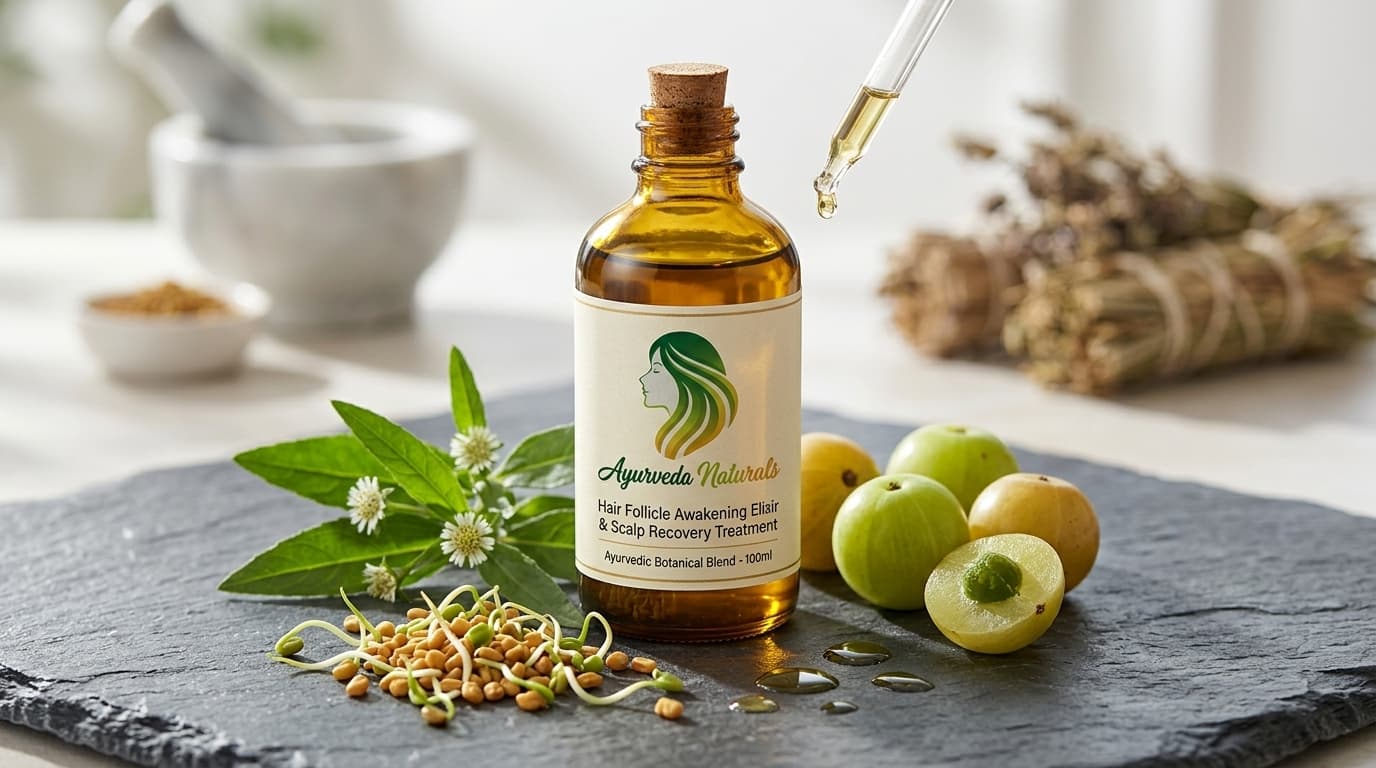
Direct Answer: Telogen Effluvium Recovery Timeline and Natural Support
The telogen effluvium recovery timeline and natural support roadmap follows a distinct biological trajectory: following an acute metabolic, hormonal, or psychological shock, sudden diffuse shedding typically begins 60 to 90 days later, peaks between months 2 and 3, stabilizes between months 4 and 6, and initiates visible new upright anagen regrowth between months 6 and 9, with full volumetric density returning between months 12 and 18. Natural support focuses on eliminating root physiological triggers, modulating the hypothalamic-pituitary-adrenal (HPA) axis with Ayurvedic adaptogens (such as Ashwagandha and Brahmi), rebuilding depleted Rasa and Asthi Dhatus through micronutrient optimization (ferritin > 50 ng/mL, vitamin D3, zinc, and bioflavonoid-rich Amalaki), and applying gentle, microcirculatory botanical scalp therapy (cold-pressed Bhringraj and Rosemary) to reactivate dormant dermal papillae.
The Cellular Trichology of Telogen Effluvium: The Synchronization of Shedding
To navigate a diagnosis of telogen effluvium without anxiety, one must understand the physiology of human hair follicular dynamics. On a healthy human scalp containing approximately 100,000 to 150,000 hair follicles, growth occurs asynchronously across three distinct biological phases:
- Anagen Phase (Active Growth): Approximately 85% to 90% of your hair follicles reside in this highly proliferative phase at any given time, constantly synthesizing keratin and growing at a rate of roughly 1 cm per month for a period of 2 to 7 years.
- Catagen Phase (Regression / Transition): Roughly 1% to 2% of follicles undergo controlled apoptosis over 2 to 3 weeks, where the hair follicle regresses, detaches from the dermal papilla capillary network, and shrinks.
- Telogen Phase (Resting Phase): Roughly 10% to 15% of follicles remain in this dormant metabolic state for approximately 100 days (2 to 4 months). At the end of this phase (sometimes termed the exogen phase), the old club hair is shed as a new anagen hair begins to emerge beneath it. Under normal circumstances, 50 to 100 hairs are shed daily.
What Happens During Telogen Effluvium?
When a severe systemic insult—such as a high-grade fever, systemic cytokine release, profound emotional bereavement, surgical trauma under general anesthesia, or sudden endocrine crash—strikes the body, the brain and immune system prioritize immediate survival. The body abruptly shunts vital energy, amino acids, and oxygen away from non-essential peripheral structures like hair follicles.
This acute metabolic shock causes a sudden, synchronized arrest of up to 30% to 50% of actively growing anagen follicles, prematurely thrusting them into catagen and subsequently into the telogen resting state. Because the telogen phase takes approximately 2 to 4 months to complete its biological cycle, the individual experiences no hair loss immediately after the shock. However, 60 to 90 days later, when all these synchronized telogen hairs simultaneously reach the shedding point, massive, alarming hair fall begins—often reaching 300 to 1,000 hairs per day.
Trichodynia: Why Does the Scalp Hurt and Burn?
Many individuals experiencing acute telogen effluvium report a distressing physical sensation known as trichodynia—a burning, prickling, aching, or hypersensitive feeling across the scalp, especially when moving the hair. Dermatological research reveals that trichodynia is caused by neurogenic micro-inflammation around the hair follicle neck.
The sudden apoptosis and abrupt detachment of thousands of follicular bulbs release substance P, calcitonin gene-related peptide (CGRP), and inflammatory mast cell mediators directly into the perifollicular nerve endings. Reassuringly, trichodynia is a benign, temporary symptom that universally resolves as the shedding stabilizes.
Identifying the Root Triggers: Common Causes of Telogen Effluvium
Effective management and establishing an accurate telogen effluvium recovery timeline and natural support plan requires identifying the exact trigger that occurred 2 to 4 months prior to the onset of shedding.
1. Post-Febrile & Viral Infections
High fevers (>102°F/39°C) resulting from influenza, dengue, typhoid, pneumonia, or COVID-19 generate massive spikes in inflammatory cytokines (interleukin-1, TNF-alpha, interferon-gamma) that directly trigger apoptosis in matrix keratinocytes.
2. Surgical Trauma & Anesthesia
Major surgical interventions, intraoperative blood loss, blood pressure fluctuations, and systemic anesthetic agents induce significant physiological stress that routinely triggers acute telogen effluvium 8 to 12 weeks post-procedure.
3. Postpartum Hormonal Drop
During pregnancy, high placental estrogen and progesterone keep hairs unnaturally locked in anagen phase. Following childbirth, hormones plummet within 48 hours, causing massive shedding known as telogen gravidarum. Explore our detailed guide on postpartum hair loss Ayurvedic remedies that work.
4. Rapid Weight Loss & Protein Malnutrition
Extreme caloric restriction, crash diets, bariatric surgeries, or GLP-1 receptor agonist medications that induce rapid weight loss deprive the body of essential amino acids, fatty acids, and zinc, precipitating severe follicular starvation.
5. Severe Psychological Shock
Acute emotional trauma (bereavement, divorce, extreme occupational burnout) triggers sustained HPA-axis activation. Elevated cortisol directly degrades extracellular matrix proteoglycans around the hair bulb, halting anagen growth.
6. Hidden Micronutrient Deficiencies
Depleted iron stores (ferritin < 50 ng/mL), vitamin D3 deficiency (< 30 ng/mL), zinc deficiency, or B12/folate deficits directly impair matrix cell division and can transform acute shedding into chronic telogen effluvium.
Month-by-Month Telogen Effluvium Recovery Timeline
Understanding the physiological phases of recovery provides peace of mind and prevents premature abandonment of therapeutic protocols. Below is the detailed clinical roadmap of hair follicle recovery:
Month 0: The Inciting Trigger Event
The fever, surgery, severe emotional shock, postpartum event, or metabolic crash occurs. Follicles arrest prematurely at the cellular level, but zero visible hair loss occurs on the scalp. Hair appears completely normal.
Months 2 – 3: The Peak Shedding Phase
Sudden, terrifying handfuls of hair shed in the shower, on pillows, and during gentle brushing (200 to 800+ hairs/day). Shed hairs feature a small white, keratinized club bulb at the base (telogen bulb). Trichodynia (scalp tenderness/burning) is frequently present. Total ponytail thickness may diminish by 20% to 40%.
Months 4 – 5: The Stabilization Phase
Daily shedding rates begin a steady downward trend, decreasing from hundreds of hairs per day to 100–150 hairs/day. Scalp tenderness completely resolves. The hair pull test becomes negative (fewer than 3 hairs extracted per gentle tug). The follicles have entered anagen re-initiation beneath the skin surface.
Months 6 – 8: Early Anagen Sprouting
Shedding normalizes back to physiological baseline (50 to 80 hairs/day). A halo of short, fine, upright regrowing hairs (early anagen shoots, roughly 1 to 2 inches in length) becomes clearly visible along the hairline, temples, and central parting line.
Months 9 – 12: Density Maturation
Regrowing hair shafts thicken, increase in pigmentation, and reach 3 to 5 inches in length. Mid-shaft volume begins to fill back out. Crown scalp visibility diminishes significantly.
Months 12 – 18: Full Volumetric Length Recovery
New growth reaches ponytail length (6 to 9+ inches). Overall hair density, perimeter fullness, and hair weight are fully restored to pre-trigger baseline levels.
Ayurvedic Pathophysiology: Vata-Pitta Prakopa and Rasa Dhatu Depletion
Classical Ayurvedic literature, particularly the Sushruta Samhita and Ashtanga Hridaya, attributes sudden, widespread hair shedding to acute Vata-Pitta Prakopa (severe dual-dosha aggravation) accompanied by depletion of Rasa Dhatu (the foundational nutrient plasma).
1. Aggravated Vata: Dryness, Channel Constriction, and Detachment
The intense stress, trauma, or illness causes a violent spike in Vata Dosha (governed by the elements of Air and Space). Vata embodies dryness (Ruksha), coldness (Sheeta), and mobility (Chala). When aggravated Vata invades the micro-circulatory channels (Kesha Vaha Srotas) supplying the scalp, it constricts micro-vessels, severely starving the hair bulbs of arterial blood flow. This sudden lack of nourishment causes the hair roots (Kesha Moola) to shrink, dry out, and detach from the scalp.
2. Aggravated Pitta: Heat and Rapid Catagen Induction
Simultaneously, high fever, systemic inflammation, or acute psychogenic stress elevates Pitta Dosha (Fire and Water elements). Excess internal heat (Ushna Guna) literally "burns" and inflames the delicate tissues of the hair matrix, precipitating the sensation of burning trichodynia and terminating active anagen growth prematurely.
3. Depletion of Rasa Dhatu (Nutrient Plasma)
Rasa Dhatu is the primary post-digestive fluid that carries prana, electrolytes, and micronutrients to all seven bodily tissues. When physical illness or grief impairs digestive agni, Rasa Dhatu becomes depleted (Rasa Kshaya). Because the secondary Upadhatu of Asthi Dhatu (hair) is the last tissue to receive nutrition, it is the first to be sacrificed when Rasa is compromised.
Differential Diagnosis: Acute TE vs. Chronic TE vs. Androgenetic Alopecia
Understanding where your condition falls on the diagnostic spectrum ensures appropriate therapeutic expectations and prevents unnecessary treatments.
| Clinical Feature | Acute Telogen Effluvium | Chronic Telogen Effluvium (CTE) | Early Androgenetic Alopecia (AGA) |
|---|---|---|---|
| Duration of Shedding | < 6 months (typically 2–4 months of peak loss) | > 6 months (often fluctuating for years) | Indefinite, gradual progression over years |
| Identifiable Trigger | Yes, distinct event 2–4 months prior | Often multifactorial, hidden, or chronic low ferritin/thyroid | No acute trigger; genetic / androgenic sensitivity |
| Pattern of Loss | Diffuse whole-scalp shedding; reduced ponytail volume | Diffuse shedding, prominent over bitemporal regions | Patterned thinning at crown, vertex, or temples |
| Hair Pull Test | Strongly positive (>6 hairs extracted per pull) | Weakly to moderately positive across whole scalp | Negative on occiput; positive only at thinning zones |
| Trichoscopic Signs | Empty follicles; upright regrowing short hairs; uniform shaft diameter | Multiple short regrowing hairs; minimal miniaturization (<10%) | Follicular miniaturization (>20% diversity in shaft diameter), yellow dots |
| Long-Term Prognosis | Complete 100% spontaneous regrowth once trigger resolves | High regrowth potential once chronic root causes are corrected | Requires lifelong maintenance to halt progressive thinning |
Botanical and Adaptogenic Natural Support Protocols
Accelerating recovery and shortening the telogen-to-anagen transition requires a dual internal-external approach: balancing the nervous system and replenishing cellular micronutrients.
1. Internal Adaptogens (Medhya Rasayanas)
- Ashwagandha (Withania somnifera): Standardized withanolides modulate the HPA axis, significantly lowering serum cortisol levels. Cortisol is known to accelerate the degradation of hyaluronan and proteoglycans in the follicular dermal papilla; lowering cortisol protects follicles from stress-induced apoptosis.
- Brahmi (Bacopa monnieri): Bacosides in Brahmi calm neuromuscular tension, alleviate mental anxiety, and enhance cerebral arterial circulation, ensuring optimal nutrient delivery to the scalp.
- Amalaki / Indian Gooseberry (Emblica officinalis): The ultimate Rasayana herb in Ayurveda. Exceptionally rich in stable vitamin C, gallic acid, and ellagic acid, Amla enhances gastrointestinal iron absorption (vital for ferritin restoration) and scavenges free radicals generated during acute febrile or inflammatory illness.
- Shatavari (Asparagus racemosus): Highly nourishing for female reproductive health and hormonal balance, Shatavari rejuvenates Rasa Dhatu, restores cellular hydration, and supports steady tissue rebuilding.
2. Essential Micronutrient Optimization
- Serum Ferritin Target (50–70 ng/mL): Ferritin is the storage protein for iron. Matrix keratinocytes are among the most rapidly dividing cells in the human body, relying on iron as an essential cofactor for ribonucleotide reductase. If ferritin drops below 50 ng/mL, follicles struggle to maintain anagen phase. Pair gentle chelated iron (like iron bisglycinate) with vitamin C and Amla.
- Vitamin D3 (40–60 ng/mL): Vitamin D nuclear receptors are densely expressed in hair follicle stem cells. Adequate 25-hydroxyvitamin D levels are essential for the initiation of new anagen hair cycles.
- Zinc Glycinate (15–30 mg daily): Zinc is an essential metalloenzyme cofactor required for protein synthesis, DNA replication, and cellular repair within the hair bulb.
Topical Scalp Protocols: Gentle Shiro Abhyanga & Oil Timing
A common clinical dilemma is whether to apply botanical hair oils during active telogen effluvium. Because hairs in telogen are loosely anchored, rough or aggressive mechanical friction will dislodge them, causing emotional distress. However, proper botanical scalp therapy is essential for re-stimulating the micro-capillary bed.
To learn more about how long natural oils take to show clinical results, read our detailed guide on how long Ayurvedic hair oil takes to work for hair regrowth.
The Proper Application Protocol
- During Peak Shedding (Months 2–3): Do not perform vigorous, heavy head massages. Instead, warm a small amount of botanical oil (infused with Bhringraj, Rosemary, Amla, and Brahmi) and gently dab it directly onto the scalp with fingertips or a dropper. Leave on for 45 to 60 minutes before washing with a gentle, sulfate-free herbal cleanser.
- During Stabilization & Regrowth (Months 4+): As shedding slows, begin gentle circular Shiro Abhyanga massage for 5 to 10 minutes twice weekly. Focus on the Adhipati (crown) and Simanta marma points to stimulate local endothelial growth factors (VEGF) and increase capillary perfusion to dormant follicles.
- Minimize Mechanical Traction & Friction: Use a seamless wide-tooth neem wood comb, sleep on a 100% pure mulberry silk pillowcase to eliminate friction, and strictly avoid tight ponytails, high buns, or heat styling tools until full density is restored.
Ready to Transform Your Hair Naturally?
Explore our 100% organic Ayurvedic haircare range crafted with 15+ potent herbs.
Hair Regrowth Oil · Purifying Hair Shampoo · Ultimate Haircare Bundle
Frequently Asked Questions
How long does telogen effluvium recovery typically take?
For acute telogen effluvium, recovery typically spans 6 to 18 months. Shedding usually peaks around 2 to 3 months following the initial physiological or psychological trigger, begins stabilizing between months 4 and 6, and new upright regrowing hairs (early anagen shoots) become visible between months 6 and 9. Full volumetric length and density recovery generally take 12 to 18 months.
Why does hair shed months after the stressful trigger event?
This delayed onset occurs because of the biological timing of the hair growth cycle. When an acute shock (high fever, severe stress, surgery, or crash dieting) occurs, actively growing follicles are prematurely forced into the catagen (regression) and telogen (resting) phases. The telogen phase naturally lasts approximately 2 to 4 months (100 days) before the club hair separates from the dermal papilla and is pushed out by a new growing hair.
What are the first signs that telogen effluvium is ending?
The earliest clinical signs of recovery include: a noticeable reduction in daily shedding during washing and brushing (dropping from 200-400 hairs/day back down toward normal levels of 50-100), the disappearance of scalp tenderness or burning (trichodynia), and the emergence of fine, short, upright baby hairs across the hairline, parting line, and crown visible under dermatoscopic inspection.
Can Ayurvedic adaptogens help recover from telogen effluvium faster?
Yes. Ayurvedic adaptogens like Ashwagandha (Withania somnifera) and Brahmi (Bacopa monnieri) help modulate the hypothalamic-pituitary-adrenal (HPA) axis, reducing serum cortisol levels that trigger follicular apoptosis. Additionally, nutritive tonics like Amalaki (Amla) and Shatavari replenish depleted Rasa Dhatu (plasma and micronutrients) to accelerate follicular re-entry into the anagen growth phase.
Should I oil my scalp during active, peak telogen effluvium shedding?
During the peak shedding phase (months 2-3), vigorous friction or heavy manipulation should be avoided because hairs already in the telogen phase detach easily. Instead, apply warm, lightweight herbal oils (infused with Bhringraj, Rosemary, and Amla) very gently with fingertips without vigorous rubbing, or focus on scalp applications during the stabilization phase (month 4 onwards) to stimulate microcirculation.
What ferritin level is required for telogen effluvium recovery?
While a serum ferritin of 15-20 ng/mL is considered 'normal' for basic red blood cell production, trichological research demonstrates that hair follicles require a serum ferritin level of at least 50 to 70 ng/mL (with transferrin saturation above 20%) to sustain a robust, uninterrupted anagen growth phase and halt chronic shedding.
What is the difference between acute and chronic telogen effluvium?
Acute telogen effluvium is a self-limiting condition lasting fewer than 6 months, triggered by a single discrete event (such as a high fever or surgery). Chronic telogen effluvium persists for longer than 6 months (often years), characterized by fluctuating diffuse shedding caused by unresolved systemic drivers such as chronic stress, ongoing thyroid disorders, low ferritin, or gut malabsorption.
Support Your Hair's Anagen Regrowth Naturally
Nourish stress-depleted follicles with our organic, cold-pressed Hair Regrowth Oil. Powered by clinical-grade Bhringraj, Rosemary, Brahmi, and Amla, it gently soothes scalp inflammation, restores microcapillary circulation, and accelerates new growth during telogen effluvium recovery.
Shop Hair Regrowth OilReady to stop hair fall naturally?
Don't wait until it's too late. Experience the proven magic of our 100% organic, wild-harvested Ayurvedic formulations and start seeing real results in 14 days.
Free Shipping + Cash on Delivery