
Postpartum Hair Fall Treatment Oil Pakistan
The Beautiful, Messy, and Sometimes Overwhelming Reality of Motherhood
Motherhood is undeniably one of the most profound, transformative, and miraculous experiences a human being can go through. Bringing a new life into the world is a momentous achievement. However, amidst the joyous baby coos, the tender cuddles, and the overwhelming wave of love, there is also a deeply challenging physical and emotional aftermath that is rarely discussed with the honesty it deserves. One of the most startling and distressing experiences for many new mothers is postpartum hair loss. Finding the right postpartum hair fall treatment oil Pakistan recommends can provide immense relief during this transitional phase.
Imagine this: you have just survived the exhaustion of pregnancy, the intense marathon of childbirth, and the sleep-deprived haze of the fourth trimester. You are finally starting to find a rhythm. And then, around three to four months postpartum, you step into the shower, wash your hair, and are horrified to see clumps of your precious locks swirling down the drain. You brush your hair, and the bristles are instantly full. You run your fingers through your hair, and strands come loose effortlessly. For many women, this experience induces panic, tears, and a deep blow to their self-esteem at a time when they are already feeling vulnerable.
If you are reading this while holding a sleeping baby, feeling anxious about the state of your hair, please take a deep breath. You are not alone. You are not going bald. What you are experiencing is an incredibly common, completely natural physiological response to the dramatic events your body has just endured. Postpartum hair loss is a temporary phase, and more importantly, it is a phase that can be managed, soothed, and ultimately reversed with the gentle, time-tested wisdom of Ayurveda. In this comprehensive guide, we will explore why postpartum hair loss happens, how Ayurveda interprets this condition, and the powerful, natural remedies you can use to restore your hair's volume and vitality.
We understand that as a new mother, you barely have time to drink a cup of tea while it is still warm, let alone navigate a complex multi-step hair care routine. That is why Ayurvedic remedies are so profoundly beautiful—they are rooted in simplicity, intentionality, and working with nature rather than fighting against it. Ayurveda does not promise a magical overnight assist with, but it does offer a sustainable, deeply healing path to hormonal balance and holistic wellness.
What Exactly is Postpartum Hair Loss? The Western Scientific View
Before we dive into the ancient wisdom of Ayurveda, it is incredibly helpful to understand what is happening inside your body from a modern medical perspective. Your hair grows in a continuous cycle that consists of three main phases: the anagen phase (the active growing phase), the catagen phase (the transitional phase), and the telogen phase (the resting and shedding phase). At any given point in a normal, healthy adult's life, about 85% to 90% of your hair is in the growing phase, while the remaining 10% to 15% is resting and eventually falling out to make room for new growth.
During pregnancy, your body is flooded with massive surges of hormones, primarily estrogen and progesterone. This hormonal cocktail acts as a powerful fertilizer for your hair. The elevated estrogen levels essentially freeze your hair in the anagen (growing) phase. This is the reason why so many pregnant women report having the thickest, most lustrous, and fastest-growing hair of their entire lives. The normal daily shedding of 50 to 100 hairs practically comes to a halt.
However, the magical hair-growing spell breaks shortly after you give birth. Within 24 to 48 hours postpartum, your estrogen and progesterone levels plummet dramatically, returning to their pre-pregnancy baseline. This sudden and drastic hormonal drop sends a shockwave through your hair follicles. All those hairs that were artificially kept in the growing phase during pregnancy are suddenly pushed into the telogen (resting) phase all at once. Because the resting phase lasts about three months before the hair actually falls out, women typically do not notice the shedding until their baby is around three to four months old.
This condition is extensively known as Telogen Effluvium. It is essentially a massive, synchronized shedding event. While it can look and feel terrifying, it is vital to remember that this hair loss is not permanent. The follicles themselves are not dying or becoming effectively damaged; they are simply resetting. Once the resting hairs have fallen out, the follicles will eventually return to the active growing phase. But what if we could support the body during this transition, minimize the shedding, and encourage faster, stronger regrowth? That is precisely where Ayurveda steps in.
The Ayurvedic Perspective: A Deep Dive into Postpartum Imbalances
Ayurveda, the ancient Indian system of holistic medicine, views the body and mind as an interconnected universe governed by three fundamental energies or doshas: Vata, Pitta, and Kapha. Health is defined as a state of perfect balance between these doshas, while disease, discomfort, and physical symptoms—including hair loss—are seen as manifestations of doshic imbalance.
From an Ayurvedic perspective, the postpartum period, known as the Sutika Kala, is considered one of the most sensitive, delicate, and critical phases in a woman's life. The process of childbirth involves immense physical exertion, loss of fluids, loss of blood, and the literal emptying of the womb. According to classical Ayurvedic texts, these factors lead to a profound and immediate aggravation of the Vata dosha.
Vata is the dosha composed of the elements of Air and Space. It governs all movement in the body, including the nervous system, circulation, and the flow of thoughts. When Vata is balanced, it brings creativity, vitality, and enthusiasm. However, when Vata is aggravated—as it naturally is after childbirth—it manifests as dryness, coldness, anxiety, depletion, and instability. Because Vata governs the movement of nutrients, a severe Vata imbalance can restrict the flow of nourishment to the extremities of the body, including the scalp and hair follicles.
Ayurveda refers to hair loss as Khalitya. While postpartum hair loss is primarily a Vata disorder, it often becomes a dual-dosha issue. If a new mother is experiencing high levels of stress, lack of sleep, frustration, and is eating heating or spicy foods, her Pitta dosha (the energy of Fire and Water) can also become aggravated. Excess Pitta creates excess heat in the body, which literally "burns" the hair follicles at the roots, leading to thinning, premature graying, and inflammation on the scalp.
Therefore, the Ayurvedic approach to healing postpartum hair loss is not just about applying topical treatments to the scalp. It is a comprehensive, whole-body approach that focuses on calming the aggravated Vata, cooling the fiery Pitta, nourishing the deep bodily tissues, and gently guiding the hormonal system back to a state of harmonious balance.
Understanding the Doshas in Postpartum Hair Health
To truly harness the power of Ayurvedic remedies for postpartum hair loss, it is helpful to identify which dosha is playing the dominant role in your specific experience. While Vata is universally aggravated after childbirth, the way your hair loss presents can give you clues about your unique energetic state.
Vata Aggravation: The Dry and Brittle Shedding
If your hair loss is primarily driven by an excess of Vata dosha, you will likely notice that your hair texture has changed alongside the shedding. Vata hair becomes incredibly dry, coarse, frizzy, and prone to breakage and split ends. Your scalp may feel tight, dry, and perhaps slightly flaky with dry dandruff. Emotionally, a Vata imbalance manifests as feeling overwhelmed, anxious, ungrounded, and struggling with insomnia even when the baby is sleeping. The treatment for Vata hair loss focuses heavily on intense moisturization, deep oiling, and grounding practices.
Pitta Spike: The Thinning and Heated Scalp
If Pitta dosha is the primary culprit exacerbating your postpartum hair loss, the shedding might be accompanied by a feeling of heat or tenderness on the scalp. You might notice that your hair is thinning specifically around the crown or the temples, and the individual hair strands may feel finer and thinner than before. Pitta hair loss is often associated with premature graying. Emotionally, excess Pitta manifests as irritability, frustration, impatience, and feeling easily angered. The treatment for Pitta hair loss involves using cooling herbs, soothing the nervous system, and releasing trapped heat from the body.
Kapha Stagnation: The Heavy and Blocked Follicles
While less common as a primary cause of postpartum hair loss, a Kapha imbalance can contribute to poor hair growth. Kapha is composed of Earth and Water. When Kapha is sluggish or stagnant, it can cause an overproduction of heavy sebum (oil) on the scalp. This heavy, sticky oil can clog the hair follicles, preventing new hair from pushing through the surface. Kapha-related hair issues often involve a greasy scalp, thick, sticky dandruff, and a feeling of lethargy and heaviness in the body. The treatment for Kapha hair issues involves gentle exfoliation, scalp stimulation, and using clarifying, light herbs.
The Concept of Dhatus: Why Your Bones and Hair Are Connected
One of the most fascinating and profound concepts in Ayurveda is the theory of Dhatus, or bodily tissues. Ayurveda recognizes seven distinct layers of tissue in the body: Rasa (plasma), Rakta (blood), Mamsa (muscle), Meda (fat), Asthi (bone), Majja (bone marrow and nerves), and Shukra/Artava (reproductive tissue). According to this ancient science, nutrition flows sequentially from one tissue to the next. The food you eat first nourishes the plasma, which then nourishes the blood, and so on down the chain.
In Ayurvedic physiology, hair (Kesha) is considered a "mala" or a secondary byproduct of the Asthi Dhatu, which is the bone tissue. This means that the health, strength, and vitality of your hair are directly dependent on the health and nourishment of your bones. During pregnancy, a mother's body prioritizes the development of the baby's skeletal structure, drawing heavily on the mother's own reserves of calcium, minerals, and Asthi Dhatu nourishment. If the mother's nutrient reserves are not adequately replenished during the postpartum period, the Asthi Dhatu becomes depleted. Because hair is the byproduct of bone tissue, weakened bones inevitably lead to weak, falling hair.
Understanding this connection changes the entire paradigm of how we treat postpartum hair loss. It explains why slapping a chemical serum on your scalp is largely ineffective in the long run. To truly stop hair fall and encourage vibrant new growth, we must nourish the body from the deepest levels. We must rebuild the Rasa Dhatu (the plasma and bodily fluids that were lost during childbirth) and mineralize the Asthi Dhatu (the bone tissue). This requires deeply nourishing foods, specific herbal formulations, and lifestyle practices that promote tissue regeneration.
How Ayurveda Gently Restores Hormonal Balance Without Harsh Chemicals
Modern treatments for hair loss often rely on synthetic chemicals, harsh topical treatments, or synthetic hormone replacements. While these may offer temporary visual improvements, they often come with a host of side effects, including scalp irritation, dryness, and a dependency on the product to maintain results. Furthermore, many new mothers are hesitant to use harsh chemicals, especially if they are breastfeeding, as whatever is absorbed through the skin can enter the bloodstream.
Ayurveda offers a radically different approach. It seeks to gently coax the body back into its natural state of equilibrium. Rather than forcing the hair follicles to behave a certain way, Ayurveda addresses the root causes of the disruption: the Vata aggravation, the depleted tissues, and the erratic hormonal fluctuations. It does this through the use of Medhya Rasayanas (rejuvenating herbs for the mind and nervous system), deeply nourishing botanical oils that penetrate the scalp barrier, and adaptogenic herbs that help the endocrine system regulate cortisol and sex hormones.
Ayurvedic herbs are holistic by nature. When you use an herb like Ashwagandha to help with hair loss, you aren't just treating the hair follicle; you are simultaneously lowering your stress levels, improving your sleep quality, and boosting your immune system. The benefits cascade through the entire body. Ayurveda gently restores hormonal balance by reminding the body of its innate intelligence, providing it with the exact raw materials it needs to heal itself from the inside out.
The Most Powerful Ayurvedic Herbs for Postpartum Hair Recovery
The Ayurvedic pharmacopeia is vast, but there are a few superstar herbs that have been revered for millennia specifically for their ability to combat hair loss, stimulate follicles, and promote thick, lustrous growth. These herbs can be used internally as powders or teas (always consult with an Ayurvedic practitioner if breastfeeding), or externally infused into hair oils and masks.
Bhringraj: The Undisputed King of Hair
If there is one herb you must know for postpartum hair loss, it is Bhringraj (Eclipta Alba). Its name literally translates to "Ruler of the Hair" or "King of Hair." Bhringraj is a deeply cooling herb that pacifies Pitta dosha, reducing scalp inflammation and heat that can damage follicles. It is known to actively stimulate blood circulation to the scalp, waking up dormant hair follicles and encouraging them to shift from the resting (telogen) phase back into the growing (anagen) phase. Bhringraj is also famously used to prevent and manage premature graying, keeping the hair vibrant and youthful.
Amla: The Vitamin C Powerhouse
Amla, or Indian Gooseberry, is one of the highest natural sources of Vitamin C on the planet. In Ayurveda, it is considered a Rasayana, a supreme rejuvenator that promotes longevity and vitality. For hair, Amla is nothing short of miraculous. The high antioxidant content fights free radical damage that can weaken hair roots. Amla is also deeply conditioning, adding incredible shine and volume to thinning hair. It helps to balance the pH of the scalp, keeping dandruff and fungal infections at bay. Regular use of Amla strengthens the hair shaft, making it less prone to breakage.
Brahmi: The Stress Reliever
Because postpartum hair loss is so deeply intertwined with stress, anxiety, and the massive emotional transition of motherhood, Brahmi (Bacopa Monnieri) is an essential herb in the recovery process. Brahmi is a potent nervine tonic, meaning it specifically targets and calms the nervous system. When applied to the scalp via oil massage, it creates a profound sense of relaxation, cooling the mind and reducing cortisol levels. Lower cortisol means less stress-induced hair shedding. Brahmi also coats the hair follicles, providing a protective layer that thickens the appearance of the hair.
Ashwagandha: The Ultimate Adaptogen
Ashwagandha (Withania Somnifera) is perhaps the most famous Ayurvedic adaptogen. Adaptogens are unique substances that help the body adapt to physical, emotional, and environmental stress. After childbirth, a woman's endocrine system is in a state of chaos. Ashwagandha steps in to support the adrenal glands, regulate cortisol production, and gently balance the hormones. By addressing the internal stress response, Ashwagandha stops hair loss at its hormonal root. It also improves blood circulation and delivers essential nutrients directly to the scalp.
Fenugreek (Methi): The Phytoestrogen Miracle
Fenugreek seeds, known as Methi in Hindi, are a staple in both the Indian kitchen and the Ayurvedic apothecary. For postpartum mothers, Fenugreek is doubly beneficial. Internally, it is famous for boosting milk supply in nursing mothers. Externally, it is a powerhouse for hair growth. Fenugreek seeds are rich in phytoestrogens—plant-based compounds that mimic the effects of estrogen in the body. Since the massive drop in estrogen is the primary trigger for postpartum hair loss, applying fenugreek-infused oils or pastes to the scalp can provide localized hormonal support, slowing down shedding and encouraging new growth. It also contains high levels of mucilage, which acts as a natural detangler and deep conditioner.
Neem: The Scalp Purifier
A healthy scalp is the foundation of healthy hair. If your scalp is inflamed, itchy, or suffering from postpartum dandruff, your hair follicles will struggle to hold onto the hair. Neem is Ayurveda's ultimate antibacterial, antifungal, and purifying herb. It cleanses the scalp of impurities, unblocks clogged pores, and creates an optimal, healthy environment for new hair to sprout.
A Restorative Ayurvedic Hair Care Routine for Exhausted Mothers
Knowing about the herbs is only half the battle; knowing how to incorporate them into your life as a busy new mother is the key to success. Ayurveda emphasizes the importance of routine (Dinacharya). However, as a mother, your routine needs to be realistic, forgiving, and simple. Here is a powerful, low-effort Ayurvedic hair care routine designed to stop postpartum hair fall and restore volume.
Step 1: The Sacred Practice of Shiro Abhyanga (Warm Oil Massage)
Oiling the hair is not just a cosmetic practice in Ayurveda; it is a profound therapeutic ritual known as Shiro Abhyanga. Massaging warm herbal oil into the scalp serves multiple purposes: it deeply moisturizes the dry Vata scalp, the mechanical action of the massage stimulates blood flow to the follicles, and the oil acts as a carrier vehicle, delivering the medicinal properties of the herbs deep into the skin layers. As a new mother, this is also a vital 10-minute window of self-care and grounding.
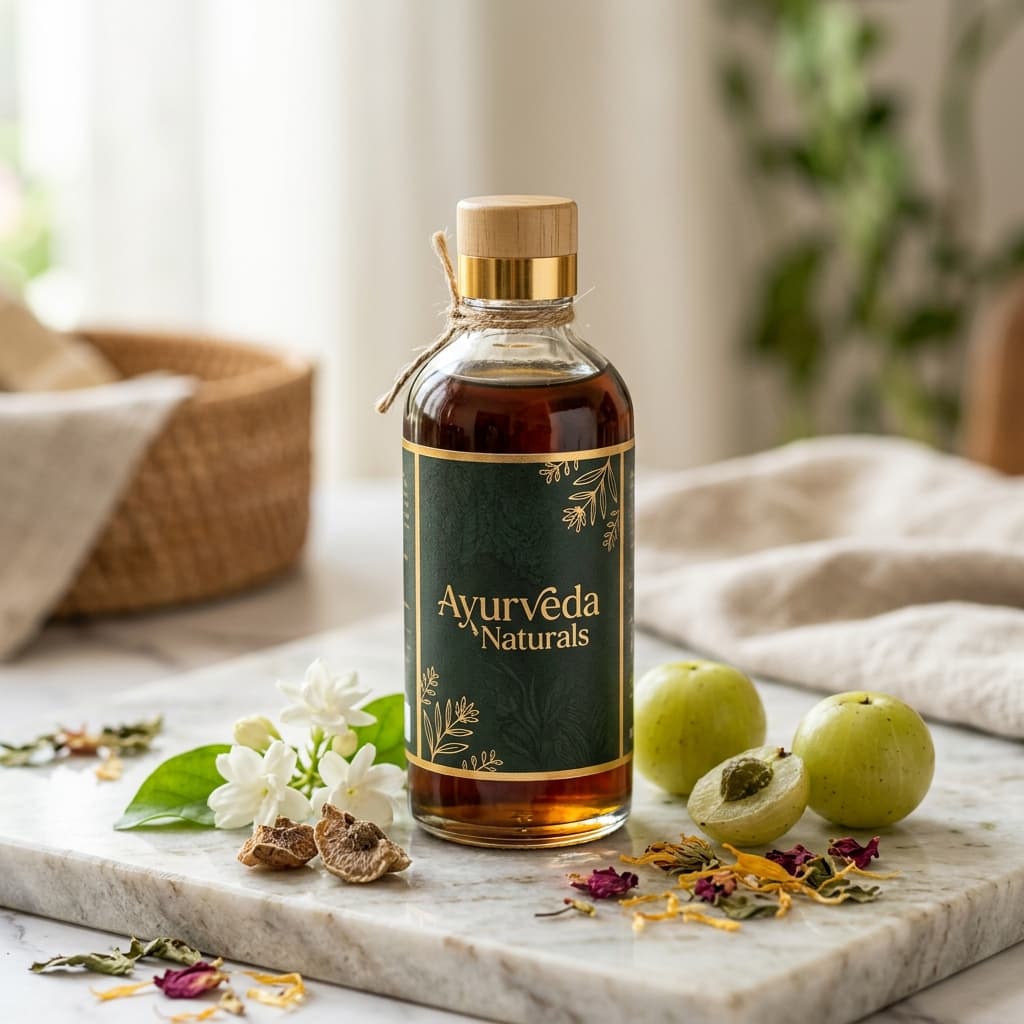
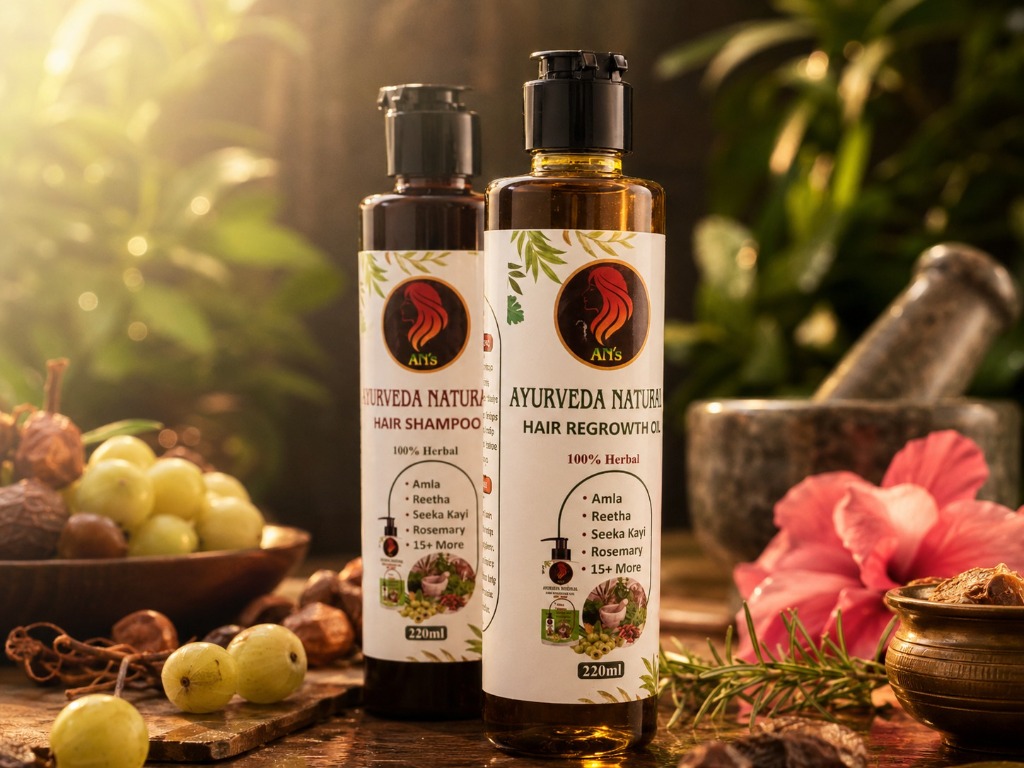
Once or twice a week, ideally before bedtime or an hour before washing your hair, gently warm a high-quality Ayurvedic hair oil. You want an oil that is infused with the powerful herbs we discussed, such as Bhringraj, Amla, and Brahmi. We highly recommend incorporating our 15-Herbs Hair Regrowth Oil into your routine. This masterfully crafted oil is slow-cooked over low heat following ancient Ayurvedic texts, infusing a potent blend of 15 follicle-stimulating herbs into a base of nutrient-rich sesame and coconut oils. Part your hair in sections and massage the warm oil directly into the roots using the pads of your fingers in circular motions. Focus on the crown and temples where thinning is most prominent. Leave the oil in for at least an hour, or ideally overnight, allowing the herbs to work their magic while you sleep.
Step 2: The Art of Gentle Cleansing
One of the biggest mistakes women make when dealing with postpartum hair loss is continuing to use harsh, commercial shampoos. Most conventional shampoos contain sulfates (like SLS) which are industrial detergents. While they create a satisfying lather, they violently strip the scalp of its natural oils. For a postpartum scalp that is already suffering from Vata-induced dryness and fragility, sulfates are a recipe for disaster. They weaken the hair shaft and cause brittle hair to snap off.
Ayurveda advocates for extremely gentle cleansing. You want to remove dirt and excess oil without disrupting the scalp's delicate microbiome. Transition to a mild, herbal cleanser that uses natural saponins (like Reetha or Shikakai) to clean the hair. When you wash out your hair oil, use warm—not hot—water, as hot water further aggregates Pitta and dries out the scalp.
For a beautiful, restorative wash day experience, explore our Purifying Herbal Shampoo. Formulated entirely without harsh sulfates, parabens, or synthetic fragrances, this gentle cleanser relies on the natural cleansing power of Ayurvedic botanicals. It effectively removes oil buildup while simultaneously delivering a dose of Amla and Neem to soothe the scalp and fortify the hair roots. It leaves your hair feeling clean, soft, and incredibly nourished, never stripped or dry.
Step 3: Weekly Herbal Lepa (Hair Mask)
If you can find an extra 20 minutes on the weekend while your partner or a family member holds the baby, treat your scalp to a restorative Lepa, or herbal paste. You can create a simple DIY mask by mixing organic Amla powder and Fenugreek powder with a little bit of plain yogurt or aloe vera juice. Yogurt contains lactic acid which gently exfoliates the scalp, while the probiotics support the scalp microbiome. Apply this paste to your roots, let it sit for 20 minutes, and rinse thoroughly. This acts as an intense, localized treatment to feed the hair follicles and calm inflammation.
Nourishing Your Body: The Ayurvedic Postpartum Diet for Hair Growth
As we discussed earlier, your hair is a reflection of your internal tissue health, specifically your bone tissue (Asthi Dhatu). No amount of external oiling can compensate for a depleted internal state. The Ayurvedic postpartum diet is meticulously designed to rebuild the mother's strength, pacify Vata dosha, and generate high-quality breast milk, which simultaneously nourishes the hair.
To combat Vata aggravation, your diet must be warm, grounding, moist, and easily digestible. Cold, raw, dry, and crunchy foods (like salads, crackers, and ice water) will severely aggravate Vata and worsen hair loss. Instead, focus on deeply nourishing, cooked foods.
- Embrace Ghee: Clarified butter, or Ghee, is considered liquid gold in Ayurveda. It is deeply lubricating, pacifies both Vata and Pitta, and helps transport the fat-soluble vitamins needed for hair growth deep into the tissues. Add a spoonful of organic ghee to your oatmeal, rice, and soups.
- Root Vegetables: Sweet potatoes, carrots, and beets grow deep within the earth and possess a heavy, grounding energy that perfectly counters the flighty, anxious energy of Vata. They are also rich in beta-carotene, which the body converts to Vitamin A, essential for sebum production and scalp health.
- Soaked Nuts and Seeds: Almonds, walnuts, and sesame seeds are nutritional powerhouses for hair growth, packed with zinc, magnesium, and healthy fats. However, Ayurveda insists on soaking them overnight before eating to remove enzyme inhibitors and make them easier to digest. Black sesame seeds, in particular, are highly revered for preventing hair fall and supporting Asthi Dhatu (bone tissue).
- Hydration with Purpose: Drinking enough water is crucial, especially if you are breastfeeding. But instead of chugging ice-cold water, sip on warm water throughout the day. You can elevate your hydration by sipping on CCF tea (Cumin, Coriander, and Fennel). This gentle tea aids digestion, flushes out toxins, and cools the body.
Lifestyle Practices to Calm the Nervous System and Encourage Hair Growth
The mind-body connection in Ayurveda is absolute. Chronic stress, anxiety, and sleep deprivation send signals to your body that it is in a state of emergency. When your body is in survival mode, it diverts all available nutrients away from "non-essential" functions—like growing hair—and redirects them to vital organs. Therefore, managing your nervous system is a crucial component of treating postpartum hair loss.
We know that telling a new mother to "sleep more" and "stress less" can feel incredibly frustrating and unrealistic. The goal is not perfection, but rather finding tiny, manageable moments of stillness to switch your nervous system from sympathetic (fight or flight) to parasympathetic (rest and digest).
Pranayama (Breathwork): You do not need an hour-long meditation session to reap the benefits of breathwork. While nursing or rocking the baby, practice Nadi Shodhana (Alternate Nostril Breathing) for just three minutes. This specific breathing technique is renowned in Ayurveda for rapidly balancing the right and left hemispheres of the brain, instantly lowering heart rate, and profoundly calming the Vata dosha.
Gentle Movement: Intense, grueling workouts too soon after birth can further deplete your energy and aggravate Vata. Opt for gentle, restorative yoga, slow walks in nature, and stretching. Movement should feel nourishing, not punishing. Healing the body takes time, and patience is the greatest virtue during the postpartum period.
Embracing the Journey with Grace and Patience
Watching your hair fall out during an already vulnerable time is emotionally taxing. It is completely valid to grieve the loss of your pregnancy hair and feel frustrated by the shedding. However, we invite you to view this transition through the compassionate lens of Ayurveda. Your body has just performed a miracle. It has stretched, yielded, and emptied itself to bring forth life. The hair loss is not a sign of failure or permanent decline; it is simply your body recalibrating and shedding the old to make way for the new.
By adopting an Ayurvedic approach—nourishing your tissues with warm foods, calming your mind with breathwork, and tending to your scalp with potent, herbal formulations—you are not just treating hair loss. You are honoring your body, rebuilding your strength, and embracing the profound transition of motherhood. Treat yourself with the same deep, unconditional love and patience that you shower upon your new baby.
The shedding will stop. The new growth will come. Until then, breathe deep, oil your scalp, and trust in the resilient, healing wisdom of your own body.
If you are ready to begin your holistic hair recovery journey and explore products crafted with authentic Ayurvedic wisdom, purity, and intention, we invite you to Shop All Organic Haircare. Let us support you in reclaiming your health, your confidence, and your beautiful, voluminous hair.
Ready to stop hair fall naturally?
Don't wait until it's too late. Experience the proven magic of our 100% organic, wild-harvested Ayurvedic formulations and start seeing real results in 14 days.
Free Shipping + Cash on Delivery