
Scalp Folliculitis Home Remedies: Herbal Washes & Scalp Soothing
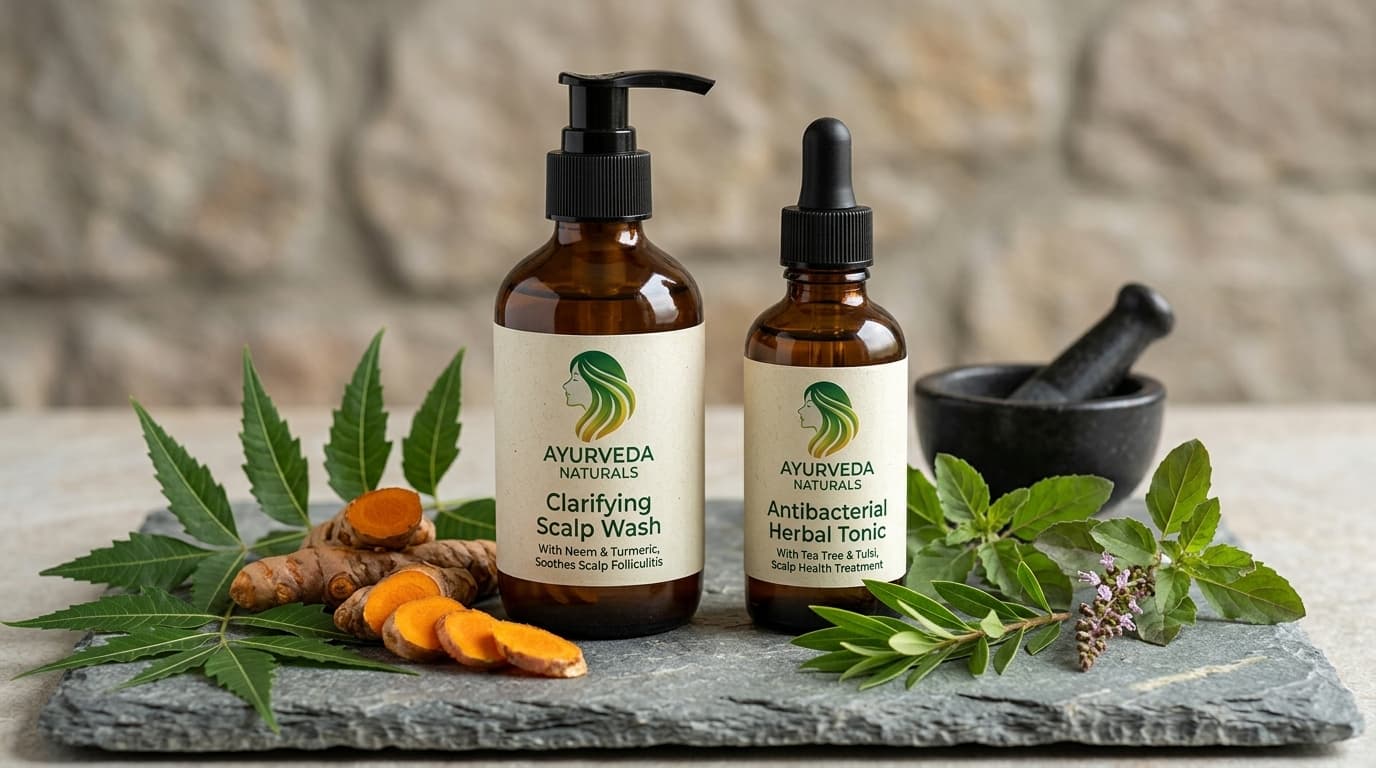
Direct Answer: Scalp Folliculitis Home Remedies and Herbal Washes
Effective scalp folliculitis home remedies and herbal washes center on neutralizing pathogenic microbes, breaking down microbial biofilms, and soothing acute follicular inflammation without occluding the pores. Clinically effective natural strategies rely on aqueous antimicrobial herbal decoctions (Kashayas)—specifically boiled organic Neem leaf wash (rich in azadirachtin and nimbin), Triphala astringent rinse (tannin-driven wound healing), Daruharidra / Indian Barberry (berberine biofilm destruction), and dilute raw Apple Cider Vinegar rinses (restoring the protective acidic pH 4.5–5.5). These herbal washes must be paired with strict avoidance of heavy pore-clogging vegetable oils, daily sanitization of grooming tools and pillowcases, and gentle cleansing with purifying, sulfate-free botanical shampoos to clear pustules and restore a balanced scalp microbiome within 10 to 21 days.
Clinical Microbiology & Pathophysiology: What Is Scalp Folliculitis?
Scalp folliculitis is an inflammatory and infective dermatological condition affecting the pilosebaceous unit (the hair follicle and its associated sebaceous gland). It manifests as tender, itchy, or painful papules and pustules centered on hair shafts across the scalp, often described colloquially as 'scalp acne' or 'head pimples.'
1. Bacterial Scalp Folliculitis
The most frequent infectious form is caused by an overgrowth of Staphylococcus aureus, a Gram-positive bacterium that normally resides commensally on human skin. When the epidermal barrier is breached—via scratching, friction from tight hats, or pore occlusion from heavy styling waxes—S. aureus penetrates the follicular infundibulum.
The immune system responds by deploying neutrophils, leading to the formation of erythematous papules that rapidly evolve into yellow-tipped pustules surrounded by an inflammatory red halo. Less commonly, Pseudomonas aeruginosa ('hot tub folliculitis') or Cutibacterium acnes can trigger widespread bacterial outbreaks.
2. Fungal / Pityrosporum (Malassezia) Folliculitis
Frequently misdiagnosed as bacterial acne, fungal folliculitis is caused by an overgrowth of lipophilic yeasts of the genus Malassezia (formerly Pityrosporum ovale). Malassezia organisms hydrolyze scalp sebum triglycerides into free fatty acids, triggering an intense cell-mediated immune reaction within the hair follicle.
Fungal folliculitis presents as monomorphic (identically sized), intensely pruritic (itchy) pink papules and small pustules, predominantly clustered along the anterior hairline, crown, and nape of the neck. For a dedicated analysis of fungal breakouts, read our comprehensive guide on fungal acne on scalp treatment.
3. Severe Scarring Variants: When to Seek Immediate Medical Care
While superficial folliculitis responds exceptionally well to herbal washes, certain rare, deep inflammatory variants require urgent prescription intervention to prevent permanent baldness:
- Folliculitis Decalvans: A chronic, cicatricial (scarring) alopecia characterized by painful pustules, yellow crusting, and 'tufted hairs' (multiple hair shafts emerging from a single dilated follicular opening, resembling doll's hair).
- Dissecting Cellulitis of the Scalp: A severe suppurative condition featuring painful, interconnected inflammatory nodules, draining sinuses, and fluctuant abscesses.
Primary Triggers and Everyday Aggravating Factors
Scalp folliculitis rarely develops in isolation; it is almost always precipitated by a combination of environmental, mechanical, and product-related triggers:
1. Occlusive Styling Products & Waxes
Heavy hair pomades, petroleum-based gels, thick edge control waxes, and non-water-soluble silicones create an airtight occlusive film over the scalp, trapping sebum, sweat, and environmental microbes inside the follicle.
2. Trapped Sweat & Heat (Microclimate)
Wearing non-breathable hats, cycling helmets, synthetic beanies, or tight wigs during strenuous workouts creates a warm, humid incubator that accelerates bacterial and fungal replication exponentially.
3. Scratching with Contaminated Nails
Compulsive scratching of an itchy scalp creates microscopic excoriations and breaks the stratum corneum barrier, directly inoculating Staphylococcal bacteria from beneath the fingernails deep into the follicular sheath.
4. Unsanitized Grooming Tools & Linens
Using unwashed hairbrushes, dirty barber clippers, or sleeping on the same pillowcase for weeks reintroduces bacterial colonies and fungal spores to freshly cleansed scalp skin nightly.
Ayurvedic Pathophysiology: Arumshika, Kapha-Pitta Vitiation, and Krimi
In classical Ayurvedic medicine (Charaka Samhita, Chikitsa Sthana), scalp folliculitis is categorized under Kshudra Rogas (minor skin diseases) and is referred to as Arumshika (multiple discharging scalp pustules) or Kandu/Kotha.
1. Kapha-Pitta Dosha Imbalance
Ayurveda attributes Arumshika to the simultaneous vitiation of Kapha and Pitta Dosha in the scalp:
- Vitiated Pitta Dosha: Represents excessive metabolic heat (Ushna), sharpness (Tikshna), and acidity. Pitta is responsible for the acute redness, fiery burning sensation (Daha), tenderness, and rapid suppuration (pus formation) inside the follicle.
- Vitiated Kapha Dosha: Represents heaviness, stickiness (Picchila), and unctuousness. Kapha causes hyperactive sebum production, pore blockage (Srotorodha), and thick exudative discharges.
2. The Role of Krimi (Pathogenic Microbes) and Ama
Ayurveda explicitly recognizes that when stagnant Kapha and fiery Pitta ferment together, they generate localized Kleda (excessive moisture/putrefaction) and Ama (endotoxins). This toxic microenvironment becomes a fertile breeding ground for Krimi (microscopic biological pathogens).
Classical Ayurvedic treatment requires Krimighna (microbial-destroying), Kashaya (astringent/drying), and Tikta (bitter/cooling) therapeutic measures to pacify Pitta, dry up Kapha exudates, and eradicate the pathogenic organisms.
Differential Diagnosis: Bacterial vs. Fungal Folliculitis vs. Psoriasis vs. Seborrheic Dermatitis
Accurate identification of the underlying scalp condition is paramount for selecting the correct herbal wash. The comparative matrix below outlines key clinical distinctions.
| Parameter | Bacterial Folliculitis | Fungal (Malassezia) Folliculitis | Seborrheic Dermatitis | Scalp Psoriasis |
|---|---|---|---|---|
| Causative Factor | Staphylococcus aureus / C. acnes overgrowth | Malassezia yeast overgrowth in follicles | Malassezia + host sebum immune reaction | Autoimmune keratinocyte hyperproliferation |
| Lesion Appearance | Tender, scattered yellow pustules with red halos | Monomorphic, small, uniform pink itchy papules | Greasy, yellowish scales over erythematous patches | Thick, well-demarcated silvery-white plaques |
| Itching vs. Pain | Painful, throbbing, tender to touch | Intensely pruritic (severe, stinging itch) | Moderate to severe itch, crawling sensation | Variable itch, tightness, bleeding when scratched |
| Response to Plant Oils | Worsens due to pore occlusion and trapping bacteria | Severely flares up (yeast feeds on C11-C24 lipids) | Worsens with heavy oils; flares flaking | Improves with unctuous, softening botanical oils |
| Optimal Herbal Wash | Neem + Triphala Kwath + Berberine Rinse | Neem Water + Dilute ACV + Tea Tree Mist | Shikakai + Reetha + Willow Bark Wash | Wrightia tinctoria (Kutaja) + Manjistha Wash |
Potent Botanical Herbal Washes (Kashayas) for Folliculitis
Aqueous herbal washes (known as Kashayas or Kwaths in Ayurveda) are the gold standard home therapy for scalp folliculitis. Unlike oil-based treatments, water-based botanical rinses deliver concentrated bioactive alkaloids and polyphenols directly into inflamed follicles without clogging pores or feeding yeast.
1. The Royal Neem Leaf Decoction (Azadirachta indica)
Neem is universally celebrated as the supreme antibacterial, antifungal, and blood-purifying botanical in Ayurveda. Its active limonoids—predominantly nimbin, nimbidin, azadirachtin, and mahmoodin—exhibit powerful bactericidal activity against S. aureus and disrupt the cell membrane permeability of Malassezia. For detailed insights on Neem's bioactive properties, see our article on Neem oil benefits for itchy scalp.
2. Triphala Kwath Astringent Scalp Rinse
Triphala combines three potent Ayurvedic fruits: Amalaki (Emblica officinalis), Haritaki (Terminalia chebula), and Bibhitaki (Terminalia bellirica). Rich in hydrolyzable tannins, chebulagic acid, and gallic acid, Triphala imparts a powerful astringent taste (Kashaya Rasa).
3. Daruharidra (Indian Barberry) & Berberine Wash
Daruharidra (Berberis aristata) contains high concentrations of berberine, a bright yellow isoquinoline alkaloid. Berberine intercalates into microbial DNA, inhibits bacterial cell division, and suppresses pro-inflammatory TNF-alpha and interleukin-6 in inflamed follicular tissues.
4. Raw Apple Cider Vinegar (ACV) Acid Mantle Rinse
A healthy human scalp has a naturally acidic pH of 4.5 to 5.5, which naturally suppresses pathogenic Staphylococcal colonization. Alkaline tap water and synthetic detergents disrupt this mantle, elevating pH and encouraging microbial dysbiosis.
Safe Topical Remedies vs. What to STRICTLY AVOID
Treating scalp folliculitis requires knowing what NOT to do just as much as knowing what remedies to apply.
CRITICAL WARNING: Avoid Heavy Plant Oils During Active Outbreaks
Applying coconut oil, olive oil, mustard oil, castor oil, or pure shea butter directly onto active folliculitis pustules is a disastrous mistake. Heavy lipids occlude the follicular ostia, trap bacteria in an anaerobic pocket, and provide a direct carbon food source for Malassezia yeast. All heavy oiling must be discontinued until all pustules have completely resolved.
Safe, Non-Comedogenic Soothing Agents
- Pure Aloe Vera Inner Leaf Gel: Contains acemannan, bradykinase, and gibberellins that extinguish burning pain, cool Pitta inflammation, and promote wound healing without leaving any oily residue.
- Dilute Tea Tree Oil Spot Treatment (Melaleuca alternifolia): High in terpinen-4-ol, a powerful antimicrobial compound. Mix 2 to 3 drops of pure tea tree oil into 1 tablespoon of pure squalane oil or 100% MCT oil (caprylic/capric triglycerides, which Malassezia cannot metabolize) and dab directly onto pustules with a clean cotton swab.
- Cold Green Tea Compresses: Epigallocatechin gallate (EGCG) in brewed green tea reduces sebaceous gland sebum secretion and calms perifollicular erythema.
The 14-Day Scalp Folliculitis Clearing Protocol
Follow this structured two-week regimen to eliminate folliculitis pustules, soothe itching, and restore scalp health:
Days 1 – 3: Acute Disinfection & Biofilm Breakdown
Washing: Cleanse daily with a sulfate-free purifying herbal shampoo containing Neem and Shikakai. Gently lather and leave on scalp for 3 to 5 minutes before rinsing.
Herbal Rinse: Follow with a freshly brewed Neem Leaf Decoction. Do not rinse out.
Hygiene: Disinfect all hairbrushes and combs in boiling water and tea tree oil. Replace pillowcase daily with a freshly laundered cotton or silk case.
Days 4 – 8: Astringent Healing & Pustule Resolution
Washing: Cleanse every other day with your purifying shampoo.
Herbal Rinse: Alternate between Triphala Kwath rinse and dilute Apple Cider Vinegar rinse.
Spot Therapy: Apply pure fresh Aloe vera inner gel mixed with 1 drop of tea tree oil directly to lingering bumps twice daily. Most pustules will dry into flat, non-tender crusts.
Days 9 – 14: Barrier Restoration & Long-Term Prevention
Washing: Maintain cleansing 2 to 3 times weekly.
Herbal Rinse: Use a weekly Neem or ACV maintenance rinse.
Outcome: Complete clearance of active pustules, total cessation of itching and scalp tenderness, and restoration of a clean, healthy scalp microbiome.
Ready to Transform Your Hair Naturally?
Explore our 100% organic Ayurvedic haircare range crafted with 15+ potent herbs.
Hair Regrowth Oil · Purifying Hair Shampoo · Ultimate Haircare Bundle
Frequently Asked Questions
Can scalp folliculitis be cured with home remedies and herbal washes?
Mild to moderate scalp folliculitis can often be successfully cleared at home using antimicrobial herbal washes (such as boiled Neem water, Triphala decoctions, and dilute Apple Cider Vinegar rinses) combined with proper hygiene and eliminating pore-clogging hair products. However, severe, recurrent, or scarring variants (like Folliculitis Decalvans) require medical diagnosis and prescription dermatological treatment.
How do I make a Neem herbal wash for scalp folliculitis?
To prepare a potent Neem wash: Boil 2 handfuls of fresh organic Neem leaves (or 2 tablespoons of dried Neem leaf powder) in 1 liter of filtered water for 15 to 20 minutes until the water reduces to a rich greenish-brown decoction. Allow it to cool completely, strain out all plant matter, and pour it over a freshly washed scalp as a final leave-in antimicrobial rinse 3 times weekly.
Why should I avoid hair oils during an active folliculitis breakout?
Applying heavy traditional hair oils (such as coconut, olive, or castor oil) to actively inflamed pustules occludes the follicular ostia (pore openings) and creates an anaerobic breeding ground for bacteria. Furthermore, fungal folliculitis (Malassezia) feeds directly on fatty acids with carbon chain lengths of C11 to C24 found in most plant oils, causing yeast to multiply rapidly and worsening the infection.
What is the difference between bacterial and fungal scalp folliculitis?
Bacterial folliculitis (usually caused by Staphylococcus aureus) typically presents as tender, painful, yellow-headed pustules surrounded by red halos. Fungal folliculitis (Pityrosporum/Malassezia folliculitis) presents as intensely itchy, uniform, tiny red bumps or whitehead-like papules clustered along the hairline and crown, which flare up rapidly with sweat and humidity.
How does Apple Cider Vinegar help clear scalp folliculitis?
A dilute Apple Cider Vinegar rinse (1 part raw ACV to 4 parts water) restores the scalp's natural acid mantle (pH 4.5 to 5.5). Pathogenic bacteria and yeasts thrive in neutral-to-alkaline environments; lowering the scalp pH with natural acetic acid breaks down microbial biofilms and relieves stinging itchiness.
Can scalp folliculitis lead to permanent hair loss?
Superficial folliculitis usually causes temporary shedding (telogen effluvium) due to local inflammation, and hair regrows fully once the infection clears. However, deep, chronic, or untreated scarring folliculitis (such as Folliculitis Decalvans) can permanently destroy the hair follicle stem cell niche, resulting in irreversible patchy baldness.
How often should I wash my hair when treating scalp folliculitis?
During an active breakout, wash your scalp every 1 to 2 days using a purifying, sulfate-free herbal shampoo containing antimicrobial botanicals (Neem, Reetha, Shikakai). Daily cleansing prevents sebum accumulation, removes sweat, and washes away microbial pathogens before they penetrate deeper into the hair follicles.
Purify Your Scalp with Organic Herbal Science
Clear stubborn scalp bumps, soothe inflammation, and restore microbiome balance with our Purifying Hair Shampoo. Infused with wild-harvested Neem, Reetha, Shikakai, and Aloe Vera, it cleanses deeply without harsh sulfates or pore-clogging residues.
Discover the Purifying ShampooReady to stop hair fall naturally?
Don't wait until it's too late. Experience the proven magic of our 100% organic, wild-harvested Ayurvedic formulations and start seeing real results in 14 days.
Free Shipping + Cash on Delivery