
Natural DHT Blockers for Hair: Evidence and Safety Considerations
Natural DHT Blockers Hair Loss: Evidence, Biochemical Pathways, and Safety
Utilizing natural dht blockers hair loss remedies offers a safe method to inhibit the 5-alpha-reductase enzyme responsible for converting testosterone into follicular-damaging dihydrotestosterone. Botanicals like saw palmetto, pumpkin seed oil, rosemary, and stinging nettle reduce local scalp DHT levels, slowing androgenetic miniaturization without triggering the sexual or hormonal side effects common with pharmaceutical finasteride.
The Biological Engine of Androgenetic Alopecia: Understanding 5-Alpha Reductase and DHT
Androgenetic alopecia (pattern hair loss) affects over 80% of men and nearly 50% of women at some point in their lives. While colloquially described as simple genetic balding, the condition is driven by a precise enzymatic and hormonal cascade occurring within the follicular microenvironment.
The central driver of this process is dihydrotestosterone (DHT), a potent androgenic steroid hormone synthesized directly from circulating testosterone. This biochemical conversion is catalyzed by a specialized intracellular enzyme: 5-alpha reductase (5-AR). While testosterone is essential for anabolic muscle growth, bone density, and energy, its conversion to DHT in the skin and hair follicles triggers a pathological reaction in genetically susceptible individuals.
The Two Primary Isozymes of 5-Alpha Reductase
Modern endocrinology recognizes multiple forms of the 5-alpha reductase enzyme, with two primary isozymes governing cutaneous and hair biology:
- Type 1 5-Alpha Reductase: Primarily located in the sebaceous glands, epidermal keratinocytes, sweat glands, and the liver. It produces approximately one-third of circulating systemic DHT and regulates local sebum composition.
- Type 2 5-Alpha Reductase: Highly concentrated in the inner and outer root sheaths of hair follicles, the dermal papilla, and genital tissues. It produces roughly two-thirds of circulating DHT and represents the principal target for hair loss interventions.
The Miniaturization Cascade at the Follicular Level
DHT possesses a five-fold higher binding affinity for the intracellular androgen receptor (AR) than testosterone, and it dissociates from the receptor five times more slowly. When DHT penetrates the dermal papilla cells of genetically sensitive follicles (typically located across the temples, frontal hairline, and crown vertex), it binds to the androgen receptor.
This hormone-receptor complex translocates directly into the cell nucleus, binding to specific hormone response elements on genomic DNA. This genetic activation triggers the over-expression of inhibitory paracrine cytokines, most notably:
- Transforming Growth Factor-Beta (TGF-β1 and TGF-β2): Signaling proteins that forcefully halt cell division in the hair matrix and initiate premature catagen apoptosis.
- Dickkopf-1 (DKK-1): A potent inhibitor of the Wnt/β-catenin signaling pathway, which is required for maintaining anagen growth and hair shaft generation.
- Interleukin-6 (IL-6): An inflammatory cytokine that accelerates follicular regression and promotes micro-fibrosis around the hair bulb.
Under the continuous influence of these inhibitory proteins, each subsequent hair cycle produces a shorter anagen (growth) phase and an extended telogen (resting) phase. With each cycle, the hair follicle physically shrinks—a biological process known as follicular miniaturization. Thick, deeply pigmented terminal hairs gradually transform into fine, wispy, non-pigmented vellus hairs until the follicle becomes dormant and eventually atrophies entirely.
Pharmaceutical vs Botanical DHT Inhibition: Why People Seek Alternatives
The conventional medical answer to androgenetic alopecia relies on pharmaceutical 5-alpha reductase inhibitors, specifically oral finasteride (Propecia) and dutasteride (Avodart). While these synthetic drugs are clinically effective, their systemic mechanism of action creates significant concerns for many patients.
The Problem with Synthetic Systemic Suppression
Oral finasteride selectively blocks Type 2 5-alpha reductase, reducing serum DHT levels by roughly 70%. Oral dutasteride inhibits both Type 1 and Type 2 isozymes, reducing serum DHT by more than 90%. However, 5-alpha reductase is not an isolated enzyme existing purely to cause baldness; it performs critical neuro-endocrine functions throughout the human body.
Beyond converting testosterone to DHT, 5-alpha reductase is required to synthesize crucial neurosteroids in the brain, including allopregnanolone (from progesterone) and tetrahydrodeoxycorticosterone (THDOC). These neurosteroids act as positive allosteric modulators of GABA-A receptors, regulating emotional resilience, stress resilience, cognitive clarity, and restorative deep sleep.
Consequently, systemic pharmaceutical suppression of 5-alpha reductase can precipitate significant adverse effects:
- Persistent Sexual Dysfunction: Decreased libido, erectile dysfunction, and ejaculatory disorders occurring in 2% to 15% of clinical trial cohorts.
- Neuropsychiatric Complications: Heightened anxiety, severe clinical depression, brain fog, and chronic sleep disruption linked to neurosteroid depletion.
- Post-Finasteride Syndrome (PFS): A medically documented condition where sexual, physical, and neurological side effects persist indefinitely even after complete cessation of the pharmaceutical.
- Gynecomastia: Unwanted proliferation of male glandular breast tissue caused by shifting androgen-to-estrogen ratios.
The Botanical Philosophy: Local Modulation Without Systemic Castration
These severe systemic liabilities explain why millions of individuals are turning to natural dht blockers hair loss remedies. Botanical compounds provide mild-to-moderate competitive and non-competitive enzyme inhibition. When applied topically or consumed as whole-food extracts, they reduce local follicular DHT accumulation, neutralize micro-inflammation, and support microcirculation without wiping out systemic hormones or disrupting vital neurosteroid pathways in the central nervous system.
The Top Clinically Studied Natural DHT Blockers
Scientific exploration into natural botanicals has identified several plant species that exhibit verifiable, peer-reviewed 5-alpha reductase inhibitory activity. For an extensive examination of these herbs, explore our guide on DHT blocker natural herbs for hair loss.
1. Saw Palmetto (Serenoa Repens / Sabal Serrulata)
Saw palmetto is a dwarf palm tree native to the coastal regions of the southeastern United States. The liposterolic extract derived from its dark purple berries has been studied extensively in urology and dermatology.
- Active Constituents: A dense concentration of free fatty acids (lauric, myristic, oleic, and linoleic acids) alongside therapeutic phytosterols, primarily β-sitosterol, campesterol, and stigmasterol.
- Mechanism of Action: Saw palmetto demonstrates dual inhibition of both Type 1 and Type 2 5-alpha reductase isozymes. Additionally, its lipophilic sterols competitively bind to nuclear androgen receptors, physically obstructing DHT from anchoring to follicular DNA.
- Clinical Evidence: A landmark double-blind, placebo-controlled clinical trial published in the Journal of Alternative and Complementary Medicine (Prager et al., 2002) evaluated men with mild-to-moderate androgenetic alopecia taking standardized saw palmetto extract. At the conclusion of the study, 60% of the active treatment cohort demonstrated clinically confirmed improvements in hair density. A 2012 comparative study by Rossi et al. confirmed that saw palmetto stabilized hair loss in 38% of patients and induced visible vertex regrowth over two years.
2. Pumpkin Seed Oil (Cucurbita Pepo)
Cold-pressed pumpkin seed oil represents one of the most thoroughly validated botanical interventions for androgenetic hair thinning.
- Active Constituents: Exceptionally high concentrations of delta-7-sterols, β-sitosterol, tocopherols (Vitamin E), zinc, and essential polyunsaturated fatty acids.
- Mechanism of Action: Delta-7-sterols and β-sitosterol inhibit 5-alpha reductase activity while downregulating inflammatory prostaglandin pathways in the scalp.
- Clinical Evidence: In 2014, researchers Cho, Lee, et al. conducted a rigorous randomized, double-blind, placebo-controlled clinical trial published in Evidence-Based Complementary and Alternative Medicine. Seventy-six male patients with mild-to-moderate androgenetic alopecia received either 400 mg of cold-pressed pumpkin seed oil daily or a placebo for 24 weeks. At 24 weeks, the pumpkin seed oil group demonstrated an astounding 40% mean increase in hair count, compared to just 10% in the placebo group, with zero adverse sexual or hormonal events reported.
3. Rosemary Oil (Rosmarinus Officinalis)
Rosemary essential oil has emerged as a premier topical botanical for follicular stimulation and androgenic defense.
- Active Constituents: Carnosic acid, rosmarinic acid, ursolic acid, and 1,8-cineole (eucalyptol).
- Mechanism of Action: Carnosic acid suppresses local 5-alpha reductase activity while providing intense antioxidant protection against lipid peroxidation. Simultaneously, 1,8-cineole stimulates microcapillary vasodilation, boosting dermal papilla perfusion without industrial chemical solvents.
- Clinical Evidence: In a landmark randomized comparative clinical trial (Panahi et al., 2015) published in Skinmed, topical rosemary oil was pitted directly against conventional 2% minoxidil over six months. Both treatments produced mathematically equivalent, statistically significant increases in hair count. Crucially, the rosemary group experienced significantly less scalp itching and zero chemical erythema compared to the synthetic minoxidil cohort.
4. Stinging Nettle Root (Urtica Dioica)
Stinging nettle has been utilized in European and Ayurvedic herbalism for centuries to treat urinary disorders and hair thinning. Learn more about botanical hair reinforcers in our guide on the top 10 herbs for thick and lustrous hair.
- Active Constituents: Plant sterols (β-sitosterol), scopoletin, lignans, and rich concentrations of bioavailable silica and sulfur.
- Mechanism of Action: Nettle root extracts exert a unique dual-action hormonal effect: they inhibit 5-alpha reductase while also inhibiting the aromatase enzyme. Furthermore, nettle root agglutinins prevent circulating DHT from binding to sex hormone-binding globulin (SHBG). Topically, nettle's sulfur and silica reinforce the structural keratin matrix of weakened hair shafts.
5. Green Tea Extract (Camellia Sinensis / EGCG)
Green tea is packed with potent polyphenol catechins, the most biologically active being epigallocatechin-3-gallate (EGCG).
- Mechanism of Action: Laboratory investigations demonstrate that EGCG selectively inhibits Type 1 5-alpha reductase. In human dermal papilla cell cultures, EGCG protects follicular cells from DHT-induced cell death, downregulates DKK-1 transcription, and encourages active hair elongation.
6. Pygeum Bark (Prunus Africana)
Extracted from the African cherry tree, Pygeum bark is rich in ferulic acid esters, triterpenes, and phytosterols. It acts synergistically with saw palmetto and stinging nettle, blocking androgen receptors in target tissues and reducing the synthesis of inflammatory leukotrienes.
The Synergistic Cascade: The Entourage Effect in Botanical Trichology
In pharmaceutical medicine, drugs are designed around single, highly purified chemical molecules engineered to block a single biological receptor with overwhelming force. While this reductionist approach achieves dramatic biomarker suppression, it frequently causes downstream toxicity by overwhelming biological feedback loops.
Botanical trichology operates through the principle of polypharmacology, commonly known as the entourage effect. In whole-plant extracts, dozens of complementary phytochemicals work in concerted harmony:
- Competitive and Non-Competitive Inhibition: Free fatty acids (such as lauric and myristic acids in saw palmetto) alter the fluidity of cell membranes, creating non-competitive allosteric inhibition of 5-alpha reductase. Meanwhile, phytosterols (β-sitosterol and stigmasterol) compete directly with testosterone for active binding sites on the enzyme. This dual-mode inhibition achieves meaningful enzyme reduction at significantly lower, non-toxic concentrations.
- Fatty Acid Synergy (GLA and ALA): Essential fatty acids, particularly Gamma-Linolenic Acid (GLA) and Alpha-Linolenic Acid (ALA), act as natural inhibitors of 5-alpha reductase. When formulated alongside rosemary or pumpkin seed oil, these fatty acids incorporate directly into the lipid bilayer of follicular cells, reducing localized oxidative stress and membrane rigidity.
- Protection Against Perifollicular Fibrosis: DHT stimulation triggers localized micro-inflammation that culminates in perifollicular fibrosis (stiffening of the collagen sheath surrounding the hair bulb). Botanical extracts contain natural bioflavonoids and coumestans that inhibit collagen cross-linking and matrix metalloproteinases, keeping the follicular bed soft, pliable, and vascularized.
Comprehensive Evidence and Safety Comparison Table
The following detailed comparison table summarizes the mechanisms, scientific backing, and safety profiles of prominent natural DHT blockers relative to synthetic pharmaceutical standards:
| Botanical / Compound | Active Chemistry | 5-AR Target | Evidence Level | Safety & Side Effects |
|---|---|---|---|---|
| Saw Palmetto (Serenoa repens) | β-sitosterol, lauric acid, myristic acid, phytosterols. | Dual Type 1 & Type 2 inhibition; blocks AR binding. | Human Randomized Controlled Trials (RCTs); positive density gains. | Exceptional safety; rare mild gastric upset if taken on an empty stomach. |
| Pumpkin Seed Oil (Cucurbita pepo) | Delta-7-sterols, β-sitosterol, zinc, linoleic acid. | Type 1 & Type 2 5-AR inhibition; anti-inflammatory. | Gold-standard Human RCT (40% hair count increase at 24 weeks). | Virtually zero adverse events; completely food-grade botanical oil. |
| Rosemary Oil (Rosmarinus officinalis) | Carnosic acid, rosmarinic acid, 1,8-cineole. | Local 5-AR suppression + microcapillary vasodilation. | Human comparative RCT (statistically equivalent to 2% minoxidil). | Safe topically when properly diluted in carrier oil; non-irritating. |
| Stinging Nettle (Urtica dioica) | Lignans, scopoletin, silica, sulfur, β-sitosterol. | 5-AR & aromatase inhibition; prevents SHBG binding. | In vitro and in vivo animal models; extensive traditional clinical use. | High safety; mild diuretic properties if taken in large oral doses. |
| Green Tea (EGCG) | Epigallocatechin-3-gallate (polyphenol catechin). | Selective Type 1 5-AR inhibition; DKK-1 suppression. | Human dermal papilla cell cultures; in vivo animal models. | Extremely safe; potent systemic antioxidant and cardiovascular support. |
| Pharmaceutical Finasteride (Reference) | Synthetic 4-azasteroid chemical compound. | Selective potent Type 2 5-AR inhibition (~70% serum drop). | Extensive multi-center Phase III clinical trials; FDA approved. | Risks of erectile dysfunction, depression, gynecomastia, PFS. |
Topical Application vs. Oral Supplementation: Local Scalp Action vs. Systemic Ingestion
When incorporating natural DHT blockers into your hair regimen, a fundamental strategic choice exists between oral ingestion and direct topical scalp delivery. Both delivery routes provide unique biological advantages:
The Topical Advantage: Direct Follicular Targeting
Applying botanical DHT blockers directly to the scalp is the safest and most efficient methodology for managing localized pattern thinning. When you apply an oil blend containing standardized rosemary, saw palmetto, and pumpkin seed extracts:
- High Local Concentration: The active phytosterols and fatty acids diffuse directly into the follicular infundibulum and sebaceous glands where Type 1 and Type 2 5-alpha reductase enzymes are concentrated.
- Zero Systemic Endocrine Disruption: Topical botanical actives do not alter systemic serum testosterone or estrogen levels, completely eliminating risks of gynecomastia or hormonal imbalances.
- Barrier Conditioning: Plant carrier oils supply oleic, linoleic, and palmitic fatty acids that replenish the scalp's intercellular lipid matrix, soothing flaking and building antimicrobial protection.
The Role of Carrier Oils and Trans-Follicular Penetration
Lipophilic botanical compounds like β-sitosterol and carnosic acid require compatible lipid delivery systems to penetrate the dense stratum corneum. Classical Ayurvedic carrier oils—specifically cold-pressed sesame oil (Tila Taila) and virgin coconut oil (Narikela Taila)—possess natural triglyceride structures that mirror human sebum. These oils dissolve stubborn sebum plugs blocking follicular ostia, allowing the botanical DHT inhibitors to reach the deep dermal papilla.
Enhancement via Scalp Microneedling
Pairing topical natural DHT blockers with weekly mechanical scalp microneedling (using a 0.5 mm to 0.75 mm dermaroller or microneedling stamp) dramatically amplifies results. Microneedling creates micro-channels through the stratum corneum, increasing trans-epidermal absorption of botanical phytosterols up to five-fold. Simultaneously, the mechanical micro-trauma triggers localized platelet activation, stimulating the release of Platelet-Derived Growth Factor (PDGF) and activating the Wnt/β-catenin pathway to reignite dormant anagen cycling.
Nutritional and Metabolic Synergies: Hormonal Balance from Within
Topical botanical treatments yield superior results when supported by intelligent internal metabolic care. Several systemic factors dictate how aggressively 5-alpha reductase operates in your body:
1. Insulin Resistance and Sex Hormone-Binding Globulin (SHBG)
Sex Hormone-Binding Globulin (SHBG) is a carrier protein produced in the liver that binds tightly to free circulating testosterone and DHT, rendering them biologically inactive. Diets high in refined carbohydrates, sugary beverages, and processed seed oils cause chronic hyperinsulinemia.
Surging insulin levels directly suppress hepatic SHBG synthesis. When SHBG drops, the pool of free, unbound circulating testosterone expands dramatically, providing an abundance of raw substrate for 5-alpha reductase to convert into follicular-damaging DHT. Adopting a whole-food Mediterranean or low-glycemic dietary framework restores insulin sensitivity and raises protective SHBG levels naturally.
2. Cortisol, Stress, and Adrenal Androgens
Chronic psychological stress drives the adrenal cortex to produce excess dehydroepiandrosterone sulfate (DHEA-S) and androstenedione. In the skin and sebaceous glands, these adrenal pro-hormones are readily metabolized into testosterone and subsequently DHT. Implementing daily nervous system regulation—through diaphragmatic breathwork, adequate sleep, and mindful movement—dampens adrenal androgen spikes.
3. Essential Micronutrient Co-Factors
Several vital trace minerals regulate cutaneous hormone metabolism:
- Zinc: A well-documented physiological inhibitor of 5-alpha reductase. Zinc deficiency directly correlates with hair shedding, epidermal flaking, and impaired wound healing.
- Vitamin B6 (Pyridoxal-5-Phosphate): Works synergistically with zinc to regulate androgen receptor sensitivity and support melanin synthesis in the hair bulb.
- Polyphenol-Rich Green Teas: Daily consumption of brewed matcha or green tea delivers circulating EGCG that scavenges free radicals and supports vascular flexibility.
Realistic Expectations: What Natural DHT Blockers Can and Cannot Achieve
In the natural wellness space, unrealistic expectations lead directly to premature frustration and treatment abandonment. Intellectual honesty regarding what botanicals can achieve is essential for long-term success.
What Natural DHT Blockers CAN Achieve:
- Halting Progression: Botanicals excel at stabilizing ongoing hair loss. By reducing local DHT binding and quieting cytokine inflammation, they prevent surviving follicles from undergoing further miniaturization.
- Thickening Miniaturized Follicles: Hairs that have thinned into intermediate or early-stage vellus fibers can regain diameter, tensile strength, and natural pigmentation over multiple growth cycles.
- Resolving Scalp Micro-Inflammation: Botanicals eliminate the itchy, burning sensation (trichodynia) and sebum hyper-secretion frequently accompanying active androgenetic loss.
What Natural DHT Blockers CANNOT Achieve:
- Reviving Fibrosed, Slick Bald Areas: If an area of your scalp has been completely bare, smooth, and shiny for over five years, the follicular ostia have closed and the underlying structures have been replaced by dense fibrous scar tissue. No botanical oil or oral supplement can resurrect dead follicles; hair transplantation or clinical interventions are required for complete restoration.
- Overnight Transformation: Natural therapies work through gentle, cumulative physiological modulation. Unlike harsh pharmaceuticals that force biological processes, botanicals support natural cellular rhythms.
The 12-Month Biological Timeline
- Months 1 to 3 (Stabilization Phase): Daily shedding numbers normalize; scalp itching, burning, and excess greasiness subside as inflammation clears.
- Months 4 to 6 (Early Regrowth Phase): Fine, short, lightly pigmented hairs begin sprouting along the hairline and crown; existing hair shafts display increased caliber and reduced breakage.
- Months 7 to 12 (Density Consolidation Phase): Regrown fibers transition into terminal hair shafts, increasing visible scalp coverage and improving overall hair density.
Safety, Contraindications, and Drug Interactions
While botanical DHT blockers boast an exceptional safety profile, they are biologically active compounds that require sensible application guidelines:
1. Pregnancy and Breastfeeding Contraindications
Women who are pregnant, planning to become pregnant, or breastfeeding should strictly avoid oral saw palmetto and oral pygeum extracts. Because these herbs inhibit 5-alpha reductase, systemic ingestion could theoretically interfere with the normal development of external genitalia in male fetuses and infants. Topical botanical hair oils formulated for general scalp health are generally safe, but consulting your obstetrician is strongly advised.
2. Medication Interactions
Individuals taking prescription anti-platelet or anticoagulant medications (such as warfarin, aspirin, or clopidogrel) should consult their physician before consuming high oral doses of saw palmetto or pumpkin seed oil, as high concentrations of phytosterols may exert mild additive anti-aggregant effects on blood platelets.
3. Debunking the Testosterone Crash Myth
A common misconception is that blocking DHT will lower an individual's testosterone levels. In reality, the exact opposite occurs. Because 5-alpha reductase converts testosterone into DHT, inhibiting this enzyme prevents testosterone from being converted. In clinical studies, patients utilizing natural 5-AR inhibitors typically maintain completely normal or slightly higher free and total testosterone levels, preserving muscle mass, metabolic vigor, and daily energy.
Ready to Defend Your Hair with Pure Botanical Science?
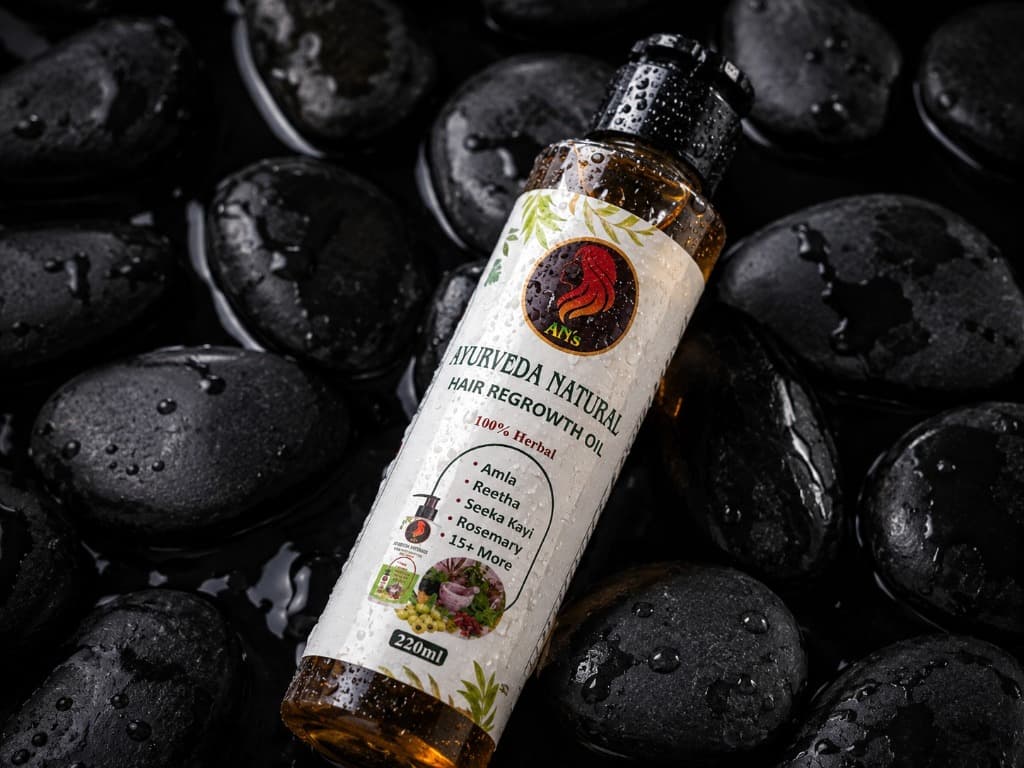
Protect your follicles naturally with our organic Ayurvedic Hair Regrowth Oil. Infused with cold-pressed Bhringraj, Rosemary, Amla, and botanical phytosterols to nourish roots, balance scalp sebum, and support robust hair density safely.
Frequently Asked Questions About Natural DHT Blockers
Do natural DHT blockers actually work for hair loss?
Yes, natural DHT blockers work effectively for mild-to-moderate androgenetic alopecia. Botanicals like saw palmetto, pumpkin seed oil, and rosemary oil contain phytosterols and fatty acids that inhibit the 5-alpha reductase enzyme, reducing local DHT concentrations around hair follicles and slowing follicular miniaturization without systemic side effects.
How do natural DHT blockers compare to pharmaceutical finasteride?
Pharmaceutical finasteride is a potent synthetic drug that reduces serum DHT by roughly 70%, but carries documented risks of sexual dysfunction, depression, and post-finasteride syndrome. Natural DHT blockers offer mild-to-moderate enzyme inhibition that acts locally on the scalp, preserving sexual health, hormonal equilibrium, and neurosteroid synthesis while supporting healthy hair density.
Can women safely use natural DHT blockers for hair thinning?
Yes, women experiencing androgenetic thinning or hair loss associated with Polycystic Ovary Syndrome (PCOS) can benefit significantly from natural DHT blockers, particularly topical rosemary oil and pumpkin seed oil. However, women who are pregnant, planning to become pregnant, or breastfeeding must avoid oral saw palmetto due to potential anti-androgenic effects on fetal development.
How long does it take for natural DHT blockers to show results?
Natural DHT blockers require patience and consistency. Users typically observe a significant reduction in daily shedding and scalp inflammation within the first 8 to 12 weeks. Visible improvements in hair thickness, caliber, and density generally emerge between 6 and 12 months of consistent topical or oral application.
Can natural DHT blockers cause hair shedding initially?
Mild, temporary shedding can occasionally occur during the first four to six weeks of initiating botanical DHT therapies. As localized inflammation subsides and microcirculation improves, dormant follicles are stimulated to re-enter active growth, shedding older, weakened telogen club hairs to make way for thicker anagen strands.
What is the most effective natural DHT blocker for topical use?
Rosemary essential oil (diluted in a nourishing carrier oil like sesame or jojoba) and liposterolic saw palmetto extract are widely considered the most effective topical natural DHT blockers. In clinical trials, rosemary oil demonstrated hair growth efficacy mathematically equivalent to 2% minoxidil over six months with significantly less scalp itching.
Will stopping a natural DHT blocker cause all my hair to fall out?
No, stopping a natural DHT blocker does not trigger the catastrophic rebound shedding typical of synthetic pharmaceuticals like minoxidil. Because botanicals work by nourishing the scalp barrier, resolving inflammation, and strengthening tissue health, discontinuing them results in a slow, gradual return to your genetic baseline over several months without sudden withdrawal shock.
Final Summary: Formulating a Sustainable, Long-Term Defense
Managing androgenetic alopecia does not require choosing between chemical dependency with severe side effects and total surrender to genetic hair loss. Modern botanical science demonstrates that natural compounds can successfully inhibit the 5-alpha reductase cascade while preserving overall systemic well-being.
By incorporating proven natural dht blockers hair loss botanicals—such as topical rosemary, authentic Bhringraj, cold-pressed pumpkin seed oil, and saw palmetto—into a mindful, consistent daily routine, you create a healthy, fertile scalp environment. Pair these botanical solutions with balanced nutrition, adequate stress management, and scalp stimulation to cultivate strong, resilient, and enduring hair density for years to come.
Ready to stop hair fall naturally?
Don't wait until it's too late. Experience the proven magic of our 100% organic, wild-harvested Ayurvedic formulations and start seeing real results in 14 days.
Free Shipping + Cash on Delivery