
Top Natural DHT Blocker Herbs for Hair Loss & Follicle Regrowth
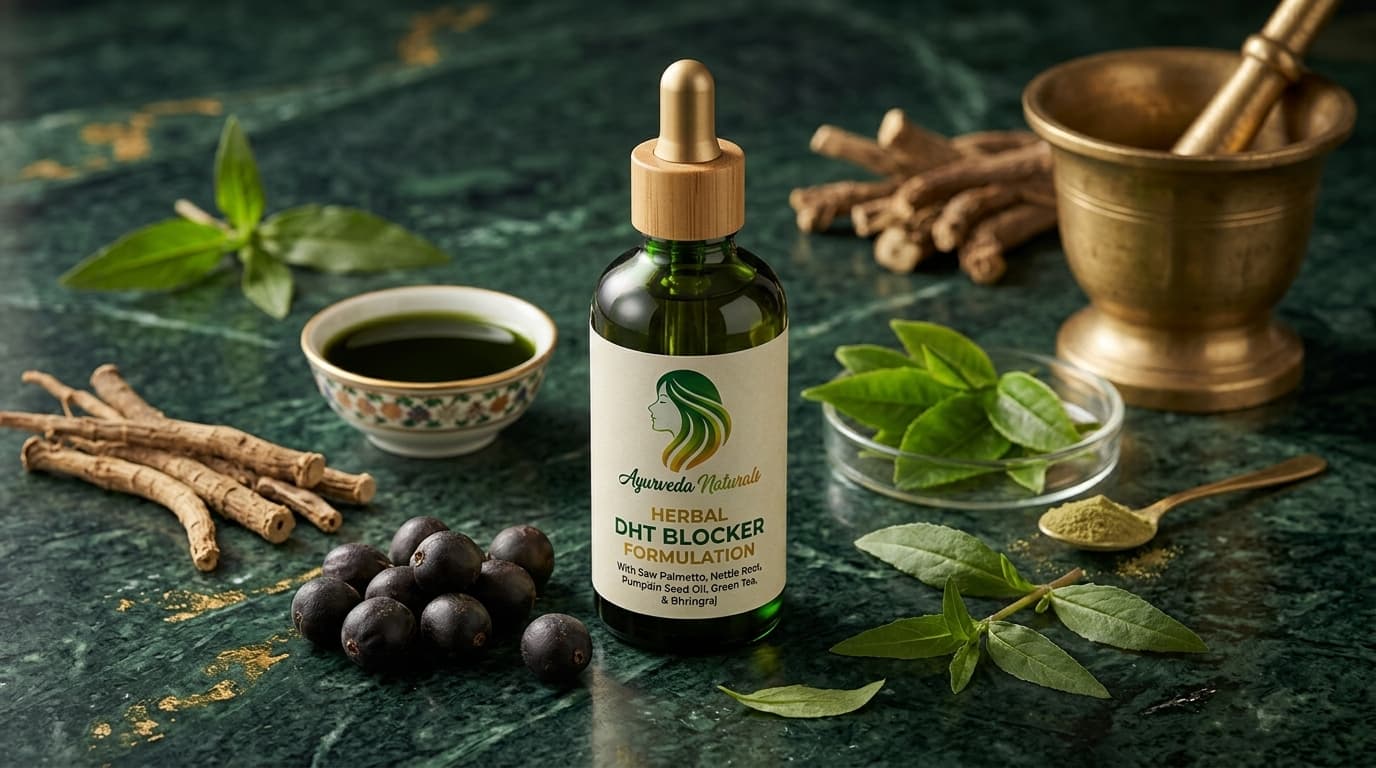
DHT blocker natural herbs for hair loss work by safely inhibiting the 5-alpha reductase (5-AR) enzyme, blocking dihydrotestosterone (DHT) from binding to androgen receptors on hair follicles, quelling follicular micro-inflammation, and nourishing the dermal papilla with essential phyto-nutrients. Potent botanicals like Saw Palmetto, Bhringraj, Stinging Nettle, Rosemary, Pygeum, and Green Tea (EGCG) halt genetic hair thinning and trigger new anagen growth without the sexual side effects, hormonal crashes, or chemical dependency associated with synthetic pharmaceutical drugs.
Androgenetic Alopecia—commonly known as male and female pattern baldness—is the single most prevalent cause of progressive hair thinning worldwide. For decades, conventional medicine offered a narrow, often risky choice: accept gradual hair loss or take synthetic 5-alpha reductase inhibitor pills like Finasteride or Dutasteride. However, an increasing number of patients experience distressing side effects from pharmaceutical blockers, including loss of libido, erectile dysfunction, depression, brain fog, and severe post-drug hormonal crashes.
Fortunately, cutting-edge phytotherapy and classical Ayurvedic wisdom reveal a superior, holistic alternative. Utilizing dht blocker natural herbs for hair loss allows you to halt the destructive biochemical cascade of androgenic hair loss while maintaining full hormonal vitality. By discovering the top 10 herbs for thick and lustrous hair and understanding the science of ayurvedic hair loss prevention, you can construct an impenetrable natural defense for your hair follicles.
The Biochemistry of DHT & Follicular Miniaturization
To appreciate how natural botanicals protect your hair, you must understand the exact molecular pathway that leads to genetic hair thinning:
1. The 5-Alpha Reductase Reaction
Testosterone is the primary androgenic hormone circulating in the male bloodstream (and present in smaller amounts in females). When testosterone reaches target peripheral tissues—including the prostate, sebaceous glands, and hair follicles—it encounters the intracellular enzyme 5-alpha reductase (5-AR). This enzyme catalyzes the stereospecific reduction of testosterone into Dihydrotestosterone (DHT), an androgen up to five times more potent in its receptor-binding affinity than free testosterone.
There are two primary isoenzymes of 5-alpha reductase in human physiology:
- Type I 5-AR: Predominantly expressed in scalp sebaceous glands, epidermal keratinocytes, and liver tissue. It contributes significantly to sebum production and localized skin DHT levels.
- Type II 5-AR: Concentrated heavily in the inner and outer root sheaths and dermal papillae of hair follicles, as well as the prostate gland and seminal vesicles. It is the primary driver of genetic follicle miniaturization.
2. The Androgen Receptor Binding Cascade
Once synthesized, DHT molecules diffuse into dermal papilla cells and bind with high affinity to intracellular Androgen Receptors (AR). In individuals genetically predisposed to pattern baldness, the androgen receptors on the crown and frontal hairline possess an exaggerated sensitivity to DHT due to polymorphisms in the AR gene.
Upon binding, the DHT-receptor complex translocates into the cell nucleus, activating the gene transcription of destructive paracrine cytokines, specifically:
- Transforming Growth Factor Beta-1 & Beta-2 (TGF-β1 / TGF-β2): Potent inhibitory cytokines that trigger premature apoptosis (programmed cell death) in follicular matrix keratinocytes and induce perifollicular fibrosis.
- Interleukin-6 (IL-6): A pro-inflammatory cytokine that accelerates the transition from the growing anagen phase to the resting telogen phase.
- Dickkopf-1 (Dkk-1): A protein that directly antagonizes the vital Wnt/β-catenin signaling pathway, halting the proliferation of hair follicle stem cells and preventing new hair shaft formation.
3. The Miniaturization Process
Under the continuous barrage of DHT and inflammatory cytokines, the hair growth cycle is progressively derailed. The active Anagen (growth) phase shortens from a healthy 3 to 6 years down to just a few months or weeks. Conversely, the Telogen (resting) phase expands. With each subsequent cycle, the hair follicle physically shrinks (miniaturizes), producing progressively thinner, shorter, and unpigmented vellus hairs until the follicle becomes completely atrophied and locked in a dormant state.
The Ayurvedic Understanding of Androgenic Thinning (Khalitya & Pitta)
Thousands of years before the discovery of hormones and enzymes, classical Ayurvedic texts accurately diagnosed and treated the root causes of patterned hair loss under the clinical diagnosis of Khalitya (alopecia) and Paittika Shiroroga (heat-induced cranial disorders).
In Ayurvedic physiology, the transformation of testosterone into aggressive DHT is viewed through the lens of corrupted Pitta dosha (specifically Bhrajaka Pitta in the skin and Ranjaka Pitta in the liver) interacting with Rakta Dhatu (blood tissue). When Pitta becomes excessively hot, sharp, and acidic—fueled by chronic emotional stress, fried foods, alcohol, and environmental toxins—the liver fails to properly conjugate and excrete circulating metabolic byproducts.
This fiery metabolic heat travels upward through the vascular channels (Srotas) to the crown of the head, causing chronic micro-inflammation in the follicular bed. This internal heat scorches the roots, leading to premature shedding. Therefore, an authentic Ayurvedic approach to blocking DHT does not merely suppress an isolated enzyme; it purifies the blood, supports liver metabolism, cools cranial inflammation, and delivers restorative plant sterols directly to the hair roots.
The Top 8 DHT Blocker Natural Herbs for Hair Loss: In-Depth Scientific Analysis
Extensive botanical research has identified specific medicinal plants containing potent phytochemicals that inhibit 5-alpha reductase, downregulate androgen receptor expression, and shield hair follicles from DHT damage:
1. Saw Palmetto (Serenoa Repens) — The Gold Standard Natural 5-AR Inhibitor
Derived from the deep purple berries of the North American dwarf palm, Saw Palmetto is the most thoroughly researched natural DHT blocker in modern medicine. Its liposterolic extract is rich in bioactive phytosterols (primarily β-sitosterol, campesterol, and stigmasterol) and free fatty acids (lauric, myristic, and oleic acids).
Scientific Mechanism: β-sitosterol acts as a competitive, non-selective dual inhibitor of both Type I and Type II 5-alpha reductase. It physically blocks the active catalytic sites of the enzyme, preventing the conversion of testosterone to DHT. Furthermore, clinical studies demonstrate that Saw Palmetto blocks androgen receptor nuclear translocation by nearly 50%, preventing circulating DHT from binding to dermal papillae.
2. Bhringraj (Eclipta Alba) — The Ayurvedic Follicular Awakener
Revered in classical Ayurveda as Keshraj ("King of Hair"), Bhringraj contains rich concentrations of coumestan derivatives, including wedelolactone and demethylwedelolactone, alongside luteolin and apigenin flavonoids.
Scientific Mechanism: Research published in ethnopharmacological journals proves that Bhringraj extract exhibits direct 5-alpha reductase inhibitory activity while significantly upregulating the expression of vascular endothelial growth factor (VEGF). It forces resting telogen follicles back into active anagen growth more rapidly than 2% minoxidil, while its potent anti-inflammatory properties soothe Pitta-driven micro-inflammation around the hair bulb.
3. Stinging Nettle Root (Urtica Dioica) — The Multi-Pathway Androgen Modulator
While the leaves of stinging nettle are rich in nourishing minerals, the root contains a unique pharmacological profile consisting of lignans (such as (-)-3,4-divanillyltetrahydrofuran), polysaccharides, and scopoletin.
Scientific Mechanism: Nettle root works through a dual mechanism. First, its lignans bind directly to Sex Hormone-Binding Globulin (SHBG), preventing excessive free testosterone from interacting with 5-AR enzymes. Second, nettle root inhibits both 5-alpha reductase and the aromatase enzyme, while suppressing the production of inflammatory prostaglandins (PGE2) that contribute to scalp fibrosis.
4. Pygeum Bark (Prunus Africana) — The Sterol-Rich Follicle Protector
Extracted from the bark of the African cherry tree, Pygeum has been used for centuries in traditional African medicine and European urology to treat androgen-driven prostate enlargement.
Scientific Mechanism: Pygeum is packed with triterpenes, pentacyclic compounds, and ferulic acid esters (including docosanol and tetracosanol). It inhibits 5-alpha reductase and suppresses androgen-stimulated fibroblast growth factors, effectively preventing the stiffening (fibrosis) of the perifollicular connective tissue that permanently chokes miniaturizing hair roots.
5. Green Tea / EGCG (Camellia Sinensis) — The Potent 5-AR Type I Inhibitor
Green tea contains exceptionally high levels of polyphenol catechins, the most bioactive of which is Epigallocatechin Gallate (EGCG).
Scientific Mechanism: Clinical research confirms that EGCG is a potent, selective inhibitor of the Type I 5-alpha reductase enzyme found abundantly in scalp sebaceous glands. By reducing sebum DHT levels, EGCG prevents follicular pore calcification. Furthermore, EGCG is a phenomenal antioxidant that neutralizes reactive oxygen species (ROS) and activates dermal papilla cell proliferation via the phosphorylation of ERK and Akt signaling pathways.
6. Pumpkin Seed Oil (Cucurbita Pepo) — The Clinically Proven Phytosterol Matrix
Cold-pressed Pumpkin Seed oil contains a concentrated spectrum of delta-7-sterols, β-sitosterol, essential fatty acids, and high concentrations of bioavailable zinc.
Scientific Mechanism: In a landmark randomized, double-blind, placebo-controlled clinical trial published in Evidence-Based Complementary and Alternative Medicine, men with mild-to-moderate androgenetic alopecia who took pumpkin seed oil for 24 weeks demonstrated an astounding 40% increase in average hair count, with significantly improved hair density scores compared to the placebo group.
7. Rosemary (Rosmarinus Officinalis) — The Microvascular DHT Shield
Rosemary essential oil contains powerful phenolic diterpenes, primarily carnosic acid and rosmarinic acid.
Scientific Mechanism: When applied topically, carnosic acid heals damaged vascular micro-capillaries, boosts peripheral blood perfusion to the dermal papilla, and blocks local 5-alpha reductase activity. A renowned comparative clinical trial showed that topical Rosemary extract produced hair regrowth results fully equal to 2% minoxidil at 6 months, while causing significantly less scalp itching and irritation.
8. Amla (Phyllanthus Emblica) — The Antioxidant & Procollagen Fortifier
Known as the ultimate Ayurvedic Rasayana, Amla is densely loaded with gallic acid, ellagitannins (emblicanin A and B), and stable Vitamin C.
Scientific Mechanism: Amla exhibits strong 5-alpha reductase inhibitory activity while preventing oxidative DNA damage in follicular melanocytes and keratinocytes. It stimulates procollagen synthesis, reinforcing the structural sheath surrounding the dermal papilla to resist hormonal shrinkage.
Comparison: Natural DHT Blocker Herbs vs. Synthetic Pharmaceutical Inhibitors
When combating hair loss, choosing between natural botanical protocols and synthetic pharmaceutical 5-AR inhibitors is a critical decision. Examine the stark differences between the two approaches:
| Evaluation Metric | Natural DHT Blocker Herbs (Ayurvedic Protocol) | Synthetic Pharmaceuticals (Finasteride/Dutasteride) |
|---|---|---|
| 5-AR Inhibition Mechanism | Gentle, localized modulation of 5-AR Type I and II enzymes using plant sterols (β-sitosterol, wedelolactone). | Aggressive, irreversible chemical inhibition of Type II 5-AR (Finasteride) or both Type I & II (Dutasteride). |
| Systemic Hormone Alteration | Zero unnatural disruption of circulating serum testosterone or systemic neurosteroids. | Crashes systemic serum DHT by 70% to 90%, altering allopregnanolone and endocrine balance. |
| Sexual Side Effect Risk | 0.0% risk of erectile dysfunction, loss of libido, or testicular pain. Preserves masculine vitality. | Well-documented risk of erectile dysfunction, decreased libido, gynecomastia, and Post-Finasteride Syndrome (PFS). |
| Scalp Microcirculation & Nourishment | Delivers rich bioflavonoids, fatty acids, trace minerals, and increases microcapillary blood flow. | Zero nutritional value; does not increase blood circulation, nourish tissue, or cool scalp inflammation. |
| Rebound Shedding on Discontinuation | Gradual, stable maintenance; strengthened tissue resilience preserves hair gains longer. | Catastrophic rebound shedding within 60 to 90 days of stopping the drug, resetting all progress. |
| Liver & Organ Safety | Hepatoprotective; herbs like Bhringraj and Amla support liver detoxification and kidney health. | Requires hepatic metabolic clearance; long-term strain on liver enzymes in sensitive individuals. |
How to Construct a Complete Anti-DHT Protocol
To maximize the efficacy of dht blocker natural herbs for hair loss, adopt a synergistic internal and external regimen:
1. External Topical Defense (2-3 Times Weekly)
Massaging a cold-pressed, multi-herb oil into the scalp delivers plant sterols and active polyphenols directly to the follicular androgen receptors where they are needed most, bypassing systemic circulation. Follow this routine:
- Warm 1 to 2 tablespoons of herbal oil containing Bhringraj, Amla, and Rosemary.
- Apply directly to the frontal hairline, temples, and crown vortex.
- Perform a 10-minute circular fingertip massage to stimulate dermal papilla stretch receptors.
- Leave on for 60 minutes or overnight before washing with a sulfate-free botanical shampoo.
2. Internal Nutritional Defense (Daily)
Support your body's internal hormonal balance and liver detoxification with daily botanical nutrition:
- Consume Raw Pumpkin Seeds: Eat 1 to 2 tablespoons of raw, unsalted organic pumpkin seeds daily for natural β-sitosterol and bioavailable zinc.
- Drink Green Tea Daily: Enjoy 2 cups of organic green tea (steeped for 5 minutes) to flood your system with bioavailable EGCG catechins.
- Supplement with Ayurvedic Adaptogens: Take organic Ashwagandha (500mg daily) to modulate cortisol and reduce stress-induced androgen surges, alongside Guduchi (Tinospora cordifolia) to support hepatic toxin clearance.
For a comprehensive, full-spectrum hair defense system, explore our complete Ultimate Haircare Bundle, which synergistically combines deep-penetrating anti-DHT herbal oils with clarifying botanical cleansers for maximum regrowth efficacy.
Frequently Asked Questions
Can natural herbs block DHT as effectively as pharmaceutical drugs like Finasteride?
Natural herbs like Saw Palmetto, Bhringraj, and Pumpkin Seed Oil effectively inhibit 5-alpha reductase and block DHT binding at the follicular level without completely crashing systemic hormone levels. While synthetic drugs like Finasteride force an aggressive 70% systemic drop in DHT, natural herbs provide a balanced, side-effect-free inhibition that halts miniaturization while preserving full sexual vitality and hormonal health.
Do natural DHT-blocking herbs cause sexual side effects or reduce testosterone?
No. Unlike synthetic pharmaceutical 5-AR blockers, natural botanicals such as Bhringraj, Rosemary, and Saw Palmetto do not cause erectile dysfunction, loss of libido, or depression. In fact, by inhibiting the conversion of testosterone into DHT, natural blockers often help maintain healthy free testosterone levels in the body.
How long does it take for natural DHT blockers to stop hair thinning?
Botanical therapies work in harmony with the natural hair growth cycle. You can expect a visible reduction in daily hair shedding within 4 to 6 weeks. Noticeable thickening of miniaturized hair shafts and the emergence of new growth along the hairline typically occurs between 3 to 6 months of consistent daily and weekly use.
Is topical application of natural DHT blockers better than oral ingestion?
A combined approach yields the highest efficacy. Topical application (such as Bhringraj and Rosemary oils) delivers high concentrations of active phytosterols directly to the dermal papillae without entering the bloodstream. Combining topical oiling with dietary zinc, pumpkin seeds, and green tea provides comprehensive 360-degree protection.
Can women use DHT blocker natural herbs for female pattern thinning?
Yes. Female pattern hair loss (diffuse thinning along the center part) is also driven by local follicular sensitivity to androgens and micro-inflammation. Natural herbs like Bhringraj, Amla, Stinging Nettle, and Rosemary are completely safe and highly effective for women, unlike synthetic drugs which carry strict warnings for females.
What happens if you stop using natural DHT blocker herbs?
Unlike pharmaceutical drugs that cause catastrophic rebound hair shedding within weeks of discontinuation, natural Ayurvedic botanicals permanently strengthen the structural tissue (Asthi Dhatu) and dermal micro-vascular beds. If you reduce usage, your follicles retain significantly greater resilience and natural thickness over the long term.
Take Control of Your Hair Density Naturally
You do not have to gamble with your long-term health or accept progressive hair thinning. By leveraging dht blocker natural herbs for hair loss, you access a sophisticated, scientifically validated system of botanical medicine that treats the root causes of follicular miniaturization.
Protect your hair follicles with potent plant sterols, soothe scalp micro-inflammation with cooling Ayurvedic herbs, and nourish your body from within. Step confidently into a natural regimen that shields your hairline, restores your crown density, and protects your vitality for life.
The Complete Natural Anti-DHT Defense
Block DHT at the root, detoxify congested scalp pores, and stimulate robust hair regrowth with our full Ayurvedic routine. 100% organic, wild-harvested, and completely free of synthetic chemicals.
Explore the Ultimate Haircare BundleReady to stop hair fall naturally?
Don't wait until it's too late. Experience the proven magic of our 100% organic, wild-harvested Ayurvedic formulations and start seeing real results in 14 days.
Free Shipping + Cash on Delivery