
How to Treat Scalp Buildup & Flaking from Seborrheic Dermatitis
Direct Answer: How to Treat Scalp Buildup and Flaking from Seborrheic Dermatitis
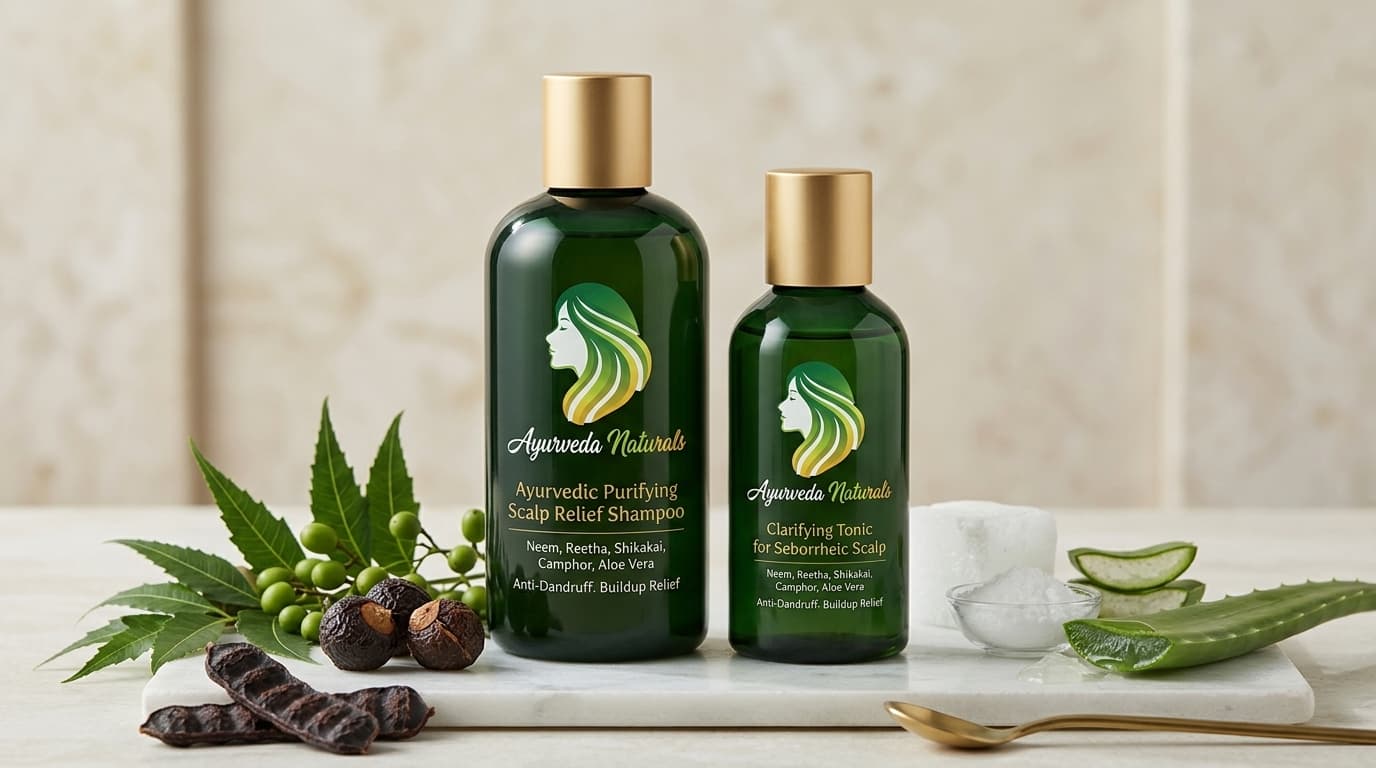
Learning how to treat scalp buildup and flaking from seborrheic dermatitis requires dismantling the biological triad of hyperactive sebaceous glands, Malassezia fungal lipase activity, and localized skin barrier inflammation. An effective, non-damaging protocol uses a three-phase natural strategy: (1) gentle keratolytic de-scaling with natural salicylic acid (willow bark) and mildly acidic Ayurvedic saponins (Shikakai and Reetha) to dissolve sticky sebum-keratin crusts without mechanical irritation, (2) targeted antifungal and antimicrobial control with aqueous Neem, Tea Tree, and Apple Cider Vinegar washes, and (3) barrier restoration and Pitta-cooling soothing via pure Aloe vera, Licorice root, and strict elimination of fungal-feeding vegetable oils (C11–C24 fatty acids like coconut and olive oil) to permanently eliminate yellow greasy scales and pruritus within 14 to 30 days.
The Pathobiology of Seborrheic Dermatitis & Scalp Buildup: The Three-Factor Triad
Seborrheic dermatitis is a chronic, relapsing inflammatory dermatosis characterized by erythematous patches covered with greasy, yellowish, adherent scales and persistent scalp buildup. Affecting up to 5% of the general population—and presenting in milder forms like chronic severe dandruff in up to 50% of adults—it is not merely a cosmetic issue, but a complex biological dysregulation involving three interconnected factors:
1. Sebaceous Gland Hyperactivity & Altered Sebum Composition
Seborrheic dermatitis occurs exclusively in sebum-dense anatomical zones—predominantly the scalp, vertex, hairline, eyebrows, nasolabial folds, and retroauricular regions. Under the influence of androgens, genetic predisposition, or autonomic stress, the sebaceous glands produce an excess of sebum rich in triglycerides, squalene, and wax esters.
2. Malassezia Lipase Cleavage and Oleic Acid Irritation
Commensal lipophilic yeasts of the genus Malassezia (predominantly Malassezia globosa and Malassezia restricta) thrive within sebum-rich environments. Because Malassezia cannot synthesize its own fatty acids, it secretes potent extracellular lipase enzymes that cleave sebum triglycerides into free fatty acids.
The yeast selectively assimilates saturated fatty acids for its metabolic needs, leaving behind large quantities of unsaturated fatty acids—most notably oleic acid and arachidonic acid. In susceptible individuals, oleic acid penetrates the stratum corneum, disrupting the organization of intercellular lipid lamellae.
3. Epidermal Hyperproliferation and Parakeratotic Scale Formation
The breached skin barrier triggers an acute inflammatory cascade: epidermal keratinocytes release pro-inflammatory cytokines (IL-1alpha, IL-6, IL-8, and TNF-alpha). In an effort to repair the barrier, the scalp accelerates its epidermal cell turnover rate from the normal 28-day cycle down to a hyperactive 7 to 10 days.
This rushed maturation results in parakeratosis—corneocytes that retain their cell nuclei and fail to detach normally. Instead of shedding invisibly, these unorganized dead cells clump together with oxidized sebum and fungal metabolites, forming thick, sticky, yellowish plaques that adhere stubbornly to the scalp and hair roots.
Seborrheic Dermatitis vs. Dandruff vs. Scalp Psoriasis vs. Product Buildup
Accurate identification of your specific type of scalp flaking is essential. Misdiagnosing seborrheic dermatitis as simple dry scalp and applying heavy oils will severely worsen the condition. For a deeper look at the underlying causes of flaking, explore our guides on how to cure severe dandruff permanently with Ayurveda and the truth about dandruff from an Ayurvedic perspective.
| Condition | Scale Appearance | Underlying Scalp Skin | Itch & Sensation | Primary Cause |
|---|---|---|---|---|
| Seborrheic Dermatitis | Thick, greasy, yellowish, adherent crusts and plaques | Erythematous (red), inflamed, warm, tender patches | Severe, persistent itch, prickling, burning sensation | Malassezia yeast overgrowth + host immune response to oleic acid |
| Simple Dandruff (Pityriasis Capitis) | Small, fine, dry, white, non-adherent flakes that fall freely onto shoulders | Normal color, non-erythematous, no visible inflammation | Mild to moderate intermittent itchiness | Mild Malassezia proliferation with minor accelerated desquamation |
| Scalp Psoriasis | Thick, dry, silvery-white, sharply demarcated micaceous plaques | Deep red, raised plaques; bleeds upon removal (Auspitz sign) | Tightness, stinging, soreness, severe itch | T-cell-mediated autoimmune keratinocyte hyperproliferation |
| Cosmetic Product Buildup | Dull, powdery, grayish-white film or gummy residue along hair shafts | Normal to congested, no redness or systemic inflammation | Minimal itch, hair feels heavy, limp, and lacks volume | Accumulation of non-water-soluble silicones, polymers, dry shampoo, and hard water minerals |
Ayurvedic Pathophysiology: Darunaka and Kapha-Vata/Pitta Vitiation
In classical Ayurvedic texts (such as the Ashtanga Hridaya and Sarangadhara Samhita), chronic flaking, scalp crusting, and seborrheic dermatitis are categorized under the diagnosis of Darunaka (a major disease of the scalp / Shiroroga).
1. The Dual Vata-Kapha Mechanism
Ayurveda describes Darunaka as a complex condition involving all three doshas:
- Vitiated Kapha Dosha: Governs unctuousness (Snigdhatva), heaviness (Gaurava), and stickiness (Picchilatva). Excess Kapha causes hyperactive sebum production, sticky exudation, and pore congestion (Srotorodha), creating the glue that cements dead cells into greasy plaques.
- Vitiated Vata Dosha: Governs dryness, roughness (Kharatva), and movement. Aggravated Vata causes rapid, abnormal exfoliation of scalp skin (Tvak Sphutana), generating relentless scaling.
- Vitiated Pitta Dosha: When chronic Kapha congestion traps internal metabolic heat, Pitta flares up. This accounts for the fiery burning sensation (Daha), scalp erythema, and painful tenderness.
2. Srotorodha and Hair Loss (Khalitya)
When the thick, sticky mixture of Kapha and Ama blocks the micro-channels (Kesha Vaha Srotas) supplying the hair roots (Kesha Moola), the follicles are deprived of prana and nutrient chyle (Ahara Rasa). Furthermore, the chronic local Pitta heat 'burns' the hair roots, loosening them and precipitating diffuse telogen hair shedding (Khalitya).
The Oil Dilemma: Why Coconut and Olive Oil Make Seborrheic Dermatitis Worse
The most common and devastating mistake made by individuals suffering from seborrheic dermatitis is applying traditional hair oils (such as coconut, olive, mustard, or castor oil) to soften the scales.
The Biochemical Carbon-Chain Rule of Malassezia
Extensive microbiological research demonstrates that Malassezia species possess 13 distinct lipase and phospholipase genes that metabolize fatty acids with carbon chain lengths spanning from C11 to C24:
- Coconut Oil: Contains ~50% Lauric Acid (C12) and ~20% Myristic Acid (C14) — the ultimate growth substrate for Malassezia.
- Olive Oil: Contains ~70% Oleic Acid (C18:1) — the exact irritant molecule that triggers the inflammatory flare.
- Castor Oil: Contains ~90% Ricinoleic Acid (C18:1-OH) — metabolized rapidly by fungal enzymes.
Applying these plant oils to a seborrheic scalp is biologically identical to pouring fuel on an open fire.
The Only 100% Malassezia-Safe Lipids
- 100% Pure MCT Oil (Caprylic/Capric Triglycerides): Contains exclusively 8-carbon (C8 Caprylic Acid) and 10-carbon (C10 Capric Acid) triglycerides. Malassezia enzymes cannot cleave or utilize carbon chains shorter than C11, making pure MCT oil 100% safe.
- 100% Pure Squalane Oil (Sugarcane-Derived): A fully saturated, highly stable hydrocarbon that does not contain the fatty acid ester bonds required for fungal metabolism.
The Multi-Phasic Botanical Treatment Protocol
Successfully eliminating seborrheic buildup requires a sequential, three-phase therapeutic approach designed to de-scale, disinfect, and repair:
Phase 1: Keratolytic De-Scaling & Crust Softening (Non-Mechanical)
Never violently scrape or scrub adherent crusts. Instead, employ gentle biochemical and enzymatic keratolytic agents:
- Willow Bark Extract (Salix alba): Natural precursor to salicylic acid (BHA). Oil-soluble, it penetrates deep into lipid-rich follicular plugs, cleaving intercellular desmosomes to dissolve sticky crusts from within.
- Shikakai (Acacia concinna): Contains natural acacic acid and lupeol saponins with an inherently low pH of 4.5 to 5.0. It gently breaks sebum crusts without stripping the delicate lipid mantle.
- Dilute Apple Cider Vinegar: Restores scalp acidity, breaks mineral buildup, and loosens flakes safely.
Phase 2: Targeted Antifungal & Antimicrobial Cleansing
Once scales are softened, cleanse the scalp with potent botanical antifungals to suppress Malassezia populations:
- Neem Leaf Extract (Azadirachta indica): Nimbin and azadirachtin directly inhibit fungal cell wall synthesis and suppress yeast lipase expression.
- Reetha / Soapnut (Sapindus mukorossi): Pure botanical saponins that emulsify oxidized grease and wash away fungal spores completely without synthetic sulfates.
- Tea Tree Oil (Melaleuca alternifolia): Terpinen-4-ol disrupts the fungal cell membrane; always dilute in safe MCT oil or aqueous rinses.
Phase 3: Stratum Corneum Barrier Restoration & Soothing
Soothe underlying Pitta inflammation and restore the damaged epidermal moisture barrier:
- Pure Aloe Vera Inner Gel: Rich in acemannan, magnesium lactate (a natural antihistamine), and gibberellins that stop itching instantly and accelerate epidermal re-epithelialization.
- Yashtimadhu / Licorice Root (Glycyrrhiza glabra): Rich in glycyrrhizin, a natural anti-inflammatory agent that inhibits 11-beta-hydroxysteroid dehydrogenase, calming red erythema.
Internal Ayurvedic Diet and Metabolic Agni Optimization
Topical scalp therapy must be supported by internal metabolic balance. In Ayurveda, chronic skin conditions originate in the gut through impaired digestive fire (Manda Agni) and the accumulation of Ama (systemic toxins).
Dietary Guidelines for Seborrheic Dermatitis
- Eliminate High-Glycemic Sugars and Refined Carbohydrates: Elevated blood glucose directly increases sebaceous gland lipogenesis, flooding the scalp with extra triglyceride food for Malassezia.
- Avoid Yeast-Fermented & Mold-Containing Foods: Strictly minimize beer, wine, blue cheeses, vinegar-heavy pickles, and commercial baked breads made with active yeast during flare-ups.
- Incorporate Bitter (Tikta) and Astringent (Kashaya) Herbs: Consume bitter gourd (Karela), turmeric, fenugreek, and leafy greens to clear liver heat (Ranjaka Pitta) and purify the blood (Rakta Shodhana).
- Daily Triphala Protocol: Take 1 teaspoon of organic Triphala powder in warm water before bed to ensure daily elimination of Ama and prevent systemic endotoxemia.
The 30-Day Scalp Detox Roadmap
Follow this structured four-week protocol to systematically dissolve scalp buildup, eliminate flaking, and establish long-term remission:
Week 1: Intensive De-Scaling & Antifungal Reset
Washing: Wash every other day using our sulfate-free Purifying Hair Shampoo. Leave lather on the scalp for 5 full minutes before rinsing.
Herbal Rinse: Follow every wash with a dilute Apple Cider Vinegar rinse (1:4 ratio with water). Do not use any traditional oils.
Milestones: Thick yellow crusts begin to soften and wash away freely. Scalp itching decreases by 50%.
Week 2: Biofilm Disruption & Soothing
Washing: Cleanse 3 times weekly with Purifying Shampoo.
Herbal Rinse: Alternate between a boiled Neem leaf decoction and an ACV rinse.
Scalp Soothing: Apply pure fresh Aloe vera inner gel directly to any red, inflamed zones 30 minutes before washing. Greasy buildup is 80% cleared; redness visibly subsides.
Weeks 3 – 4: Barrier Consolidation & Maintenance
Washing: Maintain washing 2 to 3 times weekly to prevent sebum re-accumulation.
Maintenance: Use a weekly Neem herbal rinse. If light moisture is needed on hair ends, apply 2 drops of 100% pure sugarcane Squalane oil or MCT C8 oil strictly to the lengths.
Milestones: 100% clear scalp surface, complete disappearance of flaking and erythema, zero pruritus, and restored follicular vitality.
Ready to Transform Your Hair Naturally?
Explore our 100% organic Ayurvedic haircare range crafted with 15+ potent herbs.
Hair Regrowth Oil · Purifying Hair Shampoo · Ultimate Haircare Bundle
Frequently Asked Questions
How do you permanently treat scalp buildup and flaking from seborrheic dermatitis?
Permanent management of seborrheic dermatitis requires a comprehensive approach: chemical keratolytic de-scaling with natural salicylic acid (willow bark) and acidic herbal saponins (Shikakai and Reetha) to remove sticky crusts without mechanical trauma; eliminating Malassezia yeast overgrowth using botanical antifungals like Neem, Tea Tree, and Apple Cider Vinegar; avoiding yeast-feeding plant oils (coconut, olive, castor); and soothing barrier inflammation with pure Aloe vera and internal Ayurvedic Pitta-Kapha balancing diets.
Why does coconut oil make seborrheic dermatitis worse?
The yeast responsible for seborrheic dermatitis (Malassezia) lacks its own fatty acid synthase enzyme and depends entirely on exogenous lipids with carbon chain lengths between C11 and C24 for survival. Coconut oil is roughly 50% lauric acid (a C12 fatty acid), which acts as the ideal food source for Malassezia, causing rapid yeast proliferation, increased oleic acid production, and severe inflammatory flaking flares.
What is the difference between dandruff and seborrheic dermatitis?
Dandruff (Pityriasis capitis) is a mild, non-inflammatory condition presenting as dry, loose, fine white flakes that detach easily without significant scalp redness. Seborrheic dermatitis is a chronic inflammatory disorder characterized by thick, greasy, yellowish adherent crusts attached to red, itchy, inflamed patches of skin that can spread to the eyebrows, ears, and chest.
Can you use a scalp scrub or brush to remove seborrheic dermatitis buildup?
No. Aggressive mechanical scrubbing with stiff brushes, abrasive physical scrubs, or fingernails creates micro-tears in an already compromised stratum corneum, triggering the 'Koebner phenomenon' and worsening inflammation, flaking, and secondary bacterial infections. Instead, use gentle chemical and enzymatic de-scaling agents like willow bark, Shikakai, or dilute Apple Cider Vinegar.
Which oils are 100% safe to use on a scalp with seborrheic dermatitis?
The only oils that do not feed Malassezia yeast are 100% pure MCT oil containing only Caprylic (C8) and Capric (C10) triglycerides (with zero lauric acid C12), 100% pure sugarcane-derived Squalane oil, and pure mineral oil. All other plant oils, butters, and esters feed the yeast and should be avoided on the scalp.
Can seborrheic dermatitis scalp buildup cause hair loss?
Yes. Severe seborrheic buildup suffocates the follicular infundibulum, while the intense micro-inflammation and oxidative stress from Malassezia byproducts damage the hair root matrix. This pushes follicles into premature telogen shedding. Furthermore, vigorous scratching damages the hair shaft and root sheath. Fortunately, hair loss from seborrheic dermatitis is temporary and regrows once inflammation is resolved.
How does Apple Cider Vinegar help remove scalp flaking and buildup?
Apple Cider Vinegar contains natural acetic acid and alpha-hydroxy acids (malic acid) with a low pH (2.5–3.0). When diluted with water, it restores the scalp's physiological acid mantle (pH 4.5–5.5), dissolves alkaline soap scum and calcium deposits from hard water, softens keratin crusts, and creates an acidic environment that inhibits Malassezia replication.
Eliminate Scalp Buildup & Flaking Naturally
Free your scalp from stubborn crusts, greasy buildup, and persistent itching with our botanical Purifying Hair Shampoo. Powered by organic Neem, Shikakai, Reetha, and soothing Aloe Vera, it restores a healthy microbiome and leaves hair weightlessly refreshed.
Discover the Purifying ShampooReady to stop hair fall naturally?
Don't wait until it's too late. Experience the proven magic of our 100% organic, wild-harvested Ayurvedic formulations and start seeing real results in 14 days.
Free Shipping + Cash on Delivery