
Herbal Anti Dandruff Shampoo Pakistan Buy

Introduction: The Endless Winter on Your Shoulders
We have all been there, or at least, we all know someone who has. You are getting ready for an important presentation, a romantic date, or simply a night out with friends. You put on your favorite dark-colored shirt or an elegant black dress, take one last look in the mirror, and there it is: the dreaded dusting of white flakes resting upon your shoulders like an uninvited winter snowfall. The immediate reaction is usually a mix of embarrassment and frustration. You brush them away, but within hours, they return. This is the persistent, maddening reality of dandruff. For millions of people worldwide, dandruff is not just a cosmetic nuisance; it is a chronic source of anxiety, discomfort, and plummeting self-esteem. It is crucial to know where to find a trusted herbal anti dandruff shampoo Pakistan buy online to combat this persistent issue naturally.
If you have struggled with dandruff, you have likely traversed the seemingly endless aisles of pharmacies and supermarkets, scanning rows upon rows of brightly colored plastic bottles promising "instant relief," "100% flake-free hair," and "extensively tested results." You have probably tried the bright blue liquids, the clinical-strength chemical concoctions, and the medicinal-smelling tar shampoos. And perhaps, for a fleeting moment, they worked. Your scalp felt momentarily clean, aggressively stripped of every natural oil it possessed. But what happens when you stop using them for just one week? The flakes return, often with a vengeance, accompanied by an unbearable itch and an even more inflamed scalp.
This vicious cycle happens because modern, conventional treatments often treat dandruff merely as a superficial issue—a symptom to be temporarily suppressed rather than a root imbalance to be fundamentally healed. They act as chemical band-aids. But what if we told you that dandruff is not just "dry skin" crying out for moisture? What if the true cause lies much deeper, rooted in an intricate fungal imbalance and a disruption of your body's vital energies? Welcome to the profound and illuminating world of Ayurveda, an ancient Indian system of medicine that has been successfully diagnosing and treating the root causes of scalp ailments for over five thousand years.
From an Ayurvedic perspective, dandruff—known traditionally as Darunaka—is a highly specific manifestation of doshic aggravation, primarily involving Vata and Kapha imbalances, which creates the perfect micro-environment for opportunistic fungi to thrive. In this comprehensive guide, we are going to dive deep into the truth about dandruff. We will unravel the scientific and Ayurvedic mechanisms behind why your scalp is flaking, explore the critical role of your scalp's microbiome, and reveal how potent botanical allies like Neem and Tea Tree oil can resolve this fungal imbalance effectively. If you are ready to break free from the cycle of chemical dependency and restore true, lasting harmony to your hair and scalp, read on.
Understanding Dandruff: The Modern View vs. The Ayurvedic Wisdom
Before we can assist with an ailment, we must intimately understand its nature. Modern dermatology and ancient Ayurveda might use different terminologies, but when we look closely, they often describe the exact same physiological phenomena from different vantage points. Understanding both perspectives gives us a complete, holistic picture of the battlefield that is your scalp.
The Modern Dermatological Perspective: The Malassezia Menace
In modern science, dandruff is primarily understood as a condition caused by a microscopic, yeast-like impurities called Malassezia globosa. Here is the fascinating—and somewhat unsettling—truth: this impurities is not an invading foreign pathogen. It actually lives peacefully on the scalp of nearly every single human adult on the planet. It is a natural part of your skin's microbiome. So why do some people suffer from severe dandruff while others never see a single flake in their entire lives?
The answer lies in the balance of the scalp's ecosystem and your skin's unique, genetic reaction to the impurities. Malassezia feeds on the natural oils (sebum) produced by your hair follicles. As the impurities feasts on these oils, it breaks them down and leaves behind a highly irritating byproduct called oleic acid. For about half of the global population, the scalp is highly sensitive to this specific oleic acid. When the acid penetrates the top layer of the epidermis, it triggers an intense inflammatory response. Your immune system senses an irritant and goes into overdrive, attempting to shed the affected skin cells as rapidly as possible to purge the threat.
Under normal, healthy conditions, human skin cells take about a full month to mature, die, and shed invisibly. But when Malassezia triggers this inflammatory panic, the cell turnover rate hyper-accelerates. The cells mature and shed in just a matter of days. Because they are shedding so rapidly, they clump together with excess oils and dirt to form the visible white or yellowish flakes we identify as dandruff. When this fungal activity goes completely out of control, it evolves into a much more severe, chronic inflammatory condition known as severe flaking.
The Ancient Ayurvedic Perspective: The Concept of Darunaka
Thousands of years before microscopes could identify Malassezia globosa or dermatologists could isolate oleic acid, Ayurvedic sages accurately described this exact condition. In the classical Ayurvedic texts, such as the venerated Charaka Samhita and Sushruta Samhita, dandruff is referred to as Darunaka. It is traditionally classified under Kshudra Rogas, which translates to minor diseases, but the ancient texts explicitly acknowledge its stubborn, highly recurrent nature and the deep distress it causes the patient.
Ayurveda views the human body not as a collection of isolated, mechanical parts, but as a holistic, interconnected system governed by three primary life forces or energies known as Doshas: Vata (representing the elements of air and space), Pitta (representing the elements of fire and water), and Kapha (representing the elements of earth and water). Perfect, radiant health is achieved when these three doshas exist in a dynamic equilibrium. Disease—including scalp disease—occurs when one or more of these doshas become aggravated, vitiated, or pushed out of their natural balance.
According to Ayurvedic pathology, Darunaka is never caused by a single, isolated factor. It is rather a complex, multi-layered interplay of aggravated Vata and Kapha doshas, often with Pitta ultimately contributing to the inflammatory aspect. When Kapha dosha, which governs lubrication, structure, and fluid balance, becomes imbalanced, it produces an excess of sebum (oil) and creates a damp, sticky, and heavy environment on the scalp. Simultaneously, when Vata dosha, which governs movement, circulation, and dryness, becomes aggravated, it disrupts the natural, rhythmic shedding process of the skin and causes excessive scaling and roughness. This specific combination of deep Kapha dampness at the root and superficial Vata dryness on the surface creates the perfect storm: an ideal breeding ground for pathogenic microbes, which Ayurveda refers to generally as Krimi (encompassing bacteria, parasites, and fungi).
The Role of the Doshas: Is Your Dandruff Vata, Pitta, or Kapha Dominant?
One of the greatest failings of commercial hair care is the fundamental "one size fits all" approach. A single, mass-produced anti-dandruff shampoo is marketed indiscriminately to everyone. But Ayurveda recognizes that every individual has a unique genetic constitution (Prakriti) and that illnesses manifest entirely differently depending on which dosha is dominant in the current imbalance (Vikriti). Understanding your specific doshic type of dandruff is the absolutely critical first step to effectively curing it, rather than just masking it.
Vata-Dominant Dandruff: The Dry Winter Storm
Vata dosha is characterized by the qualities of being dry, light, cold, rough, and mobile. When Vata is aggravated on the scalp, it drastically restricts the natural production of protective sebum, leading to extreme dehydration and malnourishment of the scalp tissues. Vata-type dandruff is what most people mistakenly refer to as simply "dry scalp," but it is a distinct pathological state.
Symptoms of Vata Dandruff: The flakes are typically very small, dry, stark white, and highly powdery. They fall off the scalp incredibly easily, dusting your shoulders, collar, and back like fine, dry snow. The scalp feels tight, rough, and highly itchy, especially in cold, dry winter weather or when exposed to artificial air-conditioned environments. The hair itself will often appear lifeless, dry, frizzy, brittle, and highly prone to breakage and split ends.
The Root Cause: Vata aggravation is heavily driven by lifestyle factors. Excessive stress, anxiety, chronic lack of sleep, fasting or irregular eating habits, and a diet too high in dry, cold, or highly processed foods all spike Vata. Externally, excessive washing with harsh chemical shampoos and exposure to cold, harsh winds without protecting the head will rapidly dry out the natural lipid barrier, triggering Vata dandruff.
Kapha-Dominant Dandruff: The Fungal Breeding Ground
Kapha dosha is characterized by the qualities of being heavy, oily, cold, damp, dense, and sticky. When Kapha dosha becomes vitiated, the sebaceous glands go into absolute overdrive, producing an excessive, unnatural amount of thick, sticky oil. This is the exact, nutrient-dense environment where our fungal friend, Malassezia, throws a massive, uninhibited feast.
Symptoms of Kapha Dandruff: The flakes are significantly larger, often yellowish in color, sticky, and greasy to the touch. Instead of falling easily to the shoulders, they tend to clump together and adhere stubbornly to the scalp and the very roots of the hair. The scalp often smells slightly sour, musty, or yeasty due to the fungal activity. The itching is deep, persistent, and accompanied by a heavy, sluggish feeling in the head. The hair looks lank, heavily oiled, and weighed down, often appearing dirty even shortly after a thorough washing.
The Root Cause: Kapha aggravation is almost always driven by systemic issues like a sluggish metabolism, a sedentary lifestyle, and critically, poor digestion leading to the accumulation of Ama (undigested metabolic toxins). A diet heavily reliant on sweet, oily, heavy, deep-fried, and processed dairy-rich foods (like cheese and ice cream) creates excess Kapha in the gut, which literally oozes out through the body's channels (Srotas) and manifests on the scalp, feeding the fungal overgrowth.
Pitta-Dominant Dandruff: The Fiery Inflammation
While Vata and Kapha are the primary structural culprits in Darunaka, Pitta dosha almost always joins the fray as the condition worsens, severely complicating the healing process. Pitta is characterized by heat, sharpness, intensity, and inflammation.
Symptoms of Pitta Dandruff: The scalp becomes intensely red, visibly inflamed, hot to the touch, and extremely sensitive or sore. The itching morphs from a dry tickle into a severe, burning sensation. There may be painful bumps, pimples, pustules, or even bleeding if the scalp is scratched too aggressively. The actual flakes can be either dry (Vata-Pitta) or greasy (Kapha-Pitta), but the defining feature is the severe, undeniable inflammation and erythema (redness).
The Root Cause: Pitta aggravation is caused by excess internal heat in the body. This is driven by deep emotional stress, unexpressed anger, hormonal imbalances, excessive exposure to the sun, and a diet too high in spicy, sour, salty, and fermented foods (such as tomatoes, vinegar, chilies, and alcohol). This internal heat rises to the head, literally "cooking" the scalp and creating intense inflammation.
Why Commercial Anti-Dandruff Shampoos Fail You
Now that we intimately understand the complex, multi-layered Ayurvedic pathology of dandruff, it becomes painfully and obviously clear why grabbing a standard bottle of commercial anti-dandruff shampoo from the local drugstore is a assured recipe for long-term failure.
Let's critically examine the active ingredients found in the vast majority of popular anti-dandruff products. You will commonly find synthetic chemical agents like Zinc Pyrithione, Ketoconazole, Selenium Sulfide, or Coal Tar. These are highly aggressive, lab-created chemicals designed with one singular, myopic goal: to chemically nuke the Malassezia impurities and forcibly suppress the cellular turnover rate.
While they might temporarily achieve this isolated goal, they cause massive, devastating collateral damage to the scalp ecosystem in the process. These harsh chemicals indiscriminately strip the scalp of its delicate protective acid mantle and eradicate all of its natural, healthy, lubricating oils. Furthermore, they disrupt the entire delicate microbiome of the scalp, killing off the beneficial, symbiotic bacteria right alongside the pathogenic impurities. What is the ultimate result? Your scalp goes into a state of absolute physiological panic.
From an Ayurvedic perspective, this aggressive chemical stripping causes a severe, immediate spike in Vata dosha due to the sudden introduction of extreme dryness and roughness. In desperate response to this Vata crisis, the body's intelligence frantically tries to overcompensate by pumping out even more Kapha (excess sebum) to relubricate and protect the terribly compromised, dry scalp. This massive overproduction of oil creates a brand new, even richer and thicker feeding ground for the Malassezia impurities to return with a vengeance the moment you attempt to stop using the medicated shampoo.
This phenomenon is known as the infamous "rebound effect." You find yourself trapped in an endless, expensive loop. You use the harsh shampoo to temporarily clear the flakes. The shampoo strips the scalp. The scalp overproduces oil in a panic to heal itself. The impurities inevitably returns to eat the newly produced oil. The flakes come back worse than before. You are forced to buy more shampoo. The cosmetic and pharmaceutical companies profit endlessly from your sustained imbalance, while your scalp health steadily deteriorates.
The Ayurvedic Solution: Healing the Fungal Imbalance from the Roots
Ayurveda flatly rejects the concept of mere symptom management. It does not believe in chemical band-aids. It believes in profound, structural, root-cause healing. To alleviate dandruff effectively and genuinely, we must approach it holistically. We must effectively eliminate the fungal overgrowth without destroying the scalp's delicate natural microbiome. We must pacify the aggravated Vata and Kapha doshas. We must deeply strengthen the hair follicles and soothe the fiery Pitta inflammation. And most importantly, we must address the root cause, which often begins deep within the gut and the mind.
This authentic healing journey involves a carefully calibrated, synergistic approach utilizing powerful, nature-derived topical botanical treatments alongside supportive lifestyle and dietary adjustments. At the very heart of this ancient Ayurvedic protocol are two of the most potent, scientifically validated botanical medicines on planet Earth: Neem and Tea Tree Oil.
Neem (Azadirachta indica): The Ultimate Antifungal Marvel
In the vast, ancient pharmacopeia of Ayurvedic botanical medicine, incredibly few plants command as much profound respect and reverence as the Neem tree. Often referred to in classical Sanskrit texts as Sarva Roga Nivarini (the assist withr of all ailments) and traditionally known as the "Village Pharmacy" in rural India, absolutely every part of the Neem tree—its leaves, bark, seeds, and the deeply aromatic oil extracted from them—is packed with astonishing medicinal, curative properties. When it comes specifically to restoring scalp health and eradicating chronic dandruff, Neem is nothing short of miraculous.
The Deep Science of Neem’s Antifungal Power
Ayurvedic physicians have prescribed Neem for severe skin and scalp diseases for millennia, primarily because of its powerful cooling (Sheetala) and blood-purifying properties, which rapidly and effectively pacify both aggravated Pitta and Kapha doshas. However, modern dermatological science has now caught up with ancient wisdom, isolating the exact biochemical compounds that make Neem such a devastating, targeted weapon against dandruff.
Neem is incredibly rich in complex active phytochemical compounds, most notably Nimbidin, Nimbin, Gedunin, and Quercetin. Numerous rigorous clinical studies have conclusively demonstrated that these specific compounds possess extraordinarily strong antifungal, antibacterial, and anti-inflammatory properties. Nimbidin, in particular, has been shown in laboratory settings to directly inhibit the growth and proliferation of Malassezia globosa, the exact fungal strain responsible for dandruff. It fundamentally disrupts the cellular walls of the impurities, completely halting its ability to multiply, spread, and thrive on the human scalp.
Beyond impurities: Comprehensive Holistic Scalp Healing
But the true brilliance of Neem goes far beyond simply acting as a natural fungicide. Unlike synthetic chemical antifungals that leave the scalp barren, chemically burned, and damaged, Neem acts as an highly intelligent, adaptogenic healer:
- Regulates Sebum Production: Neem naturally balances the heavy Kapha dosha, sending signals to the sebaceous glands to normalize their output. It prevents the scalp from overproducing the sticky, heavy oil that feeds the impurities in the first place, thus removing the food source of the disease.
- Soothes Severe Inflammation: For those suffering from Pitta-aggravated, red, inflamed, and intensely itchy scalps, Neem provides immediate, deep cooling relief. Its potent anti-inflammatory action rapidly reduces redness, brings down local heat, and stops the excruciating itch-scratch cycle that further damages the hair follicles.
- Purifies the Blood and Roots: Neem contains powerful, broad-spectrum antioxidants that neutralize damaging free radicals, intensely detoxifying the micro-vessels feeding the hair follicles. This promotes a deeply purified, oxygen-rich environment where vibrant, healthy hair can finally flourish uninhibited.
Tea Tree Oil (Melaleuca alternifolia): Nature’s Antiseptic Powerhouse
While Neem stands as the undisputed king of classical Ayurvedic scalp care, it finds a truly perfect, modern synergistic partner in Tea Tree Oil. Although the Tea Tree is native to the coastal regions of Australia and was famously utilized by Indigenous Australians for centuries to heal wounds and skin infections, it is not traditionally detailed in ancient Indian texts. However, modern Ayurvedic practitioners globally have enthusiastically embraced it into their protocols due to its spectacular, undeniable balancing effects on Kapha dosha and its unrivaled, scientifically proven antiseptic capabilities.
Derived from the aromatic leaves of the Melaleuca alternifolia tree, Tea Tree oil is a highly concentrated, incredibly potent volatile essential oil. Its primary active therapeutic constituent is Terpinen-4-ol, a remarkable compound that has been rigorously proven in countless dermatological studies to possess immense broad-spectrum antimicrobial, antifungal, and antiviral activity.
The Synergistic Eradication of Malassezia
When Tea Tree oil is intelligently applied to the scalp (always properly diluted in a nourishing carrier oil, never applied raw, as its potency can burn the skin), it penetrates deeply down into the core of the hair follicles. Terpinen-4-ol effectively destroys the Malassezia yeast colonies by physically breaking down their cellular structure and causing cellular leakage. A landmark dermatological study published in the prestigious Journal of the American Academy of Dermatology showed that a shampoo formulation containing just 5% Tea Tree oil significantly reduced the severity of dandruff, intense itchiness, and greasiness in human patients after just four weeks of consistent use, with absolutely zero of the negative side effects associated with chemical treatments.
When you combine the acute, penetrating power of Tea Tree Oil with the deep, sustained healing of Neem, you create an unstoppable, full-spectrum, holistic defense against dandruff. Tea Tree provides the immediate, penetrating antiseptic strike, rapidly clearing out the existing fungal colonies and unclogging deeply blocked hair follicles. Neem follows up closely behind with deep, sustained anti-inflammatory healing, regulating the future oil production, and fortifying the scalp's natural immune defenses against any future outbreaks. Together, they effectively reset the scalp's delicate microbiome, transforming it from a diseased fungal breeding ground into a beautifully balanced, healthy, thriving ecosystem.
How to Create a Permanent Ayurvedic Anti-Dandruff Routine
Theoretical knowledge without practical application is merely philosophy. To effectively resolve your dandruff and reclaim the health of your hair, you must purposefully integrate these powerful botanical herbs into a consistent, dedicated, daily hair care ritual. In Ayurveda, the true path to healing is always found through gentle, loving, daily devotion to the body, not through harsh, occasional chemical assaults.
Step 1: The Sacred Ritual of Shiro Abhyanga (Therapeutic Scalp Oiling)
The absolute foundational cornerstone of all Ayurvedic hair care is Shiro Abhyanga, the ancient practice of deeply massaging warm, herb-infused, medicinal oils into the scalp. Many people with dandruff, especially the greasy Kapha type, mistakenly avoid oils entirely, fearing it will make the problem worse. Remember this crucial Ayurvedic principle: "like dissolves like." The correct, targeted herbal oils will dissolve the sticky, hard, fungal-laden sebum blocking your follicles, all while delivering deep, concentrated medicinal healing directly to the roots.
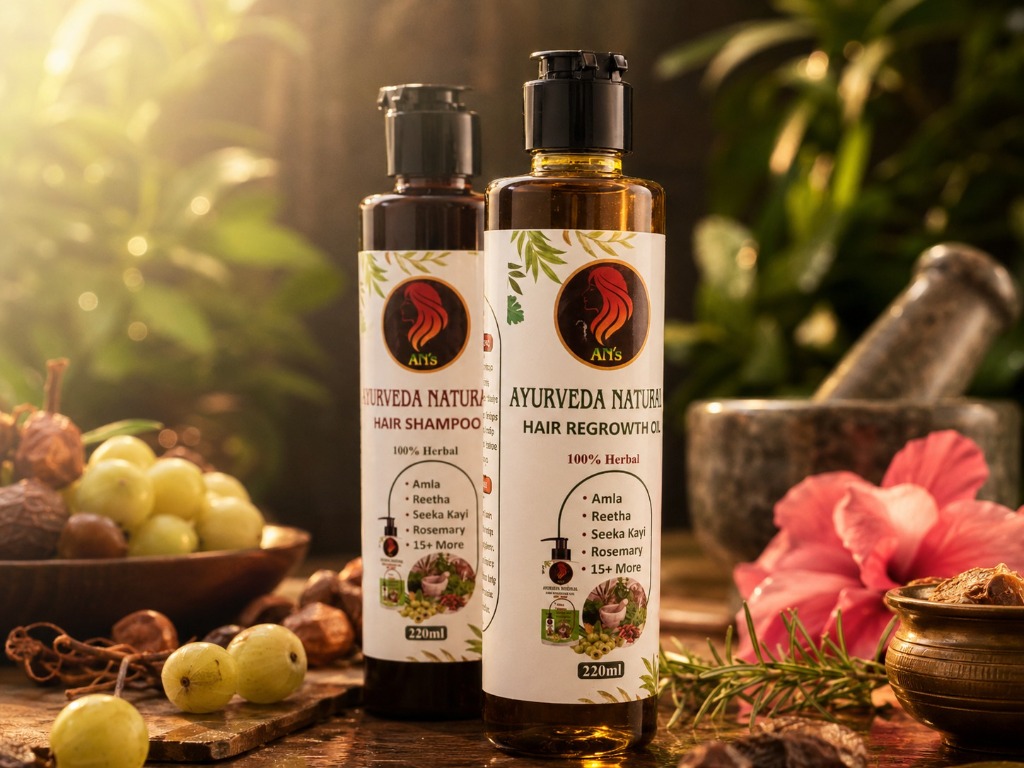
You need a targeted oil that is explicitly formulated to vigorously combat fungal infections, soothe parched Vata dryness, and efficiently regulate heavy Kapha oiliness. We highly and confidently recommend incorporating our deeply penetrating 15-Herbs Hair Regrowth Oil into your weekly routine. This incredibly potent formulation is not just designed for stimulating hair growth; it is masterfully packed with powerful Ayurvedic herbs, including potent antifungals, that create an entirely inhospitable environment for fungi while deeply nourishing and rebuilding the roots.
How to properly perform Shiro Abhyanga: Gently warm the herbal oil (never ever microwave it, which destroys the delicate botanical compounds; use a gentle hot water bath or double boiler method). Neatly part your hair into sections and apply the warm oil directly to the exposed scalp. Using the soft pads of your fingertips (never your sharp nails), massage the scalp in vigorous, yet gentle, circular motions for at least 10 to 15 minutes. This action heavily stimulates blood circulation, releases scalp tension (lowering Vata), and ensures the medicinal herbal extracts penetrate deep down into the follicular level. Leave the therapeutic oil on for a minimum of one hour, or ideally overnight, allowing the Neem and other botanical extracts ample time to work their profound magic.
Step 2: Gentle, Purifying Botanical Cleansing
After deeply treating and saturating the scalp with medicinal oils, you must carefully wash them out without using harsh, commercial chemical sulfates (like SLS or SLES) that will instantly ruin all your hard healing work and send the scalp right back into a state of Vata shock. You need a cleanser that utilizes gentle, natural botanical saponins (such as Reetha and Shikakai) alongside potent natural antifungals.
This is exactly where our Purifying Herbal Shampoo becomes your greatest, most reliable daily ally. Formulated entirely without synthetic chemical detergents, toxic parabens, or irritating artificial fragrances, it gently and effectively lifts away excess oil, dead skin cells, and microscopic fungal debris without violently stripping your scalp's vital protective moisture barrier. It expertly leverages the combined power of Neem and other clarifying Ayurvedic botanicals to maintain a perfectly balanced, slightly acidic pH on your scalp—an environment where the Malassezia impurities simply cannot survive.
Step 3: Unwavering Consistency and Deep Holistic Care
Chronic dandruff did not manifest on your scalp overnight, and it will absolutely not disappear effectively after a single, solitary wash. True healing of a deep-seated fungal imbalance requires profound patience, respect for your body's timeline, and unwavering consistency. Make this Ayurvedic routine a non-negotiable weekly ritual. As your scalp slowly begins to heal from the roots up, the intense, maddening itching will be the very first symptom to subside, closely followed by a gradual, steady reduction in the visible flakes, until your scalp is completely clear, calm, and incredibly healthy.
If you are truly serious about radically transforming your entire approach to personal care and abandoning the toxic cycle of commercial cosmetics, we warmly invite you to explore our full range of holistic solutions. You can Shop All Organic Haircare to build a comprehensive, completely natural, and deeply effective regimen that profoundly honors the innate intelligence of your body and the timeless wisdom of the earth.
Lifestyle and Dietary Adjustments for a Flake-Free Scalp
As we emphasize constantly and repeatedly in the study of Ayurveda, what you apply externally to your body is only half the battle. What you put internally into your body ultimately determines the fundamental balance of your doshas and the strength of your immune system. Dandruff is almost always a physical, external manifestation of deep internal toxicity (known as Ama) and a severely compromised digestive fire (weak Agni).
Foods to Severely Limit or Avoid (The impurities Feeders)
If you are actively battling a Malassezia overgrowth, you must absolutely stop feeding the impurities from the inside out. Fungi, yeast, and bad bacteria thrive on refined sugar and internal dampness. You should strictly limit or completely eliminate:
- Refined Sugars and Artificial Sweets: Sugar directly and immediately suppresses the immune system and acts as the ultimate super-fuel for yeast and fungal overgrowth throughout the entire body, including the scalp.
- Excess Processed Dairy: In Ayurvedic medicine, cold, pasteurized, heavily processed dairy (especially cheese, milk, and ice cream) is considered highly Kapha-genic. It creates heavy, sticky mucus and dense dampness in the digestive tract, which eventually travels through the body's channels and manifests as excess, sticky sebum on the scalp.
- Yeasty and Highly Fermented Foods: Commercial yeast breads, excessive alcohol (especially beer and sweet wine), and excessive consumption of vinegar can severely exacerbate systemic fungal imbalances.
- Deep-Fried and Greasy Foods: These heavy foods completely bog down the liver and disrupt the body's natural fat metabolism, leading directly to the production of poor-quality, highly inflammatory sebum on the scalp.
Foods to Actively Include (The System Purifiers)
To fundamentally heal your scalp, you must eat foods that pacify heavy Kapha, ground erratic Vata, and cool inflamed Pitta. Focus your diet heavily on whole, fresh, deeply nourishing, and purifying foods:
- Bitter and Astringent Greens: Fresh kale, spinach, arugula, collard greens, and dandelion greens are highly revered in Ayurveda for their unique ability to rapidly purify the blood, support the liver, and clear out excess systemic heat and toxicity.
- Healthy, Digestible Fats: To effectively combat Vata dryness from within, you must include moderate amounts of high-quality, easily digestible fats like organic grass-fed Ghee, soaked chia seeds, flaxseeds, and walnuts. These provide the essential internal, systemic lubrication needed for a healthy, flexible scalp.
- Potent Anti-inflammatory Spices: Liberally incorporate organic turmeric, cumin, coriander, ginger, and fennel into your daily cooking. Turmeric, in particular, is a miraculous systemic anti-inflammatory that works beautifully from the inside out, alongside external Neem application, to completely clear stubborn skin conditions.
- Abundant Hydration: Drink plenty of warm water or herbal teas throughout the day to constantly flush accumulated toxins from the lymphatic system and keep the skin deeply hydrated.
Deep Stress Management: Taming the Vata Storm
Never, under any circumstances, underestimate the profound, undeniable connection between your mind, your nervous system, and your scalp. High stress, chronic anxiety, and a constantly overactive, frazzled nervous system directly and severely aggravate Vata dosha. Have you ever noticed that your dandruff flares up dramatically and uncontrollably during intense exam weeks, stressful work deadlines, or periods of deep emotional turmoil? That is the Vata spike in action, rapidly constricting blood vessels, drying out the scalp, and triggering the rapid cellular shedding response.
Integrating daily, non-negotiable stress-management practices such as Pranayama (deep, controlled breathwork), seated meditation, or gentle, grounding Yoga is not just a "nice to have" lifestyle suggestion—it is an absolute medical necessity for treating chronic Vata imbalances and permanent dandruff. When the nervous system finally calms down and shifts out of "fight or flight" mode, the skin's barrier function repairs itself, the immune system stabilizes, and the inflammatory panic on the scalp ceases immediately.
Conclusion: Reclaiming Your Confidence, Naturally
Dandruff is a highly frustrating, deeply annoying, and often confidence-draining condition, but you must remember that it is absolutely not a life sentence. You do not have to spend the rest of your life tethered to harsh, toxic chemical shampoos that relentlessly damage your hair, poison your body, and offer only fleeting, temporary relief at best. By taking the time to deeply understand the intricate, Ayurvedic mechanics of the condition—recognizing the complex, beautiful dance of Vata, Pitta, and Kapha doshas, and understanding the opportunistic, natural behavior of the Malassezia impurities—you fundamentally empower yourself to make profound, lasting, and permanent changes.
Nature has already provided us with the perfect, complete remedies. The extraordinarily powerful antifungal brilliance of ancient Neem and the incredibly deep, penetrating antiseptic power of Tea Tree oil offer a fully scientifically proven, holistically sound path to complete healing. When you consciously combine these incredible botanical powerhouses with mindful, intelligent dietary choices and targeted, deep stress reduction, you are no longer just treating a superficial symptom; you are actively restoring the fundamental harmony, health, and vitality of your entire body.
Embrace the incredibly rewarding journey of natural, holistic healing. Be gentle and patient with your body. Shift your perspective away from the aggressive, western mindset of "attacking" a disease to the gentle, supportive Ayurvedic mindset of "restoring balance." Soon enough, that endless, frustrating winter snowfall on your shoulders will melt away completely, leaving behind nothing but a beautifully clear, vibrantly healthy scalp and a profoundly renewed sense of radiant self-confidence.
Ready to stop hair fall naturally?
Don't wait until it's too late. Experience the proven magic of our 100% organic, wild-harvested Ayurvedic formulations and start seeing real results in 14 days.
Free Shipping + Cash on Delivery