
How to Protect Hair from Chlorine After Swimming: Swimmer Guide
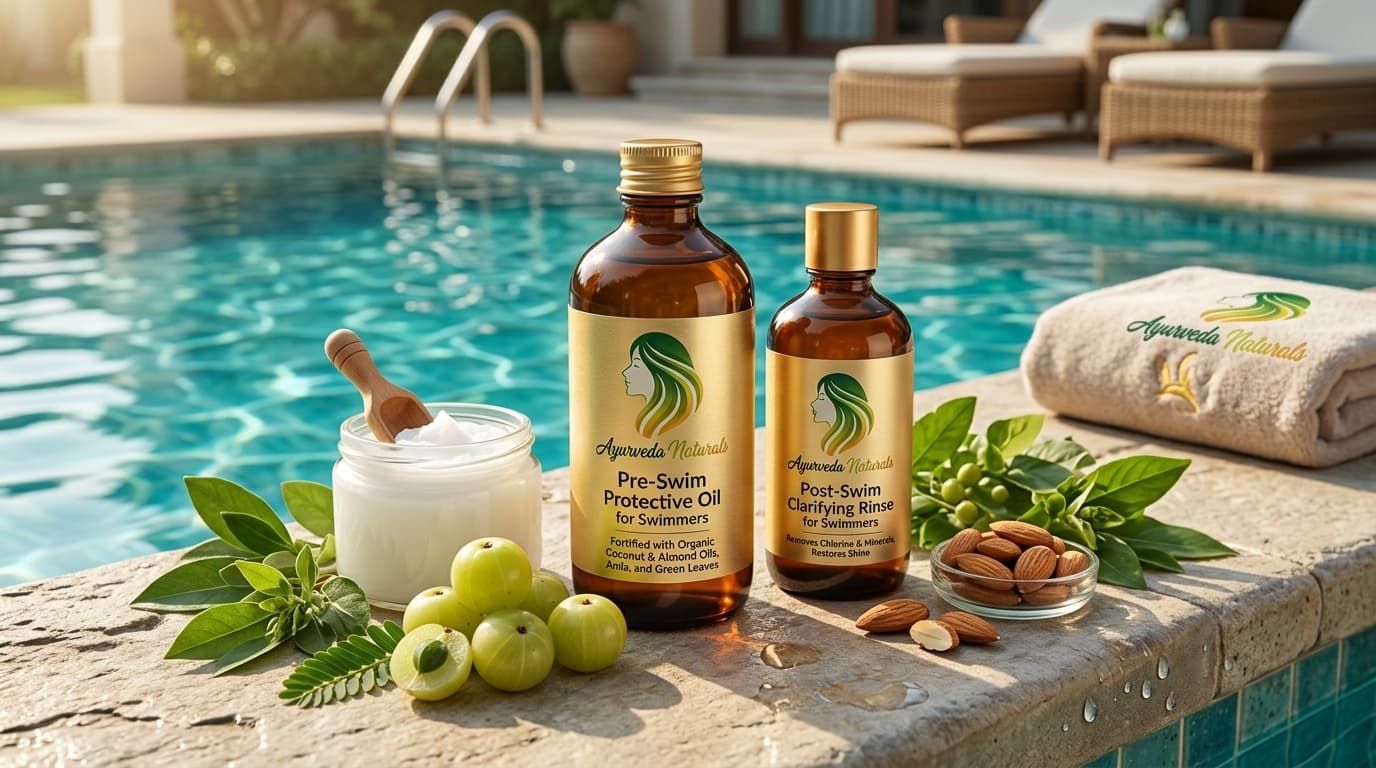
Direct Answer: To master how to protect hair from chlorine after swimming, you must execute a strict three-phase protocol: pre-saturate hair with fresh water and seal with virgin Coconut oil before entering the pool; immediately rinse post-swim with a natural Vitamin C (Ascorbic Acid or Amla) solution to chemically reduce and deactivate oxidizing hypochlorous acid; and wash with a sulfate-free purifying herbal shampoo to chelate residual copper and chemical compounds. Applying an unctuous Ayurvedic Lepam (Fenugreek, Aloe Vera, and Ghee) restores the stripped 18-MEA cuticle lipid layer and prevents swimmer's hair brittleness permanently.
Swimming is widely celebrated as one of the most complete, invigorating full-body cardiovascular workouts, offering unparalleled benefits for physical fitness, mental relaxation, and joint health. However, for your hair and scalp, regular visits to the swimming pool can quickly turn into a structural nightmare. Frequent swimmers, triathletes, and recreational pool-goers are all too familiar with the dreaded phenomenon of "Swimmer's Hair"—a condition characterized by extreme dryness, crunchy straw-like texture, persistent tangling, rapid color fading, an uncomfortably tight and burning scalp, and, in many cases, a bizarre greenish discoloration on lighter hair strands.
While pool operators must utilize chemical sanitizers to kill dangerous waterborne pathogens like E. coli and Pseudomonas, the powerful oxidizing agents used in public and private pools do not distinguish between harmful bacteria and the delicate organic keratin proteins of your hair. When left unprotected, pool water aggressively strips away the natural lipid barrier of the hair shaft, oxidizes cortical melanin, and breaks vital structural protein bonds. In this comprehensive master guide, we explore how to protect hair from chlorine after swimming, uncovering the detailed chemical reactions of pool disinfection, the ancient Ayurvedic perspectives on caustic chemical exposure, and step-by-step natural neutralization protocols to keep your hair lush, vibrant, and impervious to pool chemicals.
The Chemistry of Pool Water: Hypochlorous Acid & Chloramines
To understand why pool water wreaks such intense havoc on your hair, we must examine the chemical reactions that occur when swimming pools are chlorinated. Commercial pools are typically treated with chlorine gas, sodium hypochlorite (liquid bleach), or calcium hypochlorite tablets. When these compounds dissolve in water, they undergo a rapid chemical equilibrium reaction, forming two primary active sanitizing agents:
Cl₂ + H₂O ↔ HOCl (Hypochlorous Acid) + H⁺ + Cl⁻ (Chloride Ion)
HOCl ↔ H⁺ + OCl⁻ (Hypochlorite Ion)
Hypochlorous Acid (HOCl) is an exceptionally aggressive, non-selective chemical oxidizing agent. Because HOCl carries a neutral electrical charge, it effortlessly penetrates the hydrophobic lipid layers of biological membranes. When HOCl comes into direct contact with human hair and scalp tissue, it initiates several destructive chemical reactions:
- Stripping of the 18-MEA Cuticle Lipid Layer: Every healthy hair strand is coated in a covalently bonded monolayer of 18-Methyleicosanoic Acid (18-MEA). HOCl chemically oxidizes and shears off these protective fatty acid molecules within minutes of pool immersion, permanently destroying the hair's natural hydrophobicity and leaving the cuticle porous and vulnerable.
- Oxidative Cleavage of Keratin Disulfide Bonds: Hair's tensile strength is derived from cystine disulfide bridges (-S-S-) connecting adjacent alpha-keratin polypeptide chains. Hypochlorous acid oxidizes cystine into cysteic acid, breaking these vital structural bridges. The internal protein matrix softens, loses its elasticity, and becomes exceedingly brittle.
- Melanin Photo-Bleaching: Chlorine acts as a powerful chemical bleaching agent, oxidizing the natural eumelanin and pheomelanin pigment granules housed within the hair cortex. This strips away natural hair color, causes expensive salon dyes to wash out, and leaves hair dull, brassy, or faded.
- Formation of Volatile Chloramines: When free chlorine reacts with organic compounds in the pool—such as human sweat, urea, and residual cosmetic oils—it forms mono-chloramines and di-chloramines. Chloramines are the chemical agents responsible for the pungent "pool smell" and cause severe ocular, respiratory, and scalp skin irritation.
The "Green Hair" Mystery: Why Swimming Turns Blonde Hair Green
A widespread urban myth claims that chlorine itself turns light brown, gray, or blonde hair green. In reality, chlorine is a clear, invisible chemical oxidant. The true culprit behind green swimmer's hair is Oxidized Copper Metals present in the pool water.
Copper enters swimming pool water through two primary sources: copper-based algaecides routinely added by pool maintenance staff to prevent green algae blooms, and the corrosion of copper heating pipes and pump components caused by imbalanced pool pH. When free chlorine oxidizes dissolved copper ions (Cu²⁺), the copper takes on a vivid, turquoise-green hue.
Because chlorine has already stripped away the protective 18-MEA lipid layer and blown open the hair's cuticle scales, the porous, positively charged keratin cortex acts like an ion-exchange sponge. The oxidized copper ions chemically bind to the exposed sulfur atoms in the damaged keratin matrix. Once bonded, the green copper cannot be removed with ordinary shampoo, leaving blonde and bleached hair with an unsightly, stubborn swamp-green tint.
Chlorinated Pool Water vs. Ocean Salt Water: A Chemical Comparison
Swimmers often ask whether ocean swimming is equally damaging to hair compared to chlorinated swimming pools. While both environments present challenges, their chemical mechanisms differ significantly:
- Chlorinated Pools: Inflict severe chemical oxidation. The chemical agents (HOCl and OCl⁻) actively break covalent disulfide bonds in the keratin cortex, bleach melanin pigment, and destroy cellular membrane complexes. This chemical alteration permanently compromises the hair's tensile strength until new hair grows.
- Ocean Salt Water: Inflicts primarily physical osmotic dehydration. Seawater contains approximately 3.5% dissolved mineral salts (primarily sodium chloride and magnesium sulfate). Because seawater is hypertonic compared to the hair cortex, it draws water out via osmosis, causing physical desiccation and cuticle roughness. However, unlike chlorine, salt water does not cleave disulfide chemical bonds. Once rehydrated and conditioned with natural lipids, salt-exposed hair returns to its healthy state without permanent structural loss.
Ayurvedic Understanding: Caustic Kshara & Pitta-Rakta Vitiation
Classical Ayurvedic texts categorize harsh, chemically treated water under the concept of Kshara Dravyas (caustic, alkaline, and stripping substances). Ancient masters like Acharya Sushruta described Kshara as having intense Teekshna (sharp/penetrating), Ushna (hot), and Kharatva (roughness-inducing) properties that consume biological unctuousness (Sneha) upon contact.
When you submerge your head in chlorinated pool water, the caustic chemical Kshara triggers a severe systemic and localized doshic disturbance:
- Severe Pitta and Rakta Vitiation: The hot, reactive chemical properties of chlorine overheat the scalp tissues, vitiating Pitta dosha and contaminating the blood tissue (Rakta Dhatu). This manifests as a red, burning, highly sensitized scalp (Sensitive Scalp Syndrome), folliculitis, and acute root inflammation that forces hair follicles into premature shedding.
- Acute Vata Surge: By stripping every trace of natural sebum and structural lipid moisture from the hair fiber, chlorine provokes a severe local Vata imbalance. Vata's dry (Ruksha), cold (Sheeta), and rough (Khara) attributes take over the hair shaft, resulting in split ends, severe static tangles, and mid-shaft breakage.
- Depletion of Keshya Ojas: In Ayurveda, healthy hair is considered a direct reflection of abundant Ojas (vital cellular essence) and strong Asthi Dhatu (bone tissue). Chemical oxidants deplete localized Ojas, leaving hair lifeless, dull, and structurally hollow.
The 3-Phase Defense Protocol: Complete Swimmer's Hair Armor
To swim regularly without sacrificing the health and beauty of your hair, you must execute a comprehensive, three-phase scientific protocol: Pre-Swim Inoculation, Post-Swim Chemical Neutralization, and Deep Ayurvedic Lipid Restoration.
Phase 1: Pre-Swim Defense (The Hydrophobic Barrier)
Never dive into a chlorinated pool with dry, unprotected hair. Follow these non-negotiable preparation steps before stepping onto the pool deck:
- The Fresh Water Pre-Saturation Rule: Human hair is a porous, fibrous sponge with a strictly limited absorption capacity. If you enter the pool with dry hair, your hair will instantly absorb chlorinated pool water until it is 100% saturated. Conversely, if you thoroughly drench your hair in clean, non-chlorinated fresh shower water for 2 full minutes beforehand, the hair cortex becomes fully engorged with pure water, reducing chlorinated pool water absorption by up to 80%.
- Apply a Cold-Pressed Botanical Lipid Armor: After pre-saturating with fresh water, coat your hair strands from mid-lengths to ends with cold-pressed Virgin Coconut Oil (Narikela Taila) or a blend of Coconut and Castor Oil (Eranda Taila). Coconut oil’s straight-chain lauric acid penetrates into the cuticle, establishing an impermeable, hydrophobic barrier that actively repels chlorinated water.
- The Silicone Cap Seal: Tuck your oiled, damp hair securely inside a 100% pure silicone swimming cap. While silicone caps are not entirely waterproof along the perimeter, the combination of pre-saturation, oil armor, and a tight cap creates an almost impenetrable barrier against chemical oxidants.
Phase 2: Immediate Post-Swim Chemical Neutralization (The Vitamin C Redox Reaction)
The single greatest mistake swimmers make is merely rinsing their hair with plain water or standard shampoo after exiting the pool. Plain water cannot break the chemical bonds between hypochlorous acid and hair keratin, allowing chlorine to continue oxidizing and degrading your hair for hours after your swim.
To halt this oxidation immediately, you must perform a chemical Redox (Reduction-Oxidation) Neutralization using Ascorbic Acid (Vitamin C). Ascorbic acid is a powerful biological reducing agent that instantly reacts with hypochlorous acid, donating electrons to convert toxic chlorine into completely harmless, water-soluble chloride ions (table salt):
C₆H₈O₆ (Ascorbic Acid) + HOCl → C₆H₆O₆ (Dehydroascorbic Acid) + H⁺ + Cl⁻ + H₂O
- How to Prepare the Ultimate DIY Vitamin C De-Chlorinating Spray: Dissolve 1 teaspoon of pure, pharmaceutical-grade Ascorbic Acid powder (or Sodium Ascorbate) in 2 cups of filtered water inside a spray bottle. Alternatively, steep 2 tablespoons of organic Amla (Indian Gooseberry) powder in 2 cups of warm water; Amla contains astronomical concentrations of natural, bio-stabilized ascorbic acid and gallic acid.
- Application: Immediately upon stepping out of the pool, drench your hair and scalp thoroughly with the Vitamin C solution. Massage gently for 60 to 90 seconds. The chemical chlorine odor will vanish instantly as the chlorine is neutralized. Rinse thoroughly with fresh water.
Phase 3: Deep Cleansing, Chelation & Lipid Reconstruction
Once chlorine has been neutralized, you must cleanse away oxidized copper metals and sweat residues using a gentle, sulfate-free chelating herbal shampoo. Commercial anti-swimmer shampoos rely on aggressive industrial surfactants that further dehydrate fragile hair fibers.
Instead, choose a botanical shampoo formulated with natural triterpenoid saponins from Reetha (Soapnut) and Shikakai, enriched with natural metal chelators. For an in-depth exploration of how botanical chelation extracts heavy metal deposits, read our clinical guide on natural shampoo for repairing hard water damage.
To eliminate copper residues and re-establish the scalp’s acidic mantle (pH 4.5–5.0), wash with our handcrafted Ayurveda Naturals Purifying Hair Shampoo.
Rebuilding Chemically Fried Keratin Bonds Without Cutting
If you are already suffering from severe, chronic swimmer's hair damage—where your hair feels like coarse sandpaper, snaps during gentle brushing, and has split into frayed ends—do not panic and reach for the scissors. You can structurally rehabilitate chemically compromised hair fibers through deep Ayurvedic protein and lipid rebuilding therapy.
For an extensive, step-by-step clinical protocol on reversing severe chemical oxidation, study our master guide on how to fix chemically damaged hair without cutting.
The Ayurvedic Swimmer's Hair Rehabilitation Lepam (Weekly Intensive Mask)
This weekly restorative treatment infuses essential sulfur-bearing amino acids, bio-proteins, and vital fatty acids directly into the damaged hair cortex to restore elasticity and mend lifted cuticles.
- The Ingredients:
- 2 tablespoons of finely ground Fenugreek Seed (Methi) Paste (soaked overnight and blended until completely smooth).
- 3 tablespoons of fresh organic Aloe Vera (Kumari) Gel.
- 1 tablespoon of authentic, grass-fed A2 Cow's Ghee (Ghrita) (warmed to liquid state).
- 1 tablespoon of cold-pressed Sweet Almond Oil (Badam Taila).
- 1 teaspoon of organic Hibiscus Petal Powder (Japa).
- The Biochemical Action: Fenugreek delivers high-potency nicotinic acid and restorative plant proteins that patch cortical gaps. Aloe vera provides acemannan humectants and restores the acid mantle. Cow's ghee delivers short-chain fatty acids (butyric acid) and fat-soluble vitamins (A, D, E, K) that assimilate into the depleted stratum corneum. Hibiscus infuses alpha-hydroxy acids and botanical mucilage to seal cuticles flat.
- How to Apply: Section damp, freshly washed hair and apply the rich, creamy lepam from roots to ends. Cover with a shower cap and leave on undisturbed for 45 minutes. Rinse thoroughly with lukewarm water. Execute this treatment once weekly to completely reverse chlorine brittleness.
Comparison: Chlorine Protection Methods & Natural Countermeasures
To evaluate the efficacy and biochemical actions of different swimmer's hair care strategies, review the following comprehensive comparison table.
| Treatment Method | Chemical & Biological Action | Chlorine Neutralization Power | Cuticle Lipid Retention | Application Timing | Protection Rating |
|---|---|---|---|---|---|
| Fresh Water Pre-Saturation | Engorges cortex with pure water; physically limits pool water absorption by 80% | Moderate (Preventative dilution) | High (Preserves native hydration) | Immediately before entering pool | Essential (9/10) |
| Coconut Oil Pre-Swim Armor | Lauric acid establishes a hydrophobic lipid seal that repels chemical water | High (Chemical barrier defense) | Maximum (Prevents protein loss) | 5 minutes before swimming | Superior (10/10) |
| Vitamin C / Amla Redox Rinse | Ascorbic acid donates electrons, reducing toxic HOCl into harmless chloride ions | Maximum (100% De-chlorination) | High (Halts ongoing lipid oxidation) | Immediately after exiting pool | Non-Negotiable (10/10) |
| Commercial Chemical Swimmer's Shampoos | Synthetic EDTA chelators in heavy SLS/SLES sulfate surfactant bases | Moderate to High | Very Low (Aggressively strips sebum) | Post-swim shower | Poor (5/10 - Causes Rebound Dryness) |
| Botanical Saponin Cleanse (Reetha & Shikakai) | Plant triterpenoid saponins gently flush copper residues at pH 5.0 without stripping | High (When paired with Vitamin C) | Maximum (Protects acid mantle) | Post-swim wash | Superior (9.5/10) |
| Apple Cider Vinegar Final Rinse | Acetic acid contracts raised cuticles (pH 4.5); chelates light mineral and copper deposits | Moderate | High (Restores smooth light reflection) | Final shower step | Essential (9/10) |
The Complete Swimmer's Hair Care Routine Checklist
Print or save this comprehensive checklist to ensure your hair remains fully protected before, during, and after every swim session.
- Pre-Pool Shower (2 Minutes): Drench hair completely in fresh tap water under the shower. Squeeze out excess water.
- Apply Pre-Swim Oil (1 Minute): Warm 1 teaspoon of virgin Coconut or Almond oil between palms and smooth thoroughly through hair lengths.
- Secure Cap (30 Seconds): Tuck hair neatly inside a smooth silicone swimming cap.
- Immediate Post-Pool Spritz (1 Minute): Remove cap and immediately spray hair with Ascorbic Acid / Amla Vitamin C de-chlorinating solution. Massage for 60 seconds to neutralize hypochlorous acid.
- Herbal Wash (3 Minutes): Cleanse with a sulfate-free purifying herbal shampoo. Rinse thoroughly with cool water.
- Acidifying Sealant (1 Minute): Pour a diluted Apple Cider Vinegar rinse (2 tbsp ACV in 2 cups water) over hair to snap cuticles shut.
- Post-Swim Moisture (30 Seconds): Apply 2 drops of Argan or Jojoba oil to damp ends before air-drying.
Frequently Asked Questions (FAQ)
How do you protect hair from chlorine after swimming?
To protect hair from chlorine after swimming, immediately rinse your hair with fresh water, apply a natural Vitamin C (ascorbic acid) or Amla rinse to chemically reduce and neutralize active chlorine, and wash with a sulfate-free purifying herbal shampoo to eliminate chemical residues. Follow with a deep conditioning Ayurvedic oil or mask to replenish the stripped 18-MEA lipid layer.
Why does chlorine turn light or blonde hair green in swimming pools?
Chlorine itself does not turn hair green; rather, chlorine oxidizes trace copper metals present in pool water (often added via copper-based algaecides or from copper plumbing). The oxidized, green-tinted copper ions chemically bind to the damaged, porous protein matrix of chlorine-bleached hair shafts, producing a visible greenish tint.
How does Vitamin C (Ascorbic Acid) neutralize pool chlorine on hair?
Vitamin C (ascorbic acid or sodium ascorbate) is a powerful natural reducing agent. When applied to hair exposed to swimming pool water, it undergoes an immediate redox reaction with hypochlorous acid (free chlorine), converting toxic, oxidizing chlorine into harmless, water-soluble, non-reactive chloride ions that effortlessly wash down the drain.
Should you wet your hair with fresh water before entering a chlorinated pool?
Yes, always saturate your hair with clean, non-chlorinated fresh tap water before swimming. Human hair acts like a porous sponge with a finite liquid absorption capacity. When pre-saturated with clean water, the hair fiber can absorb up to 80% less chlorinated pool water, drastically minimizing chemical penetration into the cortex.
Which natural oil is best to apply before swimming in a pool?
Cold-pressed virgin coconut oil is the superior pre-swim botanical oil. Its high concentration of straight-chain lauric acid penetrates deep into the hair cortex, reducing protein loss during water immersion and establishing an impenetrable hydrophobic (water-repellent) lipid barrier against pool chemicals.
How does Ayurveda view chlorine and chemical pool water damage?
In Ayurveda, chlorinated pool water is classified as a harsh Kshara (caustic, alkaline chemical substance). It severely vitiates Pitta and Rakta Dhatus, causing burning scalp inflammation, and aggravates Vata dosha, stripping the hair of its natural unctuousness (Sneha) and rendering it brittle, rough, and lifeless.
Can chemically damaged swimmer's hair be repaired without cutting it off?
Yes, swimmer's hair can be rehabilitated without cutting by removing oxidized copper and mineral crusts with chelating botanical washes, restoring the hair cuticle's acid mantle (pH 4.5–5.0) with apple cider vinegar rinses, and infusing bio-proteins and lipids using Ayurvedic masks made of fenugreek, aloe vera, and pure cow's ghee.
Is wearing a swimming cap enough to keep hair safe from chlorine?
While silicone swimming caps reduce direct contact with pool water, they are rarely 100% watertight around the hairline and neck. For complete protection, you must combine a snug silicone cap with pre-swim fresh water saturation and a hydrophobic botanical oil barrier.
Protect Your Hair From Harsh Chlorine & Pool Chemicals
Enjoy swimming without the fear of brittle, green, straw-like hair. Purify chemical residues and restore vibrant, silky softness with our 100% organic, plant-powered botanical cleanser.
Get Ayurveda Naturals Purifying Hair ShampooChemical-Free Neutralization • Sulfate-Free • Free Shipping Nationwide
Ready to stop hair fall naturally?
Don't wait until it's too late. Experience the proven magic of our 100% organic, wild-harvested Ayurvedic formulations and start seeing real results in 14 days.
Free Shipping + Cash on Delivery