
How to Prevent Hair Loss from Wearing a Helmet Daily: Rider Guide
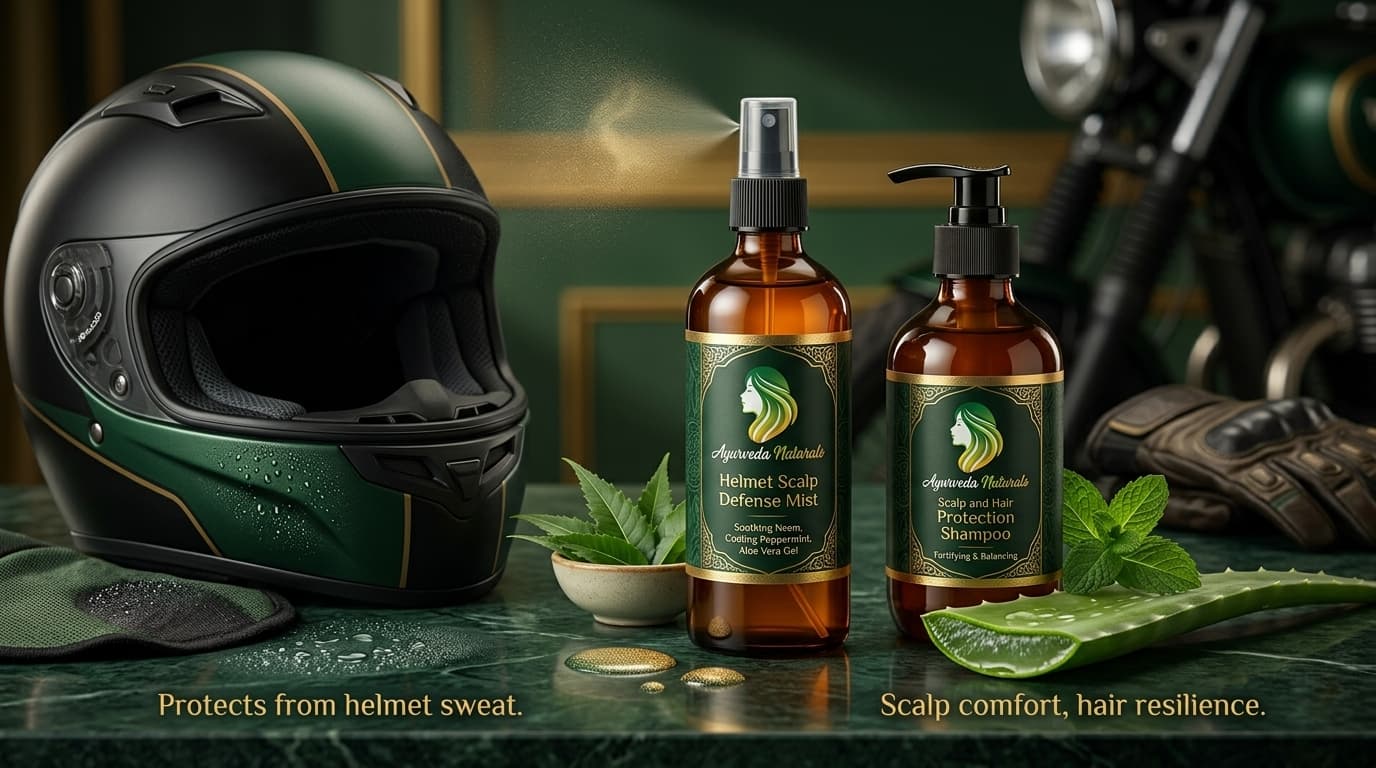
To prevent hair loss from wearing helmet daily, you must eliminate mechanical friction (traction alopecia) by wearing a breathable cotton or silk skull cap under your helmet, prevent sweat-induced fungal infections and follicle clogging through post-ride scalp ventilation, maintain rigorous helmet hygiene, and detoxify congested sweat channels using clarifying Ayurvedic herbs like Neem, Shikakai, and Vetiver. This multi-layered strategy shields your hairline from pulling, cools overheated scalp tissue, and keeps hair roots firmly anchored despite long daily commutes.
For millions of daily motorcycle commuters, delivery riders, and cycling enthusiasts, helmets are an indispensable, life-saving piece of safety gear. However, regular riders frequently encounter an alarming, frustrating side effect: progressive hair thinning along the frontal hairline, accelerated temple recession, persistent scalp itching, foul odor, and heavy dandruff. Many riders mistakenly assume they must choose between road safety and their hair density.
Understanding how to prevent hair loss from wearing helmet daily requires addressing the exact physical, microbial, and thermal stresses that an enclosed helmet imposes on your scalp. In Ayurvedic trichology, trapped heat and sweat severely aggravate Pitta and Kapha doshas, creating toxic stagnation (Ama) within the follicular micro-channels. By implementing a targeted commuter routine, learning how to detox scalp buildup at home, and choosing the best clarifying shampoo oily scalp summer pakistan offers, you can protect your skull while preserving a thick, flourishing head of hair.
The Triple Threat: How Daily Helmet Use Destroys Hair Follicles
Wearing a helmet for 30 to 120 minutes every day subjects your scalp to three distinct destructive biological mechanisms:
1. Traction Alopecia & Mechanical Shear Friction
When you pull a tight helmet on and off your head, the rough synthetic lining rubs forcefully against your delicate hair shafts. This constant mechanical dragging creates high shear stress along the frontal hairline, temporal peaks, and crown vortex. Over weeks and months, this repetitive pulling induces Traction Alopecia—the physical loosening and mechanical uprooting of healthy hair bulbs from their dermal anchor sheaths. If left unchecked, chronic traction causes micro-scarring around the follicle, permanently destroying its regenerative capacity.
2. Scalp Hyperhidrosis, Sebum Fermentation & Fungal Colonization
A motorcycle helmet functions as a sealed micro-climate. As your scalp heats up during riding, the apocrine and eccrine sweat glands produce copious amounts of perspiration. Because the thick polystyrene foam prevents air ventilation, sweat, sebum, and shed epidermal cells become trapped against your scalp skin in a dark, warm, and hyper-humid environment.
This enclosed moisture chamber serves as the ultimate breeding ground for opportunistic microorganisms—most notably the lipophilic yeast Malassezia globosa. This fungus feeds ravenously on trapped sebum, hydrolyzing it into irritating oleic acid. The resulting inflammation causes severe scalp itching, redness, foul odors, and thick, sticky dandruff that suffocates follicular ostia and triggers acute telogen shedding.
3. Thermal Stagnation & Microvascular Hypoxia
Tight helmet padding exerts continuous compressive pressure across the superficial temporal and occipital arteries. This physical compression restricts arterial capillary blood flow to the dermal papillae, starving the hair roots of oxygen and circulating micronutrients. Furthermore, the trapped heat elevates localized scalp temperature, triggering thermal shock and accelerating the premature transition of growing anagen hairs into the shedding telogen phase.
The Ayurvedic Pathology: Srotas Blockage & Pitta-Kapha Toxicity
In classical Ayurvedic dermatology, the negative effects of daily helmet usage are classified under the pathology of Svedavaha Srotas Dushti (vitiation of the sweat-carrying micro-channels) leading to Darunaka (severe dandruff) and Khalitya (hair loss).
The disease mechanism unfolds in distinct Ayurvedic stages:
- Pitta Aggravation (Heat Surge): The friction and lack of ventilation create intense localized heat (Ushnata) on the scalp. This elevates Pitta dosha, causing micro-inflammation, follicular burning, and root weakening.
- Kapha Accumulation (Moisture & Sebum Stagnation): Copious sweat (Sveda) and thick sebum (Meda) mix under the helmet, creating an excess of sticky, unctuous Kapha.
- Ama Formation (Toxin Generation): Trapped sweat and environmental urban pollution ferment together, forming Ama—toxic metabolic sludge that physically blocks the Keshaprada Srotas (nutrient channels feeding hair roots).
- Root Detachment: Deprived of clean airflow and nourishment, the hair roots loosen their grip in the living tissue and shed in large numbers.
The 7-Step Comprehensive Biker Protocol: How to Prevent Hair Loss from Wearing Helmet Daily
Protecting your hair does not mean sacrificing safety on the road. Follow this complete 7-step Ayurvedic biker protocol to ride safely while maintaining robust hair density:
Step 1: The Silk or Breathable Cotton Barrier Shield (Non-Negotiable)
Never wear a helmet directly against your bare hair. The synthetic, rough foam padding of a helmet acts like abrasive sandpaper against your hair cuticles. Always wear a clean, high-grade, breathable 100% cotton or pure silk balaclava / skull cap underneath your helmet.
A barrier cap provides three massive advantages:
- Friction Elimination: Reduces the friction coefficient between your hair and helmet lining to near zero, completely preventing traction alopecia.
- Sweat Absorption: Absorbs sweat immediately as it is produced, pulling moisture away from the scalp surface before it macerates the epidermal barrier.
- Lining Protection: Prevents dead skin cells, hair oils, and styling products from penetrating and contaminating the permanent helmet foam.
Step 2: Master the Proper Helmet Insertion & Removal Technique
Most riders pull their helmet straight down from the front of their face, dragging their frontal hairline violently backward. Instead, adopt the proper glide technique:
- Hold your helmet by the retention chin straps and pull them outward to slightly expand the helmet opening.
- Tilt the helmet slightly backward and place the rear portion against the back of your head (occipital bone) first.
- Gently roll the helmet forward over your crown and forehead without dragging the hairline backward.
- When removing the helmet, pull the straps outward again and lift the helmet upward and slightly forward to clear the forehead without friction.
Step 3: Rigorous Helmet Hygiene & Sanitization
A contaminated helmet lining is a hotbed of bacteria, yeast spores, and oxidized sebum. If your helmet has removable interior padding, wash the cheek and crown pads every 1 to 2 weeks using a gentle antibacterial wash and allow them to dry completely under direct sunlight. Sunlight acts as a natural UV sterilizer, killing fungal spores.
If your helmet has non-removable padding, spray the interior lining after every commute with an Ayurvedic purifying mist made with pure distilled water, witch hazel, and a few drops of organic Tea Tree and Neem essential oils. Allow the helmet to air-dry upside down in a well-ventilated area.
Step 4: Pre-Commute Cooling Scalp Prep
Before putting on your helmet for a hot commute, mist your scalp lightly with a cooling, Pitta-pacifying herbal toner made of pure organic Rose Water (Gulab Jal) or Vetiver (Khus) hydrolat. Vetiver is renowned in classical Ayurveda for its extreme cooling potency (Sheeta Virya), which keeps the scalp temperature down and reduces excessive sweat production during the ride.
Step 5: Immediate Post-Ride Scalp Ventilation & Finger Massage
The moment you arrive at your destination and remove your helmet:
- Do not leave your hair compressed and sweaty under a tight hat or cap.
- Gently pat your scalp and hair dry using a clean, soft handkerchief or microfiber cloth.
- Spend 60 to 90 seconds massaging your scalp using the pads of your fingers in gentle circular motions. This immediate micro-massage relieves myofascial pressure, disperses accumulated sweat salts, and instantly restores arterial blood flow to starved dermal capillaries.
Step 6: Purifying Botanical Scalp Cleansing
Commuting in traffic exposes your sweat-soaked hair to dense vehicular exhaust fumes, heavy particulate matter (PM2.5), and soot. Washing with a generic chemical shampoo can worsen scalp irritation due to harsh sulfates. Instead, wash 2 to 3 times weekly with a clarifying, herbal formulation like our Purifying Hair Shampoo.
This botanical wash harnesses the power of:
- Reetha & Shikakai: Natural saponins that effortlessly dissolve sweat salts, heavy sebum, and urban pollution without stripping the protective moisture barrier.
- Neem Leaf Extract: Neutralizes Malassezia fungal colonies, instantly curing commuter dandruff and itchy scalp folliculitis.
- Aloe Vera: Soothes thermal inflammation and rehydrates the stratum corneum.
Step 7: Weekly Shiro Abhyanga & Scalp Detoxification Lepa
Once or twice a week, perform a deep Ayurvedic oil massage (Shiro Abhyanga) using a cooling, herb-infused oil containing Bhringraj, Brahmi, and Amla. Massaging warm herbal oil dissolves hardened, calcified sebum plugs at the root base, detoxifies the sweat channels, and replenishes the essential fatty acids lost to daily heat exposure.
Additionally, apply a monthly Ayurvedic Scalp Lepa (herbal mask) made with equal parts Triphala powder, Neem powder, and organic Aloe Vera gel. Leave this mask on for 20 minutes before rinsing to vacuum out deep environmental impurities from follicular ducts.
Comparison: Commuter Scalp Habits — Damaging vs. Protective
Examine how everyday commuter habits directly dictate the health and longevity of your hair follicles:
| Habit / Factor | Damaging Commuter Habit (Causes Hair Loss) | Protective Ayurvedic Routine (Preserves Hair) |
|---|---|---|
| Under-Helmet Barrier | Wearing helmet directly over bare hair, allowing coarse foam to pull the hairline. | Wearing a 100% breathable cotton or silk skull cap to eliminate friction completely. |
| Hair State Before Riding | Wearing helmet on damp or wet hair immediately after showering (severely weakens roots). | Ensuring hair is 100% dry before putting on the helmet to prevent root breakage and mold. |
| Liner Sanitization | Never washing helmet padding; allowing years of old sweat, bacteria, and fungus to accumulate. | Washing liners bi-weekly and sun-drying to destroy Malassezia fungal spores. |
| Post-Ride Care | Letting sweat dry naturally in stagnant clumps; scratching itchy scalp with fingernails. | Drying scalp with a cloth immediately and performing a 90-second circulation micro-massage. |
| Cleansing Protocol | Using harsh chemical anti-dandruff shampoos containing SLS, silicones, and zinc pyrithione. | Using gentle, sulfate-free Ayurvedic cleansers rich in Neem, Reetha, and Shikakai. |
| Helmet Sizing | Wearing an overly tight helmet that crushes cranial arteries and causes chronic hypoxia. | Wearing an ergonomically fitted helmet with proper crown clearance and ventilation channels. |
Top Ayurvedic Herbs for Biker Scalp Health
Integrate these master botanical ingredients into your hair care arsenal to counteract commuter-related scalp damage:
1. Neem (Azadirachta Indica) — The Antifungal Powerhouse
Neem is celebrated in Ayurveda as the ultimate blood and skin purifier (Kushthaghna). Its active constituents—azadirachtin, nimbidin, and nimbolide—exhibit exceptional antifungal potency against Malassezia yeast. Neem clears itchy commuter dandruff, prevents pustular folliculitis, and soothes inflammatory scalp redness caused by helmet friction.
2. Ushira / Vetiver (Vetiveria Zizanioides) — The Extreme Scalp Cooler
Vetiver root is renowned for its profound cooling energy (Sheeta Virya). Applying a vetiver-infused scalp mist or oil reduces localized Pitta heat, stops excessive sweating, relieves scalp burning sensations, and imparts an earthy, refreshing fragrance that eliminates sweat odors naturally.
3. Tulsi (Ocimum Sanctum) — The Antimicrobial & Microcirculatory Shield
Holy Basil (Tulsi) contains eugenol, camphor, and caryophyllene, which stimulate microcapillary blood circulation to counter the compressive hypoxia caused by tight helmet padding. Furthermore, Tulsi acts as an environmental adaptogen, shielding scalp cells from heavy metal airborne pollution and soot.
4. Karpura (Natural Camphor) — The Instant Itch Reliever
Derived from the wood of the Cinnamomum camphora tree, natural Karpura provides an instant cooling, soothing sensation to an irritated scalp. It rapidly opens congested micro-capillaries, boosts blood flow to suffocated follicles, and eliminates the urge to scratch.
5. Triphala (Amalaki, Bibhitaki, Haritaki) — The Master Detoxifier
Triphala is an ancient formulation of three sacred fruits that provides profound astringent (Kashaya) and detoxifying properties. When used as a scalp rinse or lepa, Triphala gently tightens the follicular pores, pulls out trapped sweat toxins, and restores the scalp's natural acidic mantle.
Crucial Mistakes Bikers Must Stop Making Today
Avoid these widespread commuter errors to protect your hair roots from irreparable damage:
- Wearing a Helmet Over Wet Hair: This is the absolute worst mistake a rider can make. Water breaks the hydrogen bonds in hair keratin, making strands 300% more vulnerable to snapping. Furthermore, trapping wet hair inside an unventilated helmet creates a swamp-like environment that fosters explosive fungal proliferation within 20 minutes.
- Using Heavy Styling Waxes Before Riding: Petroleum-based styling clays, waxes, and pomades melt under helmet heat, running down the hair shaft to form an impenetrable, suffocating film over follicular openings.
- Choosing an Incorrect Helmet Size: A helmet that is too tight causes severe vascular constriction and chronic traction alopecia. A helmet that is too loose shifts and rubs constantly during riding, causing excessive friction breakage. Invest in a properly fitted helmet with certified safety ratings.
- Scratching an Itchy Commuter Scalp with Nails: Scratching creates micro-abrasions in the scalp epidermis, introducing bacteria and leading to painful scalp boil infections (folliculitis).
Frequently Asked Questions
Does wearing a helmet every day cause permanent baldness?
Wearing a helmet daily does not directly cause genetic male pattern baldness. However, poor commuter habits—such as mechanical friction pulling the hairline (traction alopecia), fungal dandruff from trapped sweat, and follicular hypoxia from tight padding—can severely accelerate hair thinning and permanently damage follicles if left untreated. Following proper hygiene and wearing a protective cotton cap completely eliminates this risk.
Why does my scalp itch intensely after removing my motorcycle helmet?
Intense post-ride scalp itchiness is caused by the combination of trapped sweat salts drying against the skin and the rapid overgrowth of the Malassezia fungus in the warm, humid helmet environment. This fungus metabolizes trapped sebum into irritating fatty acids, triggering inflammatory dermatitis. Using an antifungal Neem shampoo and drying your scalp immediately after riding stops the itch.
How can I wear a helmet without pulling my receding frontal hairline?
Always wear a smooth, breathable cotton or silk skull cap under your helmet to eliminate direct friction. When putting on your helmet, pull the chin straps outward to slightly widen the opening, seat the back of the helmet on the occipital ridge first, and gently roll the front down over your forehead rather than dragging it straight backward over your hairline.
How often should I wash my helmet's inner lining pads?
You should remove and wash your helmet's interior cheek and crown pads every 1 to 2 weeks using a gentle antibacterial detergent, and dry them thoroughly in direct sunlight. If your helmet lining is non-removable, spray it with an antimicrobial herbal mist (water, witch hazel, and tea tree oil) after every commute and allow it to air-dry.
Should I apply hair oil before wearing a helmet?
No. Applying hair oil right before putting on a helmet creates a greasy mixture with sweat and dust, which clogs pores and soils the helmet padding. Instead, apply Ayurvedic herbal oils in the evening or on days when you are not riding, leave on for 45 to 60 minutes (or overnight), and wash thoroughly before your next commute.
What is the best natural shampoo to eliminate helmet sweat odor and dandruff?
The best natural cleanser for commuters is a sulfate-free herbal shampoo formulated with pure Neem, Reetha, Shikakai, and Tea Tree. This combination effectively breaks down stubborn sweat salts, kills odor-causing bacteria and dandruff fungi, and clarifies the scalp without stripping essential protective moisture.
Ride Safe and Keep Your Hair Strong
You never have to compromise your road safety to maintain a thick, healthy head of hair. By mastering how to prevent hair loss from wearing helmet daily, you create an impenetrable defense against traction, sweat buildup, and thermal stress.
Make a breathable cotton under-cap your constant riding companion, practice rigorous helmet sanitization, and treat your scalp to the purifying, cooling wonders of authentic Ayurvedic botanicals. Ride with complete peace of mind, knowing that your hair roots remain resilient, clean, and firmly anchored.
Purify Your Scalp from Commuter Buildup
Effortlessly eliminate sweat salts, traffic pollution, and stubborn dandruff with our sulfate-free Ayurvedic formulation. Powered by pure Neem, Reetha, Shikakai, and cooling Aloe Vera.
Discover Our Purifying Hair ShampooReady to stop hair fall naturally?
Don't wait until it's too late. Experience the proven magic of our 100% organic, wild-harvested Ayurvedic formulations and start seeing real results in 14 days.
Free Shipping + Cash on Delivery