
How Poor Sleep Affects Hair Follicles & Density: Natural Fixes
The direct answer: Understanding how poor sleep affects hair follicles and density reveals that sleep is not a passive resting state, but the primary biological window during which hair is synthesized at the cellular level. When sleep is shortened, fragmented, or irregular, your body fails to produce adequate pulses of nocturnal Human Growth Hormone (HGH) and follicular melatonin, while midnight cortisol surges suppress Insulin-like Growth Factor 1 (IGF-1) and arrest dermal papilla cell mitosis. In classical Ayurveda, sleep (Nidra) is one of the Three Pillars of Life (Trayopastambha); chronic sleeplessness depletes Ojas (vital biological essence), exhausts Majja Dhatu (nervous tissue), and starves Asthi Dhatu (bone tissue), causing rapid diffuse hair thinning. You can fully restore your hair density by aligning your circadian rhythm, applying overnight botanical oils, performing evening foot massage (Padabhyanga), and consuming neuro-calming Ayurvedic adaptogens.
The Circadian Biology of Hair Growth: Melatonin, Growth Hormone, and Follicular Clocks
Most people view hair care through the lens of external products: shampoos, conditioners, hair masks, and serums. However, the true biological engine of hair fiber synthesis operates internally while you are asleep in the dark. Deep, uninterrupted sleep is the ultimate biological restorative therapy for human hair. To appreciate how poor sleep affects hair follicles and density, we must examine the fascinating molecular chronobiology that synchronizes your sleep cycles with the mitotic engines in your scalp.
Every single hair follicle on your scalp contains its own autonomous peripheral circadian clock. Regulated by a master feedback loop of core clock proteins—including BMAL1, CLOCK, PER1, PER2, and CRY1—these peripheral follicular oscillators synchronize the metabolic activity of dermal papilla cells with the 24-hour light-dark cycle governed by the suprachiasmatic nucleus (SCN) in the brain's hypothalamus.
During the deep stages of nocturnal sleep, three vital chronobiological events occur that dictate whether your hair grows thick and vibrant or withers and sheds:
1. Nocturnal Pulsing of Human Growth Hormone (HGH)
Over 70% of your body's total daily production of Human Growth Hormone (HGH) is released in pulsatile surges during Stage 3 and Stage 4 Non-Rapid Eye Movement (NREM) slow-wave sleep. HGH binds to receptors on the liver and local tissue cells to trigger the secretion of Insulin-like Growth Factor 1 (IGF-1). Within the hair bulb, IGF-1 is the primary molecular signaling peptide responsible for maintaining the anagen (growth) phase. It prevents keratinocyte apoptosis, stimulates protein synthesis, and accelerates the proliferation of matrix cells that construct the hair shaft. When slow-wave sleep is cut short, HGH and IGF-1 secretion collapse, starving the hair matrix of its most critical growth signal.
2. The Follicular Melatonin Synthesis and Antioxidant Shield
While the pineal gland produces melatonin to regulate systemic sleep architecture, dermatological research has proven that human hair follicles are fully capable of synthesizing and metabolizing melatonin locally. Hair follicle keratinocytes and dermal papilla cells express high-affinity melatonin receptors (MT1 and MT2). Melatonin acts as an extraordinary free-radical scavenger, neutralizing dangerous reactive oxygen species (ROS) generated by daytime UV exposure, atmospheric pollutants, and cellular metabolism. Furthermore, clinical trials published in the British Journal of Dermatology demonstrate that melatonin directly upregulates hair matrix cell proliferation and prolongs the anagen phase. When chronic poor sleep impairs nocturnal melatonin production, follicles suffer massive oxidative damage, leading to premature miniaturization and accelerated greying.
3. Nocturnal Mitophagy and Ribosomal Protein Synthesis
Hair matrix cells are among the fastest dividing cells in the entire human body, rivaling the turnover rate of intestinal epithelium. Synthesizing a dense, hard keratin fiber requires massive amounts of cellular energy and continuous ribosomal protein translation. During deep sleep, cellular energy consumption drops throughout the rest of the body, allowing cells to enter a critical maintenance mode called mitophagy—the clearing out and replacement of damaged mitochondria. Without adequate sleep, defective mitochondria accumulate in dermal papilla cells, leading to bioenergetic failure, energy depletion, and follicular atrophy.
The Pathophysiology of Sleep Deprivation on Follicle Miniaturization and Shedding
When you regularly sleep less than 7 hours per night, wake up repeatedly throughout the night, or suffer from chronic insomnia, your physiology enters a state of persistent low-grade systemic emergency. This nocturnal dysregulation damages hair follicles through four distinct clinical pathways:
- HPA Axis Hyperactivity and Nocturnal Cortisol Surges: In a healthy circadian rhythm, serum cortisol drops to its lowest baseline level around midnight and rises gradually in the early morning to wake you up. Sleep deprivation completely inverts this rhythm. Nocturnal cortisol remains dangerously elevated throughout the night, binding to glucocorticoid receptors in the hair follicle and accelerating the degradation of structural proteins like collagen and hyaluronic acid in the extracellular matrix surrounding the hair bulb.
- Microvascular Vasoconstriction and Hypoxia: Sleep deprivation triggers continuous sympathetic nervous system tone, causing sustained constriction of the micro-capillary networks that feed the dermal papilla. Deprived of oxygen (cellular hypoxia) and glucose, the follicle cannot generate sufficient adenosine triphosphate (ATP) to sustain the rapid cellular division required for hair growth.
- Upregulation of Inflammatory Cytokines: Sleep loss triggers a surge in systemic inflammatory markers, including Interleukin-6 (IL-6), Interleukin-1 beta (IL-1β), and Tumor Necrosis Factor-alpha (TNF-α). These pro-inflammatory cytokines infiltrate the perifollicular tissue, initiating premature catagen involution and degrading the epithelial-mesenchymal interactions that keep the hair anchored.
- Accelerated Genetic Miniaturization (DHT Sensitivity): In individuals with a genetic tendency toward androgenetic alopecia, sleep deprivation amplifies the sensitivity of androgen receptors on the scalp. Elevated cortisol and systemic inflammation increase the expression of the 5-alpha reductase enzyme, converting free testosterone into dihydrotestosterone (DHT) at accelerated rates, causing rapid receding of the hairline and thinning at the crown.
Ayurvedic Physiology: Nidra (Sleep), Ojas, and Majja Dhatu Regeneration
Long before modern endocrinologists identified cortisol, HGH, or melatonin, classical Ayurvedic physicians understood the profound, undeniable link between restorative sleep and vibrant physical vitality. In the timeless medical treaties of the Charaka Samhita, sleep is designated as one of the Trayopastambha—the Three Pillars of Life (the other two being Ahara/nourishment and Brahmacharya/energy management). Exploring the science of ayurvedic hair loss prevention reveals that optimal sleep is the foundation upon which all tissue regeneration rests.
In Ayurvedic pathology, chronic sleeplessness (Anidra or Asvapna) dismantles the body's internal tissue hierarchy through several profound mechanisms:
1. The Destruction of Ojas (Vital Biological Immunity)
Ojas is the supreme, refined biological essence of all seven bodily tissues (Sapta Dhatu). It is responsible for radiant skin, strong immunity, emotional calm, and thick, lustrous hair. According to classical texts, healthy sleep (Samyak Nidra) is the single most important lifestyle factor that cultivates and preserves Ojas. When you deprive your body of sleep, Ojas is systematically depleted. The physical symptoms of depleted Ojas include profound chronic fatigue, dry brittle skin, mental fog, and severe, unyielding hair shedding (Khalitya).
2. Prana Vata and Vyana Vata Derangement
Staying awake past 10:00 PM violently aggravates the Vata dosha, particularly Prana Vata (governing the brain, nervous system, and mind) and Vyana Vata (governing circulation and cellular movement). Because Vata is inherently cold, dry, rough, and light, its excess literally drains the unctuous, hydrating fluids (Sneha) from the body. It causes severe dryness of the scalp skin, impairs blood flow through the micro-capillaries, and starves the hair roots of vital moisture, leading to frizzy, weak, brittle hair that breaks effortlessly.
3. Majja Dhatu and Asthi Dhatu Exhaustion
Ayurvedic physiology delineates a sequential progression of tissue nutrition. Majja Dhatu comprises the bone marrow, spinal cord, and central nervous system. Deep sleep is the exact physiological window during which Majja Dhatu digests its nutrients and rejuvenates. Because Asthi Dhatu (bone tissue) and Majja Dhatu are intimately linked, the depletion of Majja Dhatu starves Asthi Dhatu. Since hair (Kesha) is the direct metabolic sub-tissue (Upadhatu) of Asthi Dhatu, any compromise in bone and marrow nutrition immediately results in hair follicle miniaturization, structural thinning, and accelerated loss.
Comparison Table: Sleep Architecture Stages vs Follicular Cellular Repair & Doshic Balance
To visualize how different sleep states directly dictate hair health, review this comprehensive comparative breakdown of human sleep architecture:
| Sleep Stage / State | Primary Hormonal Output | Follicular & Cellular Action | Ayurvedic Doshic State | Long-Term Hair Density Impact |
|---|---|---|---|---|
| Stage 3 NREM (Deep Slow-Wave Sleep) | Maximum pulses of HGH; peak systemic melatonin; lowest baseline cortisol | Massive dermal papilla cell mitosis; peak ribosomal keratin synthesis; rapid mitophagy | Supreme cultivation of Ojas; complete pacification of Vata and Pitta; Majja Dhatu restoration | Maximum density; robust hair shaft diameter; prolonged anagen growth phase |
| REM Sleep (Rapid Eye Movement) | Neurotransmitter synthesis (GABA, acetylcholine); balanced autonomic tone | Neural stress processing; reduction of peripheral Substance P and neurogenic inflammation | Calming of Prana Vata and Sadhaka Pitta; psychological and emotional equilibrium | Prevents stress-induced telogen effluvium; stabilizes hair growth cycles |
| Light Stage 1-2 NREM Sleep | Mild reduction in core body temperature; intermediate hormonal regulation | Baseline cellular maintenance; minimal active keratin protein translation | Neutral doshic influence; transitional resting state for metabolic Agni | Insufficient on its own; requires progression into Stage 3 slow-wave sleep for true repair |
| Fragmented / Disrupted Sleep | Nocturnal cortisol spikes; blunted HGH pulses; suppressed nocturnal melatonin | Stalled matrix mitosis; microvascular vasoconstriction; oxidative mitochondrial damage | Violent Prana Vata aggravation; gradual depletion of Ojas; Tarpaka Kapha dryness | Progressive shaft thinning; increased daily shedding count; brittle hair texture |
| Chronic Severe Insomnia (Anidra) | Sustained high cortisol; elevated IL-6 and TNF-α; 5-alpha reductase upregulation | Cellular apoptosis in outer root sheath; premature anagen termination; follicular atrophy | Severe simultaneous Vata-Pitta derangement; total Ojas collapse; Asthi-Majja starvation | Severe diffuse telogen effluvium; accelerated androgenetic thinning; permanent density loss |
Padabhyanga and Shiro Abhyanga: The Somnogenic Botanical Oil Ritual
When insomnia and racing thoughts prevent you from entering the deep slow-wave sleep required for hair synthesis, traditional Ayurvedic topical therapies offer an immediate, non-pharmaceutical solution. Integrating nightly oiling rituals calms overstimulated neural pathways and invites profound restfulness.
Padabhyanga: Foot Reflexology for Deep Sleep and Hair Vitality
In Ayurvedic medicine, the soles of the feet are intricately connected to the brain, eyes, and scalp via subtle energetic channels known as Nadis. Padabhyanga is the practice of massaging the feet with warm botanical oil before sleep:
- Marma Point Stimulation: Massaging Kurchapara Marma (located at the junction of the big toe and foot pad) and Tala Hridaya Marma (in the center of the sole) instantly stimulates parasympathetic relaxation, lowers heart rate, and grounds hyperactive Prana Vata.
- Thermoregulatory Induction of Sleep: Massaging the feet with warm oil dilates peripheral blood vessels in the extremities, facilitating the rapid dissipation of core body heat. This natural drop in core temperature is the primary physiological trigger that signals the brain to release melatonin and initiate deep slow-wave sleep.
- How to Perform Padabhyanga: Warm 1 tablespoon of pure cold-pressed sesame or herbal oil. Rub your palms together and massage the entire sole, heel, and top of each foot using firm, circular motions for 5 minutes per foot before putting on breathable cotton socks and getting into bed.
Overnight Shiro Abhyanga (Cranial Oiling)
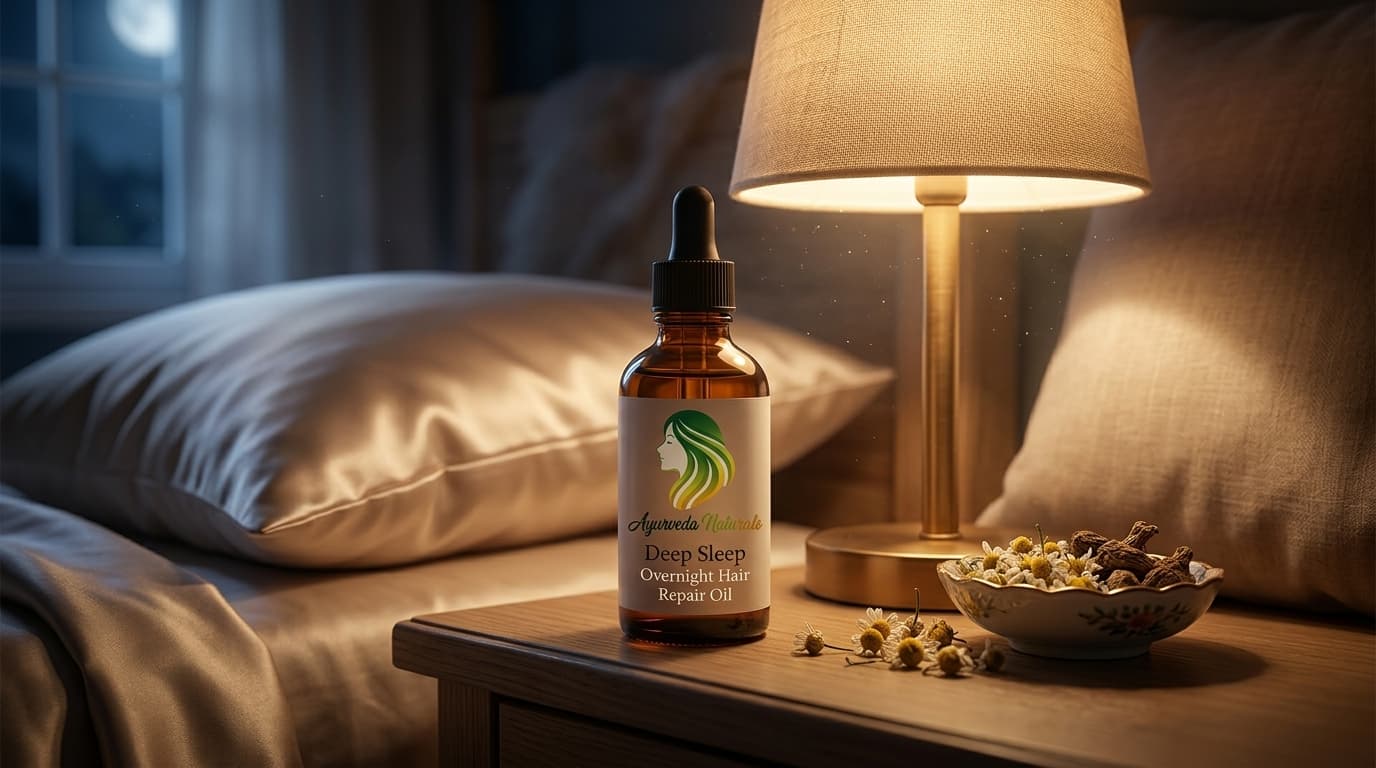
Massaging the scalp with botanical oils before bed cools an overheated brain and directly nourishes the hair roots. Discover the complete scientific protocol in our detailed guide on the benefits of overnight hair oiling. Applying our specialized Ayurveda Naturals Hair Regrowth Oil 2 to 3 nights a week infuses your scalp with deeply calming botanicals like Brahmi and Jatamansi, delivering therapeutic lipids directly to dermal papilla cells while you sleep.
Nidra-Enhancing Ayurvedic Botanicals and Herbal Teas
Rather than relying on synthetic sleeping pills—which disrupt natural sleep architecture and suppress natural REM/slow-wave cycles—Ayurvedic medicine utilizes natural somnogenic adaptogens that gently harmonize the nervous system and enhance sleep quality:
1. Withania Somnifera (Ashwagandha): The Circadian Calmer
Ashwagandha (specifically the somnifera component, meaning "sleep-inducing") contains triethylene glycol, a bioactive compound that promotes deep non-REM slow-wave sleep. It acts as a GABA-mimetic agent, quieting racing thoughts, reducing nighttime cortisol awakenings, and supporting healthy adrenal function.
2. Convolvulus Pluricaulis (Shankhpushpi): The Medhya Rasayana
Shankhpushpi is an extraordinary brain-calming herb that balances the electrical activity of the brain. Rich in convolvine and scopoletin, it reduces mental restlessness, enhances cognitive clarity, and soothes aggravated Prana Vata, making it easier to drift into uninterrupted, deep slumber.
3. Nardostachys Jatamansi (Jatamansi): Natural GABA Enhancer
Jatamansi is the ultimate Ayurvedic herb for chronic sleep disturbances and nervous exhaustion. It naturally increases the brain's levels of gamma-aminobutyric acid (GABA) and 5-HT (serotonin), extending the duration of deep slow-wave stage 3 sleep without causing morning grogginess or dependence.
4. Jatiphala (Nutmeg): Nature's Ancient Sleep Tonic
Nutmeg contains myristicin and elemicin, compounds that relax smooth muscle tissue and soothe the nervous system. A small pinch of freshly grated organic nutmeg stirred into warm milk is one of the most famous and effective classical Ayurvedic remedies for insomnia.
The Nightly Somnogenic Moon Milk Recipe
To guarantee a night of deep, hair-nourishing sleep, prepare this delicious Ayurvedic elixir 45 minutes before bedtime:
- 1 cup of organic whole milk or unsweetened almond milk (rich in tryptophan, the precursor to serotonin and melatonin).
- 1/2 teaspoon of pure organic Ashwagandha powder.
- 1/4 teaspoon of Shankhpushpi powder (or Brahmi powder).
- 1 pinch of freshly ground nutmeg (Jatiphala).
- 1 pinch of organic cardamom (to aid digestion).
- 1/2 teaspoon of pure cow's Ghee.
Simmer the ingredients gently for 5 minutes, allow it to cool to a warm drinking temperature, and sip mindfully in a dim, quiet room. This potent elixir grounds erratic Vata, coats the digestive tract, and sets the stage for optimal nocturnal follicular regeneration.
The 7-Step Sleep Hygiene Routine for Maximum Follicular Density
Transforming your sleep quality requires creating an environment and a routine that actively signals to your nervous system that it is safe to enter deep restoration. Follow these 7 non-negotiable sleep hygiene rules:
- Anchor Your Sleep-Wake Schedule (10:00 PM Bedtime): In Ayurveda, the hours between 10:00 PM and 2:00 AM represent the Pitta time of night, during which the liver, cellular mitochondria, and hair follicles undergo deep metabolic renewal. Going to sleep before 10:00 PM ensures you capture this critical hormonal repair window.
- Execute a Strict 60-Minute "Digital Sunset": The high-energy blue light emitted by smartphones, laptops, and LED televisions penetrates deep into the retina, completely suppressing pineal melatonin secretion for up to 3 hours. Turn off all screens at least 60 minutes before bed, or wear certified 100% blue-blocking amber glasses.
- Cool Down Your Sleep Sanctuary: Set your bedroom thermostat between 18°C and 20°C (65°F to 68°F). A cool ambient temperature mimics the body's natural nocturnal thermoregulatory dip, facilitating rapid transition into Stage 3 slow-wave sleep.
- Sleep on a 100% Mulberry Silk Pillowcase: Traditional cotton pillowcases create intense friction against delicate hair strands as you toss and turn, resulting in cuticle abrasion, breakage, and tangles. Furthermore, cotton is porous and absorbs the natural protective oils from your hair and scalp. Mulberry silk provides a frictionless, non-absorbent surface that preserves your hair fiber.
- Practice 5 Minutes of Bhramari Pranayama (Humming Breath): Sit in bed, close your eyes, and perform 10 rounds of humming bee breath. The acoustic vibration stimulates nitric oxide production, activates the vagus nerve, and instantly drops heart rate and mental anxiety.
- Enforce a 2:00 PM Caffeine Curfew: Caffeine has an average metabolic half-life of 6 to 8 hours and a quarter-life of up to 12 hours. Drinking coffee or energy drinks in the late afternoon blocks adenosine receptors in the brain, destroying sleep architecture and preventing you from entering deep restorative slow-wave sleep.
- Black Out Your Bedroom Completely: Even tiny amounts of ambient light from streetlights or electronics penetrate closed eyelids and disrupt peripheral circadian clock gene expression in your skin and hair follicles. Use blackout curtains or wear a contoured silk eye mask.
Frequently Asked Questions About Sleep and Hair Follicles
Here are detailed answers to the most common questions regarding sleep quality, circadian rhythms, and hair density restoration:
How does chronic poor sleep cause hair thinning and reduced follicular density?
Chronic poor sleep disrupts the nocturnal secretion of Human Growth Hormone (HGH) and melatonin while sustaining elevated cortisol levels throughout the night. Dermal papilla cells contain autonomous circadian clock genes (such as BMAL1 and CLOCK) that govern cellular division and keratin protein synthesis during deep, slow-wave sleep. When sleep is shortened or fragmented, follicular stem cell mitosis stalls, microvascular perfusion declines, oxidative stress damages cellular mitochondria, and actively growing anagen follicles are prematurely forced into the shedding telogen phase.
What is the relationship between melatonin and hair growth?
Melatonin is not only a sleep-regulating neuro-hormone produced by the pineal gland; it is also an extraordinarily potent direct antioxidant synthesized locally within hair follicles. Melatonin binds to MT1 and MT2 receptors on follicular keratinocytes, neutralizing damaging reactive oxygen species (ROS), downregulating inflammatory cytokines, and actively extending the anagen (growth) phase of the hair cycle. Melatonin deficiency resulting from poor sleep directly accelerates hair follicle miniaturization and premature graying.
How does Ayurveda explain the connection between sleep (Nidra) and hair health?
In classical Ayurveda, Nidra (sleep) is revered as one of the Trayopastambha—the Three Pillars of Life (alongside Ahara/diet and Brahmacharya/energy management). Sleep is the physiological period during which Ojas (the supreme biological essence of vitality and immunity) is regenerated and Majja Dhatu (nervous system tissue) is restored. Chronic insomnia (Anidra) severely aggravates Prana Vata and overheats Sadhaka Pitta, depleting Ojas and cutting off nourishment to Asthi Dhatu (bone tissue), which starves its metabolic sub-tissue: Kesha (hair).
Can hair loss caused by sleep deprivation be reversed naturally?
Yes, hair loss caused by sleep deprivation is fully reversible because follicular stem cells remain viable in the hair bulge. Once restorative sleep architecture (especially 90 to 120 minutes of deep slow-wave stage 3 NREM sleep) is re-established, nocturnal growth hormone surges resume, cortisol drops, and follicular cellular division is restored. Visible improvements in hair thickness and reduction in shedding typically occur within 90 to 120 days of consistent, high-quality sleep.
What is Padabhyanga and how does it improve sleep and hair growth?
Padabhyanga is the classical Ayurvedic practice of massaging the soles of the feet with warm botanical oil (such as Sesame or Ksheerabala oil) before bed. Massaging key reflex zones and marma points (notably Kurchapara and Tala Hridaya) activates the parasympathetic nervous system, stimulates cranial nerve pathways via subtle energetic channels (Nadis), instantly lowers systemic blood pressure, pacifies erratic Prana Vata, and induces deep, restorative slow-wave sleep that fuels nocturnal follicular regeneration.
How many hours of sleep are required for optimal hair density?
For optimal follicular regeneration, adults require 7 to 9 hours of continuous, high-quality sleep nightly, with a consistent bedtime between 10:00 PM and 10:30 PM. Sleeping early aligns with natural circadian rhythms and maximizes the critical hormonal repair window between 10:00 PM and 2:00 AM, when cellular mitosis and HGH secretion are at their highest physiological peaks.
Which Ayurvedic herbs promote both deep sleep and hair regrowth?
The most effective dual-action Ayurvedic herbs include Ashwagandha (Withania somnifera) for reducing nocturnal cortisol and supporting GABAergic relaxation, Shankhpushpi (Convolvulus pluricaulis) and Brahmi (Bacopa monnieri) for calming overstimulated brain waves, Jatamansi (Nardostachys jatamansi) for extending deep slow-wave sleep duration, and Bhringraj (Eclipta alba) applied topically overnight to cool the cranial nerves and directly stimulate dermal papilla cells.
Conclusion and Holistic Rejuvenation Blueprint
Restoring your hair density does not begin at the salon counter or beneath the bathroom mirror—it begins when you turn off the lights and allow your body to enter deep, regenerative sleep. By treating sleep as a sacred physiological necessity, synchronizing your lifestyle with nature's circadian rhythms, and nourishing your nervous system with classical Ayurvedic botanicals, you unlock your body's innate capacity for cellular renewal.
Make a firm commitment tonight to honor your body's need for rest. Prepare your somnogenic moon milk, massage your feet with warm oil, apply your botanical scalp treatment, and give your hair follicles the deep nocturnal restoration they need to thrive.
Nourish Your Hair Follicles and Calm Your Mind While You Sleep
Experience the supreme nighttime restorative ritual. Our Ayurveda Naturals Hair Regrowth Oil is infused with sleep-enhancing and follicle-stimulating botanicals including Brahmi, Bhringraj, Jatamansi, and pure cold-pressed Sesame oil. Massaged into your scalp before bed, it calms overactive cranial nerves, grounds Prana Vata, and delivers deep lipid nutrition to hair bulbs all night long.
Ready to stop hair fall naturally?
Don't wait until it's too late. Experience the proven magic of our 100% organic, wild-harvested Ayurvedic formulations and start seeing real results in 14 days.
Free Shipping + Cash on Delivery