
Gym Workout & Sweat Hair Loss Prevention Routine: Scalp Detox Guide
The direct answer: A truly effective gym workout sweat hair loss prevention routine hinges on preventing the toxic crystallization of lactic acid, sodium chloride, and oxidized sebum around your hair follicles. While exercise increases vital blood circulation to the scalp, leaving sweat to dry creates an alkaline, fungal breeding ground that chokes roots and triggers perifollicular inflammation. In Ayurveda, workout-induced hair shedding represents an acute Pitta-Kapha obstruction in the Swedovaha (sweat-carrying) and Kesha (hair) channels. You can safeguard your hair density completely by wearing loose, low-tension hairstyles, applying botanical pre-workout barriers, rinsing your scalp with lukewarm water within 45 minutes of training, and performing bi-weekly clarifying washes with cooling herbal cleansers.
The Science of Sweat, Sebum, and Scalp Micro-Ecology During Exercise
Engaging in regular cardiovascular training, weightlifting, and high-intensity interval training (HIIT) is one of the greatest gifts you can give your cardiovascular system, hormonal profile, and cellular longevity. Exercise stimulates systemic nitric oxide production, lowers resting heart rate, and enhances peripheral microcirculation. Yet, an alarming number of dedicated fitness enthusiasts, bodybuilders, and daily athletes notice progressive hair thinning, persistent scalp itchiness, and sudden post-workout shedding. Establishing a scientifically sound gym workout sweat hair loss prevention routine is critical for anyone who refuses to choose between physical fitness and thick, healthy hair.
To solve this biological paradox, we must understand the chemical composition of workout perspiration and how it interacts with the scalp microbiome.
The human scalp contains approximately 200 eccrine and apocrine sweat glands per square centimeter, sitting in intimate proximity to dense clusters of sebaceous glands. When your core body temperature rises during exercise, your hypothalamus activates these sweat glands to dissipate heat through evaporative cooling. Perspiration is composed primarily of water (99%), but the remaining 1% contains high concentrations of sodium chloride, potassium, urea, lactic acid, and trace minerals.
Here is what happens at a microscopic cellular level when sweat mixes with scalp sebum during and after your workout:
- Sodium Chloride and Mineral Crystallization: As water evaporates from your scalp post-exercise, sodium chloride and minerals do not vanish into the air. Instead, they crystallize into sharp microscopic mineral deposits across the scalp surface and around the follicular infundibulum (the funnel-shaped opening where the hair shaft emerges). These sharp crystals physically abrade the delicate cuticle scales of the hair fiber, creating microscopic fissures that lead to severe shaft dehydration, roughness, and brittleness.
- Lactic Acid Accumulation and Acid Mantle Disruption: During anaerobic exertion, muscle cells produce lactic acid, which is partially excreted through sweat. The normal healthy scalp maintains an acidic micro-environment (pH 4.5 to 5.5), known as the acid mantle, which acts as a protective barrier against pathogenic microbes. Intense, concentrated sweat shifts this delicate pH balance. High local concentrations of lactic acid degrade the keratin protein structure and irritate the epidermal stratum corneum, causing persistent burning, redness, and itching.
- Sebum Oxidation and Lipid Peroxidation: High core body temperature accelerates the enzymatic production of sebum. When fresh sebum mixes with sweat and is exposed to airborne oxygen and ambient gym bacteria, it undergoes rapid lipid peroxidation, forming squalene peroxides and malondialdehyde. These oxidized lipids are intensely cytotoxic; they trigger cellular apoptosis in the outer root sheath of the hair follicle and induce acute micro-inflammation around the dermal papilla.
- Malassezia Yeast Proliferation and Fungal Folliculitis: The human scalp microbiome naturally hosts lipophilic yeasts of the genus Malassezia (specifically Malassezia globosa and Malassezia restricta). These yeasts feed avidly on free fatty acids found in oxidized sebum. In the warm, humid, sweat-drenched microclimate of a post-workout scalp, Malassezia populations explode exponentially. They secrete irritating oleic acid metabolites that penetrate the epidermal barrier, triggering intense dandruff flaking, seborrheic dermatitis, and inflammatory fungal folliculitis that mechanically forces follicles into premature telogen shedding.
The Ayurvedic Perspective: Sweda (Sweat), Pitta-Kapha Aggravation, and Srotas Blockage
Classical Ayurvedic medical texts provide a profound, systemic understanding of athletic perspiration and its direct relationship to follicular health. In the foundational physiology of the Ashtanga Hridaya, sweat (Sweda) is classified as the primary metabolic waste product (Mala) of Meda Dhatu (fat and adipose tissue). Sweating is an essential bodily function that clears metabolic heat and purifies the bodily channels. However, when athletic exertion is combined with improper hygiene or constitutional imbalances, it becomes a major driver of hair loss (Khalitya).
The Ayurvedic pathology of gym-induced hair loss involves a distinct tripartite sequence:
1. Excessive Pitta Generation from Physical Thermogenesis
Physical exercise is inherently heating (Ushna) and sharp (Tikshna). Strenuous weightlifting, spinning, and cardiovascular workouts rapidly ignite the metabolic fire, causing a massive surge in internal Pitta dosha. In Ayurveda, the scalp and eyes are primary seats of Pitta (specifically Bhrajaka Pitta in the skin and Alochaka Pitta in the eyes). When internal Pitta overheats, it travels upward through the bloodstream (Rakta Dhatu) and concentrates in the scalp, creating an inflammatory micro-environment that "cooks" the roots of the hair.
2. Toxic Stagnation in Swedovaha and Kesha Srotas
The human body relies on specialized micro-channels (Srotas) to transport fluids, nutrients, and waste products. Sweat is conducted through the Swedovaha Srotas, while hair nourishment flows through the Kesha Srotas. When an athlete allows heavy, overheated sweat to dry on the scalp, the cooling, sticky sweat combines with unctuous Kapha (sebum), transforming into sticky toxic residue (Ama). This toxic buildup physically obstructs the follicular openings, cutting off the micro-circulation of Rasa Dhatu (plasma and nutrient fluid) to the dermal papilla. The starved hair roots weaken, detach, and shed in large numbers.
3. Darunaka: The Fungal Manifestation of Kapha-Vata Disharmony
When sweat-induced Ama remains trapped on the scalp, it provokes Darunaka—the classical Ayurvedic diagnosis for severe dandruff and seborrheic dermatitis. The combination of dry salt residues (aggravating Vata) and greasy fungal overgrowth (aggravating Kapha) creates intractable scalp itching (Kandu), burning sensations (Daha), and continuous diffuse shedding. Restoring balance requires clearing the blocked channels through cooling, antimicrobial, and purifying herbal therapies.
Workout Habits That Secretly Destroy Follicles
Many dedicated athletes diligently follow clean diets and rigorous workout regimens, yet unknowingly practice destructive hair habits in the gym locker room. If you want to protect your hair density, you must eliminate these five common follicular blunders immediately:
- Wearing Tight High Ponytails and Ballerina Buns: Pulling hair tightly against the scalp during vigorous exercise creates extreme mechanical shear forces on the frontal hairline and vertex. As you jump, sprint, or lift, the bouncing weight of the ponytail exerts continuous tensile stress on the dermal papilla. Over time, this causes traction alopecia, receding temples, and chronic perifollicular fibrosis.
- Wearing Occlusive, Non-Breathable Caps and Snapbacks: Wearing synthetic polyester baseball caps, tight beanies, or non-breathable hats during workouts creates a literal greenhouse effect on your scalp. Trapped body heat pushes local temperatures past 38°C (100°F), while trapped sweat increases relative humidity to nearly 100%. This extreme environment accelerates sebum oxidation, suffocates the scalp skin, and breeds aggressive fungal colonies.
- Wiping Your Scalp with Contaminated Gym Towels: Gym equipment, dumbbells, benches, and machines harbor millions of bacterial colonies, including Staphylococcus aureus and fungal spores. Using a towel to wipe sweat off gym benches and then aggressively wiping your face and scalp introduces pathogenic microbes directly into sweat-opened follicular pores, triggering painful bacterial folliculitis.
- Leaving Sweaty Hair Tied Up for Hours Post-Workout: Finishing a morning workout, throwing hair into a messy bun, and rushing straight to work or running errands without rinsing is catastrophic for scalp ecology. As sweat slowly dries over 4 to 6 hours beneath a compressed bun, the concentrated salt crystals and oxidized sebum form a hard, occlusive crust that chokes the roots all day long.
- Over-Relying on Chemical Dry Shampoos: Spraying dry shampoo onto a sweaty scalp is the equivalent of throwing flour into a puddle of mud. The aerosolized starches, propane propellants, and synthetic silica powders absorb the liquid surface sheen, but they bind with sweat salts and sebum to form a cement-like paste over the follicles. This paste blocks natural cellular desquamation, causes micro-cysts, and induces severe follicular suffocation.
Comprehensive Comparison Table: Post-Workout Scalp Care Strategies
Understanding the precise physiological impact of different post-workout hair care habits is essential for maintaining scalp balance. Here is how common practices compare:
| Care Strategy | Sweat & Salt Removal | Sebum & Lipid Balance | Microbial & Fungal Risk | Follicle Integrity Impact | Ayurvedic Doshic Effect |
|---|---|---|---|---|---|
| Immediate Lukewarm Water Rinse (Non-Shampoo Days) | 100% effective; completely dissolves water-soluble salt and lactic acid crystals | Preserves natural protective sebum barrier; prevents compensatory overproduction | Very low; washes away free sweat without disrupting the protective acid mantle | Optimal; keeps follicular ostia clear, hydrated, and completely unblocked | Pacifies aggravated Pitta heat; soothes Bhrajaka Pitta; maintains Vata balance |
| Clarifying Herbal Wash (2-3x Weekly) | 100% effective; completely eliminates all mineral and sweat residues | Deeply cleanses oxidized squalene and lipid peroxides without stripping | Lowest risk; potent botanical saponins (Shikakai, Neem) eliminate Malassezia | Superior; stimulates microcirculation and delivers vital antioxidant phytonutrients | Clears toxic Ama from Swedovaha Srotas; cools Pitta; balances Kapha sebum |
| Daily Harsh Sulfate Shampooing | 100% effective; strips all surface residues aggressively | Severely strips essential structural lipids; triggers reactive rebound grease | Moderate; destroys beneficial commensal bacteria, leaving scalp vulnerable | Poor; damages hair cuticle, strips natural keratin moisture, causes brittleness | Violently aggravates Vata (extreme dryness) and provokes secondary Pitta irritation |
| Dry Shampoo Spray Application | 0% effective; traps salt and lactic acid crystals against the scalp | Masks oil visually; forms an occlusive, pore-clogging sludge with sebum | Extremely high; creates an anaerobic incubator for Malassezia and bacteria | Highly destructive; leads to folliculitis, follicular plugging, and miniaturization | Severely accumulates toxic Ama; blocks Kesha Srotas; inflames Pitta |
| Allowing Sweat to Air-Dry Naturally | 0% effective; water evaporates, leaving 100% of salt crystals behind | Accelerates sebum oxidation and lipid peroxidation on the scalp surface | Severe; feeds fungal yeast colonies, leading to chronic seborrheic dermatitis | Dangerous; salt abrades cuticles; oxidized lipids trigger catagen transition | Aggravates both Pitta (burning inflammation) and Kapha-Vata (sticky flaking) |
The Ultimate Gym Workout Sweat Hair Loss Prevention Routine
To keep your hair voluminous, thick, and completely resilient while training at peak intensity, follow this meticulously structured 3-phase athletic hair care routine:
Phase 1: Pre-Workout Preparation
Follicular protection begins before you even step foot onto the gym floor:
- Adopt Low-Tension Protective Styling: Ditch tight ponytails and rigid elastics. Style your hair into a low, loose braid or a loose chignon at the nape of your neck. Secure it exclusively with 100% pure mulberry silk or satin scrunchies, which eliminate friction and prevent mechanical hair snapping.
- Wear a Wide, Moisture-Wicking Headband: Position a high-performance, breathable bamboo or microfiber headband across your forehead along the edge of your frontal hairline. The headband acts as an absorbent sponge, capturing forehead and scalp sweat before it can migrate into your hair shafts and pool at the roots.
- Apply a Protective Botanical Barrier to the Mid-Lengths: If you train with weights or do floor exercises where hair rubs against mats, apply 2 to 3 drops of pure botanical oil to your mid-lengths and ends. This creates a hydrophobic shield that prevents sweat from soaking down the shaft and abrading the cuticle.
Phase 2: Intra-Workout Best Practices
Maintain proper hygiene during your workout to minimize mechanical and microbial damage:
- Use the Dedicated "Two-Towel" System: Always bring two distinct, clean microfiber towels to the gym. Use one brightly colored towel strictly for wiping sweat off gym benches and equipment. Use the second clean towel exclusively for gently dabbing (never rubbing) sweat from your face and hairline.
- Avoid Touching Your Hair with Gym Hands: Keep your hands off your hair while training. Lifting weights, adjusting cable pulleys, and handling kettlebells coats your fingers in grime, bacteria, and metal residues that should never touch your scalp.
- Stay Systematically Hydrated: Sip cool water infused with a pinch of Himalayan pink salt and fresh mint throughout your session. Proper cellular hydration thins out perspiration, reducing the concentration of harsh lactic acid and salt in your sweat.
Phase 3: Post-Workout Restoration
The 60 minutes following your workout are the most critical window for follicular preservation:
- Allow a 15-Minute Thermal Normalization Window: Do not jump straight into a freezing cold or blazing hot shower while your body is still actively sweating. Spend 10 to 15 minutes stretching and doing gentle breathing exercises until your core temperature stabilizes and sweat gland secretion stops.
- The Lukewarm Rinse (On Non-Shampoo Days): Step into the shower and let lukewarm water (never hot) cascade over your scalp for 60 to 90 seconds. Use the soft pads of your fingertips to gently massage your scalp in circular motions. This effortlessly dissolves and flushes away all water-soluble sodium chloride and lactic acid crystals. Finish with a 15-second cool water rinse to constrict scalp capillaries and close hair cuticles.
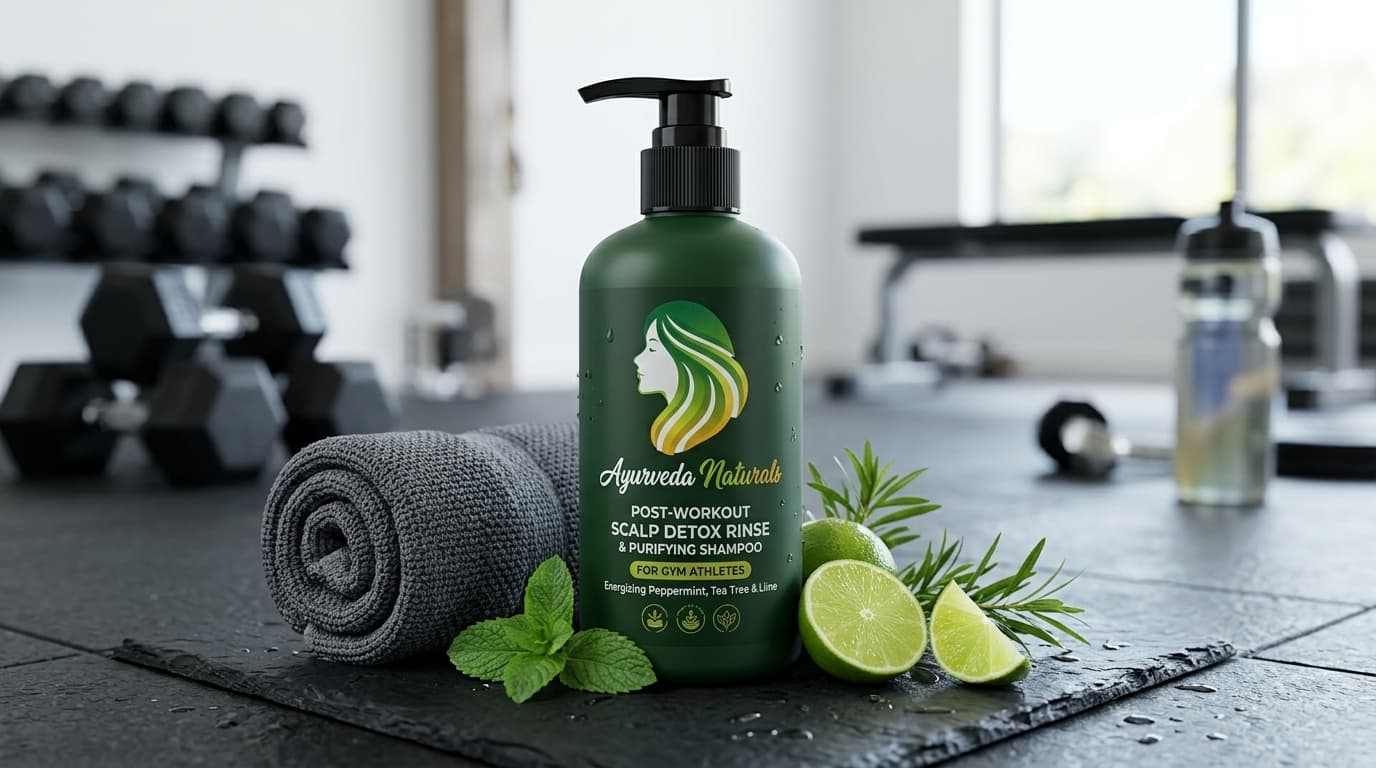
- The Clarifying Wash (2 to 3 Times Weekly): On designated wash days, cleanse your scalp with a dedicated purifying formula. Learn the proper washing mechanics in our detailed guide on how to wash oiled hair properly, and discover the best formulations in our comprehensive review of the best clarifying shampoo oily scalp summer Pakistan climates demand. For guaranteed results, use our Ayurveda Naturals Purifying Hair Shampoo, which uses pure Reetha and Shikakai saponins combined with antibacterial Neem to dissolve oxidized sebum without stripping your moisture barrier.
- Gentle Microfiber Drying: Gently squeeze out excess water with a soft microfiber towel or a clean cotton t-shirt. Never rub your hair vigorously. Let your hair air-dry completely, or use the cool setting of a ionic blow dryer. Never tie up damp hair post-shower.
Botanical Cleansers and Anti-Fungal Rinses for Active Lifestyles
Commercial athletic shampoos are often loaded with synthetic detergents, harsh sulfates (SLS/SLES), and silicone polymers that leave a suffocating film over the scalp. In contrast, classical Ayurvedic botanicals provide potent antimicrobial, antifungal, and sebum-regulating properties while maintaining the scalp's delicate biological balance:
1. Azadirachta Indica (Neem): The Broad-Spectrum Fungal Eradicator
Neem is nature's ultimate antifungal remedy. Rich in azadirachtin, nimbin, and nimbidol, Neem specifically targets and neutralizes Malassezia globosa and Malassezia restricta yeasts. It clears inflammatory pustules, eliminates post-workout itchiness, and purifies the follicular canal without causing chemical dryness or irritation.
2. Sapindus Mukorossi (Reetha) & Acacia Concinna (Shikakai): Nature's Pure Saponins
Reetha and Shikakai contain high concentrations of natural, biodegradable triterpenoid saponins. When mixed with water, these botanicals produce a gentle, silky lather that emulsifies sweat salts, environmental gym grime, and oxidized sebum. Unlike synthetic sulfates that have an alkaline pH of 8 to 9, Shikakai has a naturally low, acidic pH (4.5 to 5.0) that perfectly matches and preserves the scalp's acid mantle.
3. Vetiveria Zizanioides (Ushira / Khus): The Pitta Heat Extinguisher
Ushira is an extraordinary cooling root in Ayurvedic pharmacology. Its earthy, grounding aroma calms the nervous system, while its topical application instantly cools down the intense metabolic heat generated by heavy exercise. Ushira pacifies Bhrajaka Pitta, reduces scalp redness, and soothes microvascular inflammation around over-exercised hair follicles.
4. Melaleuca Alternifolia (Tea Tree) & Ocimum Sanctum (Tulsi): Bacterial Defense
Tea tree essential oil contains terpinen-4-ol, a powerful antimicrobial compound that penetrates deep into sebum-filled pores to kill acne-causing bacteria. Tulsi (Holy Basil) is packed with eugenol and ursolic acid, which boost local cellular immunity, stimulate scalp microcirculation, and prevent post-workout bacterial folliculitis.
5. Aloe Barbadensis (Kumari): Lactic Acid Neutralizer and Hydrator
Fresh Aloe Vera leaf gel contains polysaccharides, enzymes, and glycoproteins that soothe acute chemical irritation caused by concentrated sweat lactic acid. It forms a breathable, non-greasy protective moisture layer over the scalp skin, promoting rapid cellular repair of the stratum corneum.
Nutritional and Hydration Strategies for Active Athletes
External hygiene must be paired with internal metabolic nourishment. What you put into your body before, during, and after training directly influences the chemical composition of your sweat and the vitality of your hair roots:
- Drink Real Electrolytes Without Refined Sugars: Commercial sports drinks are packed with high-fructose corn syrup and artificial dyes, which trigger systemic insulin spikes, elevate androgen hormones, and increase oily sebum production. Instead, hydrate with fresh coconut water (rich in potassium and magnesium) or pure water infused with a squeeze of fresh lime and a pinch of rock salt (Saindhava Lavana).
- Incorporate Pitta-Cooling Superfoods: Counteract workout-induced internal heat by incorporating naturally cooling, sweet, and bitter foods into your daily diet. Eat plenty of cucumber, fresh coriander, pomegranate, sweet ripe fruits, and soaked fennel seed water to soothe aggravated Pitta dosha.
- Fuel Asthi Dhatu with Bone-Building Minerals: In Ayurveda, hair is the direct byproduct of bone tissue (Asthi Dhatu). Heavy sweating depletes vital minerals. Replenish your body with mineral-dense foods like black sesame seeds (rich in calcium and zinc), pumpkin seeds, moringa leaf powder, and soaked almonds.
- Avoid Synthetic, High-Stimulant Pre-Workouts: Commercial pre-workout powders loaded with 300 to 400 mg of synthetic caffeine, yohimbine, and artificial stimulants cause extreme sympathetic nervous system activation. This constricts scalp micro-capillaries, spikes cortisol, and accelerates telogen shedding. Opt for clean, natural pre-workout energy like a cup of green tea or an adaptogenic Ashwagandha and Cordyceps elixir.
Frequently Asked Questions About Gym Sweat and Hair Loss
Here are detailed answers to the most critical questions active individuals ask about sweat management and hair loss prevention:
Does sweating during gym workouts directly cause hair loss?
Sweating itself does not cause hair loss; in fact, vigorous exercise boosts systemic circulation and promotes nutrient delivery to hair follicles. However, leaving workout sweat to dry on the scalp causes severe damage. Sweat contains sodium chloride, lactic acid, and trace minerals that crystallize as water evaporates, dehydrating the hair shaft and shifting the scalp's acidic pH. Combined with oxidized sebum, this creates a fertile breeding ground for Malassezia yeast, leading to fungal overgrowth, follicular occlusion, perifollicular inflammation, and subsequent shedding.
How soon should I wash my hair after an intense workout?
You should rinse or wash your hair within 30 to 60 minutes after finishing a high-intensity workout. Allowing sweat and sebum to sit on the scalp for several hours leads to lipid peroxidation, bacterial proliferation, and pore clogging. If you do not wish to shampoo daily, a thorough lukewarm water rinse combined with gentle fingertip scalp massage is sufficient to dissolve salt and lactic acid crystals on non-shampoo days.
What is the Ayurvedic view on sweat and scalp health?
In Ayurveda, sweat (Sweda) is classified as the essential metabolic byproduct (Mala) of fat tissue (Meda Dhatu). While sweating is vital for thermoregulation and tissue detoxification, intense exercise generates excess internal metabolic heat, sharply aggravating Pitta dosha. When this overheated sweat mingles with sebum (Kapha), it stagnates in the micro-channels (Swedovaha and Kesha Srotas) of the scalp, 'scorching' hair roots and causing Darunaka (dandruff) and Khalitya (premature hair loss).
Can dry shampoo be used safely after gym sessions?
Relying on dry shampoo after sweaty workouts is highly damaging. Dry shampoos use starches, alcohol, and talc to absorb surface oils, but they do not remove sweat, salt crystals, or dead keratinocytes. Instead, dry shampoo forms a thick, occlusive paste over the follicular ostia, trapping bacteria and yeast beneath it. This leads to folliculitis, severe scalp inflammation, and gradual follicular miniaturization. Dry shampoo should never replace physical water rinsing.
What is the best hairstyle to wear while exercising to prevent hair breakage?
The safest workout hairstyles are low, loose braids, loose low buns secured with 100% mulberry silk or satin scrunchies, or a loose French braid paired with a breathable, moisture-wicking headband. Avoid tight high ponytails, topknots with rigid rubber elastics, and tight snapback caps, which exert severe mechanical traction on the frontal hairline and trap heat and moisture directly against the scalp.
How often should gym-goers use a clarifying herbal shampoo?
Active individuals who work out 4 to 6 times a week should use a sulfate-free, clarifying herbal shampoo 2 to 3 times weekly. This frequency thoroughly eliminates stubborn sweat residues, crystallized salts, and oxidized sebum without stripping the scalp's protective moisture barrier or provoking compensatory sebum hyper-secretion.
Which natural botanical ingredients protect athletic scalps best?
The most effective botanicals for active scalps include Neem (Azadirachta indica) and Tea Tree (Melaleuca alternifolia) for broad-spectrum antifungal and antibacterial protection, Shikakai (Acacia concinna) and Reetha (Sapindus mukorossi) for gentle saponin-based cleansing, Ushira (Vetiveria zizanioides) and Aloe Vera (Kumari) for soothing post-workout Pitta heat and lactic acid irritation, and Amla (Emblica officinalis) for neutralizing oxidative stress from exercise-induced free radicals.
Conclusion and Holistic Action Plan for Athletes
You never have to sacrifice your athletic goals to maintain a full, healthy head of hair. By understanding the biophysical chemistry of perspiration and aligning your post-workout hygiene with time-tested Ayurvedic principles, you can enjoy all the cardiovascular and muscular benefits of intense training while cultivating an immaculate, thriving scalp.
Commit to this simple summary checklist starting today:
- Always wear loose, low-tension hairstyles secured with silk scrunchies and moisture-wicking headbands.
- Never let gym sweat dry naturally beneath tight hats, caps, or messy buns.
- Rinse thoroughly with lukewarm water within 45 minutes of completing your workout.
- Cleanse your scalp 2 to 3 times weekly with a dedicated botanical clarifying shampoo.
- Hydrate with pure, mineral-rich electrolytes and nourish your body with Pitta-cooling, nutrient-dense whole foods.
Keep Your Scalp Fresh, Clean, and Follicles Strong After Every Workout
Say goodbye to workout-induced scalp buildup, itching, and hair thinning. Our Ayurveda Naturals Purifying Hair Shampoo combines pure Shikakai, Reetha, cooling Neem, and revitalizing Tea Tree to gently dissolve crystallized sweat salts, clarify oxidized sebum, and protect your acid mantle—leaving your hair clean, bouncy, and deeply refreshed after every gym session.
Ready to stop hair fall naturally?
Don't wait until it's too late. Experience the proven magic of our 100% organic, wild-harvested Ayurvedic formulations and start seeing real results in 14 days.
Free Shipping + Cash on Delivery