
Bhringraj vs Brahmi Oil: Differences for Scalp and Hair Care
Bhringraj vs Brahmi Oil: The Definitive Ayurvedic Comparison for Scalp Health
The choice between bhringraj vs brahmi oil hinges on whether your hair loss is driven by follicular weakness or mental stress. Bhringraj (Eclipta alba) excels at accelerating active growth, stimulating blood circulation, and preserving natural melanin, whereas Brahmi (Bacopa monnieri) calms an overheated Pitta dosha, soothes the nervous system, and resolves stress-induced telogen shedding.
The Ancient Roots of Ayurvedic Hair Science: Keshya and Medhya Botanicals
In classical Ayurvedic pharmacology, botanicals are categorized according to their specific organ affinities and physiological actions (Karma). When addressing hair thinning, premature greying, and scalp disorders, two legendary herbs dominate the classical literature: Bhringraj (Eclipta alba) and Brahmi (Bacopa monnieri). While both herbs are celebrated components of traditional hair oils, they possess distinct constitutional profiles, energetic potencies, and clinical indications.
Classical Ayurvedic texts, including the Charaka Samhita and Ashtanga Hridaya, divide therapeutic plants into functional groups. Bhringraj is classified primarily as a supreme Keshya herb (substances that directly benefit hair growth, follicle strength, and pigment retention). Conversely, Brahmi is celebrated primarily as a premier Medhya Rasayana (a rejuvenating adaptogen that enhances intellect, calms the nervous system, and clears mental fatigue), while functioning secondarily as a potent topical cooling agent for the cranial tissues.
Ayurvedic physiology views hair (Kesha) as an Upadhatu (secondary metabolic byproduct) of Asthi Dhatu (bone tissue). The nourishment of hair relies directly on the metabolic health of Majja Dhatu (nervous tissue and bone marrow) and the fluid balance of Rakta Dhatu (blood tissue). When chronic stress, emotional turmoil, or systemic inflammation strikes, these tissue systems suffer. Understanding the functional divergence of bhringraj vs brahmi oil enables you to select the precise botanical therapy aligned with your scalp's physiological needs.
Botanical Profiles: Eclipta Alba vs. Bacopa Monnieri
To appreciate how these oils interact with human physiology, we must examine their botanical identities and key phytochemical compounds.
Bhringraj (Eclipta Alba): The Sovereign Follicular Catalyst
Belonging to the Asteraceae family, Bhringraj is a small, moisture-loving annual herb with white composite flowers that flourishes throughout tropical and subtropical regions. In Sanskrit, Bhringraj translates literally to "King of the Hair" or "that which imparts a glossy black sheen like a bumblebee" (Bhringa).
The plant contains a remarkable spectrum of therapeutic secondary metabolites:
- Coumestans (Wedelolactone and Demethylwedelolactone): The primary chemical markers of Eclipta alba. These bioactive compounds exert potent anti-inflammatory effects by selectively inhibiting 5-lipoxygenase (5-LOX) and downregulating inflammatory cytokine cascades around the follicular dermal papilla.
- Flavonoids (Apigenin and Luteolin): Powerful antioxidants that scavenge free radicals, shielding follicular melanocytes from oxidative degradation and premature aging.
- Ecliptine: An alkaloid unique to this species that stimulates microvascular dilation and encourages mitotic activity in keratinocyte progenitor cells.
- Triterpene Saponins and Phytosterols: Natural plant sterols (including β-sitosterol) that support scalp barrier function and provide mild competitive inhibition against local 5-alpha reductase activity.
Brahmi (Bacopa Monnieri): The Neurological and Thermal Balancer
Brahmi, belonging to the Plantaginaceae family, is a creeping, perennial succulent herb with small, oblong fleshy leaves and pale blue or white flowers that thrives in wetlands and marshes across South Asia. In classical Ayurvedic nomenclature, Brahmi is named after Lord Brahma, the creator, reflecting its ancient status as a supreme revitalizer of consciousness, mental clarity, and nervous system health.
Clarification on Botanical Identity: In commercial commerce, confusion frequently arises between Bacopa monnieri (Water Hyssop, true Brahmi in North Indian traditions) and Centella asiatica (Gotu Kola, frequently called Mandukaparni or Brahmi in South Indian traditions). While both herbs share adaptogenic, neuroprotective qualities, authentic Ayurvedic cranial hair oils historically prioritize Bacopa monnieri for its intense cooling potency (Sheeta Virya) and high saponin content.
The therapeutic profile of Bacopa monnieri includes:
- Bacosides (Bacoside A and B): Dammarane-type triterpenoid saponins responsible for the plant's adaptogenic and neuroprotective prowess. Topically, bacosides help stabilize vascular endothelial cells, improve microcapillary resilience, and protect cellular membranes from lipid peroxidation.
- Hersaponin and Monnierin: Specialized saponins that exert mild sedative, antispasmodic, and tension-relieving effects on smooth muscle tissue and localized peripheral nerve endings.
- Alkaloids (Brahmine and Herpestine): Mildly stimulating nitrogenous compounds that support peripheral sensory nerve health.
- Betulinic Acid: A natural triterpenoid possessing recognized anti-inflammatory, antimicrobial, and skin-barrier-protecting properties.
Ayurvedic Energetics and Dosha Dynamics: Virya, Vipaka, and Guna
In Ayurvedic medicine, herbs do not function merely as chemical solutions; they work through fundamental energetic properties known as Dravyaguna. The contrasting energetics of Bhringraj and Brahmi explain why they produce very different sensations and outcomes on the scalp.
The Role of Bhrajaka Pitta in Scalp Health
According to classical dermatology, the skin and scalp are governed by Bhrajaka Pitta, a specialized subdosha of Pitta responsible for processing topical substances, maintaining cutaneous temperature, regulating color and luster, and facilitating the enzymatic reactions of the hair follicles. When Bhrajaka Pitta becomes aggravated—through stress, excessive intake of pungent or salty foods, heat exposure, or anger—the cranial tissues overheat. This internal fire burns the delicate hair roots, leading to Khalitya (hair loss) and Palitya (premature greying).
Energetic Profile of Bhringraj
- Rasa (Taste): Katu (Pungent), Tikta (Bitter).
- Guna (Qualities): Ruksha (Dry), Laghu (Light).
- Virya (Thermal Potency): Ushna (Gently heating/activating) to neutral.
- Vipaka (Post-Digestive/Long-Term Effect): Katu (Pungent).
- Dosha Impact: Pacifies Vata and Kapha primarily. While bitter taste inherently cools Pitta, Bhringraj's mild metabolic potency acts as an active tissue stimulant, clearing sluggish debris (Ama) and driving arterial blood flow into the micro-vessels of the hair bulb.
Energetic Profile of Brahmi
- Rasa (Taste): Tikta (Bitter), Kashaya (Astringent), Madhura (Sweet).
- Guna (Qualities): Laghu (Light), Sara (Flowing/Spreading).
- Virya (Thermal Potency): Sheeta (Intensely cooling).
- Vipaka (Post-Digestive/Long-Term Effect): Madhura (Sweet/Nourishing).
- Dosha Impact: The undisputed champion of Pitta pacification. Its bitter and astringent tastes combined with cold potency immediately draw excessive heat out of the head, soothing inflamed scalp tissue, clearing redness, and sedating hyperactive mental stress. Simultaneously, its sweet post-digestive effect calms aggravated Vata in the nervous system.
Follicular Action: Growth Acceleration vs. Stress-Induced Shedding
When comparing bhringraj vs brahmi oil for practical hair care, the core distinction lies in their primary target: direct follicular stimulation versus stress-induced shedding suppression. For related comparisons regarding scalp conditions, see our analysis of Bhringraj vs Rosemary Oil for oily or dry scalp.
Bhringraj: Accelerating the Anagen Growth Phase
Bhringraj acts directly upon the cellular machinery of the hair follicle. Pharmacological studies demonstrate that Eclipta alba extracts stimulate follicular transition from the telogen (resting) phase into the anagen (active growth) phase with high efficiency. It upregulates alkaline phosphatase activity in the dermal papilla, promoting keratinocyte proliferation and expanding the physical caliber of the hair shaft.
Furthermore, Bhringraj is unmatched in its ability to protect natural hair pigmentation. By shielding the delicate melanocytes residing in the follicular bulb from oxidative damage, regular application helps prevent premature greying and deepens the natural richness of dark hair.
Brahmi: Neutralizing Stress-Induced Telogen Effluvium
Brahmi targets hair loss through the neuro-endocrine pathway. Severe emotional stress, work burnout, anxiety, and insomnia cause sustained increases in systemic cortisol and local perifollicular Substance P. This chronic stress signal prematurely forces growing anagen follicles into catagen regression, culminating two to three months later in diffuse telogen shedding across the entire scalp.
When massaged into the scalp, Brahmi oil delivers its bioactive bacosides directly to cranial nerve endings. It relieves chronic muscular tension in the galea aponeurotica (the fibrous sheet spanning the top of the skull), reversing the micro-ischemia caused by scalp constriction. By drawing excess heat out of the cranium and promoting restorative slow-wave sleep, Brahmi halts the neuro-chemical cascade of stress-induced hair fall at its source.
Detailed Comparison Table: Bhringraj Oil vs Brahmi Oil
The following responsive comparison table highlights the essential differences between Bhringraj and Brahmi oil to guide your selection:
| Parameter | Bhringraj Oil (Eclipta alba) | Brahmi Oil (Bacopa monnieri) |
|---|---|---|
| Classical Designation | Keshraj (Sovereign of Hair); supreme Keshya Rasayana. | Medhya Rasayana (Brain Rejuvenator); premier Pitta-pacifier. |
| Primary Active Chemistry | Wedelolactone, demethylwedelolactone, luteolin, ecliptine. | Bacosides A & B, hersaponin, monnierin, betulinic acid. |
| Thermal Energy (Virya) | Ushna (Mildly warming / activating metabolic energy). | Sheeta (Intensely cooling thermal energy). |
| Core Hair Benefit | Accelerates anagen regrowth, widens shaft caliber, halts thinning. | Halts stress shedding, cools burning scalp, relieves tension. |
| Melanin & Greying | Exceptional; protects melanocytes and restores natural darkness. | Moderate; protects against heat-induced oxidative greying. |
| Nervous System & Sleep | Mild grounding; supports liver detox and general vitality. | Profound; induces deep sleep, clears mental fog, relieves headaches. |
| Ideal Scalp Condition | Thinning temples, receding hairline, sluggish circulation, dryness. | Overheated scalp, red irritated skin, tension tightness, diffuse shed. |
| Texture & Color | Deep dark green to brownish-black; rich herbal nutty aroma. | Medium green to golden; lighter herbal, earthy, sweet scent. |
| Best Time to Apply | Daytime or 2 hours prior to shampooing; supports active circulation. | Evening or 1 hour prior to sleep; promotes deep tranquility. |
The Classical Science of Murdha Taila: Four Sacred Methods of Head Oiling
In the classical literature of Ayurvedic medicine, head oiling is not a single generic activity. It is part of the comprehensive practice of Murdha Taila (cranial oil therapies), categorized by ancient physicians into four distinct tiers of therapeutic intensity:
1. Shiro Abhyanga (Regular Head Massage)
The daily or bi-weekly practice of massaging warm herbal oil into the scalp, neck, and shoulders. Bhringraj oil is the undisputed botanical of choice for standard Shiro Abhyanga when addressing hair fall, root weakness, and thinning hair shafts. The friction of the massage combined with the mildly warming potency of Bhringraj stimulates the microcapillaries feeding the hair papillae.
2. Shiro Seka (Continuous Cranial Pouring or Shirodhara)
The continuous, rhythmic pouring of warm or cool medicated liquids (oils, herbal decoctions, or medicated milk) over the forehead and scalp for 30 to 45 minutes. Brahmi oil (or Brahmi-infused milk, known as Ksheeradhara) is the gold standard formulation for this therapy. It is prescribed for severe chronic insomnia, acute anxiety, tension migraines, and sudden telogen effluvium triggered by psychological shock.
3. Shiro Pichu (Medicated Oil Pad Application)
Placing a sterile cotton pad soaked in warm medicated herbal oil directly over the crown vertex (Bregma or Adhipati Marma) for one to two hours, held in place with a soft cotton bandage. Brahmi oil applied via Shiro Pichu provides sustained neuro-sensory cooling for individuals suffering from cranial burning sensations, extreme scalp sensitivity, or severe burnout.
4. Shiro Basti (Cranial Oil Retention)
The most intensive cranial therapy in Panchakarma. A cylindrical leather cap is secured around the patient's head and sealed with black gram paste. Medicated oil is poured into the cap until the scalp is completely submerged, retained for 30 to 50 minutes under expert supervision. Combining Bhringraj and Brahmi oils in Shiro Basti treats deep neurological tremors, facial paralysis, chronic scalp dermatitis, and stubborn alopecia.
Application Rituals: The Classical Shiro Abhyanga Technique
In traditional Ayurveda, the method of applying hair oil is just as important as the botanical ingredients themselves. Applying cold oil carelessly to the surface of the hair provides minimal benefits to the living follicle. To gain maximum therapeutic efficacy, practice the time-honored art of Shiro Abhyanga (cranial head massage). For a full practical guide, read our walkthrough on how to properly oil your hair for maximum results.
How to Apply Bhringraj Oil for Growth and Follicle Activation
- Warm the Oil Gently: Place two to three tablespoons of Bhringraj oil in a small glass container resting in warm water. Warm oil penetrates the stratum corneum much faster and pacifies Vata dosha.
- Target Thinning Partitions: Section your hair with a wooden comb. Apply the warm oil directly to areas experiencing visible thinning, such as the crown vertex, temples, and central parting.
- Stimulate Hair Roots: Use the pads of your fingers to perform firm, small circular friction movements directly on the scalp. This mechanical motion, paired with the activating wedelolactones, stimulates local capillary beds.
- Leave-In Time: Leave on for two to four hours, or overnight if your constitution tolerates it. Wash out with a mild, sulfate-free herbal shampoo. Repeat twice weekly.
How to Apply Brahmi Oil for Stress Relief, Cooling, and Deep Sleep
- Maintain Lukewarm Temperature: Because Brahmi is applied to pacify excessive Pitta heat and calm the nervous system, avoid heating the oil to high temperatures. Room temperature or barely lukewarm is ideal.
- Soothe the Crown (Adhipati Marma): Begin by pouring a coin-sized pool of Brahmi oil directly onto the crown vertex (Adhipati Marma). Gently rest your palm over the crown for sixty seconds to allow the cooling energy to penetrate the cranial channels.
- Long, Gliding Strokes: Rather than vigorous circular rubbing, use slow, sweeping, linear strokes moving from the hairline backward toward the nape of the neck. This pacifies Prana Vayu and soothes sensory nerves.
- Massage the Occipital Ridge: Pay special attention to the base of the skull (Krikatika Marma) and behind the ears, releasing chronic postural neck tension.
- Nighttime Application: Apply one hour before bedtime. Brahmi's sedative bacosides encourage deep, restorative REM and slow-wave sleep. Wash out the following morning.
The Synergistic Masterpiece: Combining Bhringraj and Brahmi (Maha Bhringraj Taila)
While the debate of bhringraj vs brahmi oil encourages choosing between them, classical Ayurvedic masters recognized that combining these two powerhouse botanicals creates an unparalleled therapeutic synergy.
In classical Ayurvedic pharmacology, this combination forms the foundation of the legendary Maha Bhringraj Taila. When cooked together according to the traditional Kshir Pak vidhi:
- Complementary Energetics: Bhringraj's mild warming, metabolically activating potency is tempered by Brahmi's deeply cooling, soothing energy. The resulting formulation becomes completely tridoshic—balancing Vata, Pitta, and Kapha simultaneously without causing chills or overheating.
- Dual-Vector Follicular Protection: Bhringraj stimulates cellular mitosis and protects melanocytes in the dermal papilla, while Brahmi shields the entire cranial environment from the destructive effects of cortisol, emotional stress, and inflammatory heat.
- Holistic Hair Preservation: The hair shaft receives external conditioning and cuticle protection from the carrier lipids, while the follicular roots receive internal vitality through enhanced microcirculation and nervous system tranquility.
Seasonal Adjustments: Aligning Oil Choice with Ritu (Seasons)
Ayurveda emphasizes that environmental rhythms profoundly shift your internal doshic balance. Adjusting your selection of Bhringraj and Brahmi according to the seasons ensures continuous harmony:
Grishma Ritu (Summer) & Sharad Ritu (Autumn)
During the scorching summer months and the post-monsoon autumn, Pitta dosha naturally accumulates and peaks. The scalp feels hotter, sweat glands secrete excess saline moisture, and follicular irritation flares. During these seasons, prioritize Brahmi oil to maintain a cool, balanced scalp environment and protect against seasonal Pitta shedding.
Varsha Ritu (Monsoon)
The rainy season aggravates Vata dosha while dampening digestive fire (Agni). High atmospheric humidity pairs with fungal scalp imbalances. Use Bhringraj oil during monsoon months; its bitter, antimicrobial coumestans help clarify congested follicles, balance excess sebum, and prevent seasonal hair fall.
Hemanta & Shishira Ritu (Winter)
The cold, dry winter winds aggravate Vata dosha, leading to dry, flaky scalps, split ends, and brittle hair strands. Warm Bhringraj oil (formulated in a rich sesame oil base) is ideal during winter, supplying deep lipid hydration and counteracting environmental dryness without over-chilling the cranial sinuses.
Choosing Based on Your Scalp Type and Lifestyle Symptoms
To determine whether to select Bhringraj, Brahmi, or a synergistic blend, assess your personal symptom profile against these three common presentations:
Profile A: Choose Pure Bhringraj Oil
- Your hair loss follows a patterned distribution (widening center part, receding temporal peaks, thinning crown).
- You notice individual hair strands becoming progressively thinner, finer, and shorter over time (miniaturization).
- You are noticing premature white or silver strands emerging in your late twenties or thirties.
- Your scalp tends to be dry, normal, or mildly congested without significant burning sensations.
- Your primary objective is physical regrowth, root anchoring, and hair strand thickening.
Profile B: Choose Pure Brahmi Oil
- Your hair loss is sudden, diffuse, and widespread, shedding heavily across the entire head rather than distinct patches.
- You are currently navigating high mental stress, corporate burnout, emotional grief, or chronic anxiety.
- You struggle with restless sleep, insomnia, frequent tension headaches, or racing thoughts at night.
- Your scalp frequently feels hot, itchy, sensitive to the touch, or displays visible redness and erythema.
- Your primary objective is soothing scalp inflammation, reducing stress shedding, and achieving deep mental calmness.
Profile C: Choose a Synergistic Bhringraj & Brahmi Formulation
- You experience a combination of genetic hair thinning compounded by an intense, high-stress modern lifestyle.
- You want both rapid active growth stimulation and comprehensive protection against stress-induced telogen shed.
- You desire balanced, all-season scalp nourishment that maintains healthy follicular cycling while keeping the mind relaxed and focused.
Cognitive Neuro-Dermatology: The Modern Brain-Scalp Axis
Modern medical research increasingly validates what classical Ayurvedic scholars recognized millennia ago: the brain and scalp share intimate biological communication lines. Known in contemporary dermatology as the brain-skin axis, this neuro-immunocutaneous network operates through shared neurotransmitters, endocrine pathways, and common embryonic tissues.
When the central nervous system perceives chronic psychological distress, it triggers peripheral nerve fibers in the scalp to release neuro-inflammatory mediators, particularly Calcitonin Gene-Related Peptide (CGRP) and Substance P. These neuropeptides directly stimulate dermal mast cells to release histamine, tryptase, and tumor necrosis factor-alpha (TNF-α). This local inflammatory cascade causes perifollicular vasospasm, constricting microcapillary blood flow and driving follicular dermal papillae into early involution.
This is where Brahmi's unique pharmacological profile demonstrates modern clinical relevance. Research on Bacopa monnieri reveals that its bioactive bacosides act as natural adaptogens, modulating central and peripheral neurotransmitter levels—including serotonin, dopamine, and gamma-aminobutyric acid (GABA). By facilitating GABAergic neurotransmission, Brahmi dampens sympathetic fight-or-flight arousal, lowering systemic vascular resistance and calming cranial peripheral nerve firing. Consequently, massaged into the scalp, Brahmi protects hair follicles from neurogenic micro-inflammation and stress-mediated telogen arrest.
Identifying Authentic Formulations: Cold-Pressed Kshir Pak vs Mineral Oil Adulterations
With the surging global interest in Ayurvedic hair remedies, the market has become inundated with cheap, industrially formulated imitations. Discerning between authentic therapeutic-grade oils and cosmetic counterfeits is vital for achieving clinical outcomes:
- Check the Base Carrier Oil: Authentic Ayurvedic preparations explicitly declare their base oils—traditionally pure cold-pressed sesame oil (Tila Taila) or virgin coconut oil (Narikela Taila). Steer clear of commercial formulations listing "light liquid paraffin," "mineral oil," or "petroleum distillate" as the primary ingredient. Mineral oil is an occlusive petrochemical byproduct that cannot absorb into the follicular shaft and strips the scalp's natural lipid mantle.
- Observe Color and Opacity: Pure Bhringraj oil processed via classical Kshir Pak vidhi exhibits a deep, dark greenish-black tone derived from genuine whole-plant juice and leaf pigments. Pure Brahmi oil displays an emerald green or deep golden-green hue. Transparent, bright green, or unnaturally colored oils usually rely on artificial synthetic dyes (such as Fast Green FCF or Quinoline Yellow) rather than real botanical concentrations.
- Evaluate the Scent Profile: Genuine Ayurvedic herbal oils possess a distinctive, grounded, herbaceous, and deeply earthy aroma reflecting hours of slow simmering with medicinal herbs and whole milk. Beware of oils that smell overwhelmingly of synthetic floral perfumes, chemical fragrances, or menthol, which are often added to mask low herbal concentrations or rancid base oils.
- Check the Processing Method: Look for explicit verification of traditional Kshir Pak Vidhi or Taila Paka Vidhi on the label. This confirms that the herbs underwent sustained decoction in milk and oil, ensuring maximum extraction of both lipid-soluble coumestans and water-soluble flavonoids without damaging bioactive heat-sensitive enzymes.
Experience the Harmony of Classical Ayurvedic Hair Oils
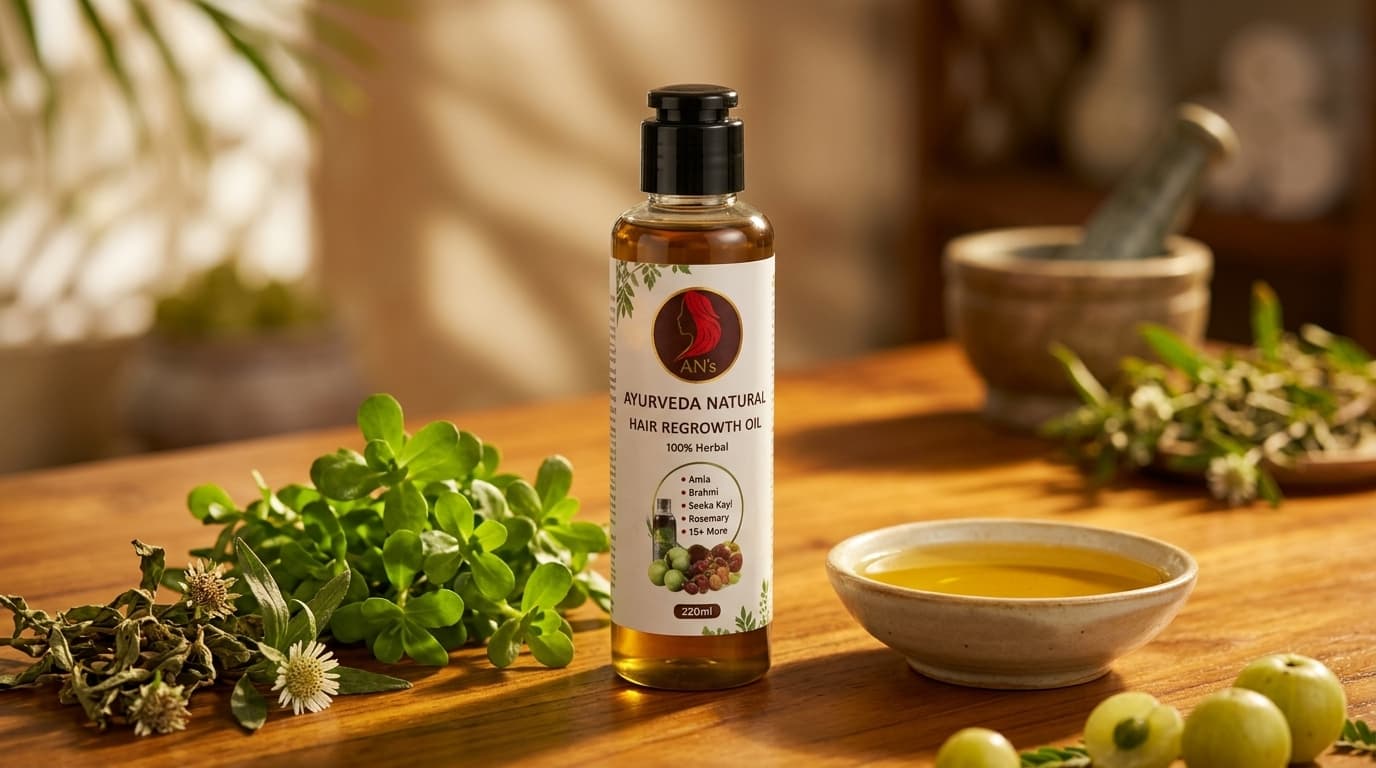
Discover our authentic Hair Regrowth Oil, handcrafted with cold-pressed Bhringraj, pure Brahmi, Amla, and 15+ organic botanicals. Simmered slowly to soothe cranial heat, nourish roots, and cultivate resilient, lustrous hair.
Frequently Asked Questions About Bhringraj and Brahmi Oil
What is the primary difference between Bhringraj and Brahmi oil?
The primary difference between Bhringraj and Brahmi oil lies in their therapeutic focus and energetic properties. Bhringraj (Eclipta alba) is a direct follicular catalyst that stimulates blood circulation, accelerates the anagen growth cycle, and prevents premature greying. Brahmi (Bacopa monnieri) is a cooling adaptogen that calms an overheated Pitta dosha, relieves mental stress and nervous tension, and resolves stress-induced telogen shedding.
Can I mix Bhringraj oil and Brahmi oil together?
Yes, mixing Bhringraj and Brahmi oil together is not only safe but highly recommended in classical Ayurveda. The combination forms the foundation of traditional formulas like Maha Bhringraj Oil. Bhringraj provides growth stimulation and pigment defense, while Brahmi provides cooling thermal balance and stress relief, creating a harmonious treatment suitable for all hair types.
Which oil is better for preventing premature greying?
Bhringraj oil is the undisputed superior choice for preventing and managing premature greying. In classical texts, it is celebrated for its ability to protect follicular melanocytes from oxidative damage through its high concentration of wedelolactone and bioflavonoids, preserving natural dark hair pigmentation over time.
Does Brahmi oil help with sleep and headaches?
Yes, Brahmi oil is renowned for promoting deep, restorative sleep and relieving tension headaches. When massaged into the scalp, its natural bacosides and hersaponin compounds soothe peripheral cranial nerves, relieve tension in the scalp muscles, and calm hyperactive mental stress.
How often should I apply Bhringraj or Brahmi oil?
For optimal results, apply Bhringraj or Brahmi oil two to three times per week. Consistent application over a period of three to six months allows the botanical phytosterols and fatty acids to nourish the scalp barrier, regulate follicular cycling, and support healthy hair density.
Can Brahmi oil make my scalp too cold in winter?
Because Brahmi has intensely cooling thermal potency (Sheeta Virya), using pure Brahmi oil in freezing winter climates can occasionally feel excessively chilling for individuals with high Vata or Kapha constitutions. In colder months, mix Brahmi with gently warming carrier oils like sesame oil or combine it with Bhringraj to maintain balanced thermal comfort.
How long should I leave Brahmi or Bhringraj oil on my hair before washing?
You should leave Bhringraj or Brahmi oil on your scalp for a minimum of one to two hours to allow adequate trans-epidermal absorption of the active compounds. For deeper conditioning and pronounced stress relief, leaving the oil on overnight and washing it out the next morning with a mild, sulfate-free shampoo is ideal.
Final Guidance: Crafting Your Personalized Ayurvedic Hair Ritual
Navigating the rich traditions of Ayurvedic botanical medicine reminds us that true hair wellness is never purely cosmetic. Hair reflects the delicate balance between internal metabolic harmony, nervous system tranquility, and topical environmental care.
By understanding the distinct virtues of bhringraj vs brahmi oil, you can move beyond generic hair loss advice and implement an intelligent, personalized regimen. Whether you choose the dynamic growth stimulation of Bhringraj, the cooling tranquility of Brahmi, or the unified balance of a classical synergistic blend, consistent, mindful application will nourish your scalp, calm your mind, and restore the natural vitality of your hair.
Ready to stop hair fall naturally?
Don't wait until it's too late. Experience the proven magic of our 100% organic, wild-harvested Ayurvedic formulations and start seeing real results in 14 days.
Free Shipping + Cash on Delivery