
Bhringraj Amla Hair Oil Pakistan Guide
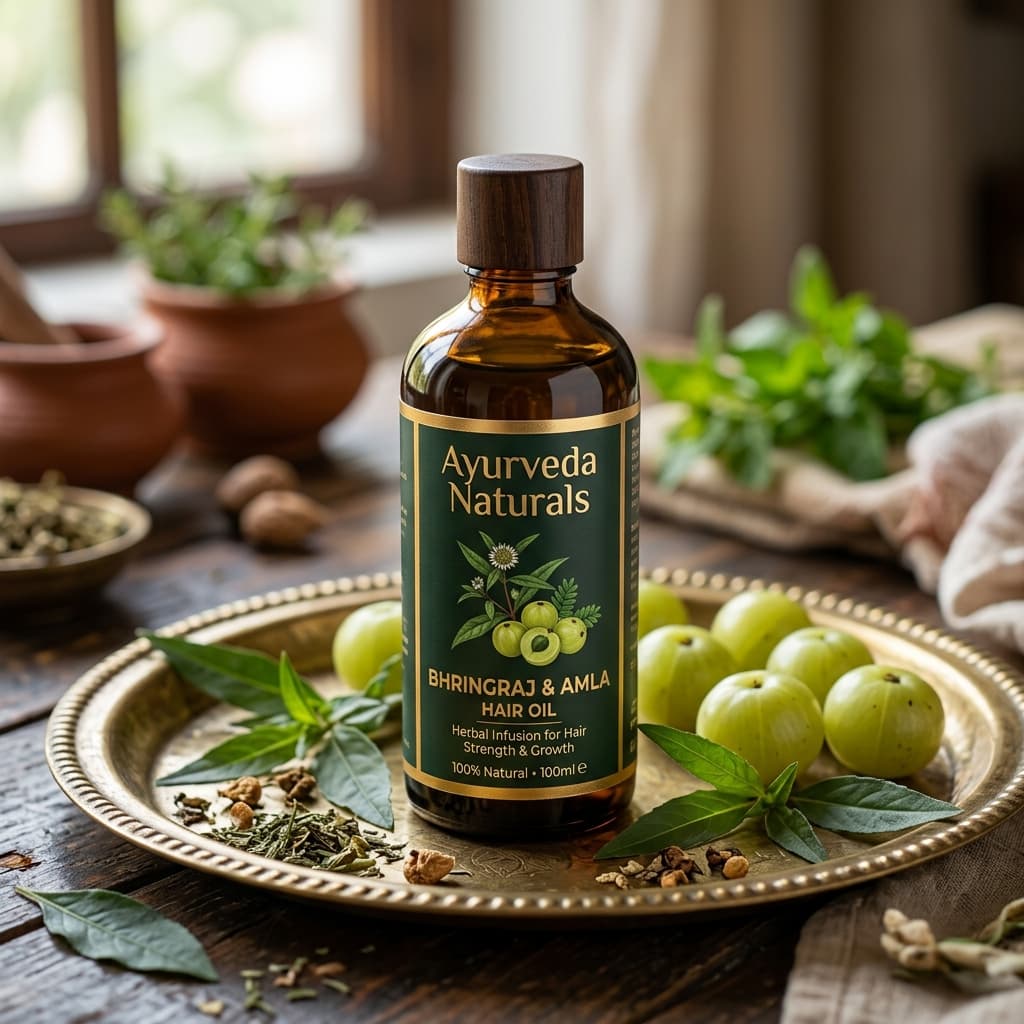
The Timeless Tradition of Ayurvedic Hair Oiling: A Journey Back to Roots
If you close your eyes and journey back through the corridors of time, you might recall the comforting scent of warm, earthy oils wafting through the air on a lazy Sunday afternoon. For centuries, across the Indian subcontinent and far beyond, the ritual of hair oiling has been much more than a mere beauty treatment or an item on a checklist. It is a profound act of love, a generational bonding experience, and a deeply therapeutic practice passed down from grandmothers to mothers, and mothers to daughters. In traditional households, the weekly oiling session was a sacred time for storytelling, for sharing wisdom, and for physically soothing away the burdens of the week. In our hyper-accelerated modern world, where synthetic chemical treatments, heat styling tools, and quick-fix products dominate our bathroom shelves, the ancient Ayurvedic practice of hair oiling stands out as a beacon of slow, intentional, and holistic self-care. But how do we ensure we are practicing this ritual correctly? Are we truly reaping the maximum benefits, or are we simply slathering oil on our strands and hoping for the best? Incorporating a premium bhringraj amla hair oil Pakistan trusts can significantly elevate these results.
Understanding how to properly oil your hair for maximum results requires a complete paradigm shift in perspective. It demands that we look beyond the surface level of aesthetic appeal and delve into the intricate science of scalp health, the balancing of bodily energies, and the profound wisdom of Ayurveda. When we oil our hair correctly, using the right techniques and the right botanicals, we are not just adding temporary shine to the hair shaft; we are nourishing the very roots of our existence. We are actively calming our nervous system, stimulating vital energy centers, and cultivating a biological environment where vibrant, robust, and exceptionally healthy hair can thrive.
The modern approach to hair care often focuses on 'fixing' problems after they arise—applying serums to mask split ends, or using heavy silicones to artificially smooth down damaged cuticles. Ayurveda, however, is a science of prevention and root-cause healing. It teaches us that true beauty and vitality are reflections of internal balance and meticulous external nourishment. Through the ancient art of hair oiling, we invite nature's most potent medicines directly into our bodies, transforming a mundane task into a deeply restorative healing ritual.
Understanding Your Hair Through the Lens of Ayurveda: Vata, Pitta, and Kapha
Before we can master the physical techniques of applying oil and truly understand how to properly oil your hair for maximum results, we must first understand the foundational principles upon which Ayurvedic healing is built: the Doshas. Ayurveda teaches us that the universe, and everything within it—including our physical bodies, our minds, and yes, our hair—is composed of five fundamental elements: space (akasha), air (vayu), fire (tejas), water (jala), and earth (prithvi). These five elements combine in unique ways to form three primary bio-energies or Doshas: Vata, Pitta, and Kapha. Your hair's natural characteristics, its texture, its growth patterns, as well as its specific struggles and ailments, are direct manifestations of your unique Doshic constitution (Prakriti) and any current imbalances (Vikriti).
Vata Dosha: The Air and Space Elements
When Vata is out of balance, the hair tends to become excessively dry, brittle, porous, and highly prone to static and frizz. Vata energy is inherently cold, light, rough, and constantly moving. If your scalp feels excessively tight, chronically itchy, and your hair ends are constantly splitting and breaking off despite your best efforts, you are likely experiencing a severe Vata aggravation. Vata imbalances are often triggered by stress, anxiety, lack of sleep, cold weather, and excessive travel. For Vata-dominant hair, the goal of oiling is profound, heavy nourishment, deep hydration, and energetic grounding. Warm, deeply penetrating and heavy oils are absolutely essential to counteract the dry, erratic, and cold qualities of Vata. Regular oiling acts as a heavy, protective, and insulating blanket, sealing in precious moisture, smoothing the hair cuticle, and grounding the erratic nervous energy that exacerbates hair fall.
Pitta Dosha: The Fire and Water Elements
Pitta energy governs metabolism, digestion, transformation, and heat within the body. When Pitta is imbalanced, it manifests as excess heat (or 'fire') in the scalp and hair follicles. This excess heat can literally 'burn' the hair roots, leading to premature graying, severe thinning, a receding hairline, and sudden hair loss. The scalp might feel hyper-sensitive, inflamed, warm to the touch, or prone to redness and burning sensations. If you find yourself losing hair in alarming clumps during periods of high professional stress, intense anger, or during the hot summer months, a Pitta imbalance is highly likely the underlying culprit. The therapeutic approach for Pitta hair is to cool, soothe, pacify, and reduce inflammation. Oils that draw heat away from the scalp and provide a powerful calming, anti-inflammatory effect are crucial for restoring equilibrium and preventing further follicular damage. Pitta types must be careful not to use oils that are too heating or stimulating.
Kapha Dosha: The Earth and Water Elements
Kapha energy provides physical structure, lubrication, groundedness, and stability. Kapha-dominant hair is typically very thick, lustrous, wavy, and physically heavy. It is the kind of hair that many people envy. However, an imbalance in Kapha leads to excessive sebum (oil) production, a persistently greasy scalp, severely clogged hair follicles, and heavy, sticky, fungal dandruff. The hair may feel weighed down, flat, lifeless, and difficult to manage. For Kapha imbalances, the practice of hair oiling must be approached with caution, moderation, and extreme intention. The goal here is to stimulate, clarify, invigorate, and cleanse. Lightweight, highly astringent oils infused with clarifying, anti-microbial herbs are necessary to break down stubborn build-up, stimulate lymphatic drainage, balance sebum production, and refresh the scalp environment without adding unnecessary heaviness or exacerbating the greasiness.
The Anatomy of the Scalp and the Science of Hair Oiling
We often treat our hair as if it were simply dead tissue—which, technically speaking, the visible keratinized hair shaft is. However, the scalp from which it grows is very much alive and incredibly dynamic. It is a complex, bustling ecosystem teeming with a delicate microbiome, tens of thousands of sebaceous glands, a rich, intricate network of blood vessels, and highly sensitive nerve endings. When you learn how to properly oil your hair for maximum results, you are not just treating the hair; you are actually performing highly targeted, intensive therapy on the living scalp environment.
Natural, cold-pressed botanical oils are uniquely composed of essential fatty acids, fat-soluble vitamins (like Vitamin E and A), and powerful antioxidants that closely mimic the scalp's own natural sebum. Unlike synthetic silicones, mineral oils, and petroleum derivatives found in commercial products—which merely coat the outside of the hair shaft to create a false, temporary illusion of smoothness while suffocating the pores—authentic Ayurvedic oils possess a molecular structure small enough to physically penetrate the lipid barrier of the scalp.
Once they penetrate the skin, these oils deliver vital, life-sustaining nutrients directly to the hair papilla—the vital structure at the very base of the hair follicle where active cellular division and hair generation occur. Furthermore, the physical act of massaging the oil into the scalp dramatically increases local micro-circulation. This surge of blood flow ensures that fresh oxygen and vital systemic nutrients are efficiently delivered to the hungry follicles, while simultaneously ensuring that cellular metabolic waste products and toxins are efficiently carried away through the lymphatic system. To truly transform your hair's health at a cellular level, incorporating authentically prepared botanical blends into your routine is absolutely essential. You can explore our complete range of authentic, meticulously crafted products and Shop All Organic Haircare to begin your personal journey toward optimal, vibrant scalp health.
The Potent Botanical Heroes of Ayurvedic Hair Oiling
The true, undeniable magic of an Ayurvedic hair oil lies not just in the quality of the base carrier oil (such as pure sesame or coconut oil), but in the specific, synergistic blend of medicinal herbs that are painstakingly infused into it. Authentic Ayurvedic oils are created using a traditional process called 'Kshir Pak Vidhi' or similar slow-brewing decoction methods, where herbs are boiled in milk and oil over low heat for days, allowing the active phytonutrients to be completely extracted. Let's take a deep dive into some of the most revered and scientifically validated herbs in the Ayurvedic hair care pharmacopeia.
Bhringraj: The Undisputed King of Hair
Known in the ancient Sanskrit texts as 'The Ruler of Hair' or 'The King of Hair', Bhringraj (Eclipta Alba) is arguably the most celebrated and thoroughly researched herb for hair growth in all of Ayurveda. It possesses deeply cooling, soothing properties that specifically pacify the fiery Pitta dosha, making it exceptionally effective in combating premature graying and stress-induced thinning hair (hair fall). Scientifically, Bhringraj has been shown to act as a powerful follicular revitalizer, effectively waking up dormant hair follicles that have prematurely entered the resting phase, and significantly extending the anagen (active growth) phase of the hair cycle. It improves blood circulation to the root and contains unique alkaloids that stimulate protein synthesis in the hair shaft.
Amla (Indian Gooseberry): The Antioxidant Powerhouse
Amla (Phyllanthus Emblica) is a true nutritional powerhouse. It contains concentrations of stable Vitamin C that are exponentially higher than those found in standard citrus fruits. This makes Amla an incredibly potent, broad-spectrum antioxidant, fiercely fighting off the oxidative stress and free radical damage that cause cellular aging, follicle miniaturization, and hair loss in the scalp. Amla physically strengthens the hair follicles from the inside out, adds a brilliant natural luster, and deeply conditions the hair matrix. Its natural astringent, slightly acidic properties also help to keep the scalp impeccably clean, maintaining an optimal pH balance and creating an inhospitable environment for dandruff-causing fungi and microbial infections.
Brahmi: The Mind-Calming Elixir
While we often focus entirely on the physical aspect of hair growth, Ayurveda recognizes that the mind and body are inextricably linked. Brahmi (Bacopa Monnieri) is a renowned adaptogenic herb, meaning it actively helps the body and mind adapt to, and resist, the damaging effects of physical, environmental, and emotional stress. In the context of holistic hair care, Brahmi works profoundly to soothe the central nervous system. Chronic stress constricts blood vessels everywhere in the body, particularly in the extremities like the scalp, literally starving the hair follicles of essential nutrients. By massaging a Brahmi-infused oil into the scalp, you promote a state of profound physiological relaxation, lower systemic cortisol levels, and create a peaceful, stress-free internal and external environment where hair can grow uninterrupted and strong.
Rosemary and Neem: The Clarifying and Stimulating Duo
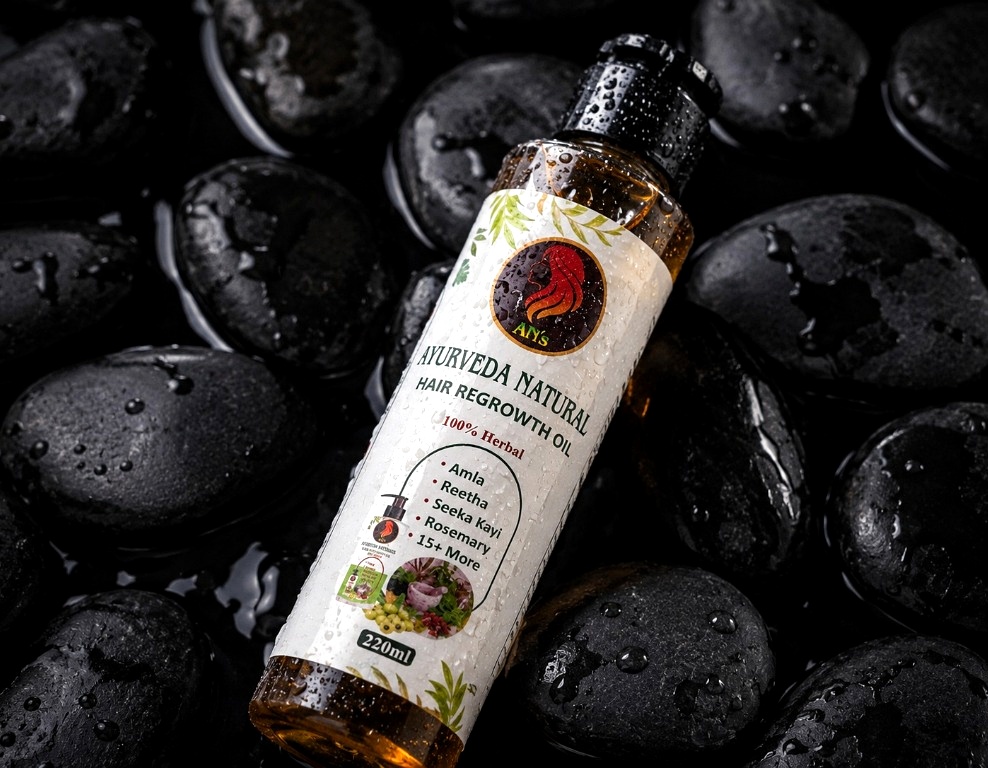
While Rosemary is often associated with Western herbalism and Mediterranean traditions, its powerful cellular-stimulating and vasodilating properties perfectly align with the Ayurvedic principles of enhancing prana (vital energy) and circulation. Rosemary essential oil has been visibly shown in some studies to perform as effectively as conventional minoxidil in promoting hair growth, without the harsh side effects. Neem (Azadirachta Indica), on the other hand, is the ultimate anti-bacterial, anti-fungal, and anti-parasitic herb of the East. Together, this dynamic duo purifies the scalp, aggressively combats severe dandruff and scalp psoriasis, and ensures that the hair follicles are never suffocated by layers of dead skin cells, environmental pollutants, or oxidized, hardened sebum. For a truly powerful, transformative blend of these and many other life-giving herbs, our highly celebrated 15-Herbs Hair Regrowth Oil is meticulously crafted to deliver these exact, scientifically backed benefits directly to your roots.
Step-by-Step Guide: How to Properly Oil Your Hair for Maximum Results
Now that we have established a deep understanding of the underlying philosophy, the anatomy of the scalp, and the specific botanical ingredients, it is time to master the physical technique. The act of oiling should never be rushed; it is not a chore to be checked off a list. It should be a deliberate, highly mindful, and deeply restorative ritual. Here is the definitive, step-by-step guide on how to properly oil your hair for maximum results.
Step 1: The Essential Practice of Double Boiling (Warming the Oil)
One of the most critical, yet frequently overlooked and misunderstood, steps in the Ayurvedic hair oiling protocol is the preparation of the oil itself. You should never apply cold, viscous oil directly to the scalp, nor should you ever commit the cardinal sin of heating your precious, carefully crafted herbal oils in a microwave. Microwaves utilize uneven, intense electromagnetic radiation that destroys the delicate volatile aromatic compounds, denatures the complex fatty acid profiles, and essentially 'kills' the living botanical energy and therapeutic properties within the oil.
Instead, you must employ the gentle, traditional, and respectful method of double boiling (also known as a bain-marie). Fill a small to medium-sized bowl with hot, steaming water (make sure it is not rapidly boiling, just hot). Pour your desired amount of hair oil (usually 1 to 3 tablespoons, depending on hair length and thickness) into a separate, smaller glass, ceramic, or metal bowl, and gently place this smaller bowl inside the hot water bath. Allow it to sit undisturbed for 3 to 5 minutes. The gentle heat from the water will evenly transfer to the oil, bringing it to a comfortable, skin-safe, and deeply soothing temperature.
Why is this step so crucial? Warm oil has a significantly lower viscosity, meaning it becomes physically thinner. This allows the oil molecules to easily bypass the scalp's outer barrier and penetrate the pores and the hair shaft's tightly overlapping cuticles much more efficiently. Furthermore, warmth is naturally vasodilating (it opens blood vessels) and profoundly pacifies the cold, erratic Vata dosha, perfectly preparing the scalp to receive and absorb the botanical nourishment.
Step 2: Preparing the Canvas – Creating Sections for Precision Application
Applying oil haphazardly over the top of your head and vigorously rubbing it in will only result in excessively greasy surface hair, massive tangles, and a completely neglected scalp. For maximum results, surgical precision and patience are required. Begin by thoroughly and gently detangling your hair using a wide-toothed wooden comb. The use of a wooden comb is absolutely crucial; plastic combs generate massive amounts of static electricity, which causes immediate micro-breakage of the hair cuticle, increases frizz, and exacerbates Vata imbalances.
Once your hair is completely detangled and free of knots, systematically divide your hair into distinct, manageable sections. A highly effective approach is to part the hair down the middle from the forehead to the nape of the neck, creating two equal halves. Then, divide each half again horizontally from ear to ear, resulting in four distinct quadrants. Secure the sections you are not actively working on with a gentle, non-snagging clip.
By working meticulously section by section, you guarantee that every single square millimeter of your scalp receives an adequate and perfectly even distribution of the potent herbal oil. Remember this golden rule: the primary, overwhelming focus of hair oiling is the scalp and the roots, not the lengths of the hair. The ends of your hair only require a very light, superficial coating of the remaining oil on your hands to seal the cuticles and prevent split ends. The roots are the living center where the true magic and transformation happen.
Step 3: The Ancient Art of 'Champi' (Indian Head Massage)
Did you know that the modern English word 'shampoo' actually derives directly from the Hindi word 'Champi', which translates to 'massage' or 'to press'? Applying the oil to the scalp is only half the battle; the massage technique itself is what physically activates the botanical ingredients and profoundly impacts your underlying physiology. 'Champi' is an ancient, highly sophisticated Ayurvedic massage technique specifically designed to stimulate the Marma points—the vital energy centers, similar to acupressure points, located densely across the head, face, and neck.
Dip the very tips of your fingers (never your fingernails, which can scratch and damage the delicate scalp tissue) into the bowl of warm oil. Begin your massage at the very crown of your head. This area is the location of the Adhipati Marma, the master energy point that governs the entire nervous system. Use firm, yet gentle, circular motions to thoroughly work the oil into the roots.
A crucial point of technique: Do not vigorously rub the hair strands together. Wet or oiled hair is in its most fragile state, highly vulnerable to friction, stretching, and irreversible breakage. Instead of rubbing the hair, plant your fingertips firmly on the scalp and move your fingertips in small, rhythmic, overlapping circles, gently shifting and massaging the actual skin of the scalp back and forth over the underlying skull bone. This specific physical manipulation of the scalp tissue breaks down chronic muscular tension, softens the rigid fascial layer, and dramatically, instantly increases local capillary blood flow.
Slowly work your way from the crown down towards the nape of your neck, paying special attention to the occipital ridge (the base of the skull), where tension headaches often originate. Then, move outwards towards the temples and the delicate areas behind the ears. The entire Champi process should take a minimum of 10 to 15 minutes of uninterrupted focus. As you perform the Champi, close your eyes and focus intensely on your breath. Inhale the grounding, earthy, and medicinal aromas of the herbs deeply into your lungs, allowing the multi-sensory experience to calm your racing mind, drastically lower your circulating cortisol levels, and signal to your body that it is time to heal. This holistic, mind-body approach ensures that you are treating not only the physical symptoms of hair loss or damage, but also directly addressing the underlying emotional and energetic root causes.
Step 4: The Art of Patience – Overnight Resting vs. Pre-Wash Deep Conditioning Treatments
One of the most frequently asked questions is: exactly how long should I leave the oil in my hair for the best results? The scientifically and Ayurvedically accurate answer depends entirely on your specific Dosha, the current state of your scalp, and your personal lifestyle schedule. However, one thing remains universally true: patience is a mandatory ingredient when learning how to properly oil your hair for maximum results.
For deep, restorative, structural repair—particularly for those with severely dry Vata constitutions or highly inflamed Pitta constitutions—an extended, overnight resting period is highly recommended and often yields the most dramatic transformations. Leaving the oil on the scalp for 6 to 8 hours allows the complex, heavy phytonutrients, the array of vitamins, and the dense lipids the necessary time to fully, deeply absorb through the multiple layers of the hair shaft cuticle and permeate into the deeper dermal layers of the scalp tissue. It provides a massive, prolonged period of intense moisture retention and therapeutic healing.
If you choose to execute an overnight oiling treatment, you must take precautions to protect your pillows and bedding. Tie your thoroughly oiled hair in a very loose, comfortable, low braid or a soft bun to completely prevent tangling and friction while you toss and turn. Wrap your head in a pure silk or satin scarf, an Ayurvedic hair wrap, or simply an old, soft cotton t-shirt. Absolutely avoid using tight elastic hair ties or scrunchies that will place unnecessary, damaging tension on the weakened hair roots while you sleep.
If leaving the oil on overnight is simply not feasible for your lifestyle, or if you have a strongly Kapha-dominant scalp that is naturally very oily and prone to heavy build-up, a highly concentrated, intensive pre-wash deep conditioning treatment is an exceptionally effective alternative. Apply the warm oil generously, perform your meticulous 15-minute Champi massage, and then immediately wrap your head in a very warm, slightly damp towel. Leave this on for 45 minutes to an hour. The gentle, trapped steam from the warm towel creates a miniature, highly effective sauna environment for your scalp. This steam rapidly and gently lifts the hair cuticles and opens the scalp pores, vastly accelerating the absorption process of the herbs, allowing you to reap the profound benefits of the oil without leaving a heavy substance on your scalp for an extended, potentially pore-clogging period.
Step 5: The Crucial Final Step – Removing the Oil Gently and Effectively
It is a tragic irony that all the meticulous care, the expensive botanicals, and the dedicated time you have just invested to deeply nourish your scalp can be completely, instantaneously undone if you choose to wash the oil out with a harsh, highly synthetic, sulfate-laden commercial shampoo. Sulfates (like SLS and SLES) are incredibly aggressive, industrial-grade detergents specifically designed to ruthlessly strip away all grease and dirt. However, they are completely incapable of distinguishing between the unwanted, excess surface oil and the vital, protective, deeply infused lipid barrier you have just painstakingly built within your scalp and hair shaft.
Using such harsh chemical products immediately after an oiling treatment will violently shock the delicate scalp ecosystem. The sudden, extreme stripping of moisture triggers the sebaceous glands to enter a state of panic, causing them to rapidly overproduce sebum to compensate for the sudden dryness, leading to an even greasier scalp in the long run. Simultaneously, it leaves your hair lengths completely stripped of the oil's benefits, feeling dry, brittle, like straw, and overwhelmingly frizzy.
To successfully maintain and lock in the incredible benefits of your Ayurvedic oiling ritual, you must absolutely cleanse your hair with a gentle, botanically-based, sulfate-free formula that is designed to cleanse without stripping. A properly formulated, pH-balanced herbal shampoo will effectively remove the heavy, excess oil sitting on the very surface of the scalp and hair, while purposefully leaving the deep, structural nourishment and the botanical micro-layer entirely intact within the hair shaft and scalp tissue. For the absolute perfect, most synergistic post-oiling cleanse, we highly and unequivocally recommend our expertly formulated Purifying Herbal Shampoo. This product is specifically and intentionally designed to work in perfect tandem with our heavy treatment oils. It utilizes natural, plant-based saponins (like Reetha and Shikakai) rather than harsh chemical detergents, guaranteeing that it leaves your hair impeccably clean, incredibly soft, perfectly balanced, and bursting with natural vitality.
Frequently Asked Questions About Ayurvedic Hair Oiling
Can I oil my hair if I have severe dandruff?
Yes, but with crucial modifications. If your dandruff is the dry, flaky, white 'snow' type (Vata dandruff), heavy oiling is highly beneficial. However, if your dandruff is yellow, sticky, heavy, and accompanied by a very greasy scalp (Kapha dandruff or severe flaking), heavy overnight oiling can actually feed the yeast that causes the dandruff. In this Kapha scenario, you should use highly anti-microbial oils (like Neem or Tea Tree blends), apply them strictly as a short 30-minute pre-wash treatment, and never leave them on overnight.
Should I apply oil to dirty hair or freshly washed hair?
Traditionally, oil is applied to unwashed hair as a pre-shampoo treatment. However, if your scalp is excessively dirty, covered in days of heavy sweat, or coated in thick layers of synthetic styling products (gels, hairsprays, dry shampoos), applying oil on top of this layer will simply trap the dirt and bacteria against your scalp, severely clogging your follicles and blocking the herbal absorption. If your hair has heavy product build-up, it is better to clarify the hair first, let it dry, and then perform your oiling ritual.
Will hair oiling cause hair fall during the massage?
It is completely normal to see some loose hairs on your hands after a Champi massage. These are hairs that have already detached from the follicle and were in the Telogen (resting/shedding) phase. The massage is simply helping to dislodge them, making way for new, healthy Anagen (growth) hairs to emerge. However, if you are experiencing massive, alarming clumps of hair fall during the massage, you are likely using too much physical force, or your hair roots are severely weakened. In this case, apply the oil with extremely gentle, light patting motions without deep friction, and consult an Ayurvedic practitioner.
Embracing the Journey: Integrating Hair Oiling into Your Weekly Routine for Lasting Transformation
Ayurveda is inherently not a modern system of overnight miracles or superficial quick fixes; it is a profound, lifelong lifestyle dedicated to internal balance, profound respect for nature, and unwavering consistency. Learning how to properly oil your hair for maximum results is an ongoing, evolving personal journey, not a static, one-time event to be checked off. To truly, visibly witness a dramatic transformation in the structural thickness, the vibrant vitality, the sheer length, and the overall health of your hair, you must fully commit to this practice as a core pillar of your self-care.
Aim to dedicate time to meticulously oil your hair 1 to 2 times a week, dynamically adjusting the frequency based on your hair's changing needs, the current season, and your unique porosity levels. Make this ritual a sacred, non-negotiable part of your weekly self-care routine. Dim the lights, light a naturally scented candle, play some deeply soothing, meditative music, and fiercely protect those 15 minutes of Champi massage as time solely dedicated to honoring yourself. As you consistently, lovingly nourish your deepest roots with nature's most potent, time-tested herbs, you will practical, undoubtedly notice far more than just a physical, aesthetic change in your hair's appearance. You will begin to experience a deeper, undeniable sense of emotional grounding, a vastly calmer and more resilient nervous system, and a profound, beautiful connection to the ancient, eternal wisdom that resides within you. May your hair grow to be as strong, resilient, and vibrant as your spirit, and may your dedicated rituals always bring you profound peace and radiant health.
Ready to stop hair fall naturally?
Don't wait until it's too late. Experience the proven magic of our 100% organic, wild-harvested Ayurvedic formulations and start seeing real results in 14 days.
Free Shipping + Cash on Delivery