
Ayurvedic Hair Care Routine for Men: Complete Daily & Weekly Guide
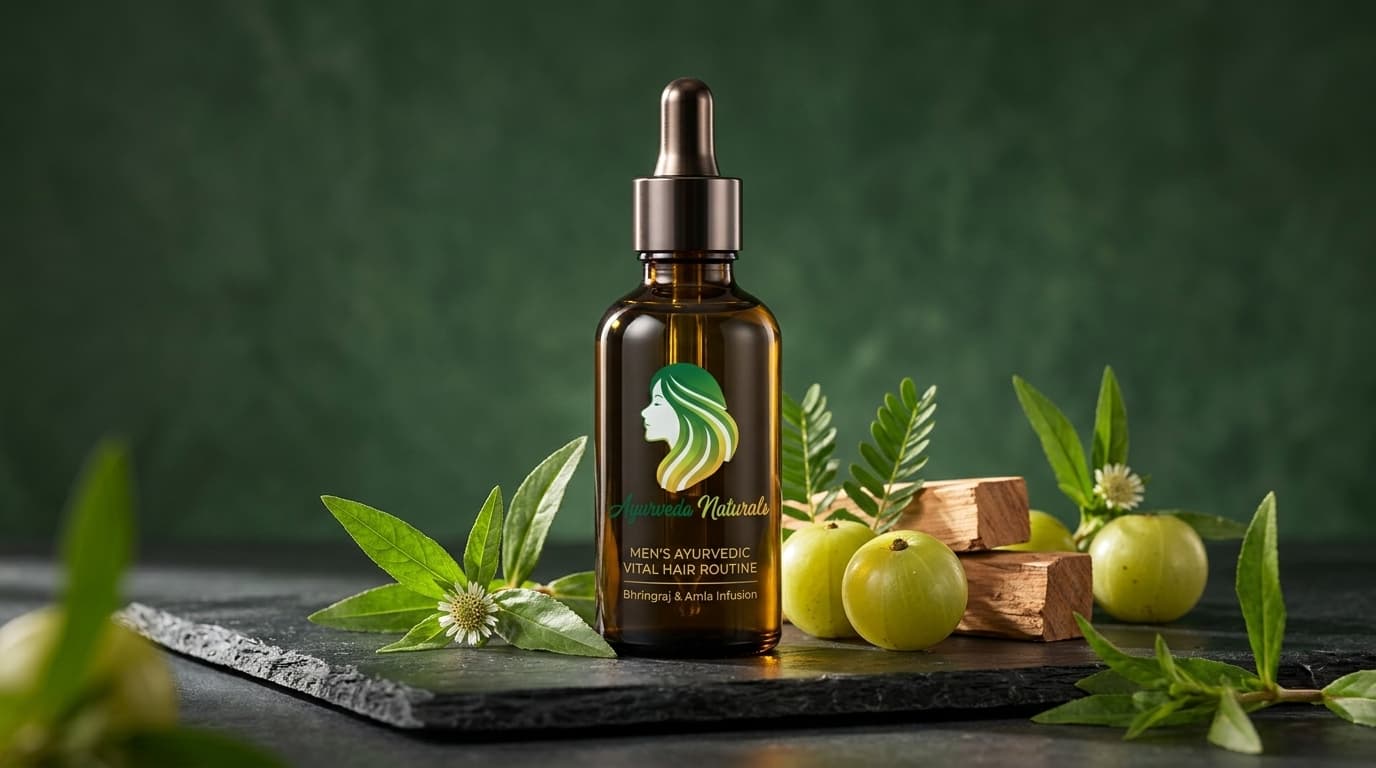
An effective ayurvedic hair care routine for men focuses on balancing excess internal Pitta (heat) and Vata (dryness), invigorating the scalp microcirculation through daily or weekly Shiro Abhyanga (head massage), detoxifying congested hair follicles, and nourishing the roots with nutrient-dense botanicals like Bhringraj, Amla, and Brahmi. By treating the scalp as living soil and addressing the health of Asthi Dhatu (bone tissue), this holistic system halts receding hairlines, controls stubborn dandruff, and triggers robust follicular regeneration without relying on synthetic chemicals or harsh pharmaceuticals.
Male hair thinning, receding temples, crown baldness, and premature graying are at an all-time high among modern men. Fast-paced modern lifestyles, chronic workplace stress, poor dietary choices, intense urban pollution, hard water calcification, and synthetic grooming pomades loaded with silicones and parabens take a heavy toll on the male scalp. While modern dermatology frequently treats hair loss solely as an isolated genetic or hormonal event, Ayurveda views hair vitality as a direct reflection of your internal physiological equilibrium.
When you establish a structured ayurvedic hair care routine for men, you do not simply coat the hair shaft with temporary smoothing agents or synthetic conditioning silicones. Instead, you systematically address the fundamental root causes of follicular decay: elevated scalp temperature, dermal micro-inflammation, DHT-driven follicle miniaturization, poor micro-capillary blood flow, and toxic metabolic accumulation (Ama). For men suffering from advanced shedding or rapid crown thinning, incorporating a complete ayurvedic hair care routine for extreme hair fall alongside specialized scalp therapies provides the deep biological foundation needed for sustained, lifelong hair restoration.
The Foundations of Ayurvedic Trichology for Men
In classical Ayurvedic texts such as the Charaka Samhita, Sushruta Samhita, and Ashtanga Hridaya, hair (termed Kesha) is categorized as an Upadhatu—a secondary or metabolic byproduct of Asthi Dhatu (bone and connective tissue). The physiological process of tissue nutrition (Dhatu Poshana Nyaya) is elegant, sequential, and deeply logical: when you consume food, your primary digestive fire (Jatharagni) and tissue-specific metabolic fires (Dhatvagnis) process nutrients through seven sequential bodily tissues (Sapta Dhatus):
- Rasa Dhatu (Plasma & Lymph): Transports systemic hydration and basic nutrients.
- Rakta Dhatu (Blood & Hemoglobin): Delivers vital oxygen and iron to living cells.
- Mamsa Dhatu (Muscle Tissue): Provides physical strength and structural tone.
- Meda Dhatu (Adipose & Lipid Tissue): Lubricates the joints and internal organs.
- Asthi Dhatu (Bone & Cartilaginous Tissue): Forms the skeletal framework and manufactures teeth, nails, and hair.
- Majja Dhatu (Bone Marrow & Nervous Tissue): Fills the bone cavities, powers the nervous system, and calms the mind.
- Shukra Dhatu (Reproductive Tissue & Vital Essence): Generates Ojas—the ultimate biological force of immunity, radiance, and longevity.
If your digestive fire is weak, sluggish, or corrupted by mental stress, ultra-processed foods, and chemical toxins, the sequential nourishment reaching Asthi Dhatu becomes severely deficient. Consequently, its metabolic byproduct—your hair and nails—suffers immediately. Hair strands become brittle, lose their natural melanin pigmentation, miniaturize at the root level, and detach prematurely from the follicular sheath. Therefore, any genuine ayurvedic hair care routine for men must work simultaneously on two fronts: nourishing the metabolic tissue cascade internally while feeding the follicular dermal papillae externally.
Furthermore, Ayurveda understands male hair loss through the diagnostic clinical framework of Khalitya (progressive alopecia), Palitya (premature graying), and Indralupta (patchy hair loss or alopecia areata). These conditions are heavily driven by aggravated Pitta dosha acting in concert with Vata and Kapha. Pitta represents the bio-energetic elements of Fire (Tejas) and Water (Jala). When Pitta rises excessively in the digestive tract and bloodstream (Rakta Dhatu), it travels upward through the vascular channels (Srotas) toward the crown of the head. This intense, localized internal heat literally scorches the delicate dermal papillae, causing chronic follicular micro-inflammation, weakening root anchorage, and initiating rapid hair shedding.
Understanding the Three Male Scalp Dosha Profiles
Men possess distinct physiological constitutions (Prakriti), and their scalp environment directly reflects these underlying doshic dominances. Before implementing your daily regimen, you must accurately diagnose your dominant scalp profile to customize your herbal oils, wash frequency, and dietary adjustments accordingly:
1. The Pitta Scalp (Heat, Inflammation, and Receding Temples)
The vast majority of men experiencing typical male pattern baldness (Androgenetic Alopecia), temporal recession, crown thinning, and early graying fall squarely into the Pitta-dominant category. A Pitta scalp feels distinctly warm or hot to the touch, sweats excessively under caps or during workouts, and is highly prone to redness, folicular irritation, and burning sensations after sun exposure. Because Pitta burns through cellular moisture and nutrients rapidly, men with high Pitta often notice rapid, aggressive hair shedding that accelerates during hot summer months or during periods of acute workplace pressure. For this scalp type, deeply cooling, soothing, and anti-inflammatory herbs like Bhringraj, Brahmi, Amla, and Vetiver (Ushira) are essential.
2. The Vata Scalp (Dryness, Flaking, and Brittle Thinning)
A Vata-dominant male scalp is characterized by a severe lack of natural moisture, sebum, and lubricating lipids. The hair feels rough, straw-like, frizzy, dull, and prone to split ends. Men with high Vata frequently suffer from dry, powdery, non-greasy dandruff that snows onto their shoulders, accompanied by an uncomfortable, tight, itchy scalp sensation. Hair loss in Vata men is typically diffuse—strands break easily along the shaft during combing and fall out in erratic clumps. A Vata scalp requires deep, warming, unctuous lipid nourishment with cold-pressed sesame-based herbal oils and moisture-locking botanicals like Bala, Ashwagandha, and Shatavari.
3. The Kapha Scalp (Excess Oil, Congested Follicles, and Sticky Dandruff)
Governed by Earth and Water elements, a Kapha scalp produces heavy, thick sebum that quickly clogs follicular ostia and suffocates the roots. Men with a Kapha scalp often complain of greasy hair within hours of showering, an oily sheen on the forehead, foul scalp odor, and sticky, yellowish dandruff (Seborrheic Dermatitis) that adheres stubbornly to the scalp skin. When excess sebum combines with dead skin cells, sweat, and environmental particulate matter, it creates a suffocating keratolytic plug that deprives hair roots of oxygen and triggers chronic fungal overgrowth. Kapha scalps require clarifying, stimulating, and astringent botanicals such as Neem, Shikakai, Reetha, Tulsi, and Tea Tree to dissolve heavy residues without causing rebound oiliness.
Step-by-Step Daily & Weekly Ayurvedic Hair Care Routine for Men
Transforming your hair health does not require complicated, hour-long grooming rituals. Consistency, correct physical technique, and pure botanical formulations are the true secrets to Ayurvedic success. Below is the master blueprint for a high-performance men's routine designed to fit seamlessly into a modern schedule.
Step 1: The Morning Awakening — Hydration, Nasya, and Scalp Brushing
Your morning routine sets the metabolic tone for your entire neuro-vascular system. Upon waking:
- Drink Copper-Charged Warm Water (Tamra Jal): Drink 500 ml of warm water stored overnight in a pure copper vessel on an empty stomach. This stimulates gastrointestinal peristalsis, clears accumulated morning metabolic waste (Ama), and delivers trace copper ions vital for enzymatic melanin production in hair follicles.
- Practice Pratimarsha Nasya (Nasal Drop Therapy): The classical Ayurvedic texts proclaim: "Nasa Hi Shirso Dvaram"—the nose is the direct doorway to the head and brain. Place 2 drops of lukewarm Anu Taila, Shadbindu Taila, or pure organic sesame oil into each nostril every morning while tilting your head back. Inhale gently. Nasya lubricates the cranial nerve pathways, calms the central nervous system, stimulates cerebral micro-capillaries, and powerfully strengthens hair roots from within.
- Scalp Brushing with a Neem Wooden Comb: Gently comb your dry scalp for 3 to 5 minutes using a wide-toothed natural Neem wood comb. Unlike synthetic plastic combs that generate static electricity and snap fragile hair shafts, Neem wood is naturally anti-bacterial, distributes natural scalp sebum smoothly along the hair fiber, and gently massages the dermal papilla.
Step 2: Shiro Abhyanga (The Medicated Oil Massage) — 2 to 3 Times Weekly
Shiro Abhyanga is the undisputed centerpiece of any authentic ayurvedic hair care routine for men. Applying warm, herb-infused oil directly to the scalp delivers lipid-soluble phyto-compounds deep into the hair bulbs while simultaneously soothing the sympathetic nervous system. To master the cellular mechanics of dermal stimulation, understand why scalp health is the secret to hair growth.
To execute the perfect Shiro Abhyanga:
- Warm the Oil: Take 1 to 2 tablespoons of authentic herbal oil, such as our handcrafted Hair Regrowth Oil, and warm it using the indirect double-boiler method (placing the oil container inside a bowl of hot water). Never microwave herbal oil, as extreme direct radiation degrades delicate therapeutic terpenes and flavonoids.
- Section and Apply: Part your hair into neat sections using your fingertips. Apply the warm oil directly onto the exposed scalp skin, paying special attention to the receding hairline, temples, and crown vortex.
- Activate Vital Cranial Marma Points: Apply steady, circular pressure with the pads of your thumbs and fingers to the primary cranial Marma points:
- Adhipati Marma: Located at the exact vertex/crown of the head (the anatomical junction where the parietal and frontal cranial sutures meet). Gentle rhythmic circular pressure here pacifies high Pitta, alleviates mental tension, and dramatically boosts total scalp microcirculation.
- Simanta Marma: Points located along the central sagittal suture of the skull. Massaging along this central midline releases chronic scalp myofascial tension and enhances lymphatic drainage.
- Krichatika Marma: Located at the base of the skull (occipital ridge) where the head joins the cervical spine. Massaging this region releases neck stiffness caused by desk work and screen posture, restoring unobstructed arterial blood supply to the scalp.
- Shankha Marma: Located at the temples. Gentle circular pressure here reduces headaches, cools ocular strain, and improves localized blood flow to the receding temporal peaks.
- Massage Technique: Use the soft pads of your fingers (never your sharp fingernails) to massage in small, firm, circular motions for 10 to 15 minutes. Ensure you physically mobilize the scalp skin over the underlying cranial bone rather than merely rubbing the hair fibers. This physical shear stress activates mechanical stretch receptors in dermal papilla cells, upregulating vascular endothelial growth factor (VEGF).
- Absorption Duration: Leave the oil on for a minimum of 45 to 60 minutes wrapped in a warm, damp towel. For men suffering from aggressive thinning or dry scalps, leaving the oil overnight covered with a breathable cotton cap yields transformative, deep-root conditioning.
Step 3: Gentle Botanical Cleansing (Snana)
Most commercial men's shampoos contain aggressive synthetic detergents like Sodium Lauryl Sulfate (SLS) and Sodium Laureth Sulfate (SLES). These chemical surfactants strip away the scalp's protective acid mantle (pH 5.5), causing acute epidermal dehydration followed by severe rebound sebum hyper-production, scalp micro-cracks, and chemical folliculitis.
Wash your hair 2 to 3 times weekly using a sulfate-free, botanical cleanser rich in traditional saponin-bearing herbs:
- Reetha (Sapindus mukorossi): Creates a gentle, natural lather that lifts grease, dirt, and pollution particles without disrupting the protective acid mantle or stripping natural ceramides.
- Shikakai (Acacia concinna): Naturally rich in Vitamin C, Vitamin D, and essential phytonutrients, Shikakai gently detangles the hair, seals the cuticle scales, and imparts a natural, healthy sheen.
- Neem Leaf Extract (Azadirachta indica): Eliminates fungal dandruff spores (Malassezia) and prevents microbial folliculitis.
- Water Temperature Rule: Always wash hair with lukewarm or cool water. Never use scalding hot shower water on your head, as excessive thermal stress severely aggravates Pitta dosha, burns hair follicles, and causes immediate root weakening.
Step 4: Post-Wash Drying and Conditioning
Men often make the destructive mistake of violently rubbing wet hair with a rough cotton towel. Wet hair is in its most fragile, hyper-elastic state because water molecules break the hydrogen bonds between keratin chains. Aggressive towel friction causes extensive mechanical breakage, cuticle splintering, and premature thinning.
Instead, gently blot and press your scalp with a soft microfiber towel or a clean cotton t-shirt. Allow hair to air-dry naturally at room temperature. Avoid high-heat blow dryers, as direct thermal stress dehydrates the hair cortex and causes structural cuticle cavitation (bubble hair deformity).
The Master Botanical Arsenal for Men's Hair Health
Ayurvedic pharmacopeia houses some of the most scientifically validated botanical extracts on Earth. In modern biochemical terms, these herbs act as natural 5-alpha reductase inhibitors, micro-vascular vasodilators, and powerful cellular antioxidants:
1. Bhringraj (Eclipta Alba) — The Undisputed King of Hair
Known in classical Sanskrit as Keshraj ("Ruler of the Hair"), Bhringraj is the absolute cornerstone herb of male hair restoration. Rich in active coumestans like wedelolactone and demethylwedelolactone, Bhringraj has been demonstrated in peer-reviewed scientific studies to shorten the telogen (resting) phase and prolong the anagen (growth) phase more effectively than standard 2% minoxidil solutions, completely free of cardiovascular or dermatological side effects. Furthermore, Bhringraj provides profound hepatoprotective benefits, supporting the liver in filtering systemic metabolic toxins that trigger hair loss.
2. Amla (Phyllanthus Emblica) — The Cellular Rejuvenator
Amla is the richest natural source of stable, heat-resistant Vitamin C, bioflavonoids, and gallic acid. It fortifies the structural collagen matrix surrounding the follicular dermal papilla, scavenges free radicals caused by intense solar UV exposure, and halts the premature graying of hair by supporting melanin synthesis in melanocyte stem cells. Amla also exhibits powerful 5-alpha reductase inhibitory activity, helping to shield follicles from DHT damage.
3. Brahmi (Bacopa Monnieri) — The Neurological and Follicular Adaptogen
Chronic psychological stress causes a sustained surge of systemic cortisol. High cortisol induces micro-inflammation around the hair follicles and triggers acute telogen effluvium (mass shedding). Brahmi contains active triterpenoid saponins known as bacosides that cross the blood-brain barrier, quiet an overactive sympathetic nervous system, reduce cortisol, and deeply cool an inflamed, overheated Pitta scalp.
4. Neem (Azadirachta Indica) — The Microbial Purifier
Neem is packed with nimbidin, nimbin, and azadirachtin—bioactive compounds possessing broad-spectrum antifungal and antibacterial properties. It eradicates Malassezia globosa (the fungal culprit behind chronic dandruff), relieves intense scalp itchiness, and unclogs suffocated pores. Neem's natural anti-inflammatory properties soothe irritated skin and prevent scar-tissue formation around hair roots.
5. Jatamansi (Nardostachys Jatamansi) — The Follicular Densifier
Jatamansi is a precious Himalayan root that deeply calms the mind while accelerating follicular cellular mitosis. Scientific analysis reveals that Jatamansi extracts increase follicle diameter, transforming fine, miniaturized vellus hairs into thick, pigmented terminal hairs. It significantly prolongs the hair growth phase and helps restore density to thinning crowns.
6. Rosemary (Rosmarinus Officinalis) & Castor Oil (Ricinus Communis)
While Rosemary is revered globally, its therapeutic profile aligns perfectly with Ayurvedic warming and circulatory principles. Rich in carnosic acid, Rosemary stimulates peripheral microcapillary circulation and inhibits 5-alpha reductase. When blended with cold-pressed Castor oil—which contains 90% ricinoleic acid—it accelerates blood flow, seals moisture, and provides antimicrobial protection across the entire scalp barrier.
Comparison: Ayurvedic Hair Care vs. Conventional Chemical Grooming
To appreciate why thousands of men are abandoning chemical-heavy grooming products in favor of an authentic ayurvedic hair care routine for men, examine how the two approaches compare across critical physiological metrics:
| Evaluation Metric | Ayurvedic Hair Care Routine for Men | Conventional Chemical Grooming |
|---|---|---|
| Primary Mechanism | Balances doshic heat (Pitta), clears metabolic toxins (Ama), stimulates dermal microcirculation, and nourishes Asthi Dhatu. | Coats hair shafts with synthetic silicones; uses synthetic pharmaceuticals to force vasodilation or alter systemic hormones. |
| Scalp Microbiome Impact | Preserves acid mantle (pH 5.5); selectively inhibits pathogenic fungi (Malassezia) while preserving protective bacterial flora. | Disrupts microbiome with harsh sulfates, synthetic preservatives (parabens), and alcohol-based styling carriers. |
| Side Effect Profile | 100% natural, zero systemic toxicity, zero sexual dysfunction, non-irritating to sensitive skin when properly formulated. | Common risks include scalp contact dermatitis, severe dryness, sexual side effects (from oral 5-AR blockers), and rebound shedding. |
| Dependency & Longevity | Builds permanent cellular tissue strength; benefits persist even if treatment frequency is reduced over time. | High chemical dependency; cessation of pharmaceutical treatments often triggers catastrophic rebound hair loss within 90 days. |
| Stress & Sleep Benefits | Shiro Abhyanga and cranial Marma massage actively lower systemic cortisol, relieve mental tension, and induce deep, restorative sleep. | Zero neurological or stress-modulating benefits; solely superficial cosmetic application. |
Dietary (Ahara) & Lifestyle (Vihara) Protocols for Men's Hair Health
In the Ayurvedic medical tradition, external therapies represent only 50% of the healing equation. The remaining 50% depends entirely on your internal nutritional intake (Ahara) and daily behavioral conduct (Vihara). To maximize the results of your ayurvedic hair care routine for men, implement these targeted lifestyle modifications:
1. Pacify Internal Pitta with a Cooling Diet
Because male pattern thinning is predominantly fueled by excess internal heat, your diet must emphasize cooling, sweet, bitter, and astringent tastes while minimizing spicy, sour, and excessively salty foods:
- Incorporate Daily Cooling Foods: Consume fresh cucumbers, soaked almonds, pumpkin seeds (naturally rich in zinc and phytosterols), coconut water, pomegranate, sweet berries, and leafy green vegetables.
- Use Desi Ghee (Clarified Butter): Add 1 teaspoon of pure grass-fed A2 cow's ghee to your warm lunch and dinner. Ghee is an exceptional Rasayana (rejuvenator) that lubricates dry tissues, cools Pitta, and transports fat-soluble vitamins directly to Asthi Dhatu.
- Eliminate Pitta Aggravators: Drastically reduce fried, oily, deep-fried street foods, excessive red meat, artificial preservatives, ultra-spicy chilies, and highly acidic drinks.
- Limit Caffeine and Alcohol: Excessive black coffee, energy drinks, and alcohol severely overheat the liver (the primary seat of Ranjaka Pitta), dehydrate the body, and starve the hair follicles of vital moisture.
2. Master Stress and Cortisol Modulation (Manasika Balance)
Modern neuroscience confirms what Ayurvedic rishis documented 5,000 years ago: chronic psychological anxiety induces premature apoptosis in follicular stem cells. Incorporate 10 to 15 minutes of Pranayama (breath regulation) daily:
- Anulom Vilom (Alternate Nostril Breathing): Balances both cerebral hemispheres, calms the autonomic nervous system, and immediately cools systemic body heat.
- Sheetali & Sheetkari Pranayama: Cooling breathing techniques specifically designed to lower aggressive Pitta during peak afternoon heat or high-stress moments.
- Bhadrasana & Balasana: Restorative yoga postures that promote pelvic and spinal relaxation, improving venous blood return to the upper torso and head.
3. Correct Your Sleep Schedule (Nidra)
Ayurveda strictly warns against Ratri Jagaran (staying awake late into the night). Between the hours of 10:00 PM and 2:00 AM, Pitta dosha naturally dominates the biological clock to perform internal cellular maintenance, detoxification, and tissue repair. If you remain awake scrolling on blue-light screens during this window, you disrupt this vital regenerative cycle, causing toxins to accumulate in your bloodstream and damaging your hair roots. Aim to sleep by 10:30 PM every night in a dark, cool room.
Seasonal Adaptations (Ritucharya) for Men's Hair Care
Ayurveda emphasizes that the human body is an inseparable part of nature. As seasons shift, the prevailing environmental doshas change, necessitating tactical adjustments to your hair care regimen:
1. Grishma Ritu (Summer Season)
During the scorching summer months, environmental heat causes a rapid accumulation of Pitta dosha. Scalp perspiration increases dramatically, and sweat salts accumulate around the follicular openings. During this season, prioritize cooling herbs like Amla, Brahmi, and Vetiver (Khus). Use cold-pressed coconut oil or light sesame oil as your massage base, and rinse hair with cool water to soothe the heated scalp. Avoid heavy, unctuous oils that trap heat.
2. Varsha Ritu (Monsoon Season)
The monsoon season brings intense atmospheric humidity and dampness, which severely aggravates Vata and Kapha doshas while weakening digestive fire (Agni). Fungal infections, dandruff, and sudden telogen hair shedding peak during this period. Wash hair regularly with antibacterial Neem and Shikakai cleansers to prevent microbial proliferation. Never tie up or cover damp hair, and ensure your scalp stays dry and ventilated.
3. Shishira & Hemanta Ritu (Winter Season)
Cold, dry winter air aggravates Vata dosha, leading to dry, flaky scalp conditions, brittle hair strands, and static-induced breakage. Switch to deeply nourishing, warming base oils like pure cold-pressed sesame oil or sweet almond oil infused with Ashwagandha and Bala. Practice warm oil Shiro Abhyanga twice a week and cover your head with a breathable silk or cotton scarf when outdoors in freezing winds.
Common Mistakes Men Make in Daily Hair Care
Even men with the best intentions often sabotage their hair recovery by repeating common grooming errors. Avoid these widespread pitfalls:
- Using Heavy Chemical Styling Waxes and Pomades: Petroleum-based hair waxes, clays, and gels contain synthetic polymers that suffocate the scalp pores, trap sweat, and physically pull hair shafts when washed out. Switch to natural water-based styling alternatives or light botanical oils.
- Over-Oiling Without Washing: Leaving thick oil on your scalp for multiple days in dusty, polluted urban environments creates a magnetic trap for airborne particulate matter and grime. Always wash your oiled scalp within 12 to 24 hours.
- Aggressive Towel-Drying and Scratching: Rubbing your head violently with rough bath towels or scratching an itchy scalp with fingernails causes micro-abrasions in the epidermal barrier, leading to secondary bacterial infections and broken shafts.
- Ignoring Gut Health and Chronic Constipation: If you suffer from chronic acidity, indigestion, or constipation, your body cannot absorb the minerals needed for hair growth. Treat your gut as the root system of your hair.
- Washing Hair with Scalding Water: Hot showers strip the scalp's protective lipids and scorch the hair roots, accelerating both hair shedding and premature graying.
Frequently Asked Questions
How often should men follow an Ayurvedic hair care routine?
Men should practice gentle daily habits such as wooden comb brushing, morning hydration, and Nasya nasal drops every single day. Medicated herbal oil massages (Shiro Abhyanga) and gentle botanical washing should be performed 2 to 3 times per week for optimal follicular stimulation without overwhelming the scalp.
Can an Ayurvedic hair care routine for men reverse a receding hairline?
Yes, provided the hair follicles along the receding temples are still biologically active or dormant (producing fine vellus hairs) rather than completely scarred over. By reducing localized Pitta inflammation, blocking DHT at the follicular level with herbs like Bhringraj, and restoring dermal blood flow through Marma massage, dormant follicles can be reactivated into producing thick terminal hairs over 3 to 6 months of consistent application.
Is daily oiling recommended for men with naturally oily scalps?
No. Men with naturally oily, Kapha-dominant scalps should not oil their hair daily, as excessive oil can clog pores and exacerbate fungal dandruff. Instead, oil the scalp 1 to 2 times weekly using lightweight, clarifying herbal oils infused with Neem and Tea Tree, leave on for 45 minutes, and cleanse thoroughly with a gentle botanical shampoo.
How does Nasya therapy help with male hair loss?
In Ayurvedic medicine, the nasal cavity is considered the direct portal to the head and central nervous system. Practicing Pratimarsha Nasya with 2 drops of medicated oil in each nostril daily nourishes the cranial nerve pathways, pacifies aggravated Vata and Pitta doshas in the head, improves cerebral microcirculation, and strengthens the root anchorage of hair follicles from the inside out.
What is the difference between Pitta-induced hair loss and genetic baldness?
Modern dermatology attributes genetic male pattern baldness to follicular sensitivity to dihydrotestosterone (DHT). Ayurveda views this exact phenomenon through the lens of Pitta dosha: excess biological heat, acidity, and metabolic inflammation accelerate DHT-driven follicular miniaturization. By cooling Pitta and blocking 5-alpha reductase naturally with botanical extracts, you target the underlying biochemical drivers of genetic hair thinning safely.
Can I combine Ayurvedic hair products with styling waxes or gels?
It is strongly advised to avoid conventional synthetic hair styling waxes, clays, and gels that contain parabens, silicones, and drying alcohols while undergoing an Ayurvedic hair restoration routine. These synthetic products clog follicular openings and negate the healing benefits of herbal oils. If styling is required, use a drop of natural pure argan oil or an organic aloe vera gel as a safe, nourishing styling alternative.
Transform Your Hair Health with Authentic Ayurvedic Care
Adopting an authentic ayurvedic hair care routine for men is an investment in your lifelong vitality, confidence, and well-being. By stepping away from harsh chemical shampoos, synthetic fixatives, and short-term cosmetic band-aids, you allow your body's natural regenerative intelligence to heal and fortify your hair from the cellular level upward.
Consistency, patience, and pure botanical ingredients are your greatest allies. Pair regular Shiro Abhyanga massage with a cooling, nutrient-rich diet, deep restorative sleep, and mindful stress management. Within weeks, you will notice a marked reduction in daily shedding, improved scalp comfort, and the resurgence of thick, strong, naturally resilient hair.
Reclaim Your Hair Density Naturally
Experience the restorative power of wild-harvested Bhringraj, Amla, Brahmi, and Rosemary infused in cold-pressed organic oils. Formulated specifically to stop hair fall and stimulate dormant follicles.
Explore Our Organic Hair Regrowth OilReady to stop hair fall naturally?
Don't wait until it's too late. Experience the proven magic of our 100% organic, wild-harvested Ayurvedic formulations and start seeing real results in 14 days.
Free Shipping + Cash on Delivery