
100% Organic Haircare Pakistan Guide
The Ancient Secret to Lush Locks: Understanding Your Dosha for Better Hair Health
Have you ever wondered why the exact same shampoo that gives your best friend shiny, bouncing hair leaves your own scalp feeling irritated and your ends completely dried out? Or why a heavily recommended hair oil completely transforms one person's hair but leaves yours feeling weighed down, greasy, and lifeless? The modern beauty industry has conditioned us to shop by superficial hair types—"dry," "oily," or "normal"—or by hair texture like "curly," "straight," and "wavy." While this approach provides a baseline, it fundamentally misses the deeper, root causes of our hair's health. It treats the symptom rather than addressing the ecosystem of the body. This is exactly where the ancient, time-tested wisdom of Ayurveda steps in to revolutionize our approach to hair care. Embracing 100% organic haircare Pakistan provides is the perfect way to honor your unique dosha.
Picture a time thousands of years ago in the lush, verdant valleys of the Indian subcontinent. Sages and healers observed that humans are not isolated from nature but are inextricably linked to it. They realized that the same five fundamental elements that make up the universe—Earth, Water, Fire, Air, and Ether (Space)—also combine to create the unique physiological and psychological blueprint of every individual. This profound science of life, known as Ayurveda, offers a completely customized, holistic approach to well-being, and this extends directly to the vitality, strength, and appearance of your hair.
In Ayurveda, your hair is considered a byproduct of your bone tissue (Asthi Dhatu) and is directly linked to your central nervous system and gut health. Your hair is essentially a mirror reflecting the internal state of your body. When you are stressed, malnourished, or fundamentally out of balance, your hair will immediately broadcast these internal disruptions through thinning, premature graying, dullness, or dandruff. To truly achieve radiant, strong, and deeply nourished hair, you must look inward and understand your unique mind-body constitution, known as your Dosha.
What is a Dosha, and Why Does It Matter for Hair Health?
According to Ayurvedic philosophy, the five elements combine in the human body to form three primary life energies, or Doshas: Vata (Air and Ether), Pitta (Fire and Water), and Kapha (Earth and Water). Everyone is born with a unique proportion of these three Doshas, which is called your Prakriti (your natural, balanced state). While all three exist within you, one or two typically dominate.
When you are in harmony with your true nature, your health is vibrant, your mind is clear, and your hair grows strong and lustrous. However, factors such as poor diet, stress, environmental toxins, harsh chemical hair products, and seasonal changes can cause your Doshas to fall out of balance, leading to a state called Vikriti. Identifying your primary Dosha and recognizing the signs of imbalance is the absolute key to unlocking your hair's ultimate potential. By tailoring your diet, lifestyle, and hair care rituals to pacify your dominant or aggravated Dosha, you can heal your scalp, stimulate follicles, and cultivate the hair of your dreams.
Let’s dive deep into the specific characteristics of Vata, Pitta, and Kapha hair types, explore the signs of imbalance, and discover the targeted, botanical Ayurvedic care that each specific Dosha requires.
Vata Dosha: Nourishing the Air and Ether Elements in Your Hair
The Vata Dosha is governed by the elements of Air and Ether (Space). Vata energy is responsible for movement, circulation, and breathing in the body. People with a dominant Vata constitution tend to be creative, energetic, adaptable, and quick-thinking. However, because Vata is inherently cold, light, dry, and mobile, it is the most easily disturbed of the three Doshas, especially by stress, cold weather, and irregular routines.
Characteristics of Vata Hair
When in balance, Vata hair can be wonderfully textured. It often has a natural wave or tight curls and grows quickly. Vata hair is generally finer, slightly more porous, and naturally leans toward being somewhat dry. Because it lacks natural heavy oils, it doesn't need to be washed as frequently as other hair types. It is light, airy, and has a beautiful, voluminous bounce when properly hydrated and cared for.
Signs of Vata Imbalance in Hair
Because the defining qualities of Vata are dryness and roughness, a Vata imbalance manifests very clearly in the hair and scalp. If you are experiencing a Vata aggravation, you will likely notice:
- Extreme Dryness and Brittleness: Your hair may feel like straw, breaking easily when brushed or tied.
- Frizz and Flyaways: The hair cuticles become rough and raised, causing the hair to seek moisture from the air, resulting in an unmanageable halo of frizz.
- Split Ends: Lack of natural sebum traveling down the hair shaft leads to splitting and fraying at the ends.
- Dry, Flaky Scalp: Unlike the oily, yellowish flakes of a fungal dandruff issue, a Vata scalp produces small, white, dry flakes that fall like snow. This is accompanied by an itchy, tight-feeling scalp.
- Thinning and Hair Loss: Because Vata governs circulation, an imbalance can restrict blood flow to the scalp. This starves the hair follicles of vital nutrients, leading to shedding, diffuse thinning, and a receding hairline.
Ayurvedic Haircare Routine and Herbs for Vata
The golden rule for Vata hair care is deep nourishment, intense hydration, and grounding warmth. Vata hair craves heavy, rich, warming oils and deeply conditioning botanical treatments to smooth the hair cuticle, lock in moisture, and soothe the aggravated, dry scalp.
1. Warm Oil Massage (Shiro Abhyanga)
Vata hair responds beautifully to regular, warm oil massages. The warmth pacifies the cold nature of Vata, while the heavy oils counteract the lightness and dryness. Sesame oil and almond oil are the absolute best base oils for Vata because they are deeply penetrating, warming, and highly nourishing.
2. Specific Ayurvedic Herbs for Vata
- Ashwagandha: This powerful adaptogen reduces cortisol levels in the body, addressing the stress that often causes Vata hair loss. It also stimulates the production of DHEA, a hormone that is critical for healthy hair growth.
- Bhringraj: Known as the "King of Hair" in Ayurveda, Bhringraj is deeply rejuvenating. It improves blood circulation to the roots, providing a rich supply of nutrients that revive dormant follicles and combat Vata-induced thinning.
- Shatavari: A deeply hydrating and cooling herb that provides intense moisture to parched Vata strands, helping to restore elasticity and prevent breakage.
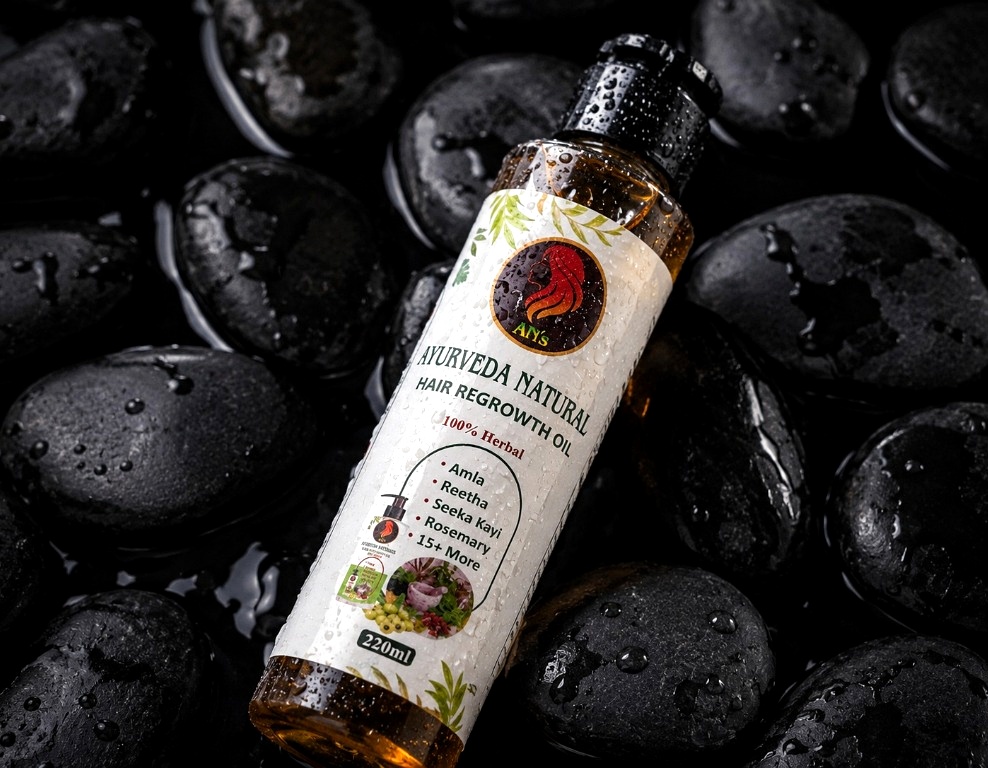
To combat dryness and stimulate your follicles with intense botanical nutrition, a robust herbal oil is crucial. We highly recommend incorporating our 15-Herbs Hair Regrowth Oil into your weekly routine. Formulated with a potent blend of Bhringraj, Ashwagandha, and rich, grounding carrier oils, it is designed specifically to deeply penetrate the scalp, arrest hair fall, and infuse Vata-prone hair with the intense, sustained hydration it desperately needs.
3. Vata Lifestyle and Diet
Wash Vata hair only 1-2 times a week using a very mild, sulfate-free cleanser. Avoid hot water, which strips natural oils; use lukewarm water instead. In your diet, focus on warm, grounding, and naturally sweet foods like sweet potatoes, root vegetables, ghee, avocados, and warm broths. Establish a strict, consistent daily routine to calm the erratic Vata nervous system.
Pitta Dosha: Cooling the Fire Element for Harmonious Hair Health
The Pitta Dosha is ruled primarily by Fire, with a secondary element of Water. Pitta energy governs digestion, metabolism, and transformation within the body. People with a dominant Pitta constitution are generally intense, focused, intelligent, driven, and passionate. However, excess Pitta creates too much heat and acidity in the body, which can literally "burn" the hair follicles from the inside out.
Characteristics of Pitta Hair
Balanced Pitta hair is typically of medium thickness and texture. It is usually straight, fine, and has a very beautiful, natural sheen. Pitta individuals often have warm tones in their hair—blondes, reds, auburns, or light browns. Their hair tends to be very manageable and falls perfectly into place without much styling effort. The scalp has good circulation, producing an adequate, healthy amount of sebum.
Signs of Pitta Imbalance in Hair
When Pitta is aggravated, excess heat, inflammation, and acidity accumulate in the body and rise to the head. A Pitta imbalance in the hair is one of the most frustrating to deal with, presenting as:
- Premature Graying: In Ayurveda, excess body heat literally bleaches the hair pigment (melanin) from the follicle, causing hair to turn gray or white at a remarkably early age.
- Inflammatory Hair Loss: Pitta-driven hair loss is often patterned, such as male or female pattern extreme thinning, or a receding hairline. The scalp may feel hot, tender, or inflamed to the touch.
- Oily Scalp with Dry Ends: The excess heat stimulates the sebaceous glands to overproduce oil, leading to greasy roots, while the ends of the hair become fried and brittle from the internal heat.
- Redness and Irritation: The scalp may be prone to redness, eczema, psoriasis, or sensitive, painful pimples.
- Thinning Hair Shaft: The individual strands of hair become finer, weaker, and more prone to snapping.
Ayurvedic Haircare Routine and Herbs for Pitta
The overarching strategy for Pitta hair care is to cool, soothe, and calm the internal and external fire. Pitta hair needs cooling oils, anti-inflammatory herbs, and a gentle touch. Harsh chemicals, synthetic fragrances, and aggressive styling tools will only exacerbate the Pitta fire.
1. Cooling Oil Massage
Pitta scalps need regular oiling, but the oils must be cooling in nature. Coconut oil is the holy grail for Pitta individuals. It is inherently sweet, deeply cooling, and possesses strong anti-inflammatory properties. Massaging the scalp with cool or room-temperature coconut oil instantly draws excess heat out of the head and calms the nervous system.
2. Specific Ayurvedic Herbs for Pitta
- Amla (Amalaki / Indian Gooseberry): Amla is a miracle for Pitta hair. It is incredibly rich in Vitamin C and antioxidants, which fight free radicals and oxidative stress. More importantly, Amla is renowned in Ayurveda for its ability to halt and even manage premature graying by strengthening hair pigmentation and drastically cooling the scalp.
- Brahmi (Gotu Kola): A powerful nervine tonic, Brahmi cools the brain, reduces stress and anxiety, and soothes inflammatory scalp conditions. It thickens the hair roots and promotes a deeply relaxed state of mind.
- Aloe Vera: The ultimate cooling hydrator. Applying fresh aloe vera gel to a Pitta scalp reduces redness, balances the scalp's pH, and controls excess oil production without stripping the hair.
- Hibiscus: The crushed flowers and leaves of the hibiscus plant are naturally mucilaginous, providing slip and conditioning to the hair while possessing astringent properties that balance an oily scalp.
Because Pitta hair struggles with excess oil at the roots and inflammation, it needs a cleanser that is effective yet extremely gentle. Harsh commercial shampoos will strip the oil, causing the scalp to panic and produce even more oil. To maintain this delicate balance, we highly recommend our Purifying Herbal Shampoo. It utilizes gentle, naturally cooling herbs like Amla and Aloe Vera to cleanse the scalp of excess sebum and environmental impurities while soothing inflammation and preserving the hair's natural vitality.
3. Pitta Lifestyle and Diet
Pitta individuals should wash their hair 2-3 times a week to manage the natural oil production. It is critical to protect Pitta hair from direct, intense sunlight, as the heat will cause further damage. Dietary changes are essential: avoid spicy, salty, sour, and fermented foods (like chilies, tomatoes, citrus, and alcohol). Instead, favor sweet, bitter, and astringent tastes. Cucumber, leafy greens, coconut water, melon, and peppermint tea are excellent for cooling the Pitta fire from within.
Kapha Dosha: Invigorating the Earth and Water Elements for Buoyant Hair
The Kapha Dosha is formed by the heavy, dense elements of Earth and Water. Kapha energy provides structure, lubrication, strength, and immunity to the body. People with a dominant Kapha constitution are typically calm, grounded, loving, compassionate, and possess incredible endurance. However, when Kapha accumulates, it can lead to stagnation, lethargy, heaviness, and excessive bodily secretions.
Characteristics of Kapha Hair
In a state of balance, Kapha hair is universally envied. It is incredibly thick, dense, coarse, and voluminous. It is deeply lustrous, heavily pigmented (often very dark brown or black), and extremely strong. Because of the natural abundance of Earth and Water elements, the hair is thoroughly lubricated, highly resilient to damage from heat styling or environmental factors, and rarely suffers from split ends. Kapha hair grows thick and luxurious.
Signs of Kapha Imbalance in Hair
When Kapha is thrown out of balance, the heavy, oily, and sticky qualities become excessive. The water and earth elements turn to mud, creating blockages and stagnation in the scalp. A Kapha hair imbalance looks like:
- Excessive Oiliness and Greasiness: The sebaceous glands go into overdrive, making the hair look flat, heavy, and oily mere hours after washing.
- Clogged Hair Follicles: The thick sebum hardens and clogs the pores of the scalp. This literally suffocates the hair follicle, preventing new hair from growing and leading to a heavy, shedding hair loss.
- Fungal Dandruff (severe flaking): Unlike the dry flakes of Vata, Kapha dandruff consists of large, yellowish, oily flakes that stick to the scalp. This creates a breeding ground for fungal and bacterial infections.
- Heaviness and Lack of Volume: The sheer weight of the excess oil causes the hair to lie flat against the skull, completely devoid of bounce or life.
- Scalp Odor: The accumulation of oil, sweat, and dead skin cells can lead to a distinctly sour or stale odor emanating from the scalp.
Ayurvedic Haircare Routine and Herbs for Kapha
The goal of Kapha hair care is to stimulate, deeply cleanse, clarify, and invigorate. Kapha hair does not need heavy moisture or rich oils; rather, it needs light, astringent, and stimulating treatments to cut through the excess grease, clear the clogged follicles, and increase blood circulation to the heavy scalp.
1. Stimulating Scalp Care
While Vata and Pitta benefit greatly from heavy oiling, Kapha individuals must use oils very sparingly, perhaps only 1-2 times a month, and strictly as a pre-wash treatment. The best oils for Kapha are very light and stimulating, such as Mustard oil, Jojoba oil, or a very light application of Olive oil infused with potent stimulating essential oils. Instead of heavy oiling, Kapha scalps benefit immensely from vigorous dry brushing or massaging with dry herbal powders (Udvartana) to exfoliate the scalp and physically remove the sticky sebum.
2. Specific Ayurvedic Herbs for Kapha
- Shikakai (Acacia Concinna): Known as the "fruit for hair," Shikakai is a natural, low-pH cleanser. It is mildly astringent, meaning it effectively binds to and washes away excess oil and dirt without completely stripping the scalp's natural acid mantle.
- Reetha (Soapnut): A powerful, natural surfactant that creates a rich lather. Reetha cuts through heavy grease, clears clogged pores, and provides a deep, purifying cleanse that leaves Kapha hair feeling incredibly light and bouncy.
- Neem: The ultimate antibacterial, antifungal, and purifying herb. Neem is absolutely essential for Kapha imbalances because it destroys the fungi and bacteria that thrive in an oily scalp environment. It assist withs oily dandruff, heals scalp imbalances, and relieves intense itching.
- Rosemary and Eucalyptus: These warming, highly stimulating herbs increase blood flow to the sluggish Kapha scalp, waking up dormant follicles and encouraging fresh hair growth while clearing out congestion.
If you have Kapha hair, or if you simply want to transition your hair care regimen to entirely natural, earth-based botanical remedies that respect your unique physiological blueprint, explore our entire curated collection. Shop All Organic Haircare to find the precise powders, lightweight serums, and purifying cleansers required to bring your heavy, oily locks back to a state of voluminous, floating brilliance.
3. Kapha Lifestyle and Diet
Kapha hair may require washing every other day to prevent sebum build-up. Always use warm water to help dissolve the thick oils. Diet is a massive factor in Kapha imbalances: strictly avoid heavy, oily, deep-fried foods, dairy products, refined sugars, and excessive wheat, as these directly translate to more sebum production. Focus on light, dry, warm, and highly spiced foods. Ginger, black pepper, turmeric, leafy greens, legumes, and astringent fruits like apples and pomegranates help to dry up excess internal moisture and kickstart a sluggish metabolism.
Universal Ayurvedic Practices for Ultimate Hair Wellness
While understanding and treating your specific Dosha is the foundation of Ayurvedic hair care, there are several universal practices that benefit every hair type, promoting longevity, vitality, and structural integrity.
Shiro Abhyanga: The Art of Ayurvedic Head Massage
Oiling the hair is not just about the hair strands; it is primarily about the scalp. Shiro Abhyanga (head massage) is a sacred Ayurvedic ritual. It stimulates the 'Marmas' (vital energy points) located on the head, neck, and shoulders. Regular massage increases local blood circulation, feeding the hair roots with fresh oxygen and nutrients. More importantly, it deeply calms the central nervous system, reducing the stress and anxiety that are the leading causes of premature graying and telogen effluvium (stress-related hair shedding). Make it a ritual: warm your chosen dosha-appropriate oil, part your hair in sections, and use the pads of your fingers in circular motions to firmly massage the scalp for at least 10-15 minutes before washing.
Holistic Nutrition: Feeding the Asthi Dhatu
Because hair is considered a secondary tissue of the bone (Asthi Dhatu), nutrition that supports bone health inevitably supports hair health. A diet rich in natural minerals, vitamins, and healthy fats is non-negotiable. Ensure you are consuming ample amounts of sesame seeds, almonds, walnuts, dark leafy greens, and deeply nourishing fats like ghee or high-quality olive oil. Spices such as cumin, coriander, and turmeric should be used daily to ensure that your digestive fire (Agni) is strong enough to actually absorb these nutrients and deliver them to your extremities—like your scalp.
The Mind-Body Connection: Stress Management
You can use the finest, most expensive herbal oils in the world, but if your nervous system is trapped in a chronic state of "fight or flight," your hair will suffer. Stress constricts blood vessels, starving the hair follicles. Ayurveda places immense emphasis on daily mental hygiene. Practices such as Pranayama (breathwork), particularly Nadi Shodhana (alternate nostril breathing), meditation, and gentle Yoga asanas help to continuously flush cortisol from the body, ensuring that your vital energy is spent on cellular regeneration and hair growth rather than survival panic.
Embracing Your Unique Ayurvedic Hair Journey
The transition to Ayurvedic hair care is a profound journey of self-discovery. It is a shift away from the instant gratification of chemical-laden commercial products that mask damage with synthetic silicones, and a move toward deep, cellular healing. By taking the time to honestly assess your Dosha, observe the signs your body is giving you, and honoring your unique constitution, you empower yourself to heal your hair from the inside out.
Remember that your Dosha can fluctuate with the changing seasons, your age, and your life circumstances. Vata tends to increase in the crisp, dry autumn; Pitta spikes in the hot, intense summer; and Kapha accumulates in the heavy, wet spring. By staying attuned to these subtle shifts and adjusting your oils, herbs, and cleansing frequency accordingly, you maintain a dynamic state of balance.
True hair health is not a one-size-fits-all formula. It is an intimate, deeply personalized practice of aligning your daily habits with the rhythmic intelligence of nature. Discover your Dosha, choose the herbs that speak to your elemental needs, and watch as your hair transforms into its thickest, strongest, and most radiant natural state.
Ready to stop hair fall naturally?
Don't wait until it's too late. Experience the proven magic of our 100% organic, wild-harvested Ayurvedic formulations and start seeing real results in 14 days.
Free Shipping + Cash on Delivery