
Tight Hairstyles & Scalp Tension: Hair Loss Prevention Guide
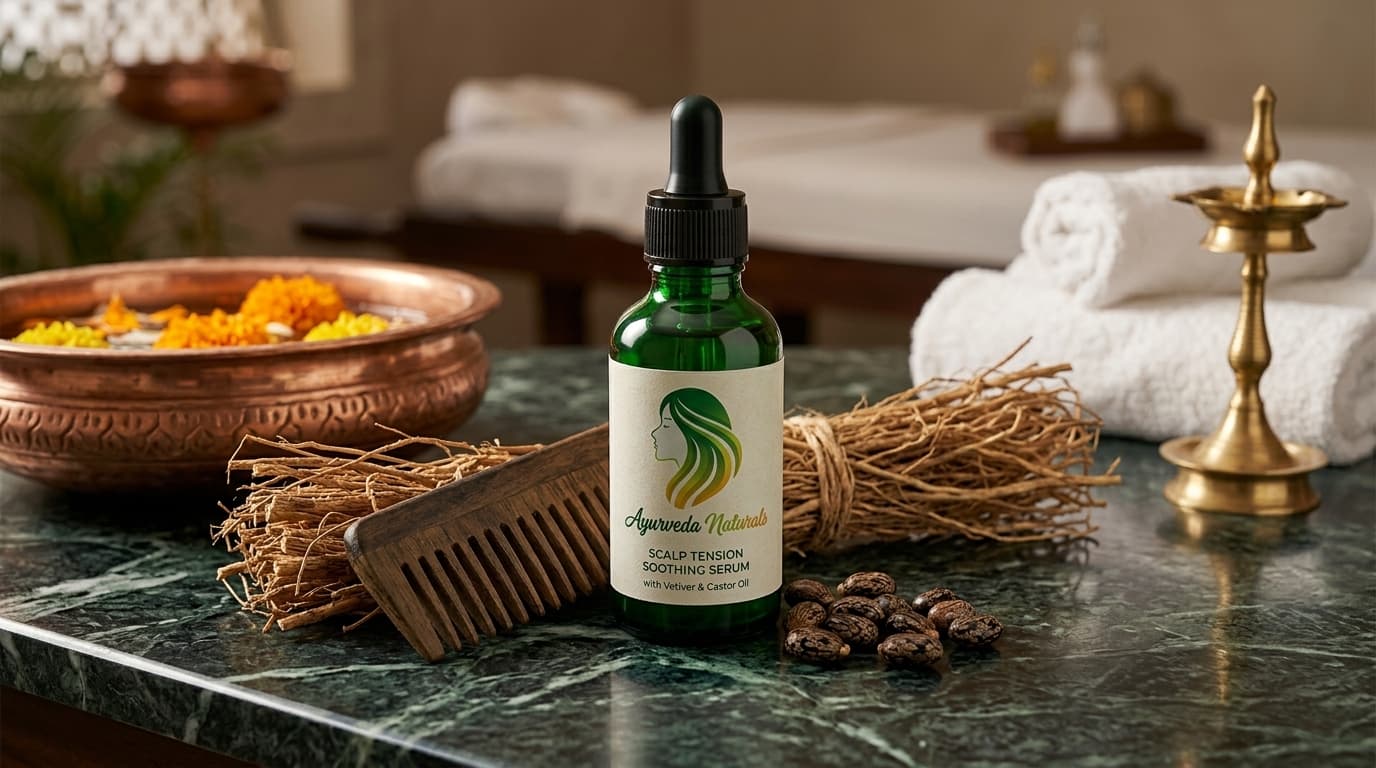
The direct answer: A comprehensive strategy for tight hairstyles and scalp tension hair loss prevention focuses on eliminating chronic mechanical shear forces before they cause irreversible perifollicular scarring (traction alopecia). When hair is pulled taut into high ponytails, tight braids, or heavy extensions, the continuous tensile stress physically detaches the dermal papilla from its capillary bed, compresses the micro-vessels of the galea aponeurotica, and triggers chronic perifolliculitis. In Ayurvedic medicine, this mechanical trauma (Abhighata) violently deranges cranial Vata dosha and overheats Pitta, starving the hair roots. You can prevent and reverse tension hair loss by switching to low-manipulation styles, practicing daily pinch-and-roll scalp mobilization, releasing cranial marma points, and restoring tissue elasticity with warm botanical oils.
Biomechanics of Traction Alopecia: Mechanical Tension to Follicular Scarring
Hairstyles are a powerful medium of personal expression, culture, elegance, and professional styling. However, when aesthetic styling relies on continuous mechanical pulling, the biological cost is devastating. Traction alopecia—the clinical term for hair loss caused by repetitive physical pulling—is one of the few forms of alopecia that is completely preventable, yet it frequently progresses to permanent, irreversible baldness if ignored. Understanding tight hairstyles and scalp tension hair loss prevention requires examining the precise biophysical forces exerted on your hair follicles.
The human hair follicle is anchored within the subcutaneous fat and dermis of the scalp by the outer root sheath, connective tissue sheath, and the dermal papilla. Under normal conditions, a single hair strand can withstand approximately 50 to 100 grams of immediate tensile force before snapping. However, the follicle's biological anchoring system is not engineered to endure continuous, unyielding mechanical pulling lasting for hours, days, or weeks at a time.
When you wear tight hairstyles, a destructive pathological cascade unfolds across four distinct stages:
- Continuous Tensile Strain and Dermal Papilla Separation: Prolonged pulling creates a continuous shear force along the hair follicle's longitudinal axis. This tension pulls the hair bulb away from its intimate contact with the subcutaneous microvascular plexus. Deprived of direct blood supply, the dividing keratinocytes in the matrix enter cellular distress.
- Perifollicular Erythema and Folliculitis: The physical micro-trauma ruptures microscopic blood vessels and tears the outer root sheath. The immune system responds by flooding the perifollicular space with inflammatory mast cells, macrophages, and neutrophils. This manifests clinically as redness (erythema), sharp scalp tenderness (trichodynia), and small inflammatory pustules along the hairline.
- Formation of Keratin Hair Casts: As the stressed root sheath attempts to repair itself, keratinized cellular debris sloughs off inside the follicular infundibulum. This debris forms small, white, cylindrical rings—known as peripilar hair casts—that encircle the hair shaft near the scalp. These casts are a hallmark diagnostic sign of severe mechanical traction.
- Follicular Atrophy and Cicatricial Fibrosis: If mechanical traction persists unabated for months or years, the chronic inflammatory infiltrate destroys the sebaceous gland and the stem cell niche in the follicular bulge. The delicate hair follicle is systematically destroyed and replaced by a dense, fibrous tract of collagen scar tissue (perifollicular fibrosis). Once a follicle is scarred over, the pore is permanently obliterated, resulting in irreversible, permanent baldness.
Galea Aponeurotica Tension and Microvascular Restriction
Traction-induced hair loss is not caused solely by the pulling of individual strands; it is also profoundly influenced by the chronic tension across the entire scalp structure. This is known in modern biomechanical dermatology as the Scalp Tension Hypothesis.
The human skull is covered by a dense, tough fibrous membrane called the galea aponeurotica (epicranial aponeurosis), which connects the frontalis muscle on the forehead with the occipitalis muscle at the back of the head. When you wear high, tight hairstyles or suffer from chronic mental and muscular tension, the frontalis and occipitalis muscles contract continuously, pulling the galea aponeurotica taut like a stretched drumhead.
This structural tightness compresses the delicate peripheral arteriolar and capillary networks that pass through the galea to nourish the scalp. The resulting reduction in blood flow creates localized hypoxia (oxygen starvation) in the upper dermal tissues of the frontal hairline, temples, and crown vertex.
Tissue hypoxia triggers a destructive molecular cascade:
- Starved of oxygen, dermal papilla cells upregulate the production of Transforming Growth Factor Beta 1 (TGF-β1), a potent fibrotic cytokine that signals surrounding fibroblasts to deposit stiff, cross-linked collagen around the hair follicle.
- Hypoxia increases local cellular levels of the 5-alpha reductase enzyme, accelerating the conversion of circulating testosterone into dihydrotestosterone (DHT), which drives progressive follicular miniaturization even in individuals with moderate genetic susceptibility.
- The rigid, unyielding scalp tissue mechanically prevents the expansion of the hair bulb during the anagen phase, causing subsequent hair generations to emerge thinner, weaker, and more fragile.
High-Risk Hairstyles and Physical Habits
To protect your hair follicles, you must recognize the specific hairstyles, styling tools, and everyday habits that place maximum mechanical stress on your roots:
1. High Ponytails and Slicked-Back "Clean Girl" Buns
Pulling hair upward and backward into a tight, slick high ponytail or bun creates immense, focused tensile force along the frontal hairline, temples, and nape of the neck. The dynamic bouncing motion while walking or exercising multiplies this force tenfold, resulting in rapid temporal recession and the classic "ponytail alopecia" pattern.
2. Tight Cornrows, Box Braids, and Micro-Braids
Braiding styles that grip the hair tightly at the scalp exert intense, continuous tension that lasts for weeks at a time. The danger is magnified exponentially when heavy synthetic hair extensions (such as kanekalon or jumbo braid hair) are added. The physical weight of the synthetic fiber pulls constantly downward on fragile natural roots, causing widespread perifollicular pustules and severe traction thinning.
3. Weaves, Tape-Ins, and Sewn-In Hair Extensions
Glued, taped, or sewn-in extensions concentrate the weight of heavy hair wefts onto tiny, isolated clusters of natural hair strands. As the natural hair grows out, the attachment point shifts, creating extreme leverage and rotational shear forces that rip hair bulbs directly out of their follicles.
4. Dreadlocks and Heavy Locs
While mature dreadlocks can be a low-maintenance style, excessively long, heavy locs exert continuous downward gravitational drag. If locs are retwisted too tightly or too frequently at the scalp, the relentless traction causes severe thinning at the crown and widespread hairline loss.
5. Tight Hijabs, Turbans, and Headwear Over Wet Hair
Religious and cultural head coverings provide modesty and elegance, but wrapping under-scarves, hijabs, or turbans too tightly around the forehead compresses scalp capillaries. Furthermore, tying hair into a tight bun beneath a head covering while the hair is still wet or damp is catastrophic: wet hair is stretched up to 30% beyond its natural length, making it extraordinarily fragile and prone to snapping at the root under tension.
6. Rigid Elastic Rubber Bands and Metal Clasps
Using cheap rubber bands, thin elastic hair ties, or metal-hinged barrettes creates severe localized friction. When pulled out, these fasteners grip and snap the hair cuticle, creating mechanical mid-shaft breakage and tearing roots from the scalp.
Comparison Table: Traction Alopecia Stages vs Histological Changes & Reversibility
Understanding where your hair stands along the spectrum of mechanical damage is vital for determining whether your follicles can still be rescued. Review this detailed clinical progression:
| Clinical Stage | Visible Physical Symptoms | Histological & Follicular Status | Biological Reversibility | Ayurvedic Intervention Strategy |
|---|---|---|---|---|
| Stage 1: Early Mechanical Stress | Scalp tenderness (trichodynia), mild redness after styling, dull aching sensation | Intact dermal papilla; transient capillary constriction; no structural tissue damage | 100% Reversible within 30 to 60 days of removing tension | Immediate cessation of tight styles; gentle warm oil application; cranial marma release |
| Stage 2: Perifolliculitis & Hair Casts | Perifollicular erythema, small red papules or pustules, white peripilar hair casts | Inflammatory cellular infiltrate around infundibulum; micro-tears in outer root sheath | 100% Reversible within 90 to 120 days with targeted anti-inflammatory care | Cooling Pitta-pacifying Lepas (Neem, Aloe, Gotu Kola); soothing antimicrobial herbal rinses |
| Stage 3: Advanced Miniaturization & Recession | Noticeable hairline recession, widening gaps between braid tracks, fine vellus hairs | Dermal papilla detachment; reduced follicle diameter; beginning of perifollicular collagen stiffening | 70% to 90% Reversible with intensive daily botanical and microvascular therapy | Intense Shiro Abhyanga with Bhringraj, Castor, and Rosemary oils; Asthi-Majja Dhatu tonics |
| Stage 4: Cicatricial Fibrosis (Scarring) | Smooth, shiny, pale bald scalp; complete absence of visible follicular openings (ostia) | Complete destruction of stem cell bulge and sebaceous gland; replaced by dense fibrotic scar tissue | Irreversible naturally; scarred follicles cannot regenerate new hair fibers | Preventative care for remaining viable surrounding follicles; soothing protective oils |
The Ayurvedic Perspective: Siravedha, Marma Points, and Vata-Pitta Pacification
Classical Ayurvedic texts classify hair loss caused by mechanical trauma and physical restriction under the concept of Abhighataja Khalitya (hair loss resulting from external injury or physical trauma). Physical pulling disrupts the delicate energetic and physical equilibrium of the head (Uttamanga), triggering a cascade of doshic disharmonies:
1. Derangement of Cranial Vata Dosha
When hair is pulled tight, the physical tension creates acute rigidity and dryness in the cranial tissues. This violently aggravates Vata dosha, particularly Prana Vata. The aggravated Vata constricts the micro-channels (Kesha Srotas) and dries up the natural protective unctuousness (Sneha) of the scalp. As a result, the roots lose their elasticity, become brittle, and detach from the scalp under minimal resistance.
2. Aggravation of Inflammatory Pitta Heat
The continuous mechanical friction and micro-tearing of root sheaths ignite local Bhrajaka Pitta. This manifests as the burning heat, throbbing pain, and inflammatory pustules (Pidakas) commonly experienced after getting tight braids or ponytails. If this fiery Pitta is not extinguished with cooling botanical therapies, it "scorches" the delicate germinative cells in the hair bulb.
3. Decompressing Cranial Marma Points
Ayurvedic surgery and physiology identify 107 vital energetic gateways (Marma points) in the human body, with 37 located in the head and neck. Tight hairstyles physically compress these vital points, obstructing the flow of vital life-force energy (Prana). Releasing these points restores immediate blood flow:
- Adhipati Marma (Crown Vertex): Located at the highest point of the skull. Gentle circular compression releases pressure across the entire sagittal suture and galea aponeurotica.
- Simanta Marma (Skull Sutures): Located along the skull's coronal and lambdoid suture lines. Massaging along these lines releases deep myofascial tension and calms overstimulated cranial nerves.
- Sthapani Marma (Third Eye Center): Located between the eyebrows. Releasing this point relaxes the frontalis muscle, lowering tension across the frontal hairline.
To maintain frictionless hair and prevent mechanical pulling during daily grooming, always use wide-toothed, hand-carved wooden tools. Learn how this ancient practice transforms root strength in our comprehensive guide on the benefits of wooden comb for hair growth.
Therapeutic Botanical Oils for Relieving Scalp Rigidity and Regrowing Hair
Topical botanical oils are nature's most potent remedy for softening hardened scalp tissues, extinguishing inflammatory Pitta heat, and stimulating microvascular blood flow around traction-stressed follicles. Learn the science of lipid-based follicular thickening in our guide on organic hair oil for thickening thin hair naturally.
When formulating an intensive recovery oil for tension-damaged hair, these specific botanicals are essential:
1. Ricinus Communis (Castor Oil): The Anti-Inflammatory Anchor
Pure cold-pressed Castor oil contains over 90% ricinoleic acid, an extraordinary monounsaturated fatty acid that acts as a natural prostaglandin D2 (PGD2) inhibitor and selective EP3 receptor agonist. Ricinoleic acid penetrates deeply into the dermis, rapidly reducing perifollicular edema, resolving traction-induced pustules, and fortifying root anchoring strength.
2. Sesamum Indicum (Sesame Oil): The Deep Penetrating Base
In classical Ayurveda, unrefined Sesame oil (Tila Taila) is considered the supreme carrier oil (Taila Shrestha) due to its minute, subtle (Sukshma) molecular structure. It penetrates all seven epidermal layers, delivering fat-soluble lignans (sesamin, sesamolin) and essential fatty acids directly to the galea aponeurotica to restore tissue elasticity.
3. Eclipta Alba (Bhringraj) & Centella Asiatica (Gotu Kola): Cellular Rejuvenation
Bhringraj stimulates hair matrix cell proliferation, while Gotu Kola upregulates collagen and fibronectin synthesis in the microvascular walls. Together, they repair the torn connective tissue sheath and initiate rapid anagen re-entry in dormant follicles.
4. Rosmarinus Officinalis (Rosemary): Microvascular Vasodilation
Rosemary essential oil contains high concentrations of 1,8-cineole and carnosic acid, which stimulate microvascular angiogenesis. Clinical trials show that rosemary oil significantly improves peripheral blood flow, delivering vital oxygen and nutrients to hypoxia-stressed follicles along receding hairlines.
For an expertly balanced formulation containing all of these therapeutic botanicals in clinical concentrations, use our handcrafted Ayurveda Naturals Hair Regrowth Oil. Apply it warm to your hairline and scalp 3 times weekly to dissolve tension and fuel rapid regrowth.
Tension-Free Hair Styling and Scalp Release Exercises
To permanently protect your hairline and maintain thick, vibrant hair density, adopt these essential tension-free styling habits and physical scalp release exercises:
1. The Daily Pinch-and-Roll Scalp Mobilization Technique
Spend 5 minutes every evening physically mobilizing your scalp to decompress the galea aponeurotica and restore microvascular perfusion:
- Place the pads of your four fingers firmly against your scalp skin at the sides of your head (above your ears).
- Without sliding your fingers over the hair strands, firmly move your scalp skin in slow, deep circular motions against the underlying skull bone for 60 seconds.
- Move your hands to your forehead, temples, crown, and the base of your skull, repeating the deep mobilization.
- Gently "pinch and lift" small sections of your scalp between your thumbs and fingers. If your scalp feels tight, rigid, and impossible to pinch, it indicates severe galea tension that requires daily mobilization.
2. Adopt the "Two-Finger Rule" for All Hairstyles
Whenever you style your hair into a ponytail, bun, or braid, apply the non-negotiable Two-Finger Rule: you must be able to slide two fingers comfortably between your scalp and the hair tie or braid base. If you cannot slide two fingers underneath, the hairstyle is dangerously tight and must be loosened immediately.
3. Switch Exclusively to 100% Mulberry Silk Scrunchies
Replace all traditional elastic hair bands, rubber bands, and plastic ties with wide 100% pure mulberry silk or satin scrunchies. Silk glides effortlessly over the hair cuticle, distributes mechanical pressure evenly over a wide surface area, and prevents localized hair shaft snapping.
4. Rotate Your Parting Lines Constantly
Parting your hair in the exact same location every day concentrates mechanical stress and environmental UV exposure along a single narrow strip of scalp. Shift your parting line by 1/2 inch every few days—from center to left, to right, to a slight zig-zag—to distribute mechanical strain across different follicular groups.
5. Allow a Mandatory 2-Week "Rest Window" Between Protective Styles
If you wear braids, cornrows, weaves, or extensions, never install a new set immediately after taking the old one down. Allow your scalp a minimum of 14 days of complete "naked" rest, during which you wear loose, natural styles and perform intensive restorative oiling rituals.
Frequently Asked Questions About Scalp Tension and Traction Hair Loss
Here are detailed answers to the most critical questions regarding tight hairstyles, scalp tension, and traction alopecia recovery:
How do tight hairstyles cause permanent hair loss (traction alopecia)?
Tight hairstyles exert continuous, prolonged tensile pulling forces on the hair follicle and its delicate dermal papilla. This mechanical strain causes repetitive micro-trauma to the outer root sheath, triggering localized inflammation (perifolliculitis), redness, and pustules. If the mechanical tension continues over months or years, the follicle undergoes progressive miniaturization and is eventually replaced by dense fibrotic scar tissue, destroying the stem cell bulge and permanently preventing new hair growth.
What are the earliest warning signs of traction alopecia?
The earliest warning signs include localized scalp tenderness or pain (trichodynia) after taking down a hairstyle, visible redness (perifollicular erythema) around hair roots, small pimple-like bumps or pustules along the hairline, the appearance of white tubular keratin 'hair casts' sliding along the hair shaft, and gradual recession or widening of the frontal and temporal hair margins.
How does scalp tension affect microcirculation and hair growth?
Chronic scalp tension stretches the galea aponeurotica (the fibrous sheet spanning the top of the skull), physically compressing the microvascular capillary networks that supply blood to hair follicles. This causes localized tissue hypoxia (oxygen starvation) and upregulates inflammatory signaling molecules like TGF-beta 1, which hardens perifollicular collagen, restricts nutrient delivery, and increases follicular sensitivity to DHT-driven thinning.
What does Ayurveda teach about mechanical scalp tension and hair health?
In Ayurveda, mechanical traction and scalp constriction are classified as Abhighata (physical trauma), which violently deranges localized Vata dosha in the cranial channels (Srotas). This constriction blocks the circulation of Rasa Dhatu (nutrient plasma), while the resulting friction generates inflammatory Pitta heat that weakens root stability. Ayurveda resolves this through Marma point massage (Adhipati, Simanta) and warm botanical oiling to soften rigid cranial tissues.
Can traction alopecia be reversed if caught early?
Yes, traction alopecia is completely reversible during the early and moderate stages before scarring occurs. When high-tension styles are abandoned immediately, scalp myofascial tension is released, and follicles are nourished with anti-inflammatory botanical oils and gentle scalp mobilization, dormant anagen follicles can fully recover, with visible regrowth appearing within 3 to 6 months.
Which hairstyles carry the highest risk of traction hair loss?
The highest-risk hairstyles include tight high ponytails, slicked-back ballerina buns, tight cornrows and box braids (especially with heavy synthetic hair extensions), tightly glued or sewn-in weaves, dreadlocks, and tight religious coverings (hijabs, turbans) pulled taut against wet or fragile hair.
What are the best natural oils for healing tension-damaged hair follicles?
The most therapeutic oils for tension-damaged scalps include pure cold-pressed Castor oil (Ricinus communis) for its high concentration of ricinoleic acid that reduces perifollicular inflammation, unrefined Sesame oil (Sesamum indicum) for deep tissue penetration, and botanical infusions of Bhringraj (Eclipta alba), Gotu Kola (Centella asiatica), and Rosemary (Rosmarinus officinalis) to stimulate microvascular angiogenesis.
Conclusion and Complete Hairline Preservation Action Plan
Your hairline is precious, delicate, and entirely irreplaceable once true cicatricial scarring sets in. Beauty and personal expression should never come at the cost of your long-term follicular health. By respecting the biological limits of your hair follicles, releasing chronic galea aponeurotica tension, and nourishing your scalp with restorative Ayurvedic botanical oils, you can maintain strong, healthy, voluminous edges for a lifetime.
Commit to these simple rules starting today:
- Loosen your ponytails, buns, and braids immediately—if it hurts, it is actively killing your follicles.
- Perform 5 minutes of daily pinch-and-roll scalp mobilization to restore vital microvascular blood flow.
- Detangle gently with a wide-toothed neem wood comb.
- Apply warm, nutrient-dense botanical oils to your hairline and temples 3 times a week.
- Give your hair regular, extended breaks from all high-manipulation styling.
Rescue Your Hairline and Restore Follicular Elasticity Naturally
Are your edges thinning or feeling tender from tight hairstyles? Our Ayurveda Naturals Hair Regrowth Oil delivers an intensive infusion of cold-pressed Castor oil, pure Sesame oil, Bhringraj, Rosemary, and Gotu Kola directly to stressed follicles. It soothes localized inflammation, increases microvascular oxygen delivery, and stimulates rapid hairline regrowth in 14 to 30 days.
Ready to stop hair fall naturally?
Don't wait until it's too late. Experience the proven magic of our 100% organic, wild-harvested Ayurvedic formulations and start seeing real results in 14 days.
Free Shipping + Cash on Delivery