
How to Stop Hair Frizz in Humid Weather Naturally: Anti-Frizz Ritual
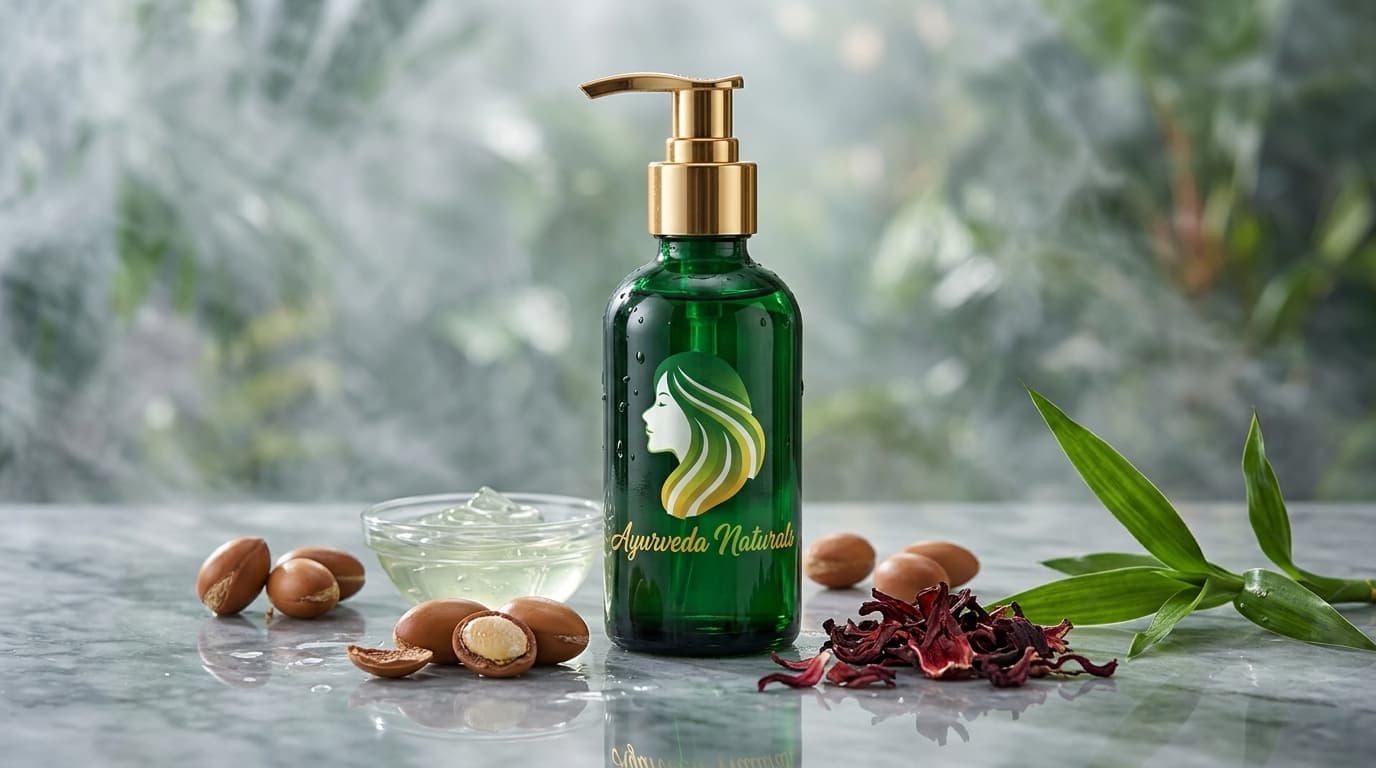
Direct Answer: To discover how to stop hair frizz in humid weather naturally, you must seal the hair shaft with hydrophobic botanical lipid bilayers (such as cold-pressed Coconut, Moringa, or Argan oil), restore the acidic pH of the hair cuticle (4.5–5.0) using herbal rinses like Apple Cider Vinegar and Hibiscus tea, and cleanse exclusively with gentle, sulfate-free herbal shampoos. By repairing the protective 18-MEA lipid layer and filling high-porosity cortical gaps with natural plant mucilage (Flaxseed and Aloe Vera), you create an impenetrable, breathable shield that prevents atmospheric moisture vapor from swelling the hair shaft.
There are few hair frustrations more universal than stepping outside on a warm, humid morning with sleek, beautifully styled tresses, only to watch them expand into an unruly, chaotic halo of frizz within minutes. Whether you live in a coastal metropolis, endure the suffocating monsoon season, or vacation in a tropical paradise, elevated ambient humidity is the sworn enemy of smooth, defined, manageable hair. Conventional commercial cosmetics promise miracles through silicone-laden serums and heavy synthetic sprays; however, these petroleum-derived products merely mask the issue with a plastic coating that suffocates the scalp, triggers greasy buildup, and leaves hair even drier and more frizzy over time.
To conquer humidity-induced frizz once and for all, we must look beyond superficial fixes and understand the underlying biophysical mechanics of the hair fiber. Classical Ayurveda, combined with contemporary hair macromolecular chemistry, reveals that frizz is not an unavoidable curse, but rather a direct physiological signal that your hair is dehydrated, porous, and seeking external moisture. In this comprehensive master guide, we explore how to stop hair frizz in humid weather naturally through botanical lipid chemistry, Ayurvedic doshic balancing, high-porosity repair protocols, and handcrafted DIY herbal smoothing formulations.
The Biophysics of Frizz: Keratin, Hydrogen Bonds & Moisture Gradients
To understand why humidity triggers explosive frizz, we must examine the internal molecular architecture of the human hair strand. Each hair shaft consists of three concentric layers: the innermost medulla, the thick middle structural layer called the cortex, and the outermost protective shingle-like layer known as the cuticle. The cortex makes up approximately 85% of the hair’s total mass and is composed of fibrous bundles of alpha-keratin proteins.
The structural integrity and shape of your hair are held together by two primary types of chemical bonds:
- Disulfide Bonds (Covalent Bonds): Strong, permanent chemical bonds formed between sulfur atoms in cystine amino acids. These bonds dictate whether your hair is naturally straight, wavy, curly, or coily, and can only be altered through harsh chemical relaxers or perms.
- Hydrogen Bonds (Non-Covalent Bonds): Weak, temporary physical bonds that form between adjacent keratin protein chains. Hydrogen bonds are highly sensitive to water molecules and heat. When you blow-dry, straighten, or curl your hair, you are temporarily breaking and resetting these hydrogen bonds into a desired smooth configuration.
Under normal conditions, healthy human hair maintains an internal moisture content of approximately 10% to 15%. However, when the surrounding atmospheric relative humidity rises above 60% or 70%, a steep moisture vapor pressure gradient is established between the damp air and the hair cortex. If your hair is dry, damaged, or porous, water vapor molecules from the humid air effortlessly penetrate the outer cuticle barrier and flood into the cortex.
As these external water molecules rush in, they violently break the temporary hydrogen bonds you established during styling. The water molecules form random, disorganized hydrogen bonds with adjacent keratin chains. This irregular bonding forces individual keratin fibrils to twist, buckle, and swell unevenly along the shaft. The microscopic cuticle scales are forced upward and outward like an open pinecone. The collective result of millions of raised cuticle scales and swollen, disorganized fibers is what we visibly perceive and feel as frizz.
The Danger of Hygral Fatigue & Hair Porosity Dynamics
Frizz is not merely a cosmetic inconvenience; it is often the first visible symptom of a progressive structural pathology known in trichology as Hygral Fatigue. When hair is repeatedly exposed to high humidity and wet-dry cycles without sufficient lipid protection, the hair shaft repeatedly absorbs massive amounts of water, swells beyond its elastic capacity, and then contracts as it dries.
This continuous expansion and contraction exerts immense mechanical stress on the delicate cell membrane complex (CMC) that glues the cuticle scales to the cortex. Over time, the CMC fractures, causing cuticle scales to chip, crack, and permanently detach. This transforms normal hair into High-Porosity Hair—hair characterized by microscopic gaps, tears, and exposed cortical tissue. High-porosity hair acts like a dry sponge: it absorbs atmospheric moisture almost instantaneously in humid weather, creating instantaneous, uncontrollable frizz, while simultaneously losing all internal moisture in dry weather, leaving it brittle and prone to snapping.
Ayurvedic Understanding: Varsha Ritu & Doshic Imbalance in Humid Weather
In the classical Ayurvedic literature, the rainy, humid season is designated as Varsha Ritu (monsoon season). During this period, the environmental qualities are characterized by excessive dampness (Kleda), heat (Ushna), heaviness (Guru), and instability (Chala). This unique environmental matrix creates a simultaneous disturbance in all three biological doshas:
- Aggravated Vata (Rukshata & Chalatva): Although the external air is damp, the underlying seasonal transition aggravates Vata dosha, leaving the internal core of the hair shaft dry (Ruksha) and brittle. The erratic, moving nature of Vata causes hair to become unruly, tangled, and flyaway.
- Aggravated Pitta (Kleda & Ushna): High atmospheric heat and trapped humidity overheat the scalp, dilating follicular pores, increasing scalp perspiration, and triggering inflammatory reactions that weaken hair root adhesion.
- Accumulated Kledaka Kapha: Excessive environmental moisture and damp sweat accumulate on the scalp, creating sticky toxic residues (Ama) that attract opportunistic fungal infections, such as Malassezia-induced seborrhea.
During the humid monsoon months, this doshic turbulence frequently leads to massive seasonal hair shedding alongside severe frizz. For an in-depth, classical protocol on stopping rainy season hair loss, consult our authoritative seasonal hair fall monsoon ayurvedic prevention guide.
The Silicones Trap: Why Commercial Anti-Frizz Serums Fail
The conventional cosmetics industry’s standard answer to humidity frizz is formulating serums and conditioners with high concentrations of non-water-soluble synthetic silicones, such as Dimethicone, Cyclopentasiloxane, and Dimethiconol. Silicones are synthetic polymers derived from petroleum and silica that coat the hair fiber in a glassy, waterproof plastic sheath. While this provides an instantaneous, mirror-like smoothing effect on Day 1, it initiates a destructive cycle over time:
- Occlusive Suffocation: Non-water-soluble silicones cannot be rinsed away with gentle water. They accumulate layer upon layer, forming a heavy, suffocating barrier over the hair cuticle and scalp pores.
- Internal Dehydration: While the silicone shield blocks external water vapor, it also completely blocks beneficial botanical nutrients, humectants, and natural atmospheric hydration from nourishing the inner cortex. Trapped beneath the plastic coat, the internal hair fiber slowly dehydrates and starves.
- Aggressive Rebound Frizz: To wash away stubborn silicone buildup, consumers are forced to use harsh, stripping sulfate shampoos. These detergents violently rip away the silicone layer along with the hair's natural intercellular lipids (ceramides and 18-MEA). The exposed, hyper-dry hair shaft now reacts to humidity with ten times more severe, explosive frizz than before.
The Ayurvedic solution rejects synthetic plastic coatings in favor of Biocompatible Botanical Lipid Bilayers. Natural plant oils contain triglycerides and free fatty acids with molecular conformations that integrate directly into the hair’s lipid matrix, sealing out humidity while allowing the hair to breathe and retain optimal internal flexibility.
The Essential Role of Sulfate-Free Cleansing for Frizz Elimination
You cannot cure frizz if your cleansing routine actively destroys the hair cuticle. Commercial shampoos formulated with harsh anionic surfactants such as Sodium Lauryl Sulfate (SLS) and Sodium Laureth Sulfate (SLES) possess an alkaline pH ranging from 7.5 to 9.0. Because human hair and scalp are naturally acidic (pH 4.5 to 5.5), washing with an alkaline detergent instantly blows the cuticle scales wide open.
To maintain sleek, frizz-free hair in humid weather, you must switch unconditionally to a pH-balanced, sulfate-free cleanser that utilizes natural plant saponins. Saponins extracted from Reetha (Soapnut) and Shikakai cleanse the scalp without altering cuticle polarity. For a detailed analysis of the best botanical cleansers available, read our comprehensive guide on the best sulfate-free shampoo Pakistan dry frizzy hair.
To instantly restore your hair's natural acid mantle and smooth down raised cuticles, wash with our handcrafted, 100% botanical Ayurveda Naturals Purifying Hair Shampoo.
The Top 7 Natural & Ayurvedic Anti-Frizz Formulations
By harnessing the power of sacred Ayurvedic botanicals rich in natural plant mucilage, high-molecular-weight fatty acids, and natural alpha-hydroxy acids, you can craft powerful, salon-quality anti-humidity shields at home.
1. Fermented Rice Water (Tandulodaka) & Aloe Vera Cortical Sealant
Traditional Asian and Ayurvedic hair traditions have utilized fermented rice water (Tandulodaka) for centuries to impart glass-like smoothness and tensile strength. During the fermentation process, rice water develops high concentrations of Inositol (Vitamin B8), an extraordinary carbohydrate that possesses the rare ability to penetrate deep inside damaged hair fibers, remaining inside the cortex even after thorough rinsing to reinforce internal elasticity and bridge high-porosity gaps.
Combining fermented rice water with fresh Aloe Vera (Kumari) gel creates an unbeatable anti-frizz pre-rinse. Aloe vera’s acemannan polysaccharides coat the outer cuticle in a flexible, light-reflective moisture film that repels ambient humidity.
- How to Prepare: Rinse 1/2 cup of organic jasmine or basmati rice with pure water to remove surface impurities. Place the clean rice in a glass bowl with 2 cups of filtered water. Let it soak at room temperature for 24 hours until slightly sour and fermented. Strain the liquid, then whisk in 3 tablespoons of freshly extracted organic Aloe Vera gel and 4 drops of rosemary essential oil.
- Application: After shampooing, pour this nutrient-dense elixir through your hair lengths. Gently detangle with your fingers, allow it to process for 15 minutes, then rinse with cool water.
2. Cold-Pressed Coconut and Moringa Seed Lightweight Anti-Humidity Glaze
While heavy oils can weigh down fine hair, cold-pressed Moringa Seed Oil (Moringa oleifera) is celebrated as one of the lightest, most nutrient-dense botanical oils on earth. Moringa oil contains extraordinarily high concentrations of Behenic Acid—a unique 22-carbon saturated fatty acid renowned in cosmetic science for its exceptional hair-smoothing, detangling, and humidity-blocking characteristics.
Blending Moringa oil with virgin Coconut Oil (Narikela Taila), which is rich in straight-chain lauric acid, provides a dual-action defense: coconut oil penetrates deep into the inner cortex to prevent water-vapor absorption, while moringa oil seals the outer cuticle surface.
- How to Prepare: Blend 2 tablespoons of cold-pressed Moringa seed oil with 1 tablespoon of virgin coconut oil and 1/2 teaspoon of pure argan oil.
- Application: Dispense 2 to 4 drops into your palms. Rub vigorously to warm the glaze, then gently smooth over damp hair from mid-lengths to ends before stepping out into humid weather.
3. Hibiscus Flower (Japa) and Marshmallow Root Slip Gel
Hibiscus (Japa - Hibiscus rosa-sinensis) and Marshmallow Root (Althaea officinalis) are nature’s supreme sources of botanical mucilage. Plant mucilage is a complex, slippery matrix of polysaccharides and hydrocolloids that mimics the function of synthetic silicones without any of the toxic buildup. It coats each individual hair strand in an invisible, breathable, water-resistant sheath that glides effortlessly, eliminating friction tangles and locking out humidity.
- How to Prepare: Boil 2 tablespoons of dried hibiscus petals and 2 tablespoons of dried marshmallow root in 2.5 cups of pure water for 15 minutes on medium heat until a thick, slippery, deep ruby-red gel develops. Strain through a fine nut-milk bag while hot.
- Application: Apply generously to wet, clean hair as a leave-in botanical smoothing serum or curl-defining glaze. Do not rinse out.
4. Raw Apple Cider Vinegar and Licorice (Yashtimadhu) Cuticle-Snapping Rinse
The physical alignment of the hair cuticle is strictly governed by pH. When the hair is exposed to alkaline water or sweating, the cuticle scales flare open. Raw organic Apple Cider Vinegar (ACV) has an acidic pH of approximately 3.0. When diluted, it instantly neutralizes alkalinity, contracting the cuticle scales and snapping them down tightly against the hair shaft like smooth armor.
Infusing ACV with Yashtimadhu (Licorice Root) delivers natural glabridin and triterpenoids that soothe scalp inflammation and impart high-gloss sheen.
- How to Prepare: Steep 1 tablespoon of licorice root powder in 2 cups of boiling water for 20 minutes; strain and let cool completely. Add 2 tablespoons of raw, unfiltered organic apple cider vinegar (with the cloudy "mother").
- Application: After washing and conditioning, pour this acidic mixture over your hair as the final rinse. Massage lightly into the scalp and lengths for 60 seconds, then gently squeeze out excess water. The mild vinegar scent completely dissipates once dry.
5. Golden Flaxseed (Atasi) and Fenugreek (Methi) Botanical Styler
For those with wavy, curly, or coily hair that loses definition and expands into a frizzy cloud in humid weather, this DIY botanical custard provides 72-hour humidity hold without stiffness or crunch. Flaxseeds (Atasi) deliver Alpha-Linolenic Acid (ALA) and omega-3 lipids, while Fenugreek (Methi) seeds provide rich galactomannan mucilage and bio-proteins that reconstruct the hair cuticle.
- How to Prepare: Soak 1 tablespoon of fenugreek seeds in 1 cup of water overnight. In the morning, add the soaked seeds and water to a pot with 2 tablespoons of whole golden flaxseeds and an additional 1.5 cups of water. Boil for 8 minutes until frothy and viscous. Strain immediately through a stocking or fine mesh. Add 1 teaspoon of sweet almond oil.
- Application: Rake the warm custard through soaking wet hair in sections using the "praying hands" technique to smooth the cuticle down. Air-dry or diffuse on a cool setting.
6. Argan & Camellia Seed (Tsubaki) Anti-Humidity Elixir
Camellia Seed Oil (Camellia japonica), revered for centuries by Japanese geishas for achieving flawless, glass-like hair, is rich in oleic acid (Omega-9) and natural plant squalene. Blended with Moroccan Argan Oil, this elixir penetrates coarse, unruly hair fibers, restoring lipid continuity and neutralizing the electrostatic charges that cause flyaway frizz.
- How to Prepare: Combine equal parts (1 tablespoon each) of cold-pressed Camellia seed oil, Argan oil, and Jojoba oil in an amber dropper bottle. Add 3 drops of pure Jasmine or Ylang-Ylang essential oil for a luxurious aroma.
- Application: Use daily as a finishing serum: warm 2 drops between fingers and lightly glaze over styled hair.
7. Unrefined Shea Butter & Bhringraj Protective Pomade
For coarse, thick, or tightly coiled hair types that require intensive occlusive protection against extreme tropical humidity, raw Shea Butter (Vitellaria paradoxa) provides a dense lipid matrix of stearic and oleic fatty acids. Infusing it with Bhringraj (Eclipta alba) fortifies the hair roots and prevents environmental oxidative damage.
- How to Prepare: Melt 3 tablespoons of unrefined Grade-A shea butter over a low-heat double boiler. Whisk in 1 tablespoon of authentic Bhringraj herbal oil and 1 teaspoon of castor oil. Pour into a glass jar and place in the refrigerator for 30 minutes to solidify into a creamy whipped pomade.
- Application: Melt a pea-sized amount between your fingertips and smooth over dry ends, braids, or edges to lock out humidity.
Comparison: Natural Anti-Frizz Botanicals vs. Synthetic Silicones
To highlight the profound differences between holistic botanical ingredients and synthetic commercial smoothing agents, review the following scientific comparison.
| Parameter | Natural Botanical Lipids & Mucilage (Ayurveda) | Synthetic Commercial Silicones (Dimethicone) |
|---|---|---|
| Origin & Chemistry | Plant-derived triglycerides, fatty acids, bio-polysaccharides | Petroleum-derived synthetic silica polymers and cyclomethicones |
| Mechanism of Action | Penetrates cortex to block moisture vapor; restores 18-MEA cuticle lipid layer | Forms an impermeable, artificial plastic film over the outer shaft |
| Breathability & Cellular Nourishment | 100% breathable; allows natural moisture balance while delivering vitamins | Non-breathable; suffocates the hair cortex and prevents hydration absorption |
| Buildup & Residue Risk | Zero toxic buildup; effortlessly washes out with gentle herbal shampoos | High buildup risk; requires harsh, stripping sulfates to remove |
| Long-Term Hair Health | Rehabilitates hygral fatigue, permanently reduces hair porosity | Leads to progressive cortical dehydration and severe rebound frizz |
| Environmental Impact | 100% biodegradable, sustainable, and non-toxic to aquatic ecosystems | Non-biodegradable synthetic pollutants that accumulate in water systems |
The Anti-Frizz Dinacharya: Daily & Weekly Routine for Humid Climates
Executing your daily hair routine with precise, protective techniques is just as critical as the ingredients you apply. Follow this step-by-step Ayurvedic Dinacharya to maintain smooth, glass-like hair throughout the most humid seasons.
- Wash with pH-Balanced Herbal Shampoos: Cleanse your hair 2 to 3 times a week using a sulfate-free, botanical cleanser. Never scrub the delicate hair lengths aggressively; massage the lather into the scalp and let the soapy runoff gently cleanse the ends.
- The Cold ACV Final Rinse: Always conclude every wash cycle with a cool water rinse or a diluted Apple Cider Vinegar / Hibiscus infusion to force the cuticles to snap shut tightly.
- Ditch Rough Terrycloth Towels: Standard bathroom towels have rough looped cotton fibers that snag against wet, swollen cuticles, ripping away the 18-MEA lipid layer and creating immediate friction frizz. Instead, use a smooth 100% Mulberry silk scarf, a fine microfiber cloth, or a soft cotton T-shirt to gently blot and squeeze water out (a technique known as "plopping"). Never rub wet hair vigorously.
- Apply Leave-In Botanical Sealants to Soaking Wet Hair: Apply your natural styling glaze (Flaxseed gel, Hibiscus mucilage, or 2 drops of Moringa-Coconut oil) while your hair is still soaking wet. Applying products to damp or dry hair results in uneven distribution and allows water vapor to penetrate before the shield is set.
- Sleep on Pure Silk: Cotton pillowcases absorb moisture and generate intense mechanical friction during sleep. Rest your head on a 100% Mulberry silk pillowcase or wrap your hair in a silk bonnet to wake up with frizz-free, polished curls and waves.
Frequently Asked Questions (FAQ)
How do you stop hair frizz in humid weather naturally?
To stop hair frizz in humid weather naturally, you must seal the hair cuticle with hydrophobic botanical lipids (such as cold-pressed coconut, moringa, or argan oils), rinse with an acidic herbal solution like diluted apple cider vinegar or hibiscus tea to lower hair pH (4.5–5.0), and wash exclusively with sulfate-free herbal cleansers that preserve the hair's natural 18-MEA lipid layer.
Why does humid weather make hair frizzy?
Humid weather makes hair frizzy because dry, porous hair shafts absorb excess moisture vapor from the air. This sudden influx of water breaks temporary hydrogen bonds within the keratin cortex, rearranging them into irregular conformations and forcing the microscopic cuticle scales to buckle, flare open, and swell unevenly.
What is hygral fatigue and how does it contribute to frizz?
Hygral fatigue is the structural stress and weakening of the hair shaft caused by continuous cycles of swelling (when absorbing atmospheric humidity) and contracting (when drying). Over time, this constant expansion and contraction fractures the cuticle scales, leading to chronic porosity, permanent frizz, and severe breakage.
Are natural botanical oils better than synthetic silicones for humidity protection?
Yes, natural botanical oils (such as coconut, jojoba, and argan) are superior because they contain bio-compatible fatty acids that penetrate the hair cortex and reinforce the lipid membrane without leaving suffocating, non-water-soluble plastic residues. Synthetic silicones (like dimethicone) provide temporary smoothing but create waterproof buildup that eventually dehydrates the hair, causing severe rebound frizz.
How does hair porosity affect frizz in high humidity?
High-porosity hair has lifted, missing, or damaged cuticle scales, allowing atmospheric water vapor to rush into the inner cortex instantly, creating extreme frizz. Low-porosity hair has tightly aligned cuticles that naturally resist humidity penetration. Applying protein-rich Ayurvedic masks like fenugreek and fermented rice water patches high-porosity gaps.
Can an apple cider vinegar rinse eliminate humid weather frizz?
Yes, raw organic apple cider vinegar is naturally acidic (pH 2.8–3.2). When diluted in water and used as a final rinse, it contracts the keratin cuticle scales, snapping them shut tightly against the hair shaft. A sealed, tightly closed cuticle physically prevents atmospheric moisture from entering and creates a smooth, light-reflective surface.
How does Ayurveda explain humidity and monsoon hair damage?
In Ayurveda, humid and monsoon seasons (Varsha Ritu) aggravate both Vata and Pitta doshas while accumulating Kledaka Kapha (excess dampness). This atmospheric dampness weakens digestive fire (Agni), increases scalp sweat and sebum decomposition, and makes hair roots vulnerable to fungal infections and rapid seasonal shedding.
What is the best natural DIY gel to hold curls and prevent frizz in humidity?
A homemade golden flaxseed and marshmallow root hydrogel is the ultimate natural anti-humidity styler. Rich in Alpha-Linolenic Acid (ALA) and botanical mucilage, it coats curls with a flexible, breathable, non-crunchy film that repels moisture vapor and defines curl patterns for up to 72 hours.
Achieve Silky, Glass-Like Smoothness in Any Humidity
Say goodbye to unruly humidity frizz and damaging sulfate shampoos. Experience the deep-cleansing, cuticle-smoothing power of pure wild-harvested Reetha, Shikakai, and Amla.
Try Ayurveda Naturals Purifying Hair Shampoo100% Organic • Cuticle-Sealing Formula • Free Shipping Nationwide
Ready to stop hair fall naturally?
Don't wait until it's too late. Experience the proven magic of our 100% organic, wild-harvested Ayurvedic formulations and start seeing real results in 14 days.
Free Shipping + Cash on Delivery