
How to Manage Thinning Hair After 40 Naturally: Ayurvedic Guide
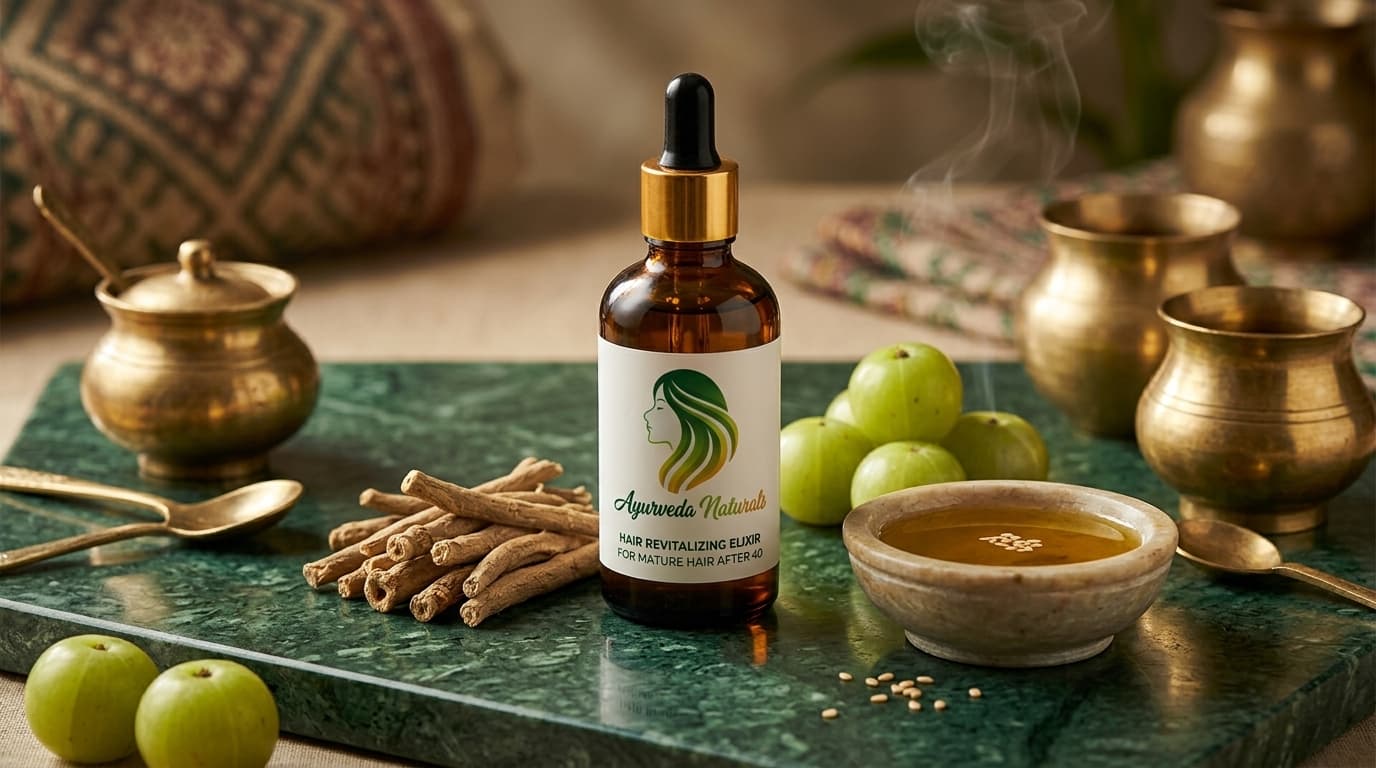
Learning how to manage thinning hair after 40 naturally requires addressing the biological shifts of perimenopause, andropause, and the systemic transition into the Vata stage of life. After age 40, a natural decline in protective hormones (estrogen and progesterone), combined with reduced microvascular circulation and diminished dermal collagen, accelerates follicular miniaturization and slows hair regrowth. An effective natural Ayurvedic strategy counters these changes by combining bi-weekly warm oil Shiro Abhyanga using potent Rasayana botanicals (Bhringraj, Ashwagandha, Shatavari, Amla), switching to gentle herbal cleansers that preserve the scalp's delicate lipid barrier, performing daily Pratimarsha Nasya, and nourishing the Asthi Dhatu (bone tissue) with mineral-dense superfoods and adaptogens.
The Biological Turning Point: Hair Health and Follicle Dynamics After 40
Crossing the threshold of 40 brings profound wisdom, self-assurance, and life experience—but it also initiates complex endocrine and cellular recalibrations throughout the body. For both women and men, the fourth decade is frequently when hair thinning shifts from occasional shedding into noticeable, progressive diffuse loss, widened parts, thinning crowns, and loss of individual strand diameter (caliber). Successfully mastering how to manage thinning hair after 40 naturally begins with a precise understanding of the physiological processes occurring beneath the scalp surface.
From a cellular and dermatological perspective, several biological factors converge after age 40:
- Hormonal Recalibration and Relative Androgen Dominance: In women, the transition into perimenopause brings fluctuating and gradually declining levels of 17-beta estradiol and progesterone. Because estrogen naturally prolongs the anagen (growth) phase and protects follicles against androgens, its decline unmasks the effects of circulating testosterone. The enzyme 5-alpha reductase converts free testosterone into dihydrotestosterone (DHT), which binds to receptors in genetically sensitive hair follicles, triggering progressive miniaturization. In men, age-related changes in free-to-bound testosterone and rising sex hormone-binding globulin (SHBG) create localized hormonal imbalances across the crown and temples.
- Dermal Collagen Depletion and Perifollicular Fibrosis: After 40, dermal fibroblast activity slows, leading to a 1% annual loss of dermal collagen type I and III. The extracellular matrix surrounding the hair bulb becomes thinner and less pliable. In some individuals, chronic subclinical inflammation leads to perifollicular fibrosis—a microscopic stiffening and scarring around the follicle opening that physically restricts hair emergence and restricts vascular perfusion.
- Microvascular Rarefaction: Subcutaneous microcapillary density naturally decreases with age. Fewer capillary loops encircle each dermal papilla, reducing the transport of oxygen, glucose, iron, and sulfur-containing amino acids (cysteine, methionine) required for continuous keratin synthesis.
- Sebaceous Gland Involution: Sebum production drops significantly after 40 due to declining endocrine stimulation. While younger adults often battle oily roots, adults over 40 frequently experience severe scalp dryness, brittle strands, rough cuticles, and lack of natural luster.
The Ayurvedic Perspective: Entering the Vata Phase of Life (Vardhakya)
In classical Ayurvedic medicine, human life is divided into three major elemental epochs: the Kapha stage (childhood to age 16, ruled by growth and structure), the Pitta stage (age 16 to 40/50, ruled by metabolism, transformation, and ambition), and the Vata stage (age 40/50 onward, ruled by the air and ether elements, sensory refinement, and systemic catabolism).
As you enter your forties, the subtle, governing qualities of Vata—Ruksha (dry), Sheeta (cold), Laghu (light), Khara (rough), and Chala (mobile)—begin to predominate in bodily tissues. When Vata becomes aggravated by modern stress, nutritional deficiencies, erratic sleep, and emotional turbulence, it targets the deepest bodily tissues. Classical Ayurvedic treatises, including the Charaka Samhita and Ashtanga Hridaya, explain that hair (Kesha) is the direct secondary metabolic tissue (Upadhatu) of Asthi Dhatu (bone tissue). When Vata increases, it creates porosity, dryness, and depletion within the bones and bone marrow (Majja Dhatu), causing hair follicles to loosen, shrivel, and shed prematurely.
Furthermore, in mature women, the interplay between remaining Pitta heat and emerging Vata dryness creates a unique pattern of hormonal shedding, an intricate condition explored extensively in our guide on ayurvedic treatment for hair loss in females. Restoring hair density after 40 requires soothing Vata with deep unctuousness (Snehana), clearing microvascular blockages (Srotoshodhana), and nourishing tissues with age-reversing Rasayana botanicals.
| Age-Related Marker | Physiological Shift (Post-40) | Conventional Approach & Drawbacks | Targeted Ayurvedic Botanical Solution |
|---|---|---|---|
| Estrogen & Progesterone Decline | Perimenopausal drop in protective estrogens unmasks androgen sensitivity, accelerating DHT binding. | Synthetic Hormone Replacement Therapy (HRT) or oral anti-androgens (potential systemic side effects). | Phytoestrogenic and adaptogenic Rasayanas (Shatavari, Ashwagandha) combined with topical DHT blockers (Amla, Bhringraj). |
| Microvascular Perfusion Decline | Capillary beds around the dermal papilla regress, starving the hair matrix of vital nutrients and oxygen. | Topical Minoxidil 5% (can cause severe scalp dryness, contact dermatitis, and immediate rebound shedding). | Warm herbal Shiro Abhyanga with lipid-soluble vasodilators (Bhringraj, Rosemary, Jatamansi) and Marma therapy. |
| Perifollicular Fibrosis & Stiffening | Chronic micro-inflammation causes collagen hardening around the follicular infundibulum, choking roots. | Topical corticosteroid lotions (thin the scalp skin and disrupt the cutaneous barrier with extended use). | Anti-inflammatory botanical coumestans (wedelolactone from Bhringraj) and polyphenol-rich Lepas to dissolve fibrosis. |
| Vata Dryness & Sebaceous Depletion | Sebum production drops sharply, leaving the scalp dehydrated and hair shafts brittle and porous. | Synthetic silicone-based serums that coat strands cosmetically while worsening root suffocation. | Cold-pressed organic Sesame and Sweet Almond oils infused with unctuous herbs that rebuild natural lipid barriers. |
| Asthi Dhatu Demineralization | Reduced bone mineral density and sluggish Agni impair the secondary metabolic nourishment of hair roots. | Isolated synthetic calcium and biotin pills (often poorly absorbed and cause digestive sluggishness). | Bioavailable Rasayana superfoods: Black Sesame Seeds, A2 Grass-Fed Ghee, Moringa, and CCF digestive tea. |
Comprehensive Ayurvedic Master Strategy for Hair Thinning After 40
Reversing age-related hair thinning requires a disciplined, multi-pathway regimen that addresses both the internal cellular environment and external scalp health. Here is the definitive 5-pillar Ayurvedic protocol designed specifically for adults over 40.
Pillar 1: Intensive Warm Oil Shiro Abhyanga (Herbal Transdermal Infusion)
Warm oil scalp massage (Shiro Abhyanga) is the most potent therapy for pacifying Vata dosha and rejuvenating dormant hair follicles after 40. Cold-pressed carrier oils—particularly black sesame and sweet almond—act as lipid transdermal carriers, transporting fat-soluble phytosterols, flavonoids, and antioxidants deep into the dermal papilla. To understand how cold-pressed botanical oils structurally thicken fine, aging strands, read our detailed guide on organic hair oil for thickening thin hair naturally.
For individuals over 40, we strongly recommend incorporating our handcrafted 15-Herbs Hair Regrowth Oil into your weekly routine. Crafted with a time-tested decoction of wild Bhringraj, Amla, Brahmi, Ashwagandha, and Jatamansi infused in pure cold-pressed oils, it delivers the exact botanical nutrition needed to halt active shedding, soften brittle strands, and stimulate dormant follicles.
The Post-40 Shiro Abhyanga Application Protocol:
- Warm the Oil: Place 2 to 3 tablespoons of herbal oil in a small glass container and submerge it in a bowl of warm water for 5 minutes. The oil should be comfortably warm to the touch (around 100°F / 38°C) to open follicular pores and relax cranial muscles.
- Section and Apply: Part your hair into narrow sections and apply the warm oil directly onto the scalp using a dropper or fingertips, paying special attention to thinning areas along the crown, hairline, and part.
- Slow Kneading Massage: Use the pads of your fingers and the heels of your hands to massage the scalp firmly for 12 to 15 minutes. Focus on moving the scalp skin over the skull rather than rubbing the hair strands. Stimulate the three primary cranial Marma points:
- Adhipati Marma (Crown): Relieves mental fatigue, pacifies all three doshas, and enhances overall cranial circulation.
- Simantaka Marma (Sagittal Suture): Alleviates hormonal stress and nourishes frontal follicles.
- Krikatika Marma (Base of Skull): Releases chronic cervical tension, opening arterial flow through the vertebral and carotid arteries.
- Deep Restorative Absorption: Leave the oil on for a minimum of 2 to 3 hours, or overnight wrapped in a pure silk or cotton wrap, allowing the botanical actives to nourish the follicle matrix before washing.
Pillar 2: Scalp Re-Acidification and Botanical Cleansing
After 40, the scalp's sebum output is significantly reduced. Washing with conventional sulfate-based shampoos strips the remaining lipid barrier, leaving the scalp vulnerable to micro-fissuring, inflammation, and accelerated shedding. Transition to a gentle, low-pH herbal shampoo powered by wild-harvested saponins from Shikakai, Reetha, Amla, and Aloe Vera.
Wash your hair no more than 2 times per week using lukewarm water. Never use steaming hot water, which dissolves essential intercellular ceramides, raises the cuticle scales, and leaves mature hair shafts feeling dry, rough, and unmanageable.
Pillar 3: Weekly Rasayana Lepas (Deep Conditioning and Anti-Aging Masks)
Once a week, treat your hair and scalp to a deeply nourishing herbal mask (Lepa) to replenish lost keratin lipids and infuse the hair cortex with bio-available moisture:
- 2 tablespoons of Organic Hibiscus (Japapushpa) Flower Powder: Rich in natural mucilage and amino acids that coat the hair shaft, impart silky slip, and seal frayed cuticles.
- 2 tablespoons of Pure Bhringraj Powder: Delivers concentrated wedelolactones to stimulate follicle cellular metabolism.
- 1 tablespoon of Soaked and Ground Fenugreek (Methi) Seed Paste: Provides plant lecithin and structural proteins to strengthen thinning hair fibers.
- 1 teaspoon of Melted Organic A2 Ghee: Delivers pure fat-soluble butyric acid and vitamins A, D, and E to pacify intense Vata dryness at the scalp level.
- 3 tablespoons of Fresh Aloe Vera Gel or Coconut Milk: Blends the mixture into a creamy, hydrating mask.
Apply generously from scalp to ends, cover with a reusable shower cap for 40 minutes, and rinse thoroughly with lukewarm water followed by a botanical wash.
Pillar 4: Daily Pratimarsha Nasya (Trans-Nasal Herbal Therapy)
In Ayurvedic science, the nasal pathway is the direct route to the head and central nervous system (Nasa Hi Shirso Dvaram). Daily trans-nasal administration of herbal oils (Pratimarsha Nasya) is one of the most powerful anti-aging therapies for maintaining hair density and mental vitality after 40:
- Every morning after washing your face, or every evening before bed, lie down with your head tilted slightly backward.
- Instill 2 drops of lukewarm Anu Taila, organic Sesame oil, or pure melted Ghee into each nostril.
- Inhale gently to allow the oil to lubricate the nasal mucosa and cranial channels. Nasya pacifies Vata in the head, calms the nervous system, supports restorative sleep, and directly nourishes the nerves and microcapillaries supplying the scalp.
Pillar 5: Internal Rasayana Nutrition (Feeding the Asthi Dhatu)
Because hair is the secondary metabolic byproduct of bone tissue, reversing thinning after 40 requires nourishing your body with bioavailable minerals, healthy fats, and hormonal adaptogens:
- Organic Grass-Fed A2 Ghee: The supreme Ayurvedic unctuous substance (Sneha). Consuming 1 to 2 teaspoons of melted warm ghee daily lubricates tissues from within, restores moisture to dry skin and hair, and enhances the assimilation of fat-soluble minerals.
- Black Sesame Seeds (Kala Tila): The premier Ayurvedic food for hair and bone strength. Consume 1 tablespoon of roasted black sesame seeds every morning with a glass of warm water. Black sesame seeds are exceptionally rich in bioavailable plant calcium, magnesium, copper, zinc, and iron.
- Morning Amla Rasayana: Drink 20–30ml of fresh, raw Indian Gooseberry (Amla) juice with warm water and 1/2 teaspoon of raw honey every morning. Amla provides heat-stable vitamin C and polyphenols that promote collagen cross-linking around the hair follicle bulb.
- Adaptogenic Herbal Support:
- Shatavari (Asparagus racemosus): 1/2 teaspoon in warm milk daily to provide natural phytoestrogens, support hormonal equilibrium during perimenopause, and hydrate dry mucous membranes.
- Ashwagandha (Withania somnifera): 1/2 teaspoon before bed to lower cortisol, modulate the stress response, and improve slow-wave regenerative sleep.
Pharmacognosy: The Top 5 Anti-Aging Botanical Extracts for Follicles Over 40
When selecting herbal remedies or formulating treatments for mature hair, ensure your products contain these scientifically backed botanical powerhouses:
1. Bhringraj (Eclipta prostrata) - The Cellular Rejuvenator
Bhringraj is the undisputed master herb for mature hair thinning. Modern pharmacological studies confirm that Bhringraj extract contains wedelolactone, demethylwedelolactone, and luteolin. In clinical trials, Bhringraj significantly reduces the transition time from telogen to anagen, reversing follicular miniaturization and producing denser, thicker hair shafts without the side effects associated with synthetic vasodilators.
2. Ashwagandha (Withania somnifera) - The Cortisol Modulator
Ashwagandha contains steroidal lactones (withanolides and withaferins) that modulate the hypothalamic-pituitary-adrenal (HPA) axis. By reducing systemic cortisol and neurogenic inflammation, Ashwagandha protects aging follicles from stress-induced telogen effluvium while stimulating DHEA synthesis to maintain tissue vitality.
3. Shatavari (Asparagus racemosus) - The Phytoestrogenic Balancer
Rich in steroidal saponins (shatavarins I–IV), Shatavari acts as a gentle, natural adaptogen for the female endocrine system. It helps buffer against the sharp drop in estrogen during perimenopause, preventing relative androgen dominance from shrinking fragile hair follicles.
4. Jatamansi (Nardostachys jatamansi) - The Follicle Awakener
Known as Indian Spikenard, Jatamansi is a potent nervine and follicular stimulant. Research shows that Jatamansi extract promotes the elongation of the hair follicle sheath and significantly accelerates the rate of hair growth, while calming the mind and reducing insomnia.
5. Amla (Phyllanthus emblica) - The Radical Scavenger
Amla contains concentrated emblicanins that protect the delicate DNA of follicular stem cells from oxidative damage caused by UV radiation and environmental pollution. It inhibits 5-alpha reductase activity, preventing DHT from binding to dermal papilla receptors and stopping miniaturization in its tracks.
Critical Mistakes to Avoid When Managing Hair Thinning After 40
Even with high-quality botanical oils, everyday styling and lifestyle habits can unintentionally sabotage your hair density. Avoid these five critical mistakes:
- Frequent Ammonia-Based Chemical Dyes: Permanent oxidative hair dyes use ammonia and hydrogen peroxide to swell the cuticle and strip natural pigment. In mature hair that is already depleted of natural lipids, this process destroys the protein cortex, causing severe porosity, breakage, and thinning. Switch to 100% natural botanical dyes like Henna, Indigo, and Amla.
- Excessive High-Heat Styling: Using flat irons or curling wands above 300°F (150°C) denatures delicate keratin proteins and creates permanent microscopic fissures in dry hair shafts. Allow your hair to air-dry naturally whenever possible, and use low-heat diffuser settings with a protective drop of herbal oil.
- Brushing Hair While Wet with Fine-Toothed Plastic Combs: Wet mature hair is highly vulnerable to mechanical snapping. Never brush wet hair with fine-toothed plastic combs that create static and snag strands. Instead, use a wide-toothed, seamless Neem wooden comb on partially dry hair, starting from the ends and gently working upward toward the roots.
- Skipping Dietary Healthy Fats: Adopting extreme low-fat diets in your forties starves your body of the essential fatty acids and fat-soluble vitamins (A, D, E, K) required to manufacture healthy sebum and maintain cellular membranes. Incorporate organic ghee, cold-pressed oils, avocados, and nuts into your daily meals.
- Ignoring Scalp Micro-Inflammation: Many adults dismiss mild scalp redness, tingling, or chronic dry flaking as normal aging. In reality, untreated low-grade inflammation leads to progressive perifollicular fibrosis that permanently damages hair roots. Treat scalp sensitivity promptly with soothing, anti-inflammatory botanical oils.
Frequently Asked Questions: Managing Thinning Hair After 40
Can thinning hair after 40 really be reversed naturally?
Yes, in the majority of non-scarring cases, thinning hair after 40 can be significantly improved and reversed naturally. Because age-related thinning is primarily driven by follicular miniaturization, hormonal shifts, and reduced microcirculation rather than permanent follicle death, applying potent Ayurvedic botanical oils (like Bhringraj and Amla), improving nutrition, and balancing Vata dosha can reactivate dormant follicles and restore noticeable thickness within 4 to 6 months.
How does perimenopause affect hair thinning in women over 40?
During perimenopause, declining estrogen and progesterone levels alter the hormone ratio, allowing circulating androgens (testosterone and DHT) to have a greater impact on hair follicles. DHT binds to androgen receptors in the scalp, shortening the active anagen growth phase and causing hair shafts to grow back finer and shorter. Phytoestrogenic herbs like Shatavari and topical DHT blockers like Amla help counteract this process naturally.
How often should adults over 40 oil their hair?
Performing Shiro Abhyanga (warm oil scalp massage) 2 times per week is optimal for adults over 40. Massaging the scalp for 12 to 15 minutes with a multi-herb Ayurvedic oil delivers vital fatty acids and antioxidants directly to the dermal papilla, pacifies dry Vata dosha, and stimulates microcapillary blood flow to starving hair roots.
What is the best shampoo for thinning hair after 40?
The best cleanser for mature thinning hair is a gentle, sulfate-free herbal shampoo formulated with wild-harvested botanical saponins from Shikakai, Reetha, Amla, and Aloe Vera. These natural ingredients cleanse away excess sebum and environmental pollutants without stripping the scalp's delicate lipid barrier or disrupting its natural pH balance.
What foods should I eat daily after 40 to thicken my hair?
To nourish the Asthi Dhatu and fuel keratin synthesis, consume 1 tablespoon of roasted black sesame seeds, 1 to 2 teaspoons of organic A2 ghee, fresh Amla juice, soaked almonds, walnuts, pumpkin seeds, dark leafy greens, and moringa daily. Drink warm cumin-coriander-fennel (CCF) tea to optimize your digestive fire (Agni) for superior mineral absorption.
How does stress after 40 impact hair loss differently than in younger years?
After 40, the body produces less DHEA to buffer against elevated cortisol. Chronic stress triggers prolonged peripheral vasoconstriction, starving hair follicles of oxygen and accelerating perifollicular fibrosis. Daily restorative breathwork (Pranayama), adaptogenic herbs like Ashwagandha, and nightly Nasya therapy help protect mature hair follicles from stress-induced shedding.
Is Minoxidil the only solution for age-related hair thinning?
No. While Minoxidil is a common pharmaceutical option, it often causes scalp dryness, contact dermatitis, and rapid rebound shedding once discontinued. Comprehensive Ayurvedic therapies—combining clinically proven botanicals like Bhringraj, Amla, and Rosemary with internal Rasayana nourishment—provide a sustainable, holistic approach that addresses the root biological causes of thinning without synthetic dependency.
Restore Your Hair Density Naturally
Embrace your 40s and beyond with thick, lustrous, youthful hair. Experience the clinically validated botanical power of our 15-Herbs Hair Regrowth Oil and nourish your follicles with authentic Ayurvedic Rasayana care.
Shop 15-Herbs Hair Regrowth OilReady to stop hair fall naturally?
Don't wait until it's too late. Experience the proven magic of our 100% organic, wild-harvested Ayurvedic formulations and start seeing real results in 14 days.
Free Shipping + Cash on Delivery