
Bhringraj Oil vs Minoxidil: A Hair-Care Comparison and When to Seek Advice
Bhringraj Oil vs Minoxidil: A Complete Biological and Clinical Comparison
Comparing bhringraj oil vs minoxidil reveals fundamental differences between synthetic vasodilation and botanical follicular nourishment. While topical minoxidil forces rapid anagen entry through potassium-channel opening with risks of dread shed and dependency, authentic kshir pak bhringraj oil stimulates microcirculation, calms inflammation, and strengthens the scalp lipid barrier without cardiovascular side effects or abrupt rebound shedding.
The Modern Hair Restoration Dilemma: Synthetic Intervention vs. Botanical Rejuvenation
Millions of people encountering progressive hair thinning or pattern baldness face a critical crossroad: should they adopt a synthetic pharmaceutical compound or turn to centuries of botanical tradition? In conventional dermatology, topical minoxidil remains the standard first-line medical intervention. In traditional Ayurvedic medicine, Bhringraj (Eclipta alba) has served as the revered "Keshraj" or "King of Hair" for thousands of years.
Historically, minoxidil entered medicine by accident. In the 1970s, the Upjohn Company developed oral minoxidil (Loniten) to treat severe, refractory high blood pressure. Physicians quickly observed that hypertensive patients taking the medication began developing unexpected, generalized hypertrichosis (excessive hair growth on the face, arms, and torso). Recognizing the massive market potential, pharmaceutical researchers reformulated the drug into a topical liquid solution dissolved in alcohol and propylene glycol, securing FDA clearance for androgenetic alopecia in 1988.
In stark contrast, Ayurvedic physicians developed Bhringraj oil through empirical clinical observation codified in classical treatises like the Charaka Samhita, Sushruta Samhita, and Bhaishajya Ratnavali. Rather than seeking a quick superficial stimulant, Ayurvedic science sought to balance cranial metabolic heat (Bhrajaka Pitta), nourish the deeper blood and bone tissues (Rakta and Asthi Dhatu), and maintain lifelong follicular vitality. To determine which path suits your biology, one must examine their underlying cellular mechanisms, clinical efficacy, and safety profiles.
Molecular Mechanisms of Action: How Minoxidil Operates on Hair Follicles
Topical minoxidil does not cure hair loss, nor does it address the genetic or hormonal roots of androgenetic alopecia. Instead, it acts as a synthetic physiological stimulant that modifies follicular behavior through several distinct biochemical pathways:
1. Potassium-Channel Opening (K_ATP Channels)
Minoxidil functions as an adenosine triphosphate-sensitive potassium (K_ATP) channel opener. When applied to the scalp, minoxidil diffuses through the stratum corneum into the dermal papilla. By opening potassium channels in vascular smooth muscle cells surrounding follicular microcapillaries, it causes hyperpolarization of the cell membranes. This induces smooth muscle relaxation, leading to immediate vasodilation of the micro-vessels feeding each hair bulb. The influx of oxygenated arterial blood delivers glucose and amino acids to starving follicular cells.
2. Upregulation of Follicular Growth Factors
Laboratory research indicates that minoxidil stimulates dermal papilla cells to synthesize and secrete key paracrine signaling proteins, most notably Vascular Endothelial Growth Factor (VEGF) and basic Fibroblast Growth Factor (bFGF). These growth factors encourage angiogenesis (the formation of new microscopic blood vessels around the lower outer root sheath), supporting sustained cellular respiration.
3. Prostaglandin Modulation
Minoxidil stimulates the enzymatic activity of cyclooxygenase-1 (COX-1), upregulating the synthesis of cytoprotective Prostaglandin E2 (PGE2). Concurrently, it helps suppress Prostaglandin D2 (PGD2), an inflammatory lipid mediator that has been shown in clinical dermatological studies to inhibit hair lengthening and induce premature catagen regression.
4. The Sulfotransferase (SULT1A1) Genetic Bottleneck
A critical, often overlooked reality of minoxidil therapy is that the parent molecule is biologically inactive. To exert any therapeutic effect on hair follicles, minoxidil must undergo enzymatic bioactivation inside the outer root sheath. The specific intracellular enzyme responsible for this conversion is sulfotransferase family 1A member 1 (SULT1A1), which converts minoxidil into its active metabolite: minoxidil sulfate.
Extensive clinical studies demonstrate that follicular sulfotransferase expression varies widely across the human population. Approximately 40% to 50% of individuals possess low or absent SULT1A1 enzyme activity within their scalp follicles. For these individuals, topical minoxidil solutions produce virtually zero therapeutic benefit, regardless of whether they use 2% or 5% concentrations. Unless an individual possesses sufficient endogenous SULT1A1 expression, the drug remains an inert chemical sitting on the scalp surface.
5. Artificial Acceleration of the Follicular Cycle
Minoxidil exerts its visible effect by forcefully shortening the telogen (resting) phase of the hair cycle. It abruptly triggers resting follicles to enter the anagen (active growth) phase. While this stimulates new hair production, it bypasses the body's natural cellular rest checkpoints, making the newly grown hair entirely dependent on continuous chemical stimulation to remain anchored.
Biochemical Composition and Follicular Dynamics of Kshir Pak Bhringraj Oil
Authentic Bhringraj oil functions through a completely different biological philosophy. Rather than relying on a single isolated synthetic molecule, Bhringraj (Eclipta alba) delivers a complex matrix of secondary plant metabolites that work synergistically across multiple cellular targets. For a deeper look at botanical hair regrowth, explore our article on whether amla and bhringraj oil can regrow lost hair.
The Pharmacological Profile of Eclipta Alba
The primary bioactive constituents responsible for Bhringraj's clinical potency include:
- Wedelolactone and Demethylwedelolactone: Powerful coumestan derivatives that exhibit pronounced hepatoprotective, anti-inflammatory, and hair growth-promoting capabilities. Wedelolactone functions as a selective inhibitor of 5-lipoxygenase (5-LOX) and IκB kinase (IKK), effectively shutting down nuclear factor kappa B (NF-κB) inflammatory signaling around the follicular dermal papilla.
- Luteolin and Apigenin: Bioflavonoids with potent antioxidant properties that neutralize reactive oxygen species (ROS). Apigenin has also been clinically demonstrated to stimulate hair follicle elongation and downregulate TGF-β1 expression.
- Ecliptine: A specialized alkaloid unique to the Eclipta genus that accelerates cellular mitosis in keratinocyte progenitor cells.
- Phytosterols (β-Sitosterol and Stigmasterol): Plant sterols that provide mild competitive inhibition against the 5-alpha reductase enzyme, helping mitigate local DHT binding at the androgen receptor.
Downregulation of Catagen-Inducing Cytokines
While minoxidil forces anagen entry, Bhringraj oil works to prevent catagen entry. During androgenetic and stress-related hair thinning, hair follicles prematurely abort growth due to heightened levels of Transforming Growth Factor-beta (TGF-β1 and TGF-β2). Research shows that the bioactive compounds in Eclipta alba suppress the transcription of TGF-β genes, thereby preventing premature follicular involution and allowing hair strands to achieve their maximum natural genetic caliber and length.
Stimulation of Dermal Papilla Alkaline Phosphatase
Alkaline phosphatase (ALP) is a crucial biomarker of metabolic activity in dermal papilla cells. Follicles undergoing miniaturization exhibit dramatic reductions in ALP activity. Pharmacological analyses have shown that topical applications of Eclipta alba extract significantly increase ALP levels in the dermal papilla, stimulating active hair shaft formation and expanding follicle diameter naturally.
The Importance of the Classical Kshir Pak Method
The method of manufacturing Bhringraj oil determines its biological efficacy. In mass-market commercial products, manufacturers often dissolve crude herbal extracts in cheap liquid paraffin or mineral oil. Authentic Ayurvedic practice rejects this shortcut, demanding the rigorous Kshir Pak Vidhi (milk-decoction process).
In this classical pharmaceutical method, fresh Bhringraj juice (Swarasa) is combined with pure cow's milk (Kshira), specific herbal pastes (Kalka), and pure, cold-pressed sesame or coconut base oil (Sneha Dravya). This mixture is slowly simmered over controlled, gentle heat for up to 72 hours until every drop of water evaporates completely. Cow's milk contains natural lipids, proteins, and lactic acid that act as emulsifiers, binding with both water-soluble flavonoids (like luteolin) and fat-soluble coumestans (like wedelolactone).
The resulting medicated oil achieves a microscopic micellar structure that mirrors human sebum. This allows the bioactive phytochemicals to penetrate deep into the follicular infundibulum and nourish the outer root sheath without requiring harsh alcohol solvents.
The Dread Shed Phenomenon: Minoxidil Shedding Phase vs. Bhringraj Follicular Stabilization
One of the most psychologically distressing aspects of initiating chemical hair loss treatment is the infamous "minoxidil dread shed." Understanding how this compares to botanical therapy is vital for anyone considering their options.
The Biology of the Minoxidil Dread Shed
When an individual begins applying 2% or 5% minoxidil, the rapid influx of vascular stimulation and potassium-channel activation jolts the scalp. Follicles currently residing in the late telogen (resting) or kenogen (empty resting) phases are abruptly commanded to reset. However, beneath each telogen hair shaft sits a club hair waiting to be shed naturally over several months.
Minoxidil causes premature exogen (the active shedding phase). Between week 2 and week 8 of starting minoxidil, hundreds of telogen hairs are pushed out of the scalp simultaneously in a synchronized wave. Patients frequently experience dramatic, alarming hair loss, with handfuls of strands falling out during showers, brushing, and sleep. This shed can cause existing hair thinning to appear noticeably worse than before starting treatment.
While dermatologists reassure patients that the dread shed indicates the medication is working, the psychological distress is intense. Clinical adherence studies show that up to 35% of first-time minoxidil users discontinue therapy during this initial two-month window out of sheer panic, leaving their follicles destabilized and shed without waiting for the promised anagen regrowth.
Follicular Stabilization with Bhringraj Oil
Kshir Pak Bhringraj oil does not induce a traumatic synchronized exogen phase. Because it operates by resolving micro-inflammation, nourishing the extracellular matrix, and gently optimizing blood perfusion through the botanical action of wedelolactone and sesame lipids, it supports follicles in their existing cycle.
Instead of forcing every telogen follicle to abort its shaft simultaneously, Bhringraj provides structural nourishment that stabilizes fragile hair roots. Hairs that have reached the natural end of their telogen cycle shed gradually, while emerging anagen fibers are fortified from within. Users switching to or starting Bhringraj oil experience a progressive, calming reduction in daily shed counts rather than an acute, terrifying shedding surge.
Adverse Side Effect Profiles: A Direct Comparative Risk Assessment
When selecting a daily scalp therapy, safety and long-term tolerability must carry equal weight with efficacy. A comparative analysis highlights major differences between synthetic chemicals and botanical oils. Read more in our focused review on Ayurvedic oil vs minoxidil side effects.
Dermatological Risks of Topical Minoxidil
Commercial liquid minoxidil formulations rely heavily on two solvent delivery vehicles: propylene glycol (50%) and denatured ethanol (30%). These industrial solvents are required because minoxidil powder is hydrophobic and poorly soluble in water.
- Irritant Contact Dermatitis: Propylene glycol is a potent skin irritant. It strips the natural ceramides and sebum from the stratum corneum, producing chronic erythema, intense burning sensations, and persistent pruritus in up to 30% of users.
- Severe Chemical Flaking and Scale: The alcohol vehicle evaporates rapidly, leaving behind crystallized drug residue combined with desquamated, dried epidermal cells. Users often mistake this heavy, chalky flaking for regular dandruff, though it represents severe barrier breakdown.
- Microbiome Disruption: Repeated daily exposure to denatured alcohol sterilizes the scalp surface, eradicating protective commensal bacteria like Staphylococcus epidermidis and promoting the overgrowth of pathogenic yeasts, worsening underlying seborrheic dermatitis.
Cardiovascular and Systemic Adverse Effects
Because minoxidil is a potent anti-hypertensive vasodilator, a measurable percentage of the topically applied drug is absorbed systemically through micro-fissures in the scalp skin:
- Reflex Tachycardia and Heart Palpitations: Systemic vasodilation reduces peripheral vascular resistance, triggering a compensatory sympathetic nervous system response. Users frequently report racing heartbeats, irregular rhythms, and palpitations, especially when applying the solution before lying down to sleep.
- Orthostatic Hypotension and Dizziness: Blood pressure can drop unexpectedly upon standing, resulting in lightheadedness, vertigo, and chronic fatigue.
- Peripheral Fluid Retention: Minoxidil stimulates renal tubular sodium reabsorption. This leads to water retention, manifesting as facial puffiness, periorbital edema, swollen fingers, and lower extremity edema.
- Unwanted Hypertrichosis: Systemic circulation of minoxidil can stimulate non-scalp hair follicles. Female users frequently develop unwanted facial hair on the forehead, temples, cheeks, and upper lip.
- Pregnancy Category C: Minoxidil is strictly contraindicated during pregnancy and breastfeeding due to proven risks of fetal toxicity and maternal cardiovascular instability.
The Safety Profile of Authentic Bhringraj Oil
Authentic Kshir Pak Bhringraj oil presents an exceptional safety profile, backed by centuries of continuous human use:
- Zero Cardiovascular Impact: The active plant constituents in Eclipta alba do not enter the bloodstream in quantities sufficient to alter blood pressure, vascular tone, or cardiac rhythm.
- Preservation of the Skin Barrier: Pure botanical oils supply oleic, linoleic, and palmitic fatty acids that reinforce the stratum corneum, soothe erythema, and lock in moisture.
- Hypoallergenic Nature: Contact allergic reactions to Bhringraj are rare. Because Eclipta alba belongs to the Asteraceae (daisy) botanical family, a simple 24-hour forearm patch test is recommended for individuals with known ragweed or daisy allergies before widespread application.
- Therapeutic Temperature Considerations: In Ayurvedic terms, Bhringraj possesses cooling potency (Sheeta Virya). While this is miraculous for pacifying inflamed Pitta scalps, applying cold oil and leaving it damp overnight in chilly weather can occasionally cause mild sinus congestion in individuals with high Kapha dosha. Gently warming the oil before application completely resolves this issue.
The Lifelong Dependency Trap: What Occurs Upon Treatment Cessation?
Perhaps the most significant difference between minoxidil and Bhringraj oil lies in what happens when an individual stops using the product. Hair restoration is a long-term commitment, making sustainability paramount.
The Chemical Withdrawal Shock of Minoxidil
Minoxidil does not cure the underlying pathophysiology of hair loss; it merely creates an artificial pharmacological lifeline for weakened follicles. The expanded capillary networks, enhanced growth factor signaling, and suppressed PGD2 activity are entirely dependent on daily topical dosing.
The moment an individual ceases minoxidil application, the biological support structure collapses abruptly. Within 8 to 16 weeks of stopping the drug, the follicles enter a catastrophic state of synchronized apoptosis known as rebound telogen effluvium. Every single hair strand that was preserved, grown, or thickened by the drug is shed in massive volumes.
Furthermore, because the underlying genetic miniaturization continued unchecked beneath the chemical mask, the patient's hair density typically drops to a level significantly worse than if they had never touched minoxidil in the first place. Users realize that starting minoxidil is a lifelong financial and daily physical commitment; you cannot pause, take a sabbatical, or stop without losing everything.
Sustainable Follicular Vitality with Bhringraj Oil
Bhringraj oil works through nutritional nourishment and tissue restoration rather than synthetic receptor hijacking. It clears microscopic cellular debris (Ama), reduces lipid peroxidation in the sebum, replenishes the scalp's fatty acid reserves, and strengthens the structural connective tissue sheath surrounding the hair root.
If you discontinue Bhringraj oil after a six-month course of treatment, your hair does not fall out in a sudden, synchronized shedding catastrophe. The cellular integrity, improved scalp microbiome balance, and thickened epidermal barrier remain intact. While natural biological aging and genetic tendencies will eventually assert themselves over time without ongoing maintenance, there is zero chemical rebound shedding or withdrawal shock.
Head-to-Head Comparison Table: Bhringraj Oil vs Minoxidil
The following detailed comparison table highlights the biochemical, clinical, and practical differences between these two prominent hair care modalities:
| Parameter | Topical Minoxidil (Synthetic) | Kshir Pak Bhringraj Oil (Ayurvedic) |
|---|---|---|
| Active Compounds | Minoxidil molecule (converted to minoxidil sulfate in tissue). | Wedelolactone, demethylwedelolactone, luteolin, apigenin, phytosterols. |
| Mechanism of Action | Potassium-channel opener, VEGF upregulation, forced early anagen entry. | NF-κB inhibition, TGF-β suppression, alkaline phosphatase stimulation, cooling Pitta. |
| Enzyme Requirement | Requires active SULT1A1 (sulfotransferase); 40-50% non-responder rate. | Universal botanical action; operates independently of SULT1A1 genetics. |
| Initial Shedding Phase | Severe "dread shed" between weeks 2-8; causes substantial psychological distress. | Gentle stabilization; gradual reduction in daily shed counts without synchronized shedding. |
| Scalp Skin Barrier | Degraded by propylene glycol and alcohol; causes chronic flaking and erythema. | Strengthened by fatty acids and ceramides; soothes irritation and builds barrier lipids. |
| Systemic Side Effects | Risk of palpitations, tachycardia, fluid retention, facial hypertrichosis, dizziness. | Completely non-toxic; zero cardiovascular impact or hormonal disruptions. |
| Cessation Consequences | Severe rebound telogen effluvium within 8-16 weeks; total loss of gained hair. | Gradual return to natural biological baseline; zero abrupt withdrawal shedding. |
| Pregnancy Safety | Category C: Strictly contraindicated during pregnancy and breastfeeding. | Safe for topical application during lactation and pregnancy (confirm base oil). |
Evaluating the Scientific Evidence: Clinical Trials and Laboratory Research
While minoxidil possesses dozens of large-scale, double-blind, placebo-controlled clinical trials funded by major pharmaceutical corporations, Eclipta alba has accumulated a compelling body of scientific literature confirming its potency relative to pharmaceutical benchmarks.
The Landmark Roy et al. Study (2008)
One of the most frequently cited peer-reviewed studies comparing Bhringraj directly to minoxidil was conducted by researchers Roy, Thakur, and Dixit, published in the prestigious Archives of Dermatological Research (Vol. 300, Iss. 7). In this rigorous in vivo comparative study, researchers evaluated the hair growth-promoting activity of pure Eclipta alba petroleum ether extract against a standard 2% minoxidil solution and negative control groups.
The quantitative results were remarkable:
- Anagen Initiation Time: The group treated with Eclipta alba extract demonstrated active follicular anagen initiation in approximately half the time required by the negative control group, matching the speed of the 2% minoxidil group.
- Completion of Hair Growth: The time required for full hair restoration was significantly reduced in the Eclipta alba group compared to controls.
- Follicular Density and Anagen/Telogen Ratio: Histological micro-sections revealed a statistically significant increase in the total number of hair follicles in the active anagen phase in the Eclipta alba group. The botanical extract stimulated follicular proliferation and extended anagen duration with a potency comparable to, and in specific histological metrics slightly exceeding, the 2% minoxidil standard.
- Hair Fiber Caliber: The newly formed hair shafts in the Eclipta alba cohort exhibited robust cuticle development and increased tensile diameter, attributed to the direct nourishing action of wedelolactones and plant sterols.
Human Clinical Evidence for Minoxidil: The Plateau Effect
Human trials on 2% and 5% topical minoxidil consistently show that while the drug produces an average increase of 12% to 18% in terminal hair count over the first 48 weeks of use, its efficacy reaches a definitive plateau around month 12 to month 24. After two years of continuous daily application, many patients experience a slow, progressive decline in density as underlying androgenetic miniaturization overwhelms the chemical vasodilation stimulus.
How to Transition from Minoxidil to Bhringraj Oil Without Triggering Severe Hair Fall
If you are currently using topical minoxidil and wish to switch to an authentic Ayurvedic regimen, the most dangerous mistake you can make is abruptly stopping the chemical cold turkey. Abrupt cessation will trigger immediate catastrophic rebound shedding. To preserve your existing hair while safely transitioning your scalp biology, follow this 16-week gradual tapering protocol:
Weeks 1 to 4: Baseline Introduction and Barrier Repair
Continue your standard minoxidil application without changing the dosage. Simultaneously, introduce warm Kshir Pak Bhringraj oil into your routine two times per week. Apply the herbal oil to your scalp, massage gently, leave it on for one to two hours, and wash out with a gentle, sulfate-free shampoo. Do NOT apply minoxidil at the exact same hour as the oil; separate applications by at least six to eight hours so the alcohol vehicle does not interact with the botanical lipids.
Weeks 5 to 8: Initial Chemical Taper (25% Reduction)
Begin reducing your weekly minoxidil exposure by approximately 25%. If you apply minoxidil twice daily (14 doses per week), reduce to once daily on weekdays and twice daily on weekends (total of 9 to 10 doses per week). Maintain your twice-weekly Bhringraj oil scalp massages. The anti-inflammatory wedelolactones will begin calming the contact dermatitis caused by the minoxidil solvents.
Weeks 9 to 12: Intermediate Taper (50% Reduction)
Reduce minoxidil application to once daily every other day (3 to 4 applications per week). Increase your Bhringraj oil application to three times per week. You may notice a mild, temporary increase in shedding during this phase as chemically dependent telogen hairs loosen; stay consistent, as the botanical nutrients are actively fortifying the surrounding dermal papillae.
Weeks 13 to 16: Final Weaning and Complete Botanical Transition
Reduce minoxidil to just two applications per week during weeks 13 and 14, and one application per week during weeks 15 and 16. By week 17, discontinue minoxidil entirely. Your scalp will now be free from synthetic dependency, with its lipid barrier repaired and follicular roots sustained by pure botanical nutrition.
Optimizing Application: The Traditional Shiro Abhyanga Method for Maximum Absorption
To extract the absolute highest therapeutic value from Bhringraj oil, one must adopt the classical Ayurvedic application methodology: Shiro Abhyanga (therapeutic head massage).
- Warm the Oil Gently: Never apply cold oil directly from the bottle to your head. Pour two to three tablespoons of Bhringraj oil into a small glass bowl and place the bowl in a container of hot water for five minutes (a double-boiler method). Never microwave the oil, as localized electromagnetic radiation degrades delicate bioflavonoids and coumestans. The oil should be soothingly warm to the touch.
- Part the Hair in Clean Tracks: Use a wide-toothed wooden comb to divide your hair into four distinct quadrants. Use a glass dropper or your clean fingertips to apply the warm oil directly along the exposed scalp partings, ensuring direct contact with the epidermis rather than coating the hair shafts alone.
- Marma Point Scalp Stimulation: Use the fleshy pads of your fingers to apply gentle, rhythmic circular pressure across key cranial energy points (Marmas):
- Adhipati Marma: Located at the exact crown vertex of the skull, eight finger-widths above the eyebrows. Stimulating this point balances Pitta dosha and improves cranial circulation.
- Simanta Marma: Located along the central cranial suture line. Gentle pressing relieves cranial tension and mental fatigue.
- Krikatika Marma: Located at the base of the skull where the occipital bone joins the neck muscles. Massaging this region releases tension from the suboccipital triangle, encouraging venous return and arterial inflow.
- Warm Towel Occlusion (Swedana): Soak a clean cotton towel in hot water, wring out all excess moisture, and wrap it securely around your oiled head for 10 to 15 minutes. The gentle moist heat opens the follicular ostia, softens sebum plugs, and facilitates trans-epidermal penetration of the active phytosterols.
- Optimal Leave-In Duration: Allow the oil to remain on the scalp for a minimum of two hours. For deeply dry or Pitta-aggravated scalps, leaving the oil on overnight (protecting your pillow with a soft cotton towel) provides maximum benefit. Wash out thoroughly with a mild, botanical, sulfate-free shampoo. Repeat two to three times per week.
Ready to Reclaim Your Hair Without Synthetic Dependency?
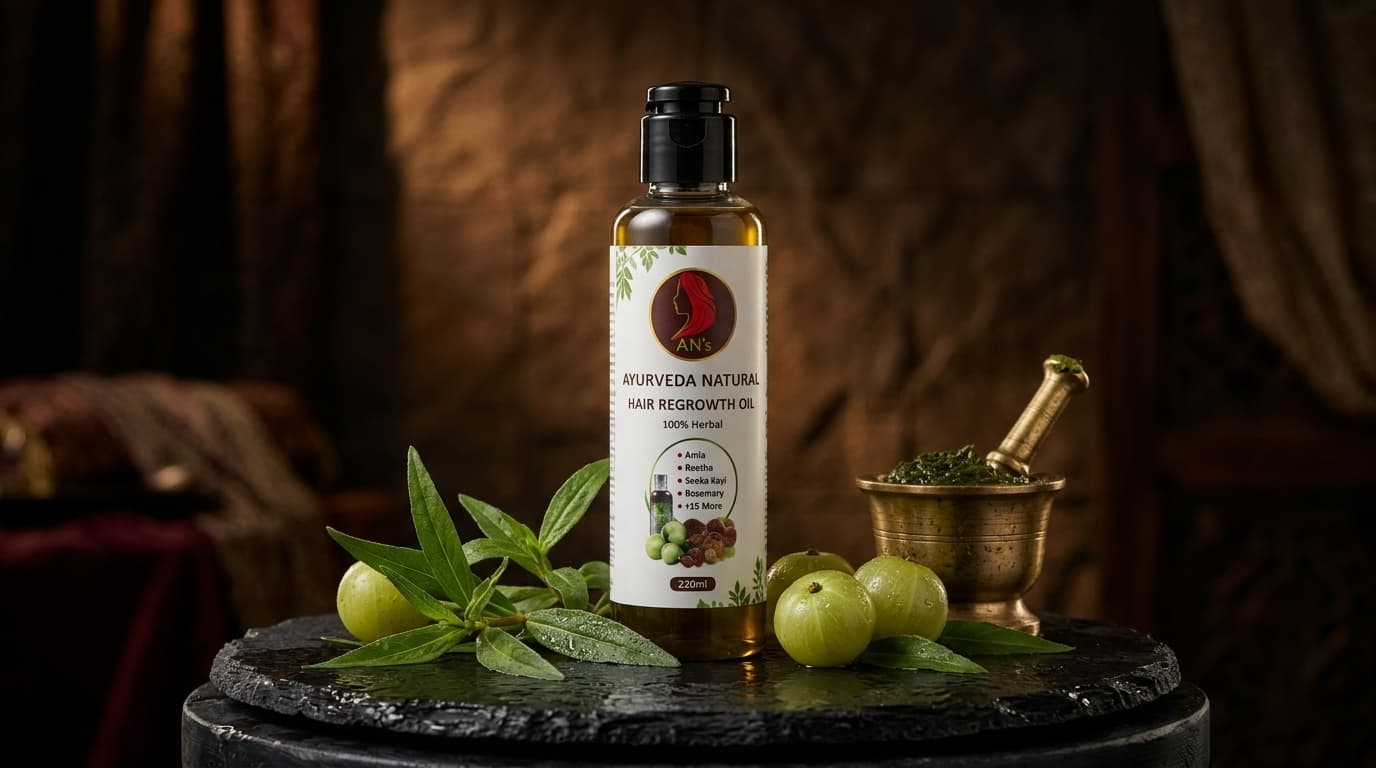
Experience our authentic Ayurvedic Hair Regrowth Oil, slowly simmered with fresh Bhringraj, Amla, and 15+ potent botanicals using the traditional Kshir Pak method. Pure, barrier-nourishing care for thicker, fuller, healthier hair.
Frequently Asked Questions About Bhringraj Oil and Minoxidil
Can I mix Bhringraj oil and minoxidil together in the same bottle?
No, you should never mix Bhringraj oil and minoxidil together in the same container. Minoxidil requires a specific alcohol and propylene glycol solvent vehicle to remain dissolved. Mixing it with a heavy vegetable lipid base will cause the chemical to precipitate into useless solid crystals. If using both during a transition phase, apply minoxidil to a clean, dry scalp and wait at least six to eight hours before applying botanical oil treatments.
Does Bhringraj oil cause a shedding phase like minoxidil?
No, Bhringraj oil does not cause the traumatic "dread shed" characteristic of minoxidil. Minoxidil forces resting follicles into active growth prematurely, causing hundreds of club hairs to fall out simultaneously between weeks 2 and 8. Bhringraj oil stabilizes existing hair follicles by resolving micro-inflammation and nourishing tissue lipids, resulting in a gentle, steady reduction in daily shedding counts.
How long does it take to see visible results with Bhringraj oil compared to minoxidil?
Minoxidil typically shows synthetic growth between 3 and 6 months, though it frequently triggers severe shedding during the first two months. Authentic Kshir Pak Bhringraj oil produces noticeable improvements in scalp comfort, reduced flaking, and decreased shedding within 4 to 8 weeks. Noticeable increases in terminal hair density, shaft caliber, and natural shine typically manifest between 4 and 6 months of consistent application.
What happens if I stop using Bhringraj oil?
Unlike minoxidil, which triggers catastrophic rebound telogen effluvium within 8 to 16 weeks of stopping, discontinuing Bhringraj oil does not cause sudden, synchronized hair loss. The structural tissue nourishment, improved barrier function, and reduced micro-inflammation achieved during treatment remain intact, allowing your scalp to return gradually to its natural biological baseline without withdrawal trauma.
Why does minoxidil stop working for some people after several years?
Minoxidil often experiences an efficacy plateau between months 12 and 24. Because minoxidil only acts as a non-specific vasodilator without halting underlying androgenetic mechanisms (such as 5-alpha reductase activity, DHT receptor binding, or follicular TGF-β signaling), progressive genetic miniaturization eventually overwhelms the artificial chemical stimulus, leading to renewed hair thinning.
Is Bhringraj oil safe for women during pregnancy and breastfeeding?
Yes, topical Bhringraj oil prepared in safe, food-grade carrier oils like sesame or coconut is generally considered safe for external cosmetic application during pregnancy and breastfeeding. In contrast, minoxidil is a Category C pharmaceutical that is strictly contraindicated during pregnancy due to potential risks of fetal cardiovascular abnormalities and systemic toxicity.
Can Bhringraj oil darken light or blonde hair?
Pure, traditionally prepared Bhringraj oil has a rich, dark greenish-black hue derived from its high chlorophyll, luteolin, and wedelolactone content. While this botanical pigmentation is celebrated in Ayurveda for preventing premature graying and restoring natural darkness to brown and black hair, repeated heavy application can impart a subtle, temporary greenish or dusky cast to very light, bleached, or platinum blonde hair.
Final Assessment: Choosing the Right Path for Your Scalp Biology
When evaluating bhringraj oil vs minoxidil, the ultimate decision depends on your personal health philosophy, tolerance for pharmaceutical risks, and long-term expectations. If you are comfortable committing to a permanent chemical treatment that carries risks of cardiovascular side effects, scalp flaking, and severe rebound shedding upon stopping, minoxidil offers rapid synthetic stimulation for those with active sulfotransferase enzymes.
However, if you seek a safe, sustainable, and holistic hair restoration protocol that strengthens your scalp barrier, nourishes dermal papillae, calms inflammation, and preserves natural hair vitality without chemical dependency, authentic Kshir Pak Bhringraj oil stands as the superior long-term choice. By honoring your scalp's complex biology and supporting it with time-tested botanical science, you cultivate an internal and external foundation for lasting hair health.
Ready to stop hair fall naturally?
Don't wait until it's too late. Experience the proven magic of our 100% organic, wild-harvested Ayurvedic formulations and start seeing real results in 14 days.
Free Shipping + Cash on Delivery