
Ayurvedic Shampoo for an Oily Scalp: Ingredients and Wash-Day Tips
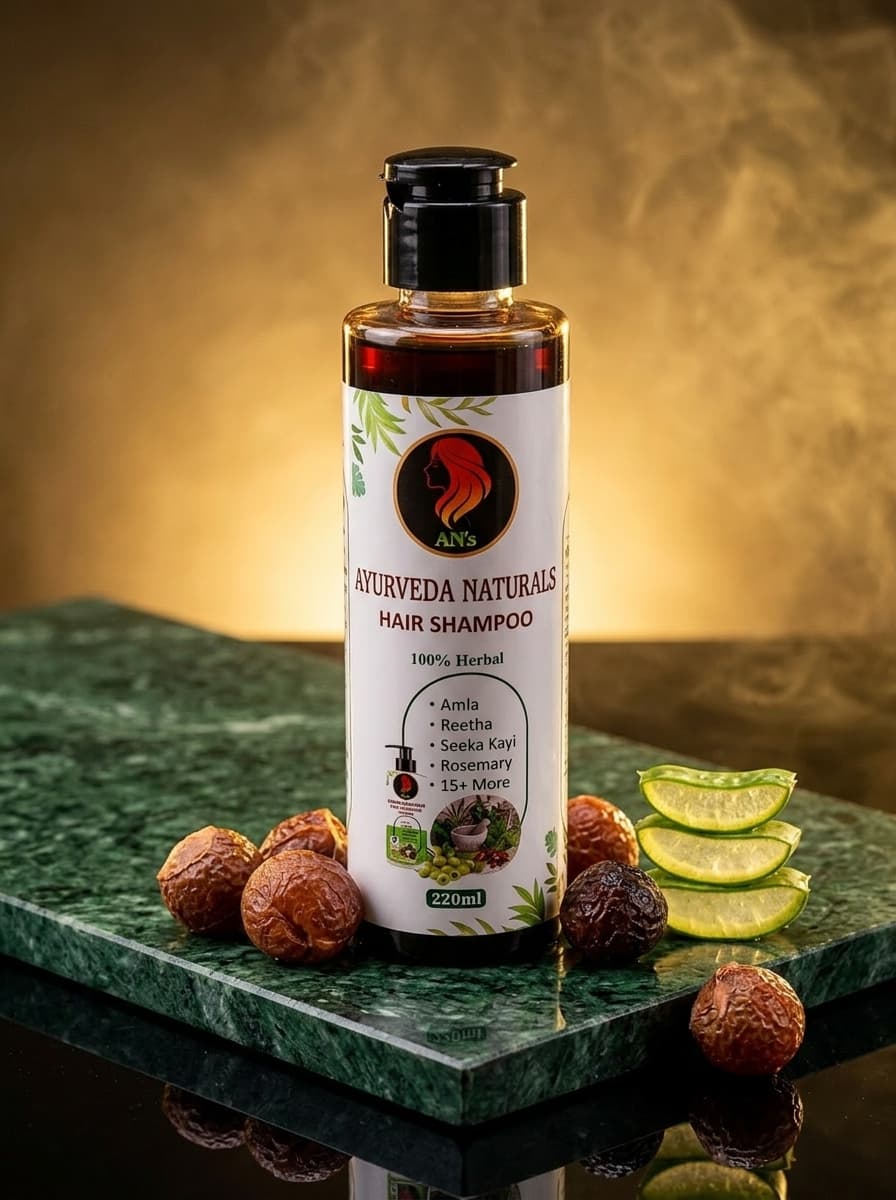
Ayurvedic Shampoo for Oily Scalp Ingredients: Natural Sebum Regulation Explained
The most effective ayurvedic shampoo for oily scalp ingredients combine saponin-rich botanical cleansers like Reetha (Sapindus mukorossi) and Shikakai (Acacia concinna) with astringent Amla (Phyllanthus emblica). This herbal blend dissolves oxidized sebum, purifies follicular pores, and preserves the scalp’s protective 5.5 pH acid mantle without triggering rebound oil production in hot, humid weather.
The Biological Paradox of the Oily Scalp: Sebum Chemistry and the Acid Mantle
Living with an excessively oily scalp is an exhausting daily frustration. Millions of people across South Asia wash their hair in the morning, step outside into warm, humid air, and find their roots greasy, flat, and clumped together by mid-afternoon. To understand why standard treatments repeatedly fail, one must examine the micro-anatomy of human sebaceous glands and the biochemical balance of the scalp barrier.
Sebaceous glands are specialized holocrine structures attached directly to hair follicles within the dermal layer, together forming the pilosebaceous unit. These glands synthesize and secrete sebum—a sophisticated lipid mixture composed of roughly 45% triglycerides, 25% wax monoesters, 12% squalene, 10% free fatty acids, and minor fractions of cholesterol and squalene derivatives. Under balanced physiological conditions, sebum is essential for hair health. It lubricates the hair cuticle, creates a flexible waterproof coating, transports vital fat-soluble antioxidants like alpha-tocopherol to the surface, and helps defend against pathogenic environmental microbes.
When sebum mingles with perspiration secreted by eccrine sweat glands, it establishes the scalp’s physiological acid mantle, which maintains a resting pH between 4.5 and 5.5. This slightly acidic environment serves as the body’s primary defense mechanism against follicular infection. It preserves the integrity of the stratum corneum, keeps the overlapping keratin scales of the hair fiber flat and tightly closed, and controls the population density of lipophilic commensal fungi such as Malassezia globosa and Malassezia restricta.
The standard consumer response to greasy hair is aggressive degreasing using mass-market commercial shampoos. These products are formulated with harsh anionic synthetic detergents, most notably Sodium Lauryl Sulfate (SLS), Sodium Laureth Sulfate (SLES), and Ammonium Lauryl Sulfate (ALS). While these industrial cleaning agents remove grease with undeniable speed, they trigger a destructive physiological response known as rebound hyper-seborrhea.
Strong anionic surfactants do not discriminate between loose surface grease and the vital intercellular lipid bilayers—composed of ceramides, structural cholesterol, and free fatty acids—that hold your scalp’s outermost skin cells together. By stripping these structural lipids, sulfates cause severe transepidermal water loss and blast open the acid mantle, driving the scalp's surface pH into an unnatural alkaline zone between 7.5 and 8.5. Sensory neuro-receptors in the epidermis interpret this sudden barrier collapse and severe dehydration as an emergency.
Through localized autocrine signaling, the sebaceous glands are commanded to compensate for the missing moisture barrier. Within 12 to 24 hours of washing, the glands go into overdrive, pumping out fresh, thin sebum to coat the raw, vulnerable skin. This traps the user in a vicious cycle: wash with sulfates, suffer barrier disruption, endure an aggressive rebound oil flood, and wash again. Breaking this exhausting pattern requires switching to authentic botanical cleansers that purify using non-ionic and amphiphilic plant saponins rather than synthetic chemical detergents. If your roots are greasy while your ends feel fried and straw-like, review our targeted protocol for an oily scalp dry ends shampoo routine in Pakistan to balance both zones effectively.
Furthermore, chronic exposure to harsh anionic detergents fundamentally damages the scalp's microbial diversity. Beneficial microflora, such as Staphylococcus epidermidis, thrive in a mildly acidic environment (pH 4.8 to 5.2) where they produce antimicrobial peptides that keep pathogenic strains in check. When synthetic shampoos repeatedly push the scalp into an alkaline state, this delicate micro-ecosystem is compromised. Pathogenic bacterial colonies and yeast populations proliferate, leading to low-grade chronic inflammation around the hair follicles. This subclinical inflammation degrades the connective tissue sheath around hair roots, leading to gradual follicle miniaturization and thinning.
Saponin Chemistry: Reetha (Sapindus mukorossi) as Nature’s Amphiphilic Surfactant
The foundation of classical Ayurvedic hair cleansing rests upon Reetha, also known as the Indian Soapnut (Sapindus mukorossi). Reetha is neither an abrasive soap nor an ornamental herb; it is a bio-surfactant powerhouse governed by precise botanical chemistry.
The pericarp, or outer fruit wall, of dried Reetha contains between 10% and 18% natural triterpenoid saponins, predominantly mukorosside, sapindoside A, sapindoside B, and hederagenin derivatives. Saponins are natural glycosides characterized by a distinctive amphiphilic molecular architecture. Each saponin molecule features two opposing chemical regions:
- A Lipophilic Aglycone Core (Sapogenin): A non-polar triterpenoid ring structure that naturally attracts and binds to oily substances, oxidized sebum, and lipid-soluble urban particulates.
- A Hydrophilic Glycone Group: One or more polar sugar chains (such as glucose, rhamnose, or arabinose) that interact strongly with surrounding water molecules.
When Reetha extract is blended with water and gently massaged into the scalp, these saponin molecules reach what physical chemists call the Critical Micelle Concentration (CMC). Above this concentration threshold, the molecules self-assemble into microscopic spherical aggregates called micelles. In an aqueous environment, the hydrophobic aglycone tails pull inward to escape the water, creating a non-polar core, while the hydrophilic sugar heads project outward into the watery solution.
When applied across an oily scalp, these botanical micelles clean with remarkable biological intelligence:
- Lipid Solubilization: The non-polar interior of each micelle readily traps hydrophobic sebum components, including hardened squalene plugs, waxy monoesters, and trapped soot particles from vehicular traffic.
- Selective Lipid Retention: Unlike synthetic SLS molecules, which have a tiny molecular radius and an aggressive electrical charge that penetrates the stratum corneum to destroy living skin cells, Reetha saponin micelles are comparatively bulky and non-cytotoxic. They sweep away unbonded surface sebum without stripping the structural ceramides that form your skin barrier.
- Clean Water Dispersal: Because the exterior shell of the micelle remains hydrophilic, the entire oil-engorged micelle remains suspended in water and rinses away completely under running water, leaving no greasy film, no chemical buildup, and zero residue.
- Antifungal Suppression: Mukorossides disrupt the cell membrane stability of opportunist fungi like Malassezia furfur, neutralizing fungal populations that thrive on unwashed sebum without causing microbial resistance.
Because Reetha cleanses via natural micellar mechanics, it does not shock the scalp into panic. The sebaceous glands do not receive an emergency signal to produce replacement oil, allowing your natural sebum secretion rate to steady and normalize over three to four weeks of consistent use.
In modern laboratory assays, the surface tension reduction of Sapindus saponins has been measured at approximately 38 to 42 dynes/cm, which closely approximates high-end, gentle cosmetic surfactants like Decyl Glucoside and Cocamidopropyl Betaine. However, unlike synthetic glucosides that require industrial chemical synthesis with propylene oxide or fatty alcohols, Reetha saponins are cold-water extractable in their completely native, bio-compatible form, retaining plant bioflavonoids that calm skin neuro-receptors during the wash cycle.
Shikakai (Acacia concinna): Low-pH Saponins, Natural Mucilage, and Cuticle Protection
While Reetha provides the heavy-lifting micellar power, Shikakai (Acacia concinna) serves as its essential botanical partner. The dried pods of this thorny climbing shrub have been harvested across the Indian subcontinent for thousands of years. The name Shikakai translates literally from ancient Sanskrit as "fruit for the hair," and contemporary laboratory analysis reveals why its biochemical profile is uniquely suited for oily scalps.
Shikakai introduces three vital functional properties that counteract the common drawbacks of synthetic clarifying cleansers:
1. Naturally Acidic Surfactant Profile
The overwhelming majority of natural cleansing agents—including traditional castile soaps, black soaps, and alkaline herbal decoctions—possess a basic pH ranging from 8.0 to 10.0. When an alkaline substance contacts hair, it hydrolyzes hydrogen bonds, forces the cuticular scales of the hair shaft to flare open like pine cones, and leaches internal moisture from the cortex. This leaves hair rough, knotty, and vulnerable to catastrophic breakage.
In sharp contrast, an aqueous Shikakai decoction naturally registers a mild, physiologically harmonious pH between 4.5 and 5.2. This closely matches the scalp’s natural acid mantle. Washing an oily scalp with Shikakai maintains an acidic environment that keeps the keratin scales of the cuticle firmly flattened against the hair fiber. This locks moisture inside the hair shaft, reflects ambient light for natural shine, and protects vulnerable lengths even as the roots are deeply purified.
2. Bioactive Triterpenoid Saponins (Acacinin)
Shikakai pods contain a unique family of monodesmosidic and bidesmosidic saponins known as acacinins (specifically acacinin A, B, C, D, and E), along with bioactive triterpenes such as lupeol, spinasterol, and betulinic acid. These compounds produce a fine, creamy micro-foam that dissolves oxidized sebum plaques around the follicular ostium (the pore opening). They flush out micro-comedones and dead keratinous debris without triggering the stinging or inflammatory redness commonly associated with chemical clarifying treatments.
3. Natural Polysaccharide Mucilage for Slip
The greatest flaw of chemical oily-scalp shampoos is that while they degrease the roots, they turn the hair lengths into a tangled, unmanageable bird's nest. Users then attempt to detangle wet hair with combs, ripping fragile strands straight from their roots. Shikakai naturally contains complex water-soluble polysaccharides and plant mucilage. As the saponins rinse away grease, this natural mucilage forms an invisible, weightless lubricating layer over each hair fiber. This provides effortless wet combability and slip without depositing a single atom of pore-clogging synthetic silicone.
Furthermore, Shikakai contains generous concentrations of plant-derived vitamins, notably vitamin A, vitamin C, vitamin D, and vitamin K, alongside essential micronutrients like zinc and copper. Zinc is a foundational co-factor in human sebum modulation; applied topically via Shikakai extract, it aids in regulating local enzymatic activity within the sebaceous gland itself, discouraging hyper-secretion and keeping the follicular duct clear and resilient.
Amla (Phyllanthus emblica): Astringent Tannins and Antioxidant Fortification
The triad of classical Ayurvedic hair care is completed by Amla, or Indian Gooseberry (Phyllanthus emblica, also classified as Emblica officinalis). If Reetha and Shikakai serve as the cleansing engine, Amla functions as the regulator and antioxidant guardian of the oily scalp.
In the classical Ayurvedic pharmacopeia, Amla is hailed as a divine Rasayana (rejuvenator) possessing five distinct tastes (Shad Rasa), dominated by Kashaya (astringent) and Amla (sour) qualities. The profound astringent action of Amla is directly tied to its exceptional concentration of low-molecular-weight hydrolyzable tannins, including emblicanin A, emblicanin B, punigluconin, pedunculagin, and free gallic acid.
Pore Toning and Follicular Infundibulum Constriction
When applied to the skin, tannins bind to and cross-link surface keratin proteins through hydrogen bonding and hydrophobic interactions. On a scalp struggling with oiliness, this gentle astringent reaction causes mild contraction of the follicular infundibulum—the funnel-shaped opening through which the hair emerges and through which sebaceous glands discharge liquid oil.
By toning and firming these enlarged follicular pores, Amla moderates the rate at which newly synthesized sebum pools across the scalp. It acts like a natural botanical toner, preventing roots from looking greasy within hours of stepping out of the shower and extending the freshness of your wash day.
Quenching Squalene Peroxidation
Excess sebum on its own is an inconvenience; oxidized sebum, however, is a serious dermatological threat. Human sebum contains over 12% squalene, an unsaturated hydrocarbon containing six reactive double bonds. Under the relentless ultraviolet radiation, urban heat, and atmospheric ozone typical of Pakistani summers, squalene rapidly peroxidizes into cytotoxic squalene monohydroperoxide and malondialdehyde.
These rancid lipid peroxides damage cellular membranes, stimulate pro-inflammatory cytokines (IL-1 alpha and IL-6), produce an unpleasant stale odor, and trigger telogen effluvium (rapid hair shedding). Amla delivers one of the highest concentrations of stable, bioavailable vitamin C (L-ascorbic acid) alongside potent polyphenol flavonoids. The emblicanin complex in Amla operates through a continuous antioxidant cascade: when emblicanin A neutralizes an oxidative free radical, it transforms into emblicanin B, which continues neutralizing additional reactive species rather than degenerating into a harmful pro-oxidant. This antioxidant shield protects the hair bulb from oxidative senescence and keeps the scalp smelling clean and fresh.
Amla also possesses documented mild 5-alpha reductase inhibitory activity. The 5-alpha reductase enzyme converts systemic testosterone into dihydrotestosterone (DHT) within scalp tissues, which binds to androgen receptors in genetically sensitive follicles. DHT not only accelerates pattern miniaturization but also directly stimulates sebaceous gland enlargement and hyperactivity. By topically dampening this localized enzymatic conversion, Amla addresses the hormonal trigger of hyper-seborrhea directly at the root.
Supporting Botanical Actives for Complete Sebum Regulation
While the triad of Reetha, Shikakai, and Amla forms the core cleansing architecture, a complete Ayurvedic oily-scalp formulation relies on a synergistic network of supporting herbs to target inflammation, micro-circulation, and microbial balance:
Neem (Azadirachta indica)
Neem contains bitter tetranortriterpenoids including nimbin, nimbidin, and azadirachtin. On an oily scalp, excess lipid production creates an ideal breeding ground for bacteria and yeast. Neem acts as a broad-spectrum botanical antimicrobial, eliminating pathogens, curbing itchy scalp sensations, and clearing inflammatory folliculitis without breeding microbial resistance.
Tulsi / Holy Basil (Ocimum sanctum)
Rich in eugenol, carvacrol, and ursolic acid, Tulsi is a revered adaptogenic herb. When sebum plugs congest the follicular root, capillary microcirculation becomes sluggish. Tulsi stimulates blood flow through the dermal papilla, enhancing oxygen and micronutrient delivery to the roots while delivering anti-inflammatory protection.
Fenugreek / Methi (Trigonella foenum-graecum)
Methi seeds are dense with natural steroid saponins, trigonelline, and vegetable lecithin. Lecithin serves as a lightweight, non-comedogenic emollient that coats fragile hair shafts with protective lipids. It prevents post-wash tangles and reinforces structural hair keratin without adding greasiness to the scalp.
Aloe Vera (Aloe barbadensis)
Aloe provides soothing, pure water-based hydration powered by acemannan polysaccharides. Crucially, raw Aloe contains proteolytic enzymes that dissolve dead keratinocytes and loosen stubborn sebum plugs at the pore entrance, ensuring the scalp can breathe freely after every wash.
In addition to these botanicals, extracts of Bhringraj (Eclipta alba) and Brahmi (Bacopa monnieri) contribute neuro-soothing flavonoids that calm thermal inflammation (Pitta aggravation) within the dermal layers. In classical Ayurveda, excess heat in the scalp causes both premature shedding and excessive oiliness. Herbs that cool the dermal blood supply naturally signal the sebaceous glands to moderate their baseline activity. For an extensive comparison of summer purifying cleansers, explore our analysis of the best clarifying shampoo for oily scalp in summer Pakistan.
Environmental Factors in Pakistan: Hard Water, Humidity, and Smog
Formulating or selecting an Ayurvedic shampoo cannot happen in a geographical vacuum. The scalp does not exist in an air-conditioned laboratory; it interacts daily with the severe environmental stressors unique to Pakistan:
1. The Hard Water Crisis (Groundwater and Boring Supplies)
In urban centers such as Karachi, Lahore, Faisalabad, Rawalpindi, and Multan, domestic water supplies are predominantly sourced from deep underground aquifers (boring water) or deteriorating municipal pipe networks. This water carries exceptionally heavy concentrations of dissolved calcium carbonate, magnesium sulfate, and soluble iron salts, resulting in total dissolved solids (TDS) levels frequently spanning 600 to 1,500 parts per million (ppm).
When synthetic shampoos or traditional soap bars contact hard water, calcium and magnesium ions bond with fatty acids to form an insoluble chemical precipitate: calcium stearate curd. This sticky, insoluble mineral scum adheres tenaciously to natural scalp sebum. It forms an impermeable coating over the follicles, suffocating the roots, trapping airborne grime, and leaving the hair feeling waxy, limp, and greasy immediately after stepping out of the shower. Saponin-rich Ayurvedic botanicals like Reetha and Shikakai feature natural chelating agents that bind free calcium ions, enabling the soap-sebum complexes to wash away cleanly without leaving mineral curd behind.
2. Extreme Coastal Humidity vs. Inland Scorching Heat
Pakistan's climate presents two starkly different challenges for oily scalps. In coastal Karachi and the lower Sindh belt, relative humidity regularly hovers between 75% and 92% alongside temperatures above 34°C. Under these conditions, eccrine sweat cannot evaporate into the moisture-saturated air. Instead, sweat pools on the scalp, emulsifying with sebum and spreading it rapidly along the entire hair fiber. Roots look drowned in grease within hours.
In contrast, the interior plains of Punjab, Khyber Pakhtunkhwa, and Balochistan face dry, searing summer heat that often exceeds 45°C. Intense heat causes rapid evaporation of surface moisture from the stratum corneum. The skin becomes parched, triggering the sebaceous glands to produce viscous, heavy sebum as a defensive barrier against dehydration.
3. Atmospheric Smog and Particulate Matter (PM2.5)
During the autumn and winter months, the agricultural and industrial belt of Lahore, Gujranwala, and Faisalabad experiences severe atmospheric inversions that generate hazardous smog. Microscopic particulate matter (PM2.5), diesel exhaust soot, and heavy metal residues settle directly onto the hair and scalp. These particles are lipophilic, meaning they dissolve readily in scalp sebum. Left unwashed, this greasy, toxic sludge causes follicular micro-inflammation, triggers burning itchiness, and accelerates telogen shedding.
Determining Wash-Day Frequency in Pakistan
A common misconception is that washing greasy hair frequently causes it to fall out. While washing daily with aggressive synthetic detergents will strip hair fibers and break hair strands, leaving oxidized sebum, perspiration salts, and urban pollution on your scalp is far more damaging to the hair roots. Stagnant sebum suffocates the hair bulb, alters the epidermal microbiome, and creates chronic inflammation.
When using a gentle, sulfate-free Ayurvedic shampoo, structure your wash schedule according to these climatic conditions:
- High Humidity / Active Gym Workouts / Daily Motorbike Commuting: Wash every 48 hours (alternate days). This removes dried sweat salts and urban soot before they can trigger follicular inflammation, while the botanical saponins safeguard the acid mantle.
- Moderate Weather / Indoor Desk Routines: Wash 2 to 3 times per week (such as Monday, Wednesday, and Saturday). This schedule allows healthy lipids to lubricate the roots without accumulating into a heavy, waxy layer.
- Dry Winter Smog Season: Wash twice per week with thorough water rinsing. If you commute through traffic or open air, perform a lukewarm water-only rinse on non-wash days to clear particulate dust without shampooing.
Consistency in wash schedule is critical for resetting sebaceous output. If you fluctuate erratically—washing three days in a row with harsh sulfates and then skipping five days—the sebaceous glands cannot adapt to a predictable moisture baseline. Sticking to an alternate-day or three-day botanical routine trains the skin's autocrine feedback systems to settle into a calm, steady rhythm of moderate lipid production.
Six Critical Wash-Day Mistakes That Sabotage Oily Scalps
Even the purest botanical ingredients will underperform if your washing habits undermine your scalp barrier. Avoid these six common errors:
1. Washing with Steaming Hot Water
Hot water liquefies surface lipids and dilates the blood vessels surrounding sebaceous glands, triggering rapid compensatory sebum secretion. Always wash with lukewarm water, and finish with a cool water rinse.
2. Relying on Aerosol Starch Dry Shampoos
Dry shampoos do not clean; they simply absorb visible surface shine using aluminum starch or modified corn starch. The trapped sebum remains lodged inside the pore. Combined with sweat, this mixture creates a paste that suffocates follicles and fosters fungal growth.
3. Aggressive Scrubbing with Fingernails
Raking sharp fingernails across an oily scalp creates microscopic tears in the stratum corneum. These micro-injuries trigger localized inflammation and prompt the skin to produce more protective sebum. Use only the soft pads of your fingertips.
4. Applying Heavy Carrier Oils to Greasy Roots
Massaging heavy, comedogenic oils like pure mustard or raw coconut oil directly into an oily scalp suffocates follicles and feeds Malassezia fungus. Apply nourishing oils strictly to the mid-lengths and dry ends before washing, keeping the scalp clear.
5. Applying Conditioner to the Roots and Scalp
Conditioners contain cationic surfactants, fatty alcohols, and emollients formulated to bind to damaged hair lengths. Applying them to the scalp coats the skin, clogs pores, and leaves roots looking greasy and limp within hours. Keep conditioner strictly below the ears.
6. Rushing the Rinse Cycle
Leaving even trace amounts of cleanser or dissolved grime on the scalp creates irritation and attracts airborne dust. Rinse thoroughly for at least two full minutes until the water runs completely clear.
The Complete Step-by-Step Ayurvedic Double-Cleanse Protocol
To achieve maximum clarifying power from botanical ingredients without stripping the scalp, adopt this double-cleanse wash method:
- The 90-Second Lukewarm Saturation: Before dispensing any shampoo, stand under lukewarm water for a full 90 seconds. Gently massage your scalp with your fingertips under the stream. This dissolves surface sweat salts, loosens oxidized sebum plugs, and rinses away loose dust.
- Palm Emulsification: Pour a coin-sized quantity of botanical shampoo into wet palms. Rub your hands together vigorously for five to ten seconds to activate the saponins into a fine, aerated micro-lather before touching your scalp.
- The First Cleanse (Surface Dirt Clearance): Apply the activated micro-lather to the crown, temples, and nape. Gently massage for 30 to 45 seconds. This first wash binds to surface sebum, airborne pollutants, and styling residues. It will lather lightly because free lipids break down foam bubbles. Rinse out thoroughly.
- The Second Cleanse (Deep Botanical Infusion): Apply a second, smaller amount of shampoo to the scalp. This time, you will notice a richer, denser micro-lather. Work it across your roots using slow, circular finger movements for a full two minutes. This contact time allows the astringent tannins of Amla to tone follicular openings, the antimicrobial properties of Neem to cleanse the microbiome, and the saponins of Reetha to clear deep sebum deposits.
- The Cool Water Finishing Rinse: Rinse your hair thoroughly with running water until no bubbles remain. Finish with a 20-second cool water rinse over the scalp. The cold water soothes sebaceous tissue, reduces inflammation, and flattens the hair cuticles for lasting shine.
- Length Care and Drying: Gently squeeze excess water from your hair using a soft microfiber towel or cotton t-shirt. Avoid aggressive friction drying, which causes mechanical breakage. If your ends are dry, apply a drop of lightweight herbal serum exclusively to the bottom two inches while damp.
Comparison: Ayurvedic Botanical Cleansers vs. Sulfates vs. Clarifiers
To evaluate how authentic botanical formulations compare with commercial alternatives, review their key biochemical and performance characteristics:
| Evaluation Criteria | Ayurvedic Botanical Formula (Reetha, Shikakai, Amla) | Conventional Sulfate Shampoos (SLS / SLES) | Chemical Clarifiers (Charcoal / Salicylic Acid / EDTA) |
|---|---|---|---|
| Surfactant Mechanism | Natural triterpenoid saponins forming amphiphilic plant micelles. | Synthetic anionic petroleum detergents that denature skin proteins. | Concentrated synthetic detergents paired with chemical chelating agents. |
| Resting pH Range | Mildly acidic (4.8 – 5.5), matching healthy scalp biology. | Alkaline to neutral (6.5 – 8.0), lifting and swelling the cuticle. | Variable (5.0 – 7.5), engineered for intense surface stripping. |
| Acid Mantle Preservation | Protects epidermal ceramides and beneficial scalp microflora. | Dissolves intercellular lipid matrix, causing barrier breakdown. | Completely strips surface barrier, requiring intensive conditioning. |
| Rebound Oil Risk | Very low; sebaceous output normalizes over 3 to 4 weeks. | Extremely high; triggers compensatory oil surges within 24 hours. | High if used more than once every 10 to 14 days. |
| Condition of Hair Lengths | Naturally soft and detangled due to Shikakai mucilage. | Rough and squeaky, requiring heavy silicone masks. | Extremely dry, brittle, and prone to mid-shaft breakage. |
| Recommended Frequency | Safe for regular, 2 to 4 times weekly cleansing. | Used 2-3x weekly, sustaining the oily rebound cycle. | Strictly once every 10 to 14 days as a reset. |
Frequently Asked Questions: Ayurvedic Oily Scalp Care
Why does my scalp get oily within 24 hours of washing with regular commercial shampoo?
Commercial shampoos typically rely on harsh synthetic anionic surfactants such as Sodium Lauryl Sulfate (SLS) and Sodium Laureth Sulfate (SLES). These industrial degreasers strip away the scalp's protective intercellular lipid barrier along with natural sebum. In response to this acute moisture depletion, the sebaceous glands enter a reactive feedback loop, overproducing fresh sebum within 12 to 24 hours to lubricate the irritated stratum corneum. This phenomenon, known as rebound hyper-seborrhea, locks the scalp into an endless cycle of rapid grease accumulation.
Can natural ingredients like Reetha and Shikakai thoroughly remove heavy oil and pollution?
Yes. Reetha contains natural triterpenoid saponins that form amphiphilic micelles in water. These botanical micelles encapsulate non-polar sebum lipids, heavy environmental soot, and styling residues, allowing them to rinse away cleanly with water. When paired with Shikakai, which provides mild acidic cleansing and natural detangling mucilage, the combination lifts heavy oil effortlessly without disrupting the scalp's delicate acid mantle or dissolving structural epidermal ceramides.
How does Amla regulate oiliness without leaving the lengths of the hair dry and brittle?
Amla (Phyllanthus emblica) is loaded with hydrolyzable tannins, including emblicanin A, emblicanin B, and gallic acid. These botanical compounds exert a mild astringent action, temporarily toning and constricting the dilated follicular infundibulum at the roots to modulate continuous sebum seepage. At the same time, Amla's bioavailable vitamin C, flavonoids, and amino acids deliver lightweight antioxidant nourishment along the hair shaft, preserving hydration and preventing split ends.
What is the optimal wash-day frequency for an oily scalp in the Pakistani climate?
During hot, humid summer months or the monsoon season in cities like Karachi and Lahore, washing every 48 hours (alternate days) using a gentle, sulfate-free Ayurvedic cleanser is ideal to prevent sweat salts and oxidized sebum from clogging follicles. In drier, cooler winter months, washing two to three times per week is generally sufficient to maintain optimal follicular hygiene without drying out the scalp.
Does an authentic Ayurvedic shampoo lather as much as a synthetic drugstore shampoo?
No. Authentic Ayurvedic shampoos do not produce the dense, billowing, synthetic foam generated by petroleum sulfates. Instead, natural saponins from Reetha and Shikakai produce a softer, fine-bubbled micro-lather. This fine foam is chemically effective at binding to excess lipids and surface dirt, rinsing away completely without leaving toxic chemical residues or causing follicular irritation.
Does hard groundwater in Pakistani cities make an oily scalp worse?
Yes. High concentrations of calcium carbonate and magnesium in local groundwater react with natural sebum and commercial surfactants to form an insoluble mineral scum (calcium stearate curd). This curd coats the scalp, suffocates follicular openings, traps airborne dust and smog particulates, and prompts sebaceous glands to produce even more oil to compensate for barrier distress.
Can an untreated oily scalp cause hair fall, and how do Ayurvedic herbs prevent it?
Yes. Stagnant sebum oxidizes into squalene hydroperoxides and harbors Malassezia yeast, triggering perifollicular micro-inflammation. Over time, this chronic inflammation degrades the extracellular matrix surrounding the hair bulb, weakening hair anchors and accelerating telogen shedding. Ayurvedic herbs like Neem, Reetha, Shikakai, and Amla purify follicular pores, eliminate microbial overgrowth, neutralize oxidative stress, and reinforce the hair root sheath.
Restore Balance to Your Oily Scalp Naturally
Formulated specifically for the Pakistani climate and hard groundwater challenges, our Purifying Hair Shampoo harnesses the saponin power of wild Reetha, low-pH Shikakai, and astringent Amla to clarify roots without stripping your scalp’s natural acid mantle.
Shop Purifying Hair Shampoo NowReady to stop hair fall naturally?
Don't wait until it's too late. Experience the proven magic of our 100% organic, wild-harvested Ayurvedic formulations and start seeing real results in 14 days.
Free Shipping + Cash on Delivery